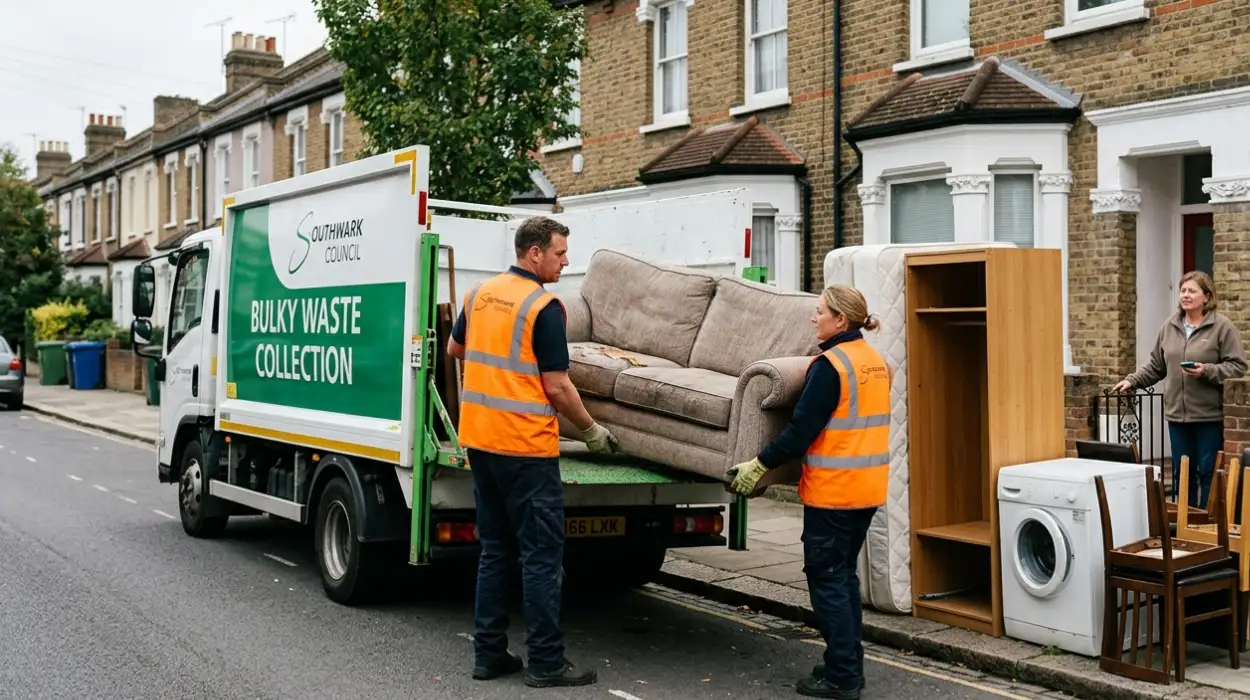
The management of bulky waste—large items of household refuse such as furniture, appliances, and mattresses that exceed the capacity of standard domestic bins—constitutes a foundational pillar of modern urban sanitation in the United Kingdom. In the southern boroughs of London, including Southwark, Lambeth, Wandsworth, Lewisham, Greenwich, Croydon, and Bromley, the provision of free or subsidised bulky waste collection dates is governed by distinct local government frameworks established under the Environmental Protection Act 1990. While contemporary residents approach this service through digital municipal portals to resolve immediate disposal needs, the infrastructure rests upon a complex historical trajectory. The evolution of public waste management in South London reflects over two centuries of legislative transformation, public health crises, industrial engineering milestones, and socio-political shifts from the early nineteenth century to the current statutory frameworks of 2026.
- Where Do I Find Free Bulky Waste Collection Dates For My South London Street?
- How Did Public Waste Disposal Systems Evolve in South London Before the Twentieth Century?
- What Legislation Governs Modern Bulky Refuse Collection in United Kingdom Municipalities?
- Which Socio-Political Factors Influenced the Transition from Private Scavenging to Municipal Services?
- How Did Historical Destruction Alter Waste Disposal Infrastructure Across South London?
- What Role Did the Crossness Pumping Station Play in Southern Metropolitan Sanitation?
- How Do Modern South London Boroughs Manage Contemporary Bulky Refuse Stream Dynamics?
- What Are the Long-Term Environmental and Civic Implications of Bulky Refuse Accumulation?
Where Do I Find Free Bulky Waste Collection Dates For My South London Street?
Residents find free bulky waste collection dates for South London streets exclusively through the official digital search portals of their respective local municipal councils, as scheduling frameworks, eligibility criteria, and fee structures vary strictly by individual borough boundaries rather than regional territories.
To identify the specific collection parameters for a given address, residents must access the dedicated environmental services section of their local authority website. For example, the London Borough of Southwark provides a localized street-search tool where residents entering their postcode can determine their designated collection days. Under the current statutory frameworks, South London is divided into distinct local government districts, each operating independent waste management contracts and collection calendars. There is no centralized, pan-London database for bulky refuse scheduling; instead, the responsibility is decentralized across the individual administrative bodies.
The administrative mechanisms governing these services depend on the specific borough’s financial strategies and environmental policies. While some South London councils offer a allocated number of free bulky waste collections per household annually, others have transitioned to a subsidised pay-per-item model to offset operational expenditures. In boroughs where free collections are permitted, such as Hounslow or specific trial zones within South London sectors, the dates are either pre-allocated by street or must be booked individually via the municipal portal.
To experience the historic landmarks and civic infrastructure born from London’s early sanitary reforms in person today, consult our comprehensive [South London Heritage Trails and Civic Walking Tours Guide] for itineraries and visiting parameters. Understanding the local boundaries is essential, as a street spanning the border between the London Borough of Lambeth and the London Borough of Wandsworth is subject to entirely different booking systems, item limits, and collection frequencies.
How Did Public Waste Disposal Systems Evolve in South London Before the Twentieth Century?
Public waste disposal systems in South London evolved from a decentralized network of private night-soil collectors and commercial ash-rakers in the early nineteenth century into a legally mandated, state-regulated municipal infrastructure following catastrophic cholera outbreaks and the passage of the Public Health Act 1875.
Prior to the mid-nineteenth century, the expansion of South London lacked systematic municipal oversight. Refuse accumulation was managed by private contractors known as dustmen, who collected household ashes, bone matter, and organic waste to sell to brickmakers and agricultural enterprises. The rapid industrialization of areas along the River Thames, such as Bermondsey, Deptford, and Rotherhithe, caused unprecedented population density. The existing system relied on cesspools and surface gutters, which routinely overflowed into local water courses, including the River Effra, the River Neckinger, and the River Wandle.
The systemic failure of this private disposal economy became evident during the cholera epidemics of 1832, 1848, and 1853. Dr. John Snow demonstrated that cholera was waterborne, transmitted through supply networks contaminated with human and domestic waste. The General Board of Health, established under the Public Health Act 1848, initiated the codification of urban sanitary standards.
The turning point occurred with the creation of the Metropolitan Board of Works (MBW) in 1855, led by Chief Engineer Sir Joseph Bazalgette. The MBW constructed the London sewerage system, which intercepted waste before it reached the urban stretches of the Thames. For South London, this culminated in the opening of the Southern Outfall Sewer network and the Crossness Pumping Station in 1865, located in the Erith marshes. This massive engineering project redirected millions of gallons of waste eastward away from the populated core.
Concurrently, the Public Health Act 1875 legally mandated that local authorities provide systematic refuse removal, requiring the introduction of standardized dustbins and regular collection routes across all South London parishes.

What Legislation Governs Modern Bulky Refuse Collection in United Kingdom Municipalities?
Modern bulky refuse collection in United Kingdom municipalities is governed primarily by the Environmental Protection Act 1990, the Controlled Waste (England and Wales) Regulations 2012, and the secondary statutory frameworks established under the Environment Act 2021.
The Environmental Protection Act 1990 (EPA 1990) serves as the primary statutory foundation for waste management across the United Kingdom. Section 45 of the EPA 1990 imposes a strict duty on every waste collection authority, which includes all South London borough councils, to arrange for the collection of household waste from properties within their administrative districts. Section 45(3) specifically dictates that while authorities cannot charge for standard household waste collection, they retain the legal right to recover reasonable costs for the collection of prescribed categories of waste, which explicitly encompasses bulky household items due to their exceptional weight, size, and handling requirements.
The precise definition and classification of these items are articulated within the Controlled Waste (England and Wales) Regulations 2012. These regulations categorize waste into household, industrial, and commercial types, stipulating that items exceeding a specific volumetric or weight threshold—such as large furniture units, major household appliances, and heavy garden waste—fall under schedules that permit municipal cost recovery.
This legislative framework was updated by the Environment Act 2021. The 2021 Act introduces enhanced statutory targets regarding resource efficiency, waste reduction, and the circular economy. It mandates strict adherence to the Waste Hierarchy, an operational model prioritizing:
- Prevention
- Reuse
- Recycling
- Recovery
- Disposal
This statutory hierarchy legally compels South London authorities to restructure their bulky waste collection protocols. Councils must ensure that reusable furniture or recyclable white goods (such as refrigerators and washing machines) are diverted from traditional landfill sites or mass incineration plants into specialized municipal recycling streams and social enterprise partnerships.
Which Socio-Political Factors Influenced the Transition from Private Scavenging to Municipal Services?
The transition from private scavenging to municipal services was driven by the collapse of the commercial market for domestic refuse, intense pressure from Victorian social reformers, and the expansion of local democratic franchises through the Local Government Act 1894.
During the early Victorian era, the collection of household waste was an active private commodity market. Dust contractors purchased the rights to clear household dust heaps because the constituent materials—primarily coal ash and cinder—held significant monetary value as raw inputs for brick manufacturing and soil conditioners. However, by the late 1860s, technological shifts in manufacturing and the discovery of alternative brickmaking materials caused the commercial value of urban dust to collapse. Private contractors could no longer generate profits from collection, leading to widespread abandonment of service routes, severe accumulation of household refuse in working-class South London tenements, and subsequent spikes in localized mortality rates.
This economic failure coincided with the rise of the Sanitarian Movement, spearheaded by social reformers such as Edwin Chadwick, whose seminal 1842 report, The Sanitary Condition of the Labouring Population, established a direct causal link between urban filth, high disease prevalence, and systemic economic poverty. Chadwick argued that public health was a collective infrastructure issue requiring centralized, state-funded administration rather than reliance on fluctuating private markets.
Political pressure intensified with the expansion of the local electorate. The Local Government Act 1894 restructured local administration, replacing elitist parish vestries with democratically elected Metropolitan Borough Councils across London in 1900. These newly formed public bodies, including the historic Boroughs of Camberwell, Southwark, and Lambeth, were directly accountable to working-class voters who demanded systematic municipal services.
The collection of refuse transformed from a volatile private commercial trade into a fundamental statutory right funded by local municipal property taxation, known as council rates.
Explore More Public Services
How to Check Vehicle ULEZ Compliance Standards in Greater London
New Short Term Holiday Letting Rules in Westminster Borough
How Did Historical Destruction Alter Waste Disposal Infrastructure Across South London?
Historical destruction, specifically the catastrophic bombing campaigns of the London Blitz between 1940 and 1941, altered waste disposal infrastructure by generating unprecedented volumes of heavy architectural debris, which forced the rapid centralization of municipal refuse management.
The geopolitical conflict of the Second World War presented an unprecedented challenge to the highly fragmented waste disposal systems of South London. Between September 1940 and May 1941, the German Luftwaffe targeted the industrial corridors, docks, and residential zones of South London, including extensive destruction within the boroughs of Bermondsey, Deptford, and Greenwich. The aerial bombardment destroyed over one million homes across the greater metropolitan area, instantly converting vast tracts of urban architecture into millions of tons of bulky, highly hazardous rubble and domestic debris.
The existing municipal infrastructure, which relied on localized horse-drawn carts and small-capacity motorized vehicles operated by individual boroughs, was completely overwhelmed by the scale of the debris. In response, the Ministry of Supply and the London County Council (LCC) intervened to centralize waste operations, establishing emergency clearance protocols that superseded borough boundaries.
The state mobilized specialized demolition squads and pioneered heavy-duty mechanised sorting equipment to separate salvageable materials—such as scrap metal for military manufacturing and timber for fuel—from inert masonry waste.
The vast quantities of unusable architectural rubble generated by the destruction of South London were transported via extensive barge networks down the River Thames. This material was utilized for massive land reclamation projects, serving as the structural foundation for low-lying marshlands in Essex and Kent, and re-engineering the topography of regional landfill sites. This wartime crisis permanently shifted municipal strategy away from localized, small-scale waste storage toward regionalized, industrial-scale bulk transport and processing facilities that defined post-war urban planning.
What Role Did the Crossness Pumping Station Play in Southern Metropolitan Sanitation?
The Crossness Pumping Station served as the critical structural terminus for the South London sewerage and liquid waste network, using massive steam-driven pumps to collect urban effluent and prevent its discharge into the central reaches of the River Thames.
Constructed between 1862 and 1865 by Sir Joseph Bazalgette within the marshlands of Erith, the Crossness Pumping Station was designed to resolve the systemic sanitary failures of the southern metropolitan area. Prior to its operation, the entirety of South London’s domestic and industrial liquid waste drained directly into the Thames via gravity-fed local rivers. This practice caused severe environmental contamination and culminated in the Great Stink of 1858, which brought parliamentary business to a halt due to the overwhelming atmospheric stench of the river.
Crossness formed the climax of the Southern High, Middle, and Low-Level Intercepting Sewers. These brick-lined tunnels intercepted the waste of South London before it could enter the river, utilizing gravity to channel the effluent eastward. Because the topography flattened significantly near the Erith marshes, the waste required mechanical lifting to enter the tidal reservoir.
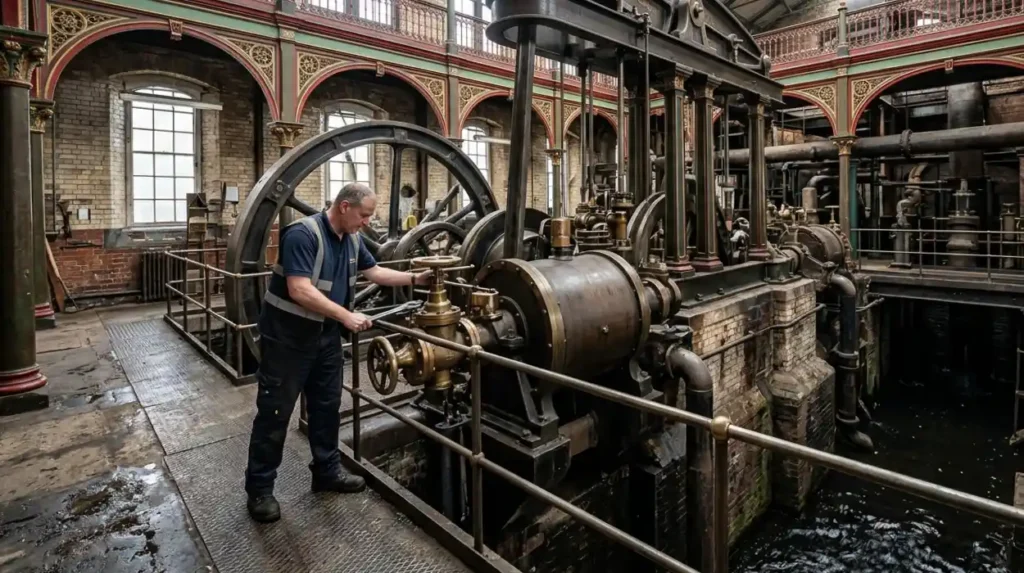
To achieve this, the station was equipped with four massive steam-driven beam engines named Victoria, Prince Consort, Albert Edward, and Alexandra. Each engine could pump approximately 6,000 tons of sewage per hour into an open, brick-lined storage reservoir covering 6.5 acres.
The waste was retained within this secure reservoir system and discharged exclusively during the ebb tide, ensuring that the current carried the untreated effluent away from London out into the North Sea. The station established the structural framework for large-scale public utility engineering, showing that urban public health required regional capital investments and continuous mechanical processing.
How Do Modern South London Boroughs Manage Contemporary Bulky Refuse Stream Dynamics?
Modern South London boroughs manage contemporary bulky refuse streams by combining digital appointment booking platforms, strict weight-and-material classification protocols, and regional waste processing partnerships with private contractors to maximize resource recovery.
In 2026, the management of bulky household waste across the southern authorities operates through highly integrated, data-driven logistical systems designed to minimize environmental impact and satisfy the stringent recycling mandates of national legislation. The table below outlines the current structural parameters, booking mechanisms, and operational partnerships utilized by four major South London waste collection authorities.
When a resident schedules a collection via their borough’s digital portal, the input data is processed by logistical routing algorithms to optimize collection vehicle paths, minimizing carbon emissions during transport. Collected items are not transported directly to landfills; instead, they are routed to regional Transfer Stations and Materials Recovery Facilities (MRFs).
At these specialized industrial facilities, bulky waste streams undergo strict mechanical and manual segregation. Combustible, non-recyclable materials are directed to energy-from-waste facilities, such as the South East London Combined Heat and Power (SELCHP) plant in Deptford, where incineration processes generate electricity and district heating for thousands of localized residential developments.
What Are the Long-Term Environmental and Civic Implications of Bulky Refuse Accumulation?
The long-term environmental and civic implications of bulky refuse accumulation include severe soil and groundwater contamination via toxic leachate, the proliferation of urban disease vectors, and the economic destabilization of communities affected by illegal fly-tipping.
Unregulated bulky waste accumulation poses severe threats to the ecological integrity of urban environments. When items such as consumer electronics, upholstered furniture containing flame retardants, and obsolete refrigeration units are abandoned in public spaces or improper landfills, they undergo chemical decomposition. This deterioration releases hazardous synthetic substances, including polybrominated diphenyl ethers (PBDEs), heavy metals like lead and mercury, and chlorofluorocarbons (CFCs), directly into the surrounding soil. During precipitation events, these chemical compounds dissolve into a highly toxic liquid known as leachate, which percolates through the soil strata to contaminate localized subterranean aquifers and surface river networks, devastating urban biodiversity.
Civically, the presence of accumulated bulky refuse triggers the “Broken Windows Theory”—a social science model stating that visible signs of urban neglect foster an environment prone to further vandalism, civic disinvestment, and criminal activity. Piles of abandoned mattresses and furniture create optimal nesting habitats for disease vectors, including the brown rat (Rattus norvegicus) and various insect populations, increasing public health risks.
Furthermore, the financial burden of clearing illegal deposits, commonly termed fly-tipping, diverts millions of pounds annually from essential local authority budgets. This economic drain forces municipal councils to reduce funding for vital community services, including public parks, libraries, and social care initiatives, thereby degrading the overall quality of urban life across affected South London neighborhoods.
What is bulky waste?
Bulky waste refers to household items that are too large to fit inside standard household bins, such as sofas, mattresses, wardrobes, refrigerators, washing machines, and other large furniture or appliances.