Key Points
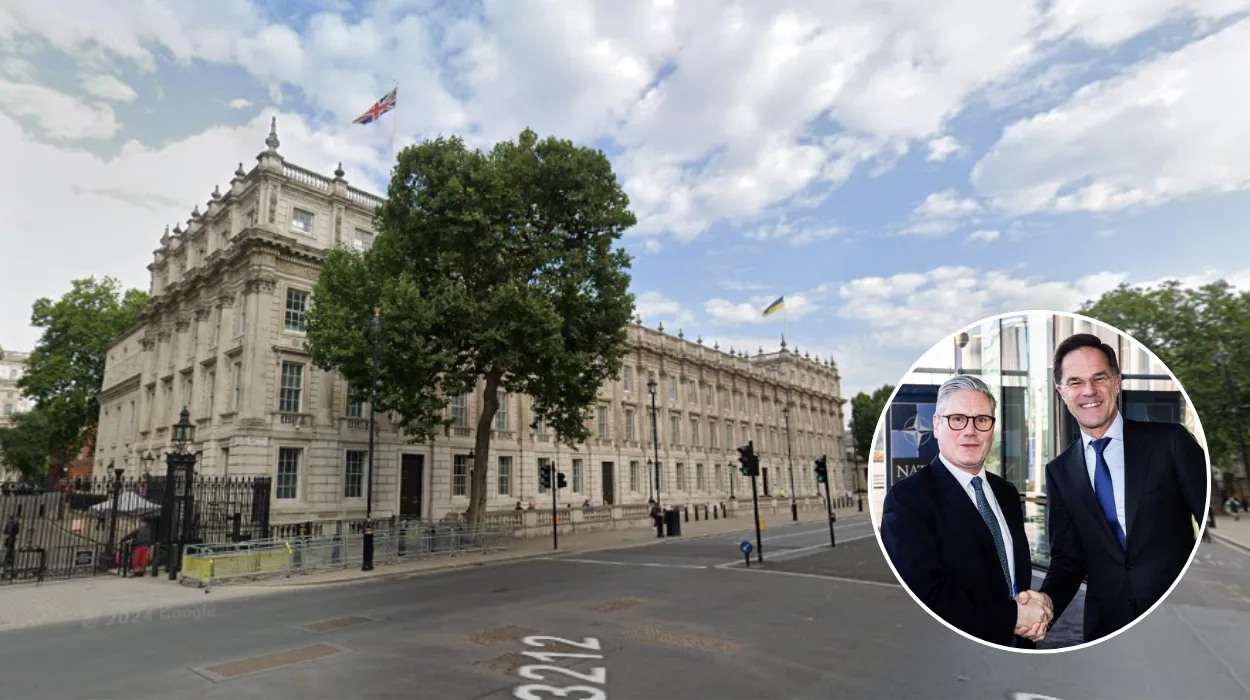
- High-Stakes Bilateral Meeting: NATO Secretary General Mark Rutte travelled to London for a critical face-to-face meeting with outgoing UK Prime Minister Sir Keir Starmer at 10 Downing Street to coordinate Western security ahead of the upcoming Alliance summit.
- UK Defence Investment Strategy: The meeting solidified the United Kingdom’s pledge to escalate its military expenditure, with discussions focusing on the publication of the UK’s comprehensive Defence Investment Plan and a firm roadmap to reaching 3% of Gross Domestic Product (GDP) on defence.
- Transition of British Power: The high-profile diplomatic visit occurred amidst a sweeping transition within the British government following Sir Keir Starmer’s recent resignation announcement, with Greater Manchester Mayor Andy Burnham widely positioned as the presumptive successor.
- Speculation on Future NATO Leadership: Media disclosures revealed that Sir Keir Starmer is actively eyeing the post of NATO Secretary General when the role becomes vacant in 2028, leveraging his foreign policy record and relationship with international leaders.
- Expanding Bilateral Consultations: Beyond the prime ministerial meeting, Secretary General Rutte held strategic discussions with Foreign Secretary Yvette Cooper and Defence Secretary Dan Jarvis to align British defense industrial production with broader Euro-Atlantic requirements.
- Focus on Ukraine Resistance: The leaders reviewed the frontline situation in Eastern Europe, acknowledging recent Ukrainian tactical momentum on the battlefield and emphasizing the urgent need to expand joint weapons manufacturing and air defence missile distribution.
London (The Londoner News) June 29, 2026 — NATO Secretary General Mark Rutte arrived at 10 Downing Street this afternoon for a crucial diplomatic summit with outgoing United Kingdom Prime Minister Sir Keir Starmer, aimed at reinforcing Euro-Atlantic defensive capabilities and solidifying long-term military commitments. The high-level talks occurred against a backdrop of deep domestic political transition in the UK, following Starmer’s recent announcement that he will step down from the premiership, triggering a leadership succession within the governing Labour Party. The discussions focused extensively on the upcoming NATO summit in Ankara, the escalation of British defence spending toward a target of 3% of GDP, and coordinated international support for Ukraine’s ongoing military operations against Russian forces.
- What Was Agreed During the Bilateral Defence Spending Review?
- How Will Keir Starmer’s Resignation Impact British Foreign Policy?
- Is Keir Starmer Positioned to Become the Next NATO Secretary General?
- What Geopolitical Strategy Was Formulated Regarding the Conflict in Ukraine?
- How Are Foreign and Defence Secretaries Aligning Industrial Capabilities?
What Was Agreed During the Bilateral Defence Spending Review?
The core of the formal discussions between the two leaders centered on the financial and industrial responsibilities of the United Kingdom within the trans-Atlantic alliance. As recorded by official administrative readouts published by the Prime Minister’s Office on GOV.UK, Sir Keir Starmer used the meeting to update the Secretary General on the advanced state of the UK’s forthcoming Defence Investment Plan. Starmer explicitly reaffirmed that the strategic document would be published in its entirety prior to the alliance assembling at the upcoming Ankara summit.
According to official records provided by the Downing Street press office, the Prime Minister reiterated his unwavering commitment to escalating the nation’s military budget, making it clear that national security remains the absolute priority of the British state, backed by the hard-edged fiscal decisions required to sustain a 3% GDP spending profile in the next parliamentary cycle.
The strategic shift toward a more aggressive spending target has been warmly received by the leadership in Brussels. In an official communication released by the alliance’s press corps, NATO Secretary General Mark Rutte welcomed the United Kingdom’s increased investment in defence, characterising it as a vital and timely contribution to the Alliance’s collective posture and an essential mechanism for meeting the highly volatile threat matrix currently facing member states.
Furthermore, during a prior programmatic address tracking the progress of these talks, Secretary General Rutte commented on the broader fiscal reality of European security, asserting that in an increasingly dangerous and unpredictable geopolitical environment, the historic benchmark of 2% will simply not be sufficient to guarantee the collective safety of the allied territories, skies, and seas.
How Will Keir Starmer’s Resignation Impact British Foreign Policy?
The diplomatic engagement has acquired an extra layer of political complexity due to the fluid domestic situation within Westminster. As reported by senior political correspondent Andrew Sparrow of The Guardian, Sir Keir Starmer has maintained a exceptionally dense international schedule during the final weeks of his premiership, seeking to firmly cement his foreign policy legacy before handing over the keys to Number 10. The Prime Minister recently returned from a high-stakes E5 leaders meeting in Berlin and the preceding G7 summit, utilizing these final platforms to project an image of British stability and continuous international engagement.
However, the impending transition of power has injected an undeniable element of uncertainty into the long-term direction of British international relations. As analyzed by Professor Pablo Calderon Martinez, an associate professor of politics and international relations at Northeastern University’s London campus, the departure of Starmer leaves a distinct void in tested diplomatic leadership. Professor Martinez noted that while Starmer had successfully navigated a delicate and highly complex web of global dynamics—including courting skeptical international figures and balancing relations with a volatile Washington administration—his projected successor may face a steeper learning curve on the world stage.
The consensus among political observers points heavily toward a changing of the guard within the Labour Party. As reported by Pippa Crerar, political editor of The Guardian, Greater Manchester Mayor Andy Burnham has emerged as the clear presumptive next Prime Minister, recently delivering a sweeping policy address outlining a radical devolution of authority away from Whitehall to regional communities.
While internal party dynamics settle, the current administration has sought to project a seamless continuity. Reporting from Westminster, Alastair Grant of the Associated Press confirmed that Starmer informed his Cabinet during their weekly meeting that he would personally oversee a meticulously planned, orderly transition to his successor, ensuring that crucial international files—specifically British commitments to NATO and ongoing bilateral intelligence sharing—remain entirely unaffected by the domestic political shuffle.
Is Keir Starmer Positioned to Become the Next NATO Secretary General?
Beyond the immediate policy objectives of the London summit, intense journalistic scrutiny has focused on the long-term career trajectory of the outgoing British Prime Minister. A explosive investigative report published by The Observer revealed that Sir Keir Starmer is quietly positioning himself to contest the leadership of the North Atlantic Treaty Organisation when the position next falls vacant. According to confidential government circle sources cited in the disclosure, Starmer is highly interested in the international post, recognizing that a return to conventional domestic backbench politics is highly unlikely following his tenure at the apex of British executive power.
To successfully mount a campaign for the top job in Brussels, the outgoing leader will require sophisticated, multi-year diplomatic scaffolding. As detailed in a subsequent analytical review by international correspondents at SUD.UA, Starmer’s allies have already initiated a discreet campaign to highlight his specific credentials to allied capitals. His proponents are heavily emphasizing his strong standing among European heads of state, which was visibly demonstrated during his active participation at the recent G7 summit, alongside his exceptionally close, trusted working relationship with Ukrainian President Volodymyr Zelenskyy.
However, the path to the Brussels headquarters is far from clear. The role will not officially become vacant until 2028, and any successful British bid would require the unyielding, continuous diplomatic and financial backing of the subsequent UK government led by Andy Burnham.
Furthermore, the position remains contingent upon the consensus of all thirty-two member states, some of whom may look to extend the tenure of the incumbent leader. Mark Rutte, the former Dutch Prime Minister who assumed the role of the 14th Secretary General in October 2024, retains the option to seek a mandate extension beyond 2028, provided he secures unanimous approval from the alliance’s permanent representatives.
Explore more Politics News:
Andy Burnham Replaces Keir Starmer as UK Prime Minister: London 2026
Sadiq Khan slammed over underutilised mayoral powers in London 2026
What Geopolitical Strategy Was Formulated Regarding the Conflict in Ukraine?
A substantial portion of the bilateral meeting was dedicated to reviewing the military landscape in Eastern Europe and adjusting the alliance’s supply lines to match the shifting realities of the battlefield. As reported by the press office of the President of Ukraine following recent trilateral briefings, the current phase of the conflict has seen an intensification of efforts toward joint weapons production and coordinated European industrial strategy. The discussions at Downing Street heavily prioritized the rapid implementation of procurement decisions previously adopted during the Ramstein-format meetings, with a particular focus on expanding contributions to the vital PURL air defence initiative.
The geopolitical messaging coming out of London remains uncompromisingly aligned against the Russian federation. In a official transcript published by the UK Government, delivered during his recent remarks to European leaders, Sir Keir Starmer observed that there are clear, quantifiable signs that as Russia loses ground and its internal economy struggles under the weight of international restrictions, the internal mood in Moscow is shifting against the war. Starmer stated:
“This is a really important moment to ramp up the pressure on their economy with more sanctions and providing Ukraine with more military support. We are committed to driving this forward and that this should be the first item on the agenda at the NATO summit.”
This hawkish consensus, however, continues to draw sharp criticism from alternative foreign policy analysts who argue that the alliance’s current trajectory closes the door on potential diplomatic resolutions. As reported by Novara Media, independent geopolitical analysts have expressed deep concern over the long-term implications of NATO’s uncompromising stance on eventual Ukrainian membership.
Writing on social media platforms, Professor Glenn Diesen, a prominent Russian foreign policy expert and professor at the University of South-Eastern Norway, argued that repeated public assurances regarding Ukraine’s inevitable integration into Western military structures, while framed as supportive of Kyiv, functionally ensure that a durable peace treaty remains mathematically impossible under current conditions, as it overlooks fundamental pan-European security anxieties held by Moscow.
How Are Foreign and Defence Secretaries Aligning Industrial Capabilities?
The diplomatic visit by Secretary General Rutte was deliberately structured to extend far beyond a symbolic photo opportunity with the outgoing Prime Minister. According to official media advisories distributed by the NATO Press and Media Section in Brussels, the Secretary General’s itinerary included separate, highly technical bilateral working sessions with UK Foreign Secretary Yvette Cooper and the newly appointed Defence Secretary, Dan Jarvis. These ministerial-level talks were specifically engineered to translate broad political commitments into operational realities across the European continent.
As detailed by European security correspondents for the Anadolu Agency, the discussions involving Defence Secretary Dan Jarvis focused intensely on the practical integration of allied defense industrial bases. The leaders reviewed the logistical output of the Ukraine Defense Contact Group (UDCG) and examined methods to streamline the delivery of advanced missile systems and heavy armor through the established “Coalition of the Willing” framework.
The ministers also evaluated the strategic impact of integrating newly allocated United States industrial contributions into the coalition’s overarching operational blueprint. Both Yvette Cooper and Dan Jarvis emphasized that regardless of the impending change in the prime ministerial office, the United Kingdom’s structural commitment to advancing long-term security guarantees, expanding maritime security in the North Sea, and enforcing rigorous compliance with international sanctions regimes remains completely unshakeable.