
Key Points
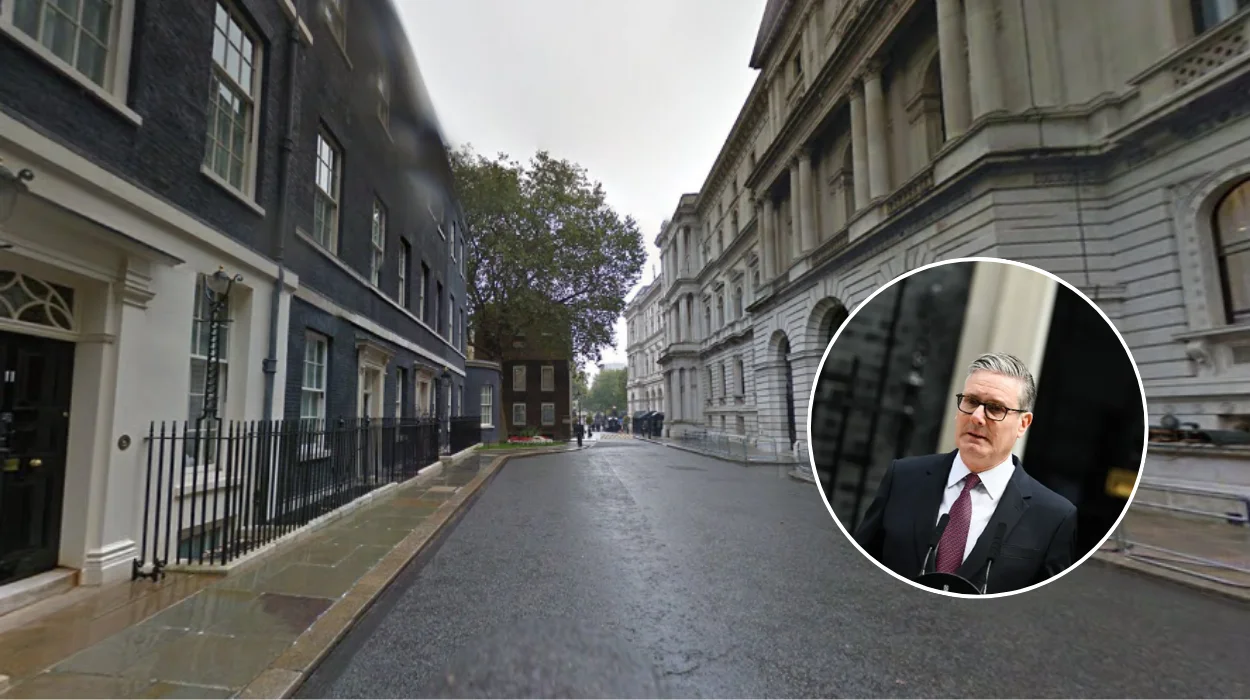
- British Prime Minister Sir Keir Starmer has officially announced his resignation outside 10 Downing Street following intense pressure from within his own parliamentary party.
- The decision comes on the heels of a monumental victory by his political rival, former Greater Manchester Mayor Andy Burnham, in the Makerfield by-election, which carved a direct path for Burnham to Westminster.
- Starmer has requested the National Executive Committee (NEC) of the Labour Party to establish an official timetable, with leadership nominations opening on July 9, 2026, and concluding before the summer recess.
- If a leadership contest occurs, the transition will be completed before Parliament returns in September; however, with former Health Secretary Wes Streeting withdrawing to back Burnham, a direct “coronation” could place Burnham in Downing Street as early as July 17 or 18, 2026.
- Starmer will remain in office as Prime Minister until the leadership selection process is fully completed, pledging his absolute support and an orderly handover to his eventual successor.
- The resignation marks the potential installation of the United Kingdom’s seventh prime minister in just over a decade, underscoring ongoing political volatility and changing public sentiment toward the ruling party.
London (The Londoner News) June 22, 2026 – British Prime Minister Sir Keir Starmer announced his resignation on Monday morning during an emotional televised address outside 10 Downing Street, effectively establishing a formal timetable for his departure from the apex of British politics. The dramatic development follows a weekend of intense internal party friction, cabinet reflection, and mounting backbench pressure triggered by the political resurgence of Andy Burnham, who secured a decisive victory in the Makerfield by-election just days prior. Starmer, who led the center-left Labour Party to a historic landslide victory in July 2024, revealed that he has formally contacted the National Executive Committee (NEC) to initiate a leadership transition process that will commence with official nominations opening on July 9, 2026.
- Why Did Prime Minister Keir Starmer Choose to Resign Now?
- What Is the Exact Timetable for the Labour Leadership Transition?
- How Has Andy Burnham Responded to the Resignation?
- Will There Be a Competitive Leadership Contest or a Coronation?
- What Factors Led to the Decline of Starmer’s Political Authority?
- How Does This Departure Affect the United Kingdom’s International Standing?
- What Legacy Does Keir Starmer Leave Behind?
Why Did Prime Minister Keir Starmer Choose to Resign Now?
The immediate catalyst for the Prime Minister’s decision was a profound shift in internal party support following recent electoral setbacks, culminating in the Makerfield by-election outcome. As reported by Olivia-Anne Cleary of TIME, Starmer’s announcement came after a weekend of heavy speculation concerning his political longevity, heavily influenced by the immediate structural threat of Burnham returning to Westminster as an elected Member of Parliament (MP).
In his address to the public, Starmer openly acknowledged that his decision was guided by consultations with his own frontbench and parliamentary colleagues. Starmer stated that “I have heard the answer of my parliamentary party to that question. And I accept that answer with good grace.” He further contextualised his departure within his long-standing political philosophy, maintaining that “Every decision I have taken has been about putting the country I love first.”
According to reporting by Pippa Crerar, the Political Editor of The Guardian, Starmer had faced escalating demands from Labour MPs—including private ultimatums from sitting cabinet ministers—to define a clear departure timeline. This panic within the rank-and-file was reportedly exacerbated by an ascending political threat from Nigel Farage’s Reform UK party, which has unnerved Labour backbenchers ahead of future general election planning. Despite asserting only days prior that he would “stand and fight” any leadership challenge, the math inside the Parliamentary Labour Party (PLP) ultimately made his position untenable.
What Is the Exact Timetable for the Labour Leadership Transition?
The mechanism to replace Starmer will move rapidly to prevent prolonged executive paralysis. As outlined in the documentation provided by Thomson Reuters, Starmer has requested the NEC to format a swift but orderly framework. The official nomination window for the Labour leadership is scheduled to open on July 9, 2026. The party aims to have the initial phases of the process completed before the upcoming parliamentary summer recess.
In the event that multiple candidates successfully secure the necessary endorsements to trigger a wider party contest, Starmer clarified that the process will ensure a new leader is formally installed before Parliament returns from recess in September. However, financial and political analysts point out that a protracted battle is increasingly unlikely. As reported in an extensive analysis by the Financial Times, if no alternative candidate emerges to challenge the frontrunner, the nomination closure on July 16, 2026, could mean a new prime minister is positioned in Downing Street by July 17 or July 18, 2026. Throughout this interim period, Starmer will continue to exercise full executive authority as Prime Minister to guarantee administrative continuity.
How Has Andy Burnham Responded to the Resignation?
Andy Burnham, the newly elected MP for Makerfield and the former Mayor of Greater Manchester, wasted no time in confirming his intention to seek the highest office in British governance. Having secured his return to the House of Commons, Burnham represents a focal point for Labour lawmakers seeking a strategic reset.
As reported by Olivia-Anne Cleary of TIME, Burnham welcomed the development as a vital moment for party rejuvenation. Burnham stated that Starmer’s resignation “marks the beginning of a transition and it is important that this process is conducted in an orderly and responsible way. I will put myself forward as part of this process.”
In a subsequent public communication monitored by reporters at the Financial Times, Burnham praised his predecessor’s extensive history of public service, while outlining the immediate policy priorities that a transformed Labour executive must confront. Burnham noted that “People want to see progress on economic growth, cost of living, public services, housing and opportunities for the next generation.”
Will There Be a Competitive Leadership Contest or a Coronation?
The likelihood of a divisive, multi-candidate leadership race dropped significantly within hours of Starmer’s Downing Street address due to a surprise alignment of key party factions. Former Health Secretary Wes Streeting, who had previously been identified by political commentators as a primary challenger to Burnham, unexpectedly withdrew from contention.
According to the Financial Times, Streeting had previously claimed to possess the necessary backing of the 81 Labour lawmakers required to formally launch a leadership challenge. However, Streeting altered his strategy, choosing instead to throw his substantial political weight behind Burnham’s candidacy to preserve party unity. Streeting stated that “We could spend the summer exaggerating small differences, or we can roll up our sleeves and help him to deliver the change our party and our country needs.”
Aides close to Streeting strongly dismissed assertions that this endorsement was the byproduct of a transactional political arrangement. An anonymous Streeting aide clarified to reporters that “There’s no deal. He has done this because it’s the best way forward for the country.” Concurrently, a spokesperson for Burnham confirmed the status of the discussions, stating explicitly, “No deal done or job offered.” This consolidation of support makes an uncontested “coronation” of Burnham highly probable.
What Factors Led to the Decline of Starmer’s Political Authority?
While the Makerfield by-election served as the immediate trigger, journalists across major British outlets note that Starmer’s political capital had been eroding systematically over the past two years due to policy shifts and external electoral pressures.
As detailed by reporters for the Financial Times, Starmer’s administration suffered from a sequence of highly publicised policy reversals. Most notable among these was the controversial decision to reduce winter fuel payments for pensioners, an action that severely damaged his standing with the British electorate and stripped away a portion of his legislative authority.
Furthermore, structural anxieties reached a boiling point last month when Labour suffered devastating local election losses across Scotland, Wales, and more than 130 English council seats. A Reuters tally indicated that more than 100 elected Labour lawmakers—representing roughly a quarter of the party’s total representation in the House of Commons—had publicly or privately demanded that Starmer step down or provide a firm exit strategy.
The turning point occurred over the weekend at the Prime Minister’s country residence. As reported by the Observer newspaper on Saturday, Starmer held exhaustive consultations with cabinet ministers, policy advisers, financial donors, and prominent trade union leaders at Chequers. Through these discussions, he concluded that his position was no longer tenable, spending his final hours before the announcement deliberating over the structural realities of his departure alongside his wife, Victoria Starmer.
Explore more Politics News:
Keir Starmer Defends Leadership at London Housing Project, London 2026
E3 Leaders and Zelenskiy Form Peace and Defence Front: London 2026
How Does This Departure Affect the United Kingdom’s International Standing?
Starmer’s sudden resignation introduces immediate complications into the United Kingdom’s diplomatic calendar, particularly regarding its evolving relationship with continental Europe. The Prime Minister had spent recent days attending the G7 Summit in the United States and engaging in high-level geopolitical discussions concerning the ongoing security crisis in West Asia, as reported by The Hindu Bureau.
However, his departure directly threatens a major domestic policy initiative: a highly anticipated reset summit with the European Union, which was scheduled for July 22, 2026. Starmer had envisioned this summit as a cornerstone of his institutional legacy, aimed at rebuilding vital economic and regulatory ties precisely ten years after the historic Brexit referendum. According to diplomatic sources cited by the Financial Times, European Union officials are currently locked in internal discussions regarding whether the summit should be postponed until Starmer’s successor is formally installed and prepared to negotiate on behalf of the British government.
What Legacy Does Keir Starmer Leave Behind?
In his final address from the Downing Street podium, Sir Keir Starmer delivered a passionate defense of his six-year tenure as Labour leader and his two years as Prime Minister, visibly affected as his voice broke at several junctures. He reminded the public of the state of the party when he assumed control following the disastrous 2019 general election defeat.
Starmer stated that “Six years ago, I inherited a Labour Party that was politically, financially, and morally bankrupt.” He argued forcefully that through rigorous internal reform, he transformed the organization into a credible force for governance, delivering a historic landslide victory in 2024. Starmer listed a series of core accomplishments achieved under his administration, including:
- Initiatives targeting long-term economic recovery and stabilization.
- Structural improvements to domestic workers’ rights.
- Measurable reductions in National Health Service (NHS) hospital waiting lists.
- New enforcement measures designed to curb illegal migration.
- Targeted legislative policies aimed at lowering child poverty indices.
As he concluded his statement, surrounded by applauding Downing Street staff and his wife, Victoria, Starmer noted a desire to shift his focus toward his private life, stating that he intended to return to being “the best dad to my beautiful children, who are my pride and joy.” He insisted that his successor would ultimately take the reins of “a Britain that is far stronger and fairer” than the one he originally inherited.
Comparative Overview of Corporate and Media Perspectives
| Media Outlet | Primary Focus of Coverage | Reported Internal Party Metric | Anticipated Successor |
| The Guardian | Focus on backbench anxiety regarding Reform UK and pressure from cabinet ministers. | Highlighted systemic fear of Farage’s party ahead of the next election. | Andy Burnham |
| TIME Magazine | Focus on the mechanics of the NEC timetable and Starmer’s consultations. | Emphasized Starmer’s acknowledgement of the parliamentary party’s verdict. | Andy Burnham |
| Financial Times | Focus on policy U-turns, local election losses, and EU Summit complications. | Noted over 100 MPs (25% of PLP) had actively withdrawn their support. | Andy Burnham (Via Coronation) |
| The Observer | Early disclosure of the Chequers crisis meetings with donors and unions. | First to report that Starmer deemed his position entirely untenable. | Andy Burnham |