
Key Points
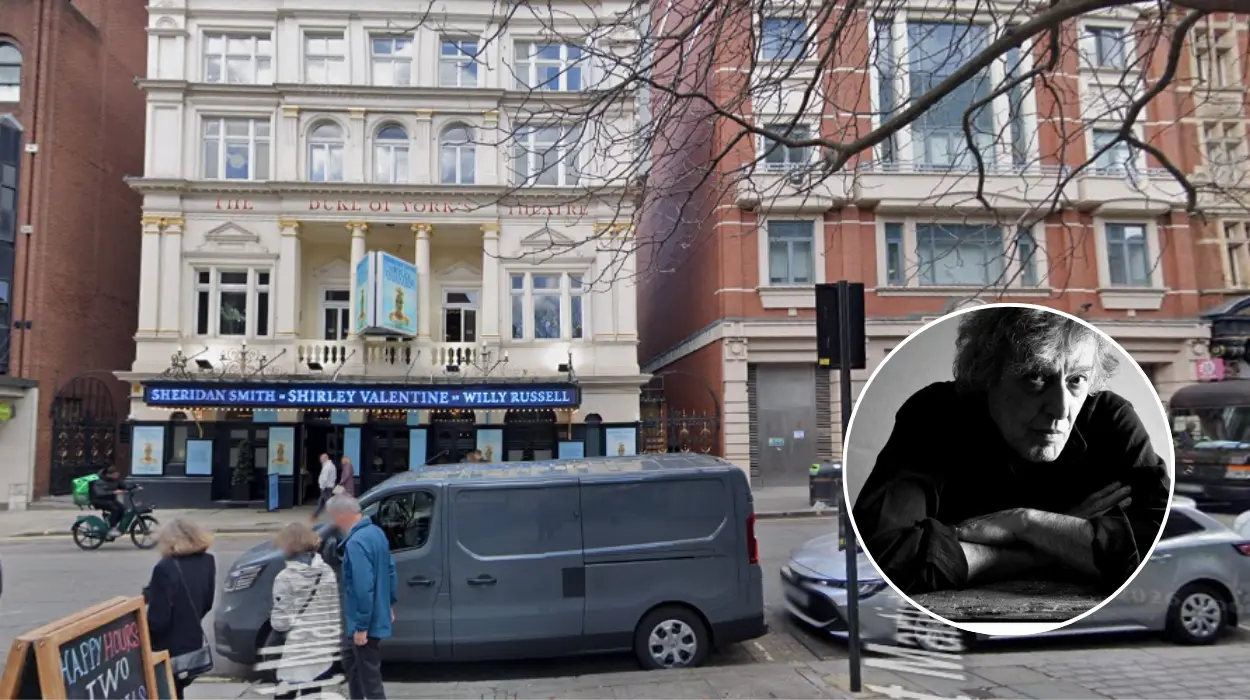
- Iconic West End Venue Rebranding: The historic Duke of York’s Theatre in London is set to be officially renamed the Tom Stoppard Theatre.
- Tribute to a Playwriting Legend: Venue owner ATG Entertainment announced the decision as a lasting tribute to the late Sir Tom Stoppard, celebrating his immense contribution to British theatre.
- Family Endorsement: The historic transition has been warmly welcomed by Stoppard’s children—Ollie, Barny, Will, and Ed Stoppard—who expressed that their late father would be deeply moved by the recognition.
- No Direct Link Explicitly Made to Royal Controversy: ATG Entertainment did not clarify whether the decision is tied to public controversies surrounding the current holder of the title, Andrew Mountbatten-Windsor.
- Rich Historical Context: Originally established as the Trafalgar Square Theatre, the venue took on the “Duke of York’s” name in 1895 in honour of the royal figure who eventually became King George V.
London (The Londoner News) July 1, 2026 – The Duke of York’s Theatre, an architectural and cultural cornerstone of London’s West End theatre district, will undergo a historic rebranding to be renamed after the legendary British playwright Sir Tom Stoppard, according to an official announcement by the venue’s parent company and owner, ATG Entertainment. The decision marks a momentous structural shift in the landscape of British theatre, transitioning a prominent stage away from its traditional royal name to immortalise one of the most celebrated literary minds of the modern era. The venue will henceforth be known as the Tom Stoppard Theatre, serving as a permanent monument to his artistic legacy within the heart of the UK’s dramatic arts capital.
- Key Points
- Why is the Duke of York’s Theatre being renamed?
- What did ATG Entertainment say about the decision?
- How did Sir Tom Stoppard’s family react to the tribute?
- Is the renaming connected to Prince Andrew, the current Duke of York?
- What is the historical background of the theatre’s name?
- What is the lasting legacy of Sir Tom Stoppard?
The extensive cultural rebranding effort has drawn substantial attention across the global arts community, coming in the wake of Sir Tom Stoppard’s passing in November 2025. By renaming the historic space, the venue’s ownership aims to formally dedicate the physical stage to the ongoing preservation of Stoppard’s intellectual and theatrical contributions. ATG Entertainment has framed the transition as an essential step in celebrating local artistic heritage, placing the playwright’s name alongside other historic West End venues that have broken away from historic naming conventions to elevate the masters of the craft.
While the decision has been widely lauded as an appropriate tribute to a theatrical master, it also lands amid a broader public discourse regarding the societal impact of royal titles attached to public commercial institutions. The theatre group has maintained a neutral, commercially focused stance on the matter, focusing public statements strictly on the cultural alignment between Stoppard’s body of work and the physical theatre space itself. The move ensures that future generations of theatregoers will engage with the venue under a banner solely dedicated to literary excellence.
Why is the Duke of York’s Theatre being renamed?
According to reporting by senior theatre correspondents across major British media titles, the primary motivation behind the renaming is to establish a permanent physical legacy for Sir Tom Stoppard within the West End landscape he helped shape for over half a century. In an official press statement released by the venue’s ownership, executives from ATG Entertainment explained that renaming the West End venue to the Tom Stoppard Theatre would stand as a “lasting tribute… to one of the most influential playwrights in British theatre”.
The corporate leadership team noted that the decision was arrived at after extensive internal deliberations regarding how best to honour Stoppard’s memory and ensure his enduring presence in the theatrical community. The transition from a royal designation to an arts-focused name reflects a growing desire within the West End administrative networks to explicitly link historic buildings to the creative individuals who filled them with content, life, and commercial success throughout the twentieth and twenty-first centuries.
What did ATG Entertainment say about the decision?
In an analytical feature covering the West End transition, the business director for ATG Entertainment in London, Andrew Rawlinson, provided deep contextual insight into the administrative rationale behind the rebranding. Andrew Rawlinson stated that naming the theatre after Sir Tom, who died in November 2025, “felt like the right and natural way to keep him among us”. The statement underscores the emotional and artistic weight the playwright carried within the executive and creative circles of the UK entertainment industry.
Expanding upon the broader cultural impact of the playwright’s storied career, Andrew Rawlinson added that “Sir Tom Stoppard gave the British theatre some of its most brilliant and best loved work, and he did it with a wit and a humanity that audiences carried home with them”. This assessment highlights the dual commercial and intellectual value that Stoppard brought to ATG Entertainment venues over the decades, making the physical renaming of the space a mutually beneficial alignment of corporate branding and artistic reverence.
How did Sir Tom Stoppard’s family react to the tribute?
The public announcement of the renaming has received the formal, heartfelt endorsement of the late playwright’s immediate family, ensuring that the transition proceeds with complete familial support. As compiled in initial breaking reports from national arts editors, the announcement was formally welcomed by Stoppard’s children—Ollie, Barny, Will, and Ed Stoppard.
In a joint public statement issued on behalf of the family estate, the Stoppard siblings expressed their collective gratitude and reflected on what the West End meant to their father during his long career. Ollie, Barny, Will, and Ed Stoppard stated: “The West End was close to his heart and we feel sure he would be thrilled and humbled in equal measure by this great honour.” The family’s reaction has solidified the public perception of the renaming as a genuine act of cultural preservation rather than an arbitrary corporate public relations exercise.
Is the renaming connected to Prince Andrew, the current Duke of York?
What is the official stance of the theatre owners?
One of the most intensely debated aspects of the renaming among cultural commentators is whether the removal of the “Duke of York” title is a strategic corporate decoupling from Prince Andrew, Andrew Mountbatten-Windsor. As noted across multiple investigative reports by mainstream journalistic outlets, the theatre owners did not say whether the renaming decision was connected with the former Duke of York, Andrew Mountbatten-Windsor, who lost the title following associations with the late sex offender Jeffrey Epstein.
The corporate communications team at ATG Entertainment has consistently deflected inquiries regarding the royal controversy, choosing instead to keep the public focus entirely trained on the celebratory nature of Sir Tom Stoppard’s life and achievements. This silence has left industry analysts and the public to draw their own conclusions regarding the timeline of the rebranding.
How has the media interpreted the timing?
Despite the lack of an explicit confirmation from venue leadership, independent cultural analysts writing for national media titles have pointed out the undeniable public relations benefits of the name change. The title of the Duke of York has been subject to heavy public scrutiny and reputational damage following the legal and social fallout surrounding Andrew Mountbatten-Windsor’s past personal associations. By pivoting the venue’s identity toward a universally respected literary giant like Sir Tom Stoppard, ATG Entertainment effectively insulates its asset from any lingering political or social controversies associated with the royal title, shifting the narrative from political damage control to a pure celebration of artistic achievement.
Explore more Local London News:
Boy Dies in Water Tragedy at Royal Victoria Dock East London 2026
Tooting Granada Wins Historic Blue Plaque: Tooting 2026
What is the historical background of the theatre’s name?
When was the theatre originally established?
To fully understand the weight of the renaming, theatre historians have pointed to the deep architectural and administrative history embedded within the St. Martin’s Lane venue. The building did not start its life under a royal banner. It was initially established as the Trafalgar Square Theatre when its doors first opened to the public, operating under that moniker during its earliest years in the late nineteenth century as a hub for popular entertainment and contemporary drama of the late Victorian era.
When did it become the Duke of York’s Theatre?
The venue underwent its first major naming transformation over a century ago. The theatre became the Duke of York’s in 1895, named after the duke who went on to become King George V. This historic change occurred during an era when securing royal patronage or naming rights was considered the pinnacle of commercial security and societal prestige for an entertainment venue in London.
The 1895 renaming embedded the venue within the royal geography of the West End for 131 years. Consequently, the transition to the Tom Stoppard Theatre represents a complete closing of a historical chapter, returning the space to a nomenclature rooted firmly in secular, creative human achievement rather than hereditary aristocratic titles.
What is the lasting legacy of Sir Tom Stoppard?
The decision to choose Sir Tom Stoppard as the new face of the theatre reflects his peerless standing in post-war British drama. Born Tomáš Straüssler in Czechoslovakia, Stoppard escaped the Nazi occupation as a child, eventually settling in the United Kingdom where he transformed the English-speaking stage. Over a career spanning more than six decades, his work became synonymous with intellectual depth, linguistic fireworks, and complex philosophical exploration.
“To classic theatre scholars, Stoppard was a rare bridge between high-concept academia and genuine box-office appeal, a writer who trusted audiences to think while they laughed.”
His breakthrough came in 1967 with Rosencrantz and Guildenstern Are Dead, a masterful existentialist comedy that viewed the events of Shakespeare’s Hamlet through the eyes of two minor characters. The play was a sensation and established Stoppard’s signature style: blending deep philosophical inquiries into determinism and human meaning with rapid-fire, vaudevillian wit.
Throughout his life, Stoppard produced an astonishingly diverse body of work that challenged both actors and directors. His landmark plays include:
- Travesties (1974): A dazzling intellectual farce exploring art, revolution, and memory, bringing together historical figures like James Joyce, Tristan Tzara, and Vladimir Lenin in Zurich.
- Arcadia (1993): Widely considered one of the greatest plays of the late twentieth century, it beautifully juxtaposes Romantic poetry and landscape design with modern chaos theory, thermodynamics, and the human search for truth across two alternating centuries.
- The Coast of Utopia (2002): A monumental nine-hour trilogy tracking the philosophical development of nineteenth-century Russian revolutionaries and intellectuals.
- Leopoldstadt (2020): An deeply personal, Olivier and Tony Award-winning epic that explored his own Jewish heritage and the devastating impact of the Holocaust on a single Viennese family.
Beyond the stage, Stoppard was a prolific screenwriter, co-writing the Academy Award-winning Shakespeare in Love (1998) and translating numerous works by foreign playwrights. His continuous presence in the West End made his name synonymous with the very survival and evolution of serious, literary non-musical drama in London. By placing his name above the marquee of the new Tom Stoppard Theatre, ATG Entertainment ensures that his monumental impact on the English language and dramatic form remains a permanent structural fixture of the West End landscape.