
Key Points
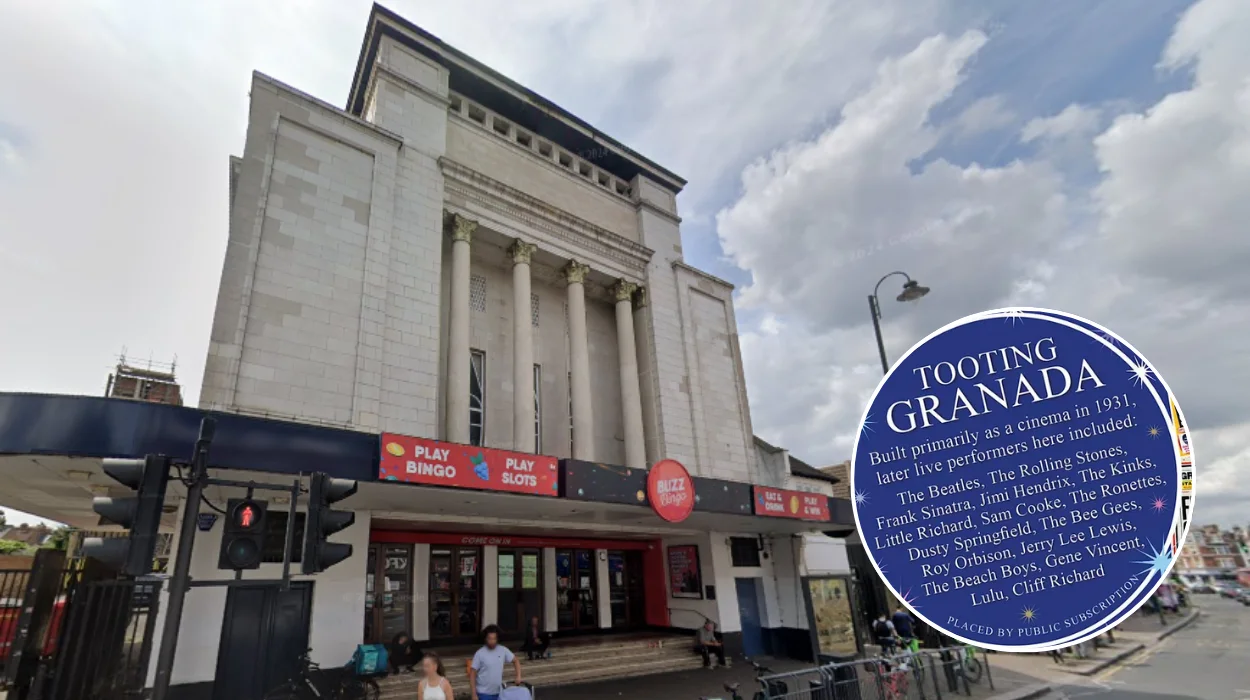
- Historic Unveiling: The Grade I-listed Buzz Bingo hall in Tooting officially unveiled a prestigious, publicly funded blue plaque to celebrate its rich legacy as the former Tooting Granada.
- Community Triumph: The milestone marks the culmination of a three-year grassroots campaign led by local historian Geoff Simmons and passionate Wandsworth residents.
- Rock ‘n’ Roll Heritage: Before transitioning into a bingo hall in 1976, the 3,000-seat 1931 venue hosted legendary acts including The Beatles, The Rolling Stones, Frank Sinatra, Jimi Hendrix, and the Bee Gees.
- Preservation Status: Deemed by Historic England as having “without doubt the most lavishly decorated interior of any cinema in Britain,” the building’s original stage, orchestra pit, and grand medieval panels remain flawlessly intact.
- National Bingo Week: The event took place during National Bingo Week, serving as a dual celebration of affordable community entertainment and monumental British music history.
Tooting (The Londoner News) June 30, 2026 – A historic Grade I-listed bingo hall in Tooting, South London, has officially been awarded a prestigious blue plaque following a dedicated three-year grassroots community campaign. The building, which currently operates as Buzz Bingo on Mitcham Road, was recognized for its extraordinary past life as the Tooting Granada—a legendary 3,000-seat cinema and premier music venue that hosted some of the greatest icons in rock ‘n’ roll history. The permanent commemorative marker, funded entirely by public subscriptions and local donations, was unveiled during a celebratory community event, cementing the venue’s status as a vital cornerstone of British cultural heritage.
- What Is the History of the Tooting Granada?
- Which Legendary Musicians Graced the Tooting Stage?
- How Did a Grassroots Campaign Secure the Blue Plaque?
- How Did Bingo Save This Historic Landmark from Demolition?
- How Was the Plaque Officially Unveiled to the Public?
- What Does This Milestone Mean for the Local Community?
What Is the History of the Tooting Granada?
As reported by contributor Roisin Teeling of Time Out, the grand building first opened its doors in 1931 as a massive 3,000-seat cinema. The architectural marvel was dreamed up by the visionary Russian theatre director Theodore Komisarjevsky, who pulled out all the stops to deliver an unforgettable aesthetic experience. Komisarjevsky meticulously fitted the vast interior with a spectacular baronial foyer, moody gothic flourishes, and an opulent “hall of mirrors” directly copied from the iconic Palace of Versailles.
According to historical records maintained by local heritage groups and cited by Stories of London, the grand interior work was executed by specialized ornamental plasterers Clark & Fenn. Joseph Bernard Clark and surveyor Harry Fenn prefabricated the masterful fibrous plaster mouldings at their factory in nearby Clapham before transporting them ready-made to the Mitcham Road site. In evaluating the cultural significance of this architectural gem, Historic England officially awarded the venue Grade I-listed status in the year 2000, explicitly stating that the building possessed “without doubt the most lavishly decorated interior of any cinema in Britain.”
Which Legendary Musicians Graced the Tooting Stage?
The legendary status of the Tooting Granada was firmly established long before the first shouts of “two fat ladies” echoed across the auditorium. Writing for Time Out, Roisin Teeling noted that the venue served as an essential stop for global musical icons during the golden era of rock, pop, and soul. In June 1963, The Beatles famously rocked up to the venue to play two historic shows on the opening night of their co-headlining UK tour alongside American legend Roy Orbison.
The momentum continued into the following year when The Rolling Stones rolled into the SW17 postal district in 1964 alongside the celebrated vocal group The Ronettes. Over the course of the decade, the Tooting stage welcomed an unparalleled roll-call of talent, including Frank Sinatra, The Kinks, The Beach Boys, and Dusty Springfield. In a particularly historic moment in April 1967, Jimi Hendrix famously tore up the auditorium for the grand finale of his first major UK package tour, before the Bee Gees ultimately brought down the curtain on the venue’s live music era in 1968.
Furthermore, documentation published by local community group Summerstown182 reveals that the venue’s golden age extended back even further. Under the keen management of whizzkid Granada manager John Roberts, a continuous conveyor belt of talent from the London Palladium brought legendary international stars to Tooting, including Danny Kaye, Carmen Miranda, Lena Horne, The Ink Spots, and The Andrews Sisters. During the height of the mid-1950s crooner craze, two consecutive Frankie Laine shows successfully sold a staggering 6,000 tickets within just 36 hours. The venue also witnessed intense fan frenzy; heartthrob Dickie Valentine was reportedly almost strangled by his own tie while attempting to escape over-enthusiastic fans, prompting management to permanently strengthen the front doors.
How Did a Grassroots Campaign Secure the Blue Plaque?
The installation of the blue plaque is a direct result of a passionate, three-year grassroots campaign championed by local Wandsworth historian Geoff Simmons. As detailed by reporters at the South West Londoner, Simmons worked tirelessly alongside local researchers to raise widespread awareness about the building’s hidden musical past. The community-led effort utilized free guided walks, interactive school presentations, and vibrant “show time” street performances directly on the bingo hall’s steps to engage thousands of residents across southwest London.
Speaking to the South West Londoner prior to the unveiling, local campaign leader Geoff Simmons stated:
“It will raise awareness of an aspect of the building that touches so many people but is not widely known about. It will also go a long way in brightening up the space which has made such a historic contribution to the area. I think it is very apt to do so in the year that Wandsworth is the London Borough of Culture.”
Reflecting on the successful culmination of the project in a statement published by London TV, Simmons further added:
“As we approach the fiftieth anniversary of bingo being played at this location – our plaque is a perfect celebration of the magic that made this area ‘The Vegas of South London’. It’s extraordinary that so many people really didn’t know about the stars who once performed here. This plaque will change all that and add to the affection in which the building is held.”
Simmons additionally extended specific credit to local research expert Lynda Cazeaux, who spearheaded the historical research and navigated the complex local planning portals required to clear the project with Wandsworth Council.
How Did Bingo Save This Historic Landmark from Demolition?
While high streets across London have undergone radical changes over the decades, the transition of the Tooting Granada into a dedicated bingo hall actively rescued the spectacular architecture from potential destruction. As reported by Time Out, transforming the building into a social club saved the venue from greedy developers and imminent demolition back in 1976.
Crucially, the building’s operational transition ensured that its irreplaceable historic features were masterfully preserved. Today, the legendary main stage, the original orchestra pit, and the grand medieval wall panels remain completely intact. Visitors and local residents are able to buy an affordable pint, socialise, and play for modern jackpots beneath the exact same Versailles-style mirrors where Paul McCartney and Jimi Hendrix once tuned their guitars.
Explore more South London News:
Frieze and Deutsche Bank Emerging Curators Fellowship: South London 2026
Southwark Council Court Case Over Emergency Housing List: South London 2026
How Was the Plaque Officially Unveiled to the Public?
The official unveiling took place on Saturday, June 27, perfectly timed to coincide with the celebrations of National Bingo Week. As reported by London TV, the historic event kicked off at 2:00 PM with an open-air “Show-Time Spectacular” on the front steps of the Mitcham Road venue. The celebratory presentation featured live musical commentary and covers of timeless tunes originally performed by the venue’s famous alumni, allowing music fans to completely take over the front steps.
To ensure minimal disruption to the building’s daily operations, organizers kept the right-hand entrance strictly clear for the regular bingo players entering the hall. The grand finale took place at 4:00 PM when the campaign group pulled back a ceremonial banner to officially reveal the publicly funded blue plaque. In accordance with strict heritage conservation guidelines set by Historic England, the plaque was installed using a specialized, completely non-invasive and sensitive mounting method that left the Grade I-listed facade entirely undamaged.
What Does This Milestone Mean for the Local Community?
The successful installation of the plaque underscores the powerful role that modern leisure operators can play in preserving nationwide heritage. By balancing commercial entertainment with strict architectural preservation, Buzz Bingo has maintained the building’s original civic purpose as an accessible, welcoming social hub.
In a corporate statement released via London TV, the General Manager of Buzz Bingo Tooting expressed immense pride regarding the building’s ongoing legacy:
“We are absolutely thrilled to host the unveiling of this plaque during National Bingo Week. This building has always been a people’s palace, and while the entertainment has changed over the decades, our role as a warm, welcoming community hub remains exactly the same. As proud custodians of this spectacular Grade I listed landmark, we are honoured to protect its unique architectural history while continuing to give our players a fantastic modern venue to catch up and play every single week.”
With the blue plaque now permanently affixed to 50 Mitcham Road, the venue stands as a living museum, ensuring that future generations of Londoners, music historians, and daily bingo players remain fully aware of the magic that once defined the “Vegas of South London.”