Key Points
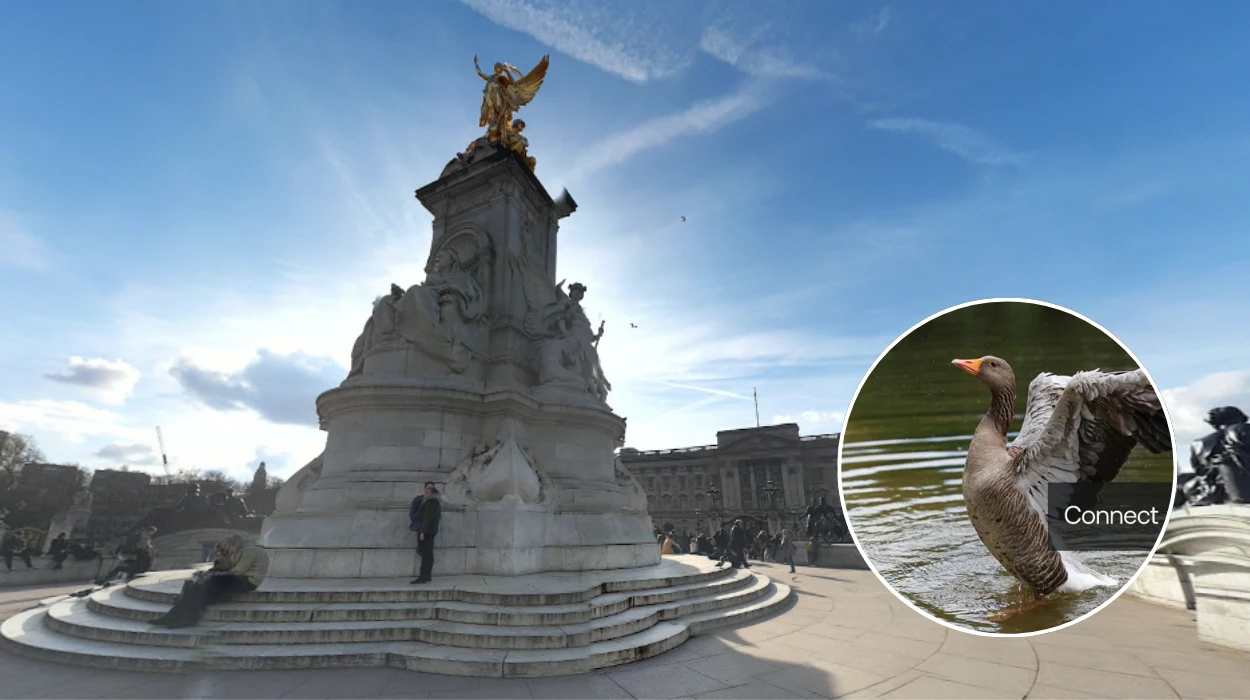
- Visual Documentation: Photojournalist Zeynep Demir Aslim captured a greylag goose flapping its wings on the central lake at St James’s Park on July 1, 2026, documenting the active natural ecosystem in the heart of London.
- Historic Wildlife Milestone: The imagery emerges amidst wider celebrations from The Royal Parks management following the historic hatching of four great white pelican chicks, the first recorded births of their kind in the park in roughly 360 years.
- Complex Environmental Management: The successful population stabilization and natural behaviours of the park’s 15 distinct waterfowl species follow strict biosecurity measures, including temporary isolation on Duck Island during recent avian flu outbreaks.
- Institutional Collaboration: International and domestic wildlife bodies, including Blackpool Zoo, the Zoological Society of London (ZSL), and the Wildfowl and Wetlands Trust (WWT), are actively co-managing the urban avian habitat.
- Ecosystem Diversity: The central lake remains a highly active urban biodiversity hub, sustaining a mixture of naturalised and captive populations including greylag geese, pelicans, mute swans, Egyptian geese, and rare red-crested pochards.
London (The Londoner News) July 1, 2026 – A greylag goose flapping its wings across the serene, sunlit waters of the central lake at St James’s Park has highlighted the vibrant vitality of London’s urban avian ecosystem, providing a striking visual testament to the success of ongoing conservation and habitat management initiatives in the heart of the capital. The moment, documented by photojournalist Zeynep Demir Aslim for ZUMA Press Wire, captures the active natural behaviours of the park’s permanent waterfowl population during a period of unprecedented biological significance for the Royal Parks.
- Key Points
- Why Is the Waterfowl Activity at St James’s Park Formally Trending Today?
- How Did Recent Avian Flu Outbreaks Impact the Park’s Avian Management?
- What Historic Milestone Was Achieved by the Pelican Population This Season?
- Which Scientific Organizations Are Ensuring the Survival of London’s Waterfowl?
- What Are the Current Developmental Timelines for the New Avian Generations?
- How Long Have Pelicans and Geese Been Part of London’s Royal History?
- What Distinct Species of Waterfowl Can Visitors Observe on the Lake?
- What Are the Strict Public Feeding and Interaction Guidelines for 2026?
This visual documentation comes at a momentous time for the central London landmark, as wildlife officers and international zoological partners celebrate a historic conservation milestone: the first successful hatching of great white pelican chicks in the park in more than three and a half centuries. The intersection of thriving native wild species, such as the greylag goose, and carefully managed exotic populations underscores a delicate ecological equilibrium maintained through strict veterinary protocols, inter-agency collaboration, and active public management within one of the world’s most heavily visited urban green spaces.
Why Is the Waterfowl Activity at St James’s Park Formally Trending Today?
The visual confirmation of thriving waterfowl on July 1, 2026, represents more than a picturesque summer scene; it marks a period of intensive environmental observation by park rangers, ornithologists, and conservationists. The image of the greylag goose (Anser anser) performing a territorial or post-preening wing flap reflects the high vitality of the wild avian communities that choose to habituate the central lake, completely free from physical containment.
According to formal field documentations compiled within the London Bird Club registries, St James’s Park regularly supports over 15 distinct species of waterfowl, which navigate a complex habitat shared with more than 5.5 million human visitors annually. The balance of this ecosystem has required rigorous scientific oversight, particularly following the highly publicised biosecurity measures implemented earlier this year to insulate the park’s rare and vulnerable avian residents from wider geographic pathogens.
How Did Recent Avian Flu Outbreaks Impact the Park’s Avian Management?
The current freedom and active displays exhibited by the park’s waterfowl follow months of restricted movement and careful isolation protocols. In reports published by The Guardian and later syndicated by the London Daily News, editorial staff detailed that a significant portion of the park’s living bird collection had to be temporarily enclosed on Duck Island—the restricted sanctuary zone situated within the lake—owing to severe regional avian influenza threats circulating across the United Kingdom.
As documented by the London Daily News editorial team on June 22, 2026, the birds were under strict preventative confinement before being formally cleared by state veterinary authorities and subsequently released back into the wider public domain of the park on April 9, 2026. This tactical intervention preserved the reproductive viability of the park’s primary avian assets, shielding them from environmental vectors and paving the way for the historic reproductive successes observed throughout May and June of 2026.
What Historic Milestone Was Achieved by the Pelican Population This Season?
The environmental health indicated by the active greylag goose population directly correlates with a broader, monumental victory for the park’s specialized conservation programmes. In an official statement recorded by BBC News wildlife correspondents, it was verified that four great white pelican (Pelecanus onocrotalus) chicks successfully hatched in the park late last month, shattering a 360-year reproductive hiatus at the royal site.
The historical significance of this event was contextualised by Mark Wasilewski, the dedicated Park Manager for St James’s Park. In an official media brief provided to The Guardian, Wasilewski stated that:
“The successful hatching is an absolute first for the park in modern records. The arrival of these chicks represents a profoundly significant occurrence for the entirety of the living collection at St James’s Park, transforming the location from a historical display site into an active, viable breeding sanctuary.”
The four chicks are the direct offspring of a carefully monitored resident colony consisting of six adult great white pelicans: two prominent males named Sun and Moon, alongside four females. According to field logs published by Royal Parks Wildlife Officers Sam Bonham and Nick Burnham, the very first chick emerged on May 17, 2026, with all four successfully navigating the critical first month of development under intensive, non-invasive surveillance.
Which Scientific Organizations Are Ensuring the Survival of London’s Waterfowl?
The management of both native wild birds and exotic species within St James’s Park relies on a sophisticated matrix of domestic and international conservation partnerships. To ensure the young pelicans and native goslings survive the complex pressures of an urban environment, the Royal Parks authority has formalised collaborative workflows with top-tier zoological institutions.
In a public informational disclosure released on the official Royal Parks digital portal, administrative officials confirmed that the park is working in direct symmetry with Blackpool Zoo, the Zoological Society of London (ZSL), based at Regent’s Park, and the Wildfowl and Wetlands Trust (WWT). These organizations provide round-the-clock veterinary advisory services, dietary formulation adjustments, and structural security assessments to mitigate the risks of urban predation and territorial disputes among the multi-species wild populations.
What Are the Current Developmental Timelines for the New Avian Generations?
According to a comprehensive biological timetable published in the natural history columns of The Guardian, the development of the park’s newest waterfowl additions is being monitored on a day-to-day basis by on-site specialists. The young birds are currently undergoing a rapid morphological transition that requires absolute isolation from the public.
The published developmental tracking indicates the following critical operational phases:
- Ages 1 to 7 Weeks: The chicks remain within a strictly secured, non-accessible zone of Duck Island, sustained by specialized feeding regimes administered by Wildlife Officers.
- Ages 8 to 9 Weeks: The young birds are projected to develop their initial true flight and contour feathers, replacing their defensive downy coats.
- Age 12 Weeks (Approximately Late August 2026): The juvenile birds are expected to formally take to the open waters of the main lake, integrating directly with the adult pelicans and the broader wild waterfowl populations.
Until these milestones are definitively reached, park authorities have issued strict directives to the public. As stated by a Royal Parks communications officer in their public safety mandate: “The young birds remain highly vulnerable at this stage of their life cycle. We strictly ask all visitors to respect the physical boundary markers, maintain appropriate distance, and completely avoid any actions that could cause disturbance to the nesting or feeding grounds.”
How Long Have Pelicans and Geese Been Part of London’s Royal History?
The presence of diverse waterfowl species within the central avian lake is not a modern design, but a deeply embedded royal tradition dating back to the restoration of the British monarchy. Historical archives preserved by the London Bird Club Wiki show that the park’s waterfowl heritage spans over three centuries of continuous political and environmental history.
| Historical Era | Key Avian Milestones & Developments |
| 1664 | King Charles II is presented with a pair of pelicans as a formal diplomatic gift from the Russian Ambassador, establishing the royal collection. |
| 17th–19th Century | The park evolved into a public promenade, with successive monarchs expanding the wild fowl collection to include diverse species of ducks and geese. |
| 20th Century | Introduction of naturalised populations, including the red-crested pochard and modern populations of the native greylag goose. |
| 2026 | The population achieves total ecological viability with the first confirmed pelican hatchings in 360 years alongside stable native goose breeding cycles. |
This deep historical lineage means the park is recognized as an officially protected conservation zone, where human historical heritage and wild animal behaviour are inextricably linked.
Explore more Central London News:
Keir Starmer Resigns: Andy Burnham Eyes Downing Street | London 2026
Prince William Joins Earthshot Prize Climate Assembly in London 2026
What Distinct Species of Waterfowl Can Visitors Observe on the Lake?
While the great white pelicans often dominate public attention due to their immense scale and historical narrative, the lake sustains a massive array of migratory and naturalised species. Field observations curated by independent naturalists on the Fandom London Bird Club platform show that the park serves as a critical stopover and nesting site for both indigenous and non-indigenous waterfowl.
Regularly documented residents include substantial flocks of Mute Swans (Cygnus olor), Canada Geese (Branta canadensis), and Egyptian Geese (Alopochen aegyptiaca). Furthermore, complex avian interactions have been observed by local birders; for instance, wild, fully winged Common Shelducks (Tadorna tadorna) routinely visit the park from rural estuaries to pair up with the park’s captive Ruddy Shelducks (Tadorna ferruginea). This continuous influx of wild genetic material ensures that the park functions as a genuine biological corridor rather than a static zoo display.
What Are the Strict Public Feeding and Interaction Guidelines for 2026?
To preserve the natural foraging habits of birds like the greylag goose and to prevent the degradation of the lake’s water quality, the Royal Parks management strictly regulates public interaction. The natural diet of the birds is supplemented by a precise institutional feeding programme, which occurs daily at 2:30 pm.
According to the park’s official FAQ guidelines, the primary birds are fed a precise, nutritionally balanced mixture consisting of roach, tench, carp, trout, and occasional supplements of herrings and sardines. Park officials warn that unauthorized public feeding—particularly with processed bread products—disrupts this nutritional balance and can lead to a dangerous environmental phenomenon known as “angel wing,” a condition that permanently deforms the wing joints of growing geese and ducks, rendering them entirely unable to fly. Visitors are encouraged to observe the natural hunting behaviours of the birds, which frequently forage for native fish populations and aquatic vegetation independently within the lake’s highly structured ecosystem.