
Key Points
- Prime Minister Resigns: Sir Keir Starmer has announced his resignation as Prime Minister and leader of the Labour Party outside 10 Downing Street, bringing an end to a turbulent two-year premiership.
- Cabinet and Party Mutiny: The departure follows weeks of intensifying internal rebellion, culminating in a delegation of over half a dozen cabinet ministers privately telling Starmer his time was up following catastrophic local election losses in May.
- Key Misjudgments and Scandals: Critics and commentators point to a series of policy U-turns (including welfare reform and the family farm tax), fiscal measures like the freeze on tax thresholds, and the highly controversial diplomatic appointment of Lord Peter Mandelson amidst lingering Jeffrey Epstein-related scrutiny.
- The Burnham Emergence: Former Manchester Mayor Andy Burnham, having swiftly returned to Westminster via last week’s Makerfield by-election, has confirmed his candidacy to succeed Starmer, immediately gaining the critical backing of Health Secretary Wes Streeting.
- Public and Institutional Backlash: Public reactions across central London range from utter frustration and exhaustion to cautious optimism, while trade unions and opposition parties declare the resignation an “honourable but necessary” acknowledgment of a lost mandate.
- Political Instability Extended: Starmer’s exit ushers in the selection process for the United Kingdom’s seventh prime minister within the last ten years, compounding a prolonged era of domestic political volatility.
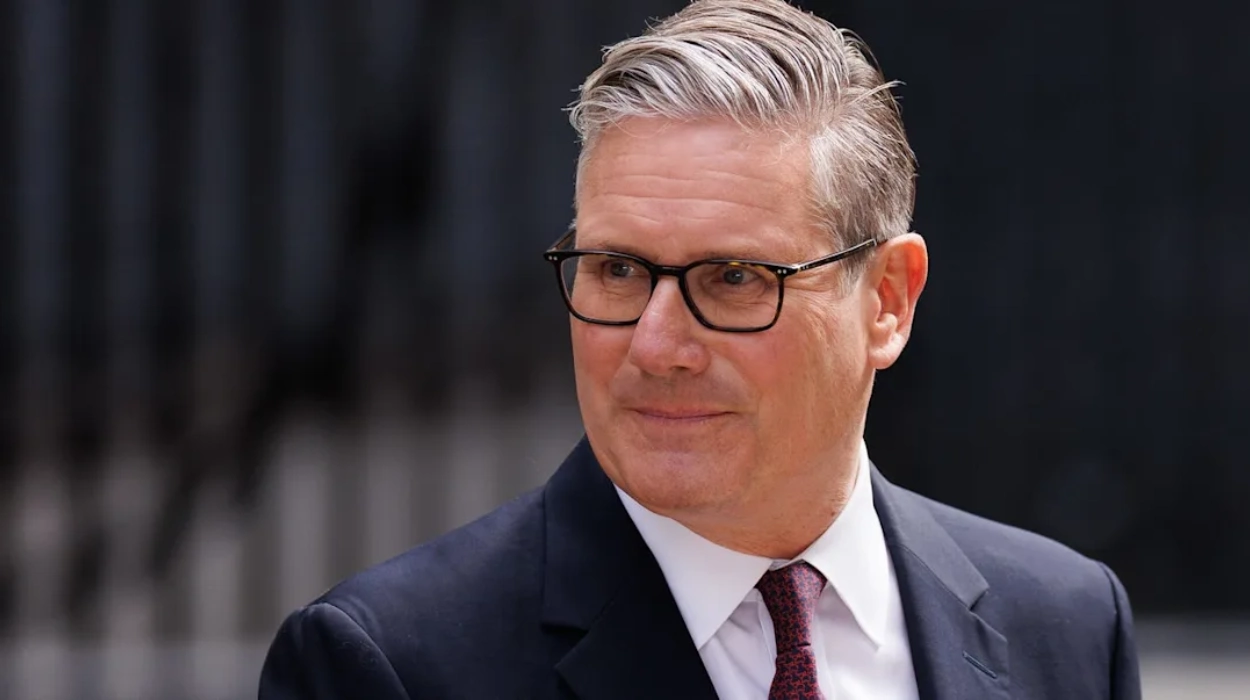
London (The Londoner News) June 27, 2026 – British Prime Minister Sir Keir Starmer has announced his resignation as leader of the Labour Party and head of the UK Government, succumbing to an overwhelming internal party mutiny and collapsing public approval ratings less than two years after securing a historic landslide election victory. Standing behind the 10 Downing Street podium on Monday morning, a visibly emotional Starmer conceded that his parliamentary party no longer believed he was the right figure to lead them into the next general election. His departure triggers a rapid leadership transition set to begin in July, plunging British politics into renewed uncertainty and paving the way for the UK to appoint its seventh prime minister in a single decade.
- Key Points
- Why Did Keir Starmer Resign as UK Prime Minister?
- What Did Sir Keir Starmer Say in His Resignation Speech?
- How Did Londoners and the British Public React to the News?
- How Have Political Rivals and Trade Unions Responded?
- Who Will Replace Keir Starmer as the Next Prime Minister?
- What Happens Next for British Politics?
The political execution was swift but followed months of grinding structural rot within the administration. The pressure on Downing Street reached a breaking point over the weekend following a devastating set of nationwide local election results in May and the dramatic return of former Manchester Mayor Andy Burnham to Parliament via the Makerfield by-election. By Saturday, an internal ring of more than half a dozen cabinet ministers had privately warned Starmer that his position had become entirely untenable. Confronted by data showing a personal approval rating plummeting to -46, Starmer and his closest aides spent the weekend drafting an exit strategy, abandoning previous vows to “fight on” and roll up his sleeves against internal detractors.
Why Did Keir Starmer Resign as UK Prime Minister?
The immediate catalyst for Starmer’s downfall was a profound loss of confidence among his own Members of Parliament, who grew terrified of an insurgent Reform UK and a populist Green Party eating away at Labour’s electoral flank. However, the foundational collapse was built upon a series of profound policy misjudgments and political controversies that alienated both the British public and the traditional Labour base.
As reported by John Harris of The Guardian, Starmer’s premiership was ultimately undone by a “painful lack of clarity” and a perceived “blankness” onto which an increasingly exhausted electorate projected their multi-year frustrations. Harris noted that just a month after taking office in 2024, Starmer delivered a somber speech warning the public that “things will get worse before we get better.” This early attempt at fiscal realism quickly morphed into a permanent governing posture defined by policy reversals and legislative gridlock.
The administration was heavily battered by major policy decisions that triggered severe backlashes from various sectors of British society. As detailed in official statements released by the Conservative Party, Starmer drew intense fire for:
- The Family Farms Tax: Introducing inheritance tax changes that heavily burdened British agricultural communities.
- National Insurance Hikes: Increasing financial strains on independent and large-scale businesses alike.
- Welfare Reform Reversals: Retreating partially on planned adjustments to disability benefits in the face of mass progressive opposition.
- The Winter Fuel Payment Restrictions: Restricting vital winter fuel allowances for pensioners, a move that severely wounded Labour’s standing in working-class communities.
Beyond economic policy, geopolitical stances and ethical controversies eroded Starmer’s moral authority. Commentators across the political spectrum highlighted the deep institutional wounds caused by the appointment of veteran Labour power broker Lord Peter Mandelson as the UK Ambassador to the United States. The decision re-ignited public outrage due to Mandelson’s historical ties to the late, disgraced financier Jeffrey Epstein. Furthermore, Starmer faced intense internal dissent from predominantly Muslim Labour councillors and progressive MPs over his initial foreign policy stances regarding the Middle East crisis, taking nearly six months to officially back an outright ceasefire.
Explore More London Politics News
Andy Burnham Replaces Keir Starmer as UK Prime Minister: London 2026
Sadiq Khan slammed over underutilised mayoral powers in London 2026
What Did Sir Keir Starmer Say in His Resignation Speech?
Stepping out to the Downing Street plinth accompanied by his wife, Victoria, Starmer attempted to frame his departure not as a humiliating defeat, but as an act of dignified public service. His voice noticeably cracked with emotion as he addressed the assembled journalists, civil servants, and remaining loyalists.
According to the official transcript published by The Washington Post, Starmer strongly defended his legacy, asserting that he had rescued the Labour Party from existential ruin. Starmer stated:
“Six years ago, I inherited a Labour Party that was politically, financially and morally bankrupt. I was told time and time again that my party was finished… But we proved those people wrong because we changed our party, ripping out the poison of antisemitism, restoring trust on the economy, defence and national security.”
Defending his brief twenty-four months in office, Starmer claimed credit for stabilizing the British economy, noting that wages had risen faster than inflation during every month of his tenure. He also pointed to key legislative achievements, including gradual rail nationalisation, the Renters’ Rights Act, and increased funding allocations for the National Health Service (NHS).
However, the core of his address was an admission of political reality. As recorded by CBS News reporting from London, Starmer directly addressed the internal party revolt that sealed his fate:
“The question my party is asking now is whether I am best placed to lead us into the next general election. I have heard the answer of my parliamentary party to that question, and I accept that answer with good grace. Every decision I’ve taken has been about putting the country I love first. That is why I will resign as leader of the Labour Party.”
Starmer confirmed he had spoken directly with His Majesty King Charles III on Monday morning to inform him of the decision. He announced that nominations for the leadership contest would officially open on 9 July under the direction of the National Executive Committee, with the entire process expected to conclude before Parliament returns from summer recess in September.
How Did Londoners and the British Public React to the News?
In the streets of central London, the public response to the dramatic collapse of the government was a complex mixture of cynicism, fatigue, and relief. For many ordinary citizens, the departure of yet another prime minister felt less like a historic turning point and more like a symptom of a fundamentally broken political system.
Public sentiment on the ground mirrored the data. Newspaper columnists capturing reactions in Westminster and local covered markets reported a widespread feeling that Starmer had failed to offer a distinct vision for the country. As one voter noted, the prevailing feeling was simply that “he hasn’t done what he said he’d do.”
The public relations disaster of Starmer’s final weeks was also analyzed heavily by corporate and political communication experts. A senior crisis communications advisor, writing anonymously about the strategic failures of the exit, observed that the ultimate job in PR is telling a leader when the game is up. The analyst stated:
“The ‘public’ in public relations means being keenly aware of the mood of the public at large at all times – and for some time, this particular Prime Minister had forfeited their trust, confidence and support. The best PR advice Starmer could have taken… would have been to get ahead of events, accept there was no use fighting when the fight could not be won, and call a press conference at least by Friday last week to announce he was going. Instead, standing behind the podium in front of 10 Downing Street, Starmer looked like a man who was once again the victim of events and not the master of them.”
How Have Political Rivals and Trade Unions Responded?
The reaction from across the political spectrum was swift, split evenly between bitter condemnation from opposition parties and structured calls for immediate policy shifts from Labour’s traditional institutional allies.
In a highly critical official statement, the Conservative Party leadership slammed Starmer’s tenure as an unmitigated failure of governance. The party executive stated:
“The pressure has been building for weeks, and now finally Keir Starmer has done the right thing and has resigned as Prime Minister… It’s clear that he wasn’t up to the task. But the problems go much deeper. Starmer might be off. But Labour isn’t going anywhere. We need to be ready for what comes next.”
Concurrently, figures on the left of British politics offered little sympathy. Columnists representing progressive factions argued that Starmer was an unprincipled politician who routinely abandoned his foundational leadership promises with enthusiasm while facing regular accusations of accepting lavish gifts from wealthy donors.
Conversely, the powerful trade union apparatus—the historic financial and organizational backbone of the Labour movement—viewed the resignation as a critical opportunity to force the government back toward pro-worker policies. As reported by the industrial communications team at Unite the Union, General Secretary Sharon Graham described Starmer’s decision to step down as the “honourable and right” course of action. Graham issued a stark warning regarding the future of the party:
“It is critical now that Labour focuses on delivering for workers and communities. There is no time to waste, everyday people are literally on their knees. Labour has one last shot to learn from the errors of the last two years. A failure to act will result in a doomsday scenario for Labour.”
Graham demanded immediate, sweeping policy interventions from the incoming leadership, including:
- Reversing Fiscal Drag: An immediate end to the freezing of tax thresholds that has systematically pulled ordinary working-class citizens into significantly higher tax bands.
- Energy Price Cap Action: Decisive legislative intervention to lower the domestic energy price cap, accusing private utility firms of unchecked “profiteering” at the expense of struggling households.
- Industrial Strategy Investment: Direct, immediate state capital injections into domestic manufacturing, green energy infrastructure, and industrial job creation.
Who Will Replace Keir Starmer as the Next Prime Minister?
With Starmer acting purely as a caretaker prime minister until September, the race to inherit the keys to 10 Downing Street has effectively narrowed to a rapid coronation. The undisputed frontrunner is Andy Burnham, the newly elected MP for Makerfield and the former high-profile Mayor of Greater Manchester.
Burnham’s strategic path to the premiership was accelerated by design. As reported by the political editing team of BBC Newscast, Burnham intentionally resigned his mayoral office to contest the Makerfield by-election, successfully neutralizing the electoral threat of Nigel Farage’s Reform UK in the region. His victory provided him with the necessary constitutional standing as a sitting Member of Parliament to launch a leadership bid.
In a public statement released shortly after Starmer’s Downing Street address, Burnham struck a tone of institutional stability and gravity. Burnham stated:
“Keir has given huge service to our country and I want to thank him for his leadership and dedication during such a challenging period. His decision marks the beginning of a transition… The country expects stability, seriousness and a continued focus on the issues that matter most and that is what it will get.”
The likelihood of a divisive, summer-long civil war within the Labour Party evaporated almost immediately due to tactical withdrawals by potential rivals. Health Secretary Wes Streeting, long considered a primary contender from the right wing of the party, announced he would not stand for the position, explicitly throwing his weight behind Burnham to ensure a unified front. Streeting stated:
“We could spend the summer exaggerating small differences, or we can roll up our sleeves and help him to deliver the change our party and our country needs. That is the choice that I am making and I hope that everyone else will back Andy, too.”
With prominent cabinet members like Home Secretary Shabana Mahmood offering formal tributes to Starmer while quietly shifting allegiance, political analysts suggest that if the parliamentary party completely unites behind Burnham without forcing an internal membership vote, he could be sworn in by King Charles III as Prime Minister as early as mid-July.
What Happens Next for British Politics?
The immediate horizon for the United Kingdom is marked by severe structural challenges that will heavily test Starmer’s successor. While Starmer promised to provide his ultimate successor with his “full and unequivocal support,” claiming he leaves behind a nation “far stronger and fairer” than the one he inherited, independent economic indicators suggest otherwise.
The incoming prime minister will instantly inherit an economically stagnant landscape, deeply strained relations with a turbulent US administration under President Donald Trump, and escalating defense anxieties regarding ongoing conflicts in Europe and the Middle East. Furthermore, the rapid rise of populist insurgencies on both the left and right means the next leader will have zero honeymoon period with an incredibly volatile electorate.
For Starmer, his departure marks a swift, bruising exit from frontline global governance. Concluding his address outside Number 10, he noted that leaving the “biggest job in the country” would finally allow him to focus on his family, promising to be the best possible husband to his wife Victoria and a devoted father to his children. For the rest of the United Kingdom, however, the exhausting cycle of political musical chairs continues unabated.
For a deeper dive into the immediate political fallout inside Westminster and an analysis of the tactical maneuvers behind Andy Burnham’s rapid rise to power, you can watch this comprehensive BBC Newscast analysis on Starmer’s resignation. This broadcast features detailed insights from political correspondents directly tracking the unfolding leadership transition.