Key Points
- Bicentenary Celebration: Their Majesties King Charles III and Queen Camilla visited the Zoological Society of London (ZSL) London Zoo to commemorate the historic 200th anniversary of the conservation charity’s founding.
- Hands-on Veterinary Check: The royal couple participated in a health check of the zoo’s penguins, using stethoscopes to listen to a penguin’s heartbeat under the expert guidance of ZSL veterinarian Stefan Saverimuttu.
- Enduring Royal Patronage: The visit underscores an unbroken tradition of British monarchical support dating back to 1830, with King Charles recently confirmed as ZSL’s Royal Patron in May 2024.
- Global Conservation Focus: The engagement highlighted ZSL’s transition over two centuries from an empire-era scientific society to a modern international powerhouse operating wildlife preservation programmes in over 70 nations.
- Public and Commemorative Exhibits: The milestone event coincided with the ongoing ‘ZSL at 200’ exhibition and the Zoo Plaque Trail, celebrating iconic historical figures such as Charles Darwin and Sir David Attenborough.
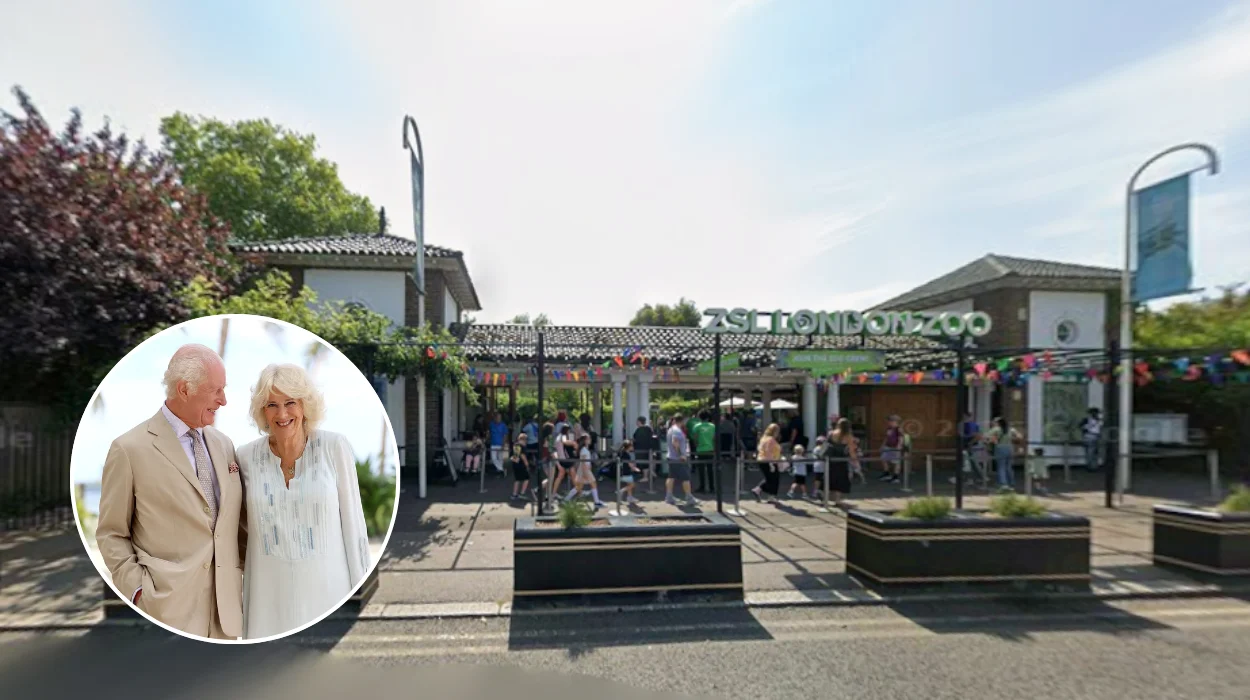
London (The Londoner News) July 9, 2026 – Their Majesties King Charles III and Queen Camilla today conducted a high-profile royal engagement at ZSL London Zoo, marks a historic bicentenary celebration of the world’s oldest scientific zoological institution. The royal couple arrived at the Regent’s Park grounds to commemorate exactly 200 years of the Zoological Society of London (ZSL), an organisation founded in 1826 that has fundamentally shaped the global lexicon of wildlife conservation, veterinary medicine, and public engagement with nature. The focal point of the morning’s activities involved an intimate, hands-on demonstration at the zoo’s Penguin Beach facility, where the King and Queen actively assisted veterinary staff in conducting routine clinical examinations on the resident avian population, highlighting the sophisticated veterinary science that underpins modern zoological management.
- Key Points
- How Did the Royal Couple Assist with the Zoo’s Penguin Health Checks?
- What Is the Historical Significance of ZSL’s 200-Year Milestone?
- How Has the British Monarchy Maintained Its Patronage of ZSL?
- What Global Conservation Operations Does ZSL Direct Today?
- How Has ZSL Influenced Global Culture and Science Over Two Centuries?
- What Commemorative Events Are Marking the Bicentenary in 2026?
- How Does ZSL Plan to Address the Future of Wildlife Conservation?
How Did the Royal Couple Assist with the Zoo’s Penguin Health Checks?
As detailed by veteran pool reporter Richard Pohle of Reuters, the highlight of the royal tour occurred at the expansive Penguin Beach enclosure—noted as England’s largest penguin pool facility. Under the precise, clinical instruction of ZSL veterinary surgeon Stefan Saverimuttu, King Charles and Queen Camilla were equipped with diagnostic stethoscopes to monitor the physiological vital signs of the penguins.
According to the official pool dispatch transmitted by Richard Pohle of Reuters, Stefan Saverimuttu guided the King’s hands to correctly place the stethoscope chest piece against the thick plumage of a cooperative penguin to capture its rapid heart rate. Observers noted that King Charles listened intently to the fast-paced cardiovascular rhythm, nodding in appreciation of the complex biological mechanisms being preserved by the zoo’s clinical teams.
Speaking to the press pool immediately following the procedure, ZSL veterinarian Stefan Saverimuttu stated that “the opportunity to demonstrate our daily welfare assessments to His Majesty, whose dedication to ecological health is well documented, emphasizes the crucial intersection between veterinary medicine and global species survival strategies.” Queen Camilla similarly engaged with the care teams, querying the staff about the dietary regimens, molting cycles, and social hierarchies of the colony.
What Is the Historical Significance of ZSL’s 200-Year Milestone?
Who Founded the Zoological Society of London?
The Zoological Society of London was established on 29 April 1826 by Sir Thomas Stamford Raffles, a visionary naturalist and statesman who envisioned an institution dedicated entirely to the “advancement of zoological science and the introduction of subjects of the animal kingdom.” Although Sir Stamford Raffles passed away only a few weeks after the society’s inaugural meetings, his foundational blueprint succeeded in launching the world’s very first purely scientific zoo. As recorded in historical archives maintained by the Society for the History of Natural History (SHNH), the institution quickly transformed from a private enclave for aristocratic fellows into a landmark of public education and global scientific network infrastructure.
When Did the Zoo Receive Its Royal Charter?
Following its initial opening to society fellows in 1828, the institution’s societal status was permanently elevated in 1829 when King George IV granted ZSL its formal Royal Charter. This pivotal legal decree cemented the society’s role within the British scientific establishment. Shortly thereafter, in 1831, the historic Royal Animal Collection housed at the Tower of London was officially transferred to the care of ZSL, effectively creating the public zoological collection that remains a cornerstone of London’s cultural and scientific landscape to this day.
How Has the British Monarchy Maintained Its Patronage of ZSL?
The presence of King Charles III and Queen Camilla at the Regent’s Park site marks the continuation of a nearly two-century-old institutional alliance. Writing for the official ZSL Bicentenary communications bureau, President Sir Jim Smith confirmed that the reigning British monarch has served continuously as the organization’s Royal Patron since King William IV assumed the role in 1830.
In an official institutional announcement issued via ZSL media channels, Sir Jim Smith stated that “ZSL is deeply honoured that King Charles has chosen to maintain his lifelong connection to our society by stepping into the role of Royal Patron following his coronation. This continues an unbroken tradition of almost 200 years, reflecting a profound, shared commitment between the Royal Family and our ongoing scientific endeavours.”
Prior to ascending the throne, King Charles served as the vice-patron of the society alongside his late mother, Queen Elizabeth II, who acted as the primary Patron throughout her historic reign. The King’s personal relationship with London Zoo is extensive; archival logs note that his first recorded visit occurred when he was just one year old to see ‘Brumas’, a famous newborn polar bear cub. At the age of 13, the young Prince Charles officially joined ZSL’s ‘Exceptional Young Zoologist’ (XYZ) Club, a pioneering youth educational programme designed to foster early interest in evolutionary biology and comparative anatomy.
What Global Conservation Operations Does ZSL Direct Today?
How Far Reaching Is ZSL’s Scientific Footprint?
While known to the general public primarily through its twin visitor attractions—London Zoo in Regent’s Park and Whipsnade Zoo in Bedfordshire—ZSL operates as an international conservation charity with an extensive corporate and scientific reach. According to documentation verified by the Royal Mint in their 2026 commemorative briefing, ZSL currently manages direct wildlife preservation, habitat restoration, and eco-governance programmes across more than 70 countries globally. The society leverages a science-first approach driven by its Institute of Zoology, a highly rated academic research facility that works at the absolute cutting edge of population biology and epidemiology.
What Is the Legacy of the IUCN Red List Criteria?
Among the most critical contributions of ZSL to modern global environmental policy is its role in developing the standardized metrics used to measure global biodiversity loss. As documented by the ZSL Heritage Trail, Dame Georgina Mace, the first female Director of Science at ZSL’s Institute of Zoology, co-created the official criteria for the International Union for Conservation of Nature (IUCN) Red List alongside scientist Russell Lande. This universally recognized matrix remains the primary system utilized by governments, NGOs, and international legal bodies to assess species’ extinction risks and allocate critical funding for ecological preservation.
How Has ZSL Influenced Global Culture and Science Over Two Centuries?
Did Charles Darwin Conduct Research at London Zoo?
The historical records of ZSL intersect continuously with the history of evolutionary science. In 1838, the legendary naturalist Charles Darwin visited London Zoo to observe ‘Jenny’, the first orangutan ever exhibited in the United Kingdom. According to curatorial notes from the ZSL Library, Darwin was profoundly impacted by the ape’s distinctly human-like emotional expressions and problem-solving capacities. These direct observations, conducted within the zoo’s facilities, provided crucial empirical qualitative data that informed his subsequent development of the theory of natural selection published in On the Origin of Species.
Which Iconic Animals Capitalised on British Pop Culture?
Over its 200-year history, London Zoo has hosted several animals that evolved into international cultural icons. The bicentenary exhibition features several notable historical figures:
- Jumbo the Elephant: An African elephant whose massive size inspired the very word “jumbo” in the English language to denote something of extraordinary proportions.
- Winnie the Black Bear: A gentle Canadian black bear deposited at the zoo during the First World War, which directly inspired author A.A. Milne to write the classic Winnie-the-Pooh children’s book series.
- Guy the Gorilla: A beloved resident from 1946 to 1978 who became a symbol of national affection, renowned for his gentle nature and tendency to cradle birds inside his enclosure.
- Chi Chi the Giant Panda: A major public drawcard throughout the 1950s and 60s, whose distinctive features were famously sketched by Sir Peter Scott to create the official, permanent logo for the World Wildlife Fund (WWF).
Explore more Local London News:
Kensington Teacher Banned For Drinking Wine At Work: London 2026
Brent Council Declares Gambling Emergency Over Betting Shops: North London 2026
What Commemorative Events Are Marking the Bicentenary in 2026?
What Is the ZSL Zoo Plaque Trail?
To allow visitors to engage directly with its history, London Zoo has implemented an interactive ‘Zoo Plaque Trail’ running throughout the entirety of 2026. The trail highlights the hidden and overt figures who built the institution’s reputation. Notably, the trail includes an unnamed plaque designed to honor the historical contributions of local guides, indigenous knowledge sharers, and unrecorded animal keepers who assisted British expeditions during the society’s colonial-era founding.
Has the Royal Mint Issued a Commemorative Coin?
To formally mark the bicentenary, the British government via the Royal Mint has struck an official UK £2 coin dedicated to 200 years of ZSL. Designed by artist Jonathan Olliffe, the reverse side of the coin features an intricate engraving of three key species that symbolize ZSL’s long-term conservation impact, with the edge inscribed with the institutional motto: “RESTORING WILDLIFE TOGETHER.” A percentage of all proceeds from the coin sales is legally structured to be funneled directly back into ZSL’s field conservation funds.
How Does ZSL Plan to Address the Future of Wildlife Conservation?
As the royal visit concluded, institutional leaders emphasized that the 200th anniversary is not merely an exercise in historical reflection, but a launching pad for future environmental strategies. In an address delivered during the SHNH Bicentenary Summer Meeting, ZSL executives outlined a strategic roadmap focusing heavily on urban rewilding, the mitigation of zoonotic diseases, and the deployment of advanced artificial intelligence technologies to track illegal wildlife trafficking routes globally.
Through its combination of elite veterinary science—demonstrated firsthand by King Charles and Queen Camilla today—and its sprawling international field infrastructure, ZSL enters its third century firmly positioned as a critical bulwark against the ongoing global biodiversity crisis.