
Key Points
- Rail passengers and public campaigners in west Wiltshire are fiercely advocating for the reinstatement of direct rail services between Bradford-on-Avon and London Waterloo.
- The direct transport link via Salisbury was axed in December 2021 after the Department for Transport (DfT) agreed to proposals submitted by South Western Railway (SWR).
- South Western Railway has launched a comprehensive timetable consultation to gather public input, heartening local campaigners who view this as a prime opportunity to present their case.
- Local political figures, including Bradford-on-Avon Mayor Sam Blackwell and Member of Parliament (MP) Brian Mathew, have publicly thrown their weight behind the restorative campaign.
- The ongoing initiative is being spearheading by the West Wiltshire Rail User Group, alongside the Bradford-on-Avon Town Council’s Sustainable Development and Travel Committee.
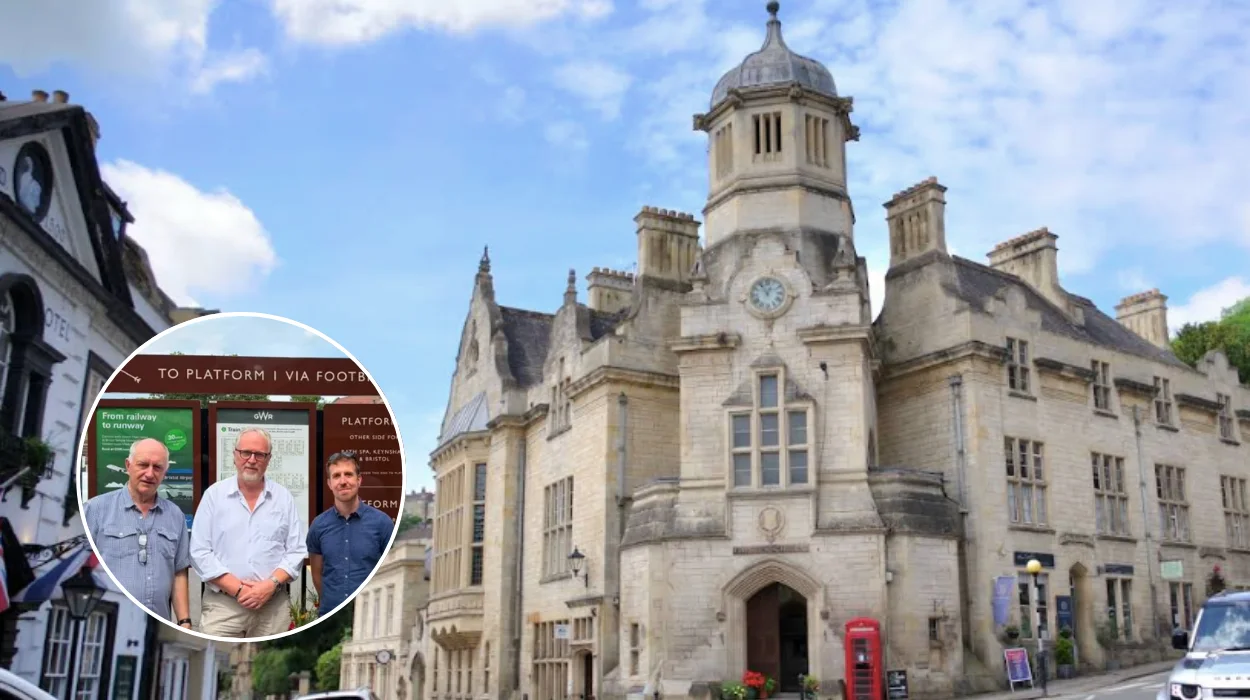
Bradford-on-Avon (The Londoner News) July 09, 2025 – Local rail passengers, public campaigners, and civic leaders in west Wiltshire have launched a coordinated campaign to force transport bosses to restore direct train services between Bradford-on-Avon and London Waterloo. The vital public rail corridor, which historically ran via Salisbury to link the west Wiltshire region directly with the heart of the UK capital, was officially axed in December 2021. However, a newly launched major timetable consultation by South Western Railway (SWR) has heartened local campaigners, who believe the process provides a realistic political window to reverse the controversial cuts and secure long-term rail connectivity for the growing commuter town.
- Key Points
- Why are residents demanding the return of the London Waterloo service?
- What did Sam Blackwell say about the South Western Railway consultation?
- How did the direct train route come to be axed in 2021?
- Who is leading the political campaign in Wiltshire?
- What are the operational challenges and industry alternatives?
- What are the next steps for the West Wiltshire rail network?
Why are residents demanding the return of the London Waterloo service?
The local push for the return of the direct line is fueled by mounting economic and geographical frustrations within the west Wiltshire commuting community. Since the axing of the direct route to London Waterloo, passengers traveling from Bradford-on-Avon have been forced to navigate complex connections, often altering their paths to travel via Great Western Railway (GWR) services through Bath Spa and London Paddington, or taking localized services and changing models manually at Salisbury.
The physical distance between London Waterloo and London Paddington is approximately 4 miles (6.4 km). Because these two major terminal stations feed into completely distinct walking, cycling, and underground transit catchments within the capital, the loss of Waterloo has severed direct access to South London, Kent, Surrey, and East Sussex for Wiltshire travelers. For thousands of regular commuters, leisure travelers, and local business owners, the current configuration adds substantial friction, increases the likelihood of transit delays, and raises overall ticket costs.
What did Sam Blackwell say about the South Western Railway consultation?
The recent launch of South Western Railway’s regional timetable review has injected fresh optimism into the localized movement. Speaking directly to the press regarding the transport development, Sam Blackwell, the Mayor of Bradford-on-Avon, expressed structural optimism about the open-door policy currently being signaled by the rail operator.
As reported by an on-air reporter of BBC Radio Wiltshire, Sam Blackwell stated that:
“It is encouraging. They are taking ideas and trying to understand what changes passengers want from the timetable.”
The Mayor’s public endorsement of the consultation has served as a rallying cry for local residents to flood the rail company’s feedback portals. By formally capturing passenger dissatisfaction and illustrating clear economic demand, town leaders hope to demonstrate that the reinstatement of the route is not merely a nostalgic preference but an infrastructure necessity.
How did the direct train route come to be axed in 2021?
To fully understand the current friction, it is necessary to examine the historical restructuring of the regional rail network that occurred three years ago. As previously reported by the editorial staff of the Wiltshire Times in 2021, the Department for Transport (DfT) explicitly agreed to South Western Railway’s sweeping structural proposals to eliminate direct trains running from Bristol, Keynsham, Bath, Bradford-on-Avon, and Trowbridge to London Waterloo via Salisbury.
The cuts, which went into effect in December 2021, were implemented during a period of sweeping post-pandemic network assessments. Rail operators nationwide were under intense pressure from the central government to reduce operational overheads and streamline timetables in response to fluctuating passenger numbers. Consequently, the historical link connecting the outer edges of the West Country to Waterloo was systematically dismantled, leaving Salisbury as the westernmost terminus for standard SWR services originating from London.
Who is leading the political campaign in Wiltshire?
The institutional campaign to reverse the 2021 decision is moving forward with significant cross-party and administrative backing. The movement has united local grassroots advocacy groups with high-ranking elected officials who wield structural influence over regional transit policies.
Which public figures have joined the rail fight?
As reported by political reporters of the Wiltshire Times, Member of Parliament (MP) Brian Mathew is among the prominent public figures who have formally joined the regional campaign to demand that the link to the capital be fully reinstated. MP Brian Mathew’s involvement elevates the issue from a localized municipal complaint to a matter of parliamentary interest, putting pressure on both the Department for Transport and rail executives.
What role is the local town council playing?
The political strategy within the community is being driven through official local government channels. Following a pivotal session of the town’s Sustainable Development and Travel Committee, the Bradford-on-Avon Town Council formally consolidated its stance.
In an official public statement published on the Bradford-on-Avon Town Council Facebook page, an authorized organizational spokesperson announced:
“Following the latest Sustainable Development & Travel Committee meeting, Bradford on Avon Mayor Councillor Sam Blackwell has backed the West Wiltshire Rail User Group’s campaign to restore direct train services between Bradford on Avon and London Waterloo.”
The spokesperson further issued a direct call to action to the local electorate, stating:
“If you regularly travel by train, please take a few minutes to complete South Western Railway’s consultation and help make the case for restoring this important service.”
Explore more Local London News:
King Charles and Queen Camilla Celebrate ZSL at London Zoo 2026
Kensington Teacher Banned For Drinking Wine At Work: London 2026
What are the operational challenges and industry alternatives?
While public demand for the direct link remains high, rail industry analysts point out that restoring the timetable requires navigating complex logistical agreements between separate corporate entities and infrastructure managers.
Currently, the regional service model split looks as follows:
- Great Western Railway (GWR): Operates the “Bristol Metro” services extending from Bristol through Bath Spa, Freshford, and Avoncliff, into Bradford-on-Avon, Trowbridge, Westbury, and Warminster, before terminating at Salisbury.
- South Western Railway (SWR): Operates services utilizing Class 158 and Class 159 diesel trains that run strictly from Salisbury eastward to London Waterloo, stopping at major hubs like Woking and Clapham Junction.
Because SWR trains now terminate at Salisbury’s platforms from the east and GWR services terminate at the very same platforms from the west, passengers are forced to disembark and wait for connecting services. Reversing this requires rearranging track paths, crew schedules, and rolling stock allocations across competing rail companies.
However, an unexpected industry development has emerged that could bypass these corporate stalemates entirely. According to internal rail sector reports documented by the Great Western Coffee Shop transit forum, industry rumors indicate that Grand Central—an Open Access rail operator owned by transport giant Arriva—has formally applied for pathing rights to run an independent service connecting London Waterloo, Salisbury, Warminster, Westbury, Trowbridge, Bradford-on-Avon, Bath Spa, and Bristol Temple Meads.
Under the legal terms of an Open Access license, an independent operator can run services if they prove there is sufficient consumer demand and that their trains will not be “primarily abstractive” of the existing taxpayer-subsidized lines. Industry insiders note that Grand Central’s multi-million-pound application strongly confirms that there is an undeniable, commercially viable demand for a direct west Wiltshire-to-Waterloo link—a fact that local campaigners are using to bolster their arguments against SWR’s current layout.
What are the next steps for the West Wiltshire rail network?
As the formal consultation period moves forward, the broader focus on Wiltshire’s rail infrastructure continues to expand. Local authorities are treating the Bradford-on-Avon campaign as one component of a wider regional transport renaissance aimed at addressing decades of perceived underinvestment in rural and suburban connectivity.
According to published regional planning briefs held by Wiltshire’s local government bodies, public officials have already formally committed to promoting and developing new railway stations at Devizes, Corsham, and Wilton. Additionally, infrastructure plans include the construction of a brand-new transit platform at Westbury to alleviate existing line bottlenecks.
A spokesperson for the regional transit authority affirmed that they:
“…will continue to work closely with local partners, Network Rail, the Department for Transport and train operators to secure better rail services and strengthen connectivity across the region.”
For the residents of Bradford-on-Avon, the immediate focus remains fixed on the South Western Railway consultation portal. Campaigners stress that if the town fails to register its voice en masse during this active feedback window, the direct link to London Waterloo could be permanently lost, leaving the town dependent on fragmented regional connections for the foreseeable future. South Western Railway has been approached for formal comment regarding the early metrics of the public response.