Key Points
- Scores of firefighters battled multiple large grass fires across east London, particularly affecting the borough of Havering, including intense blazes in Hornchurch and Rainham.
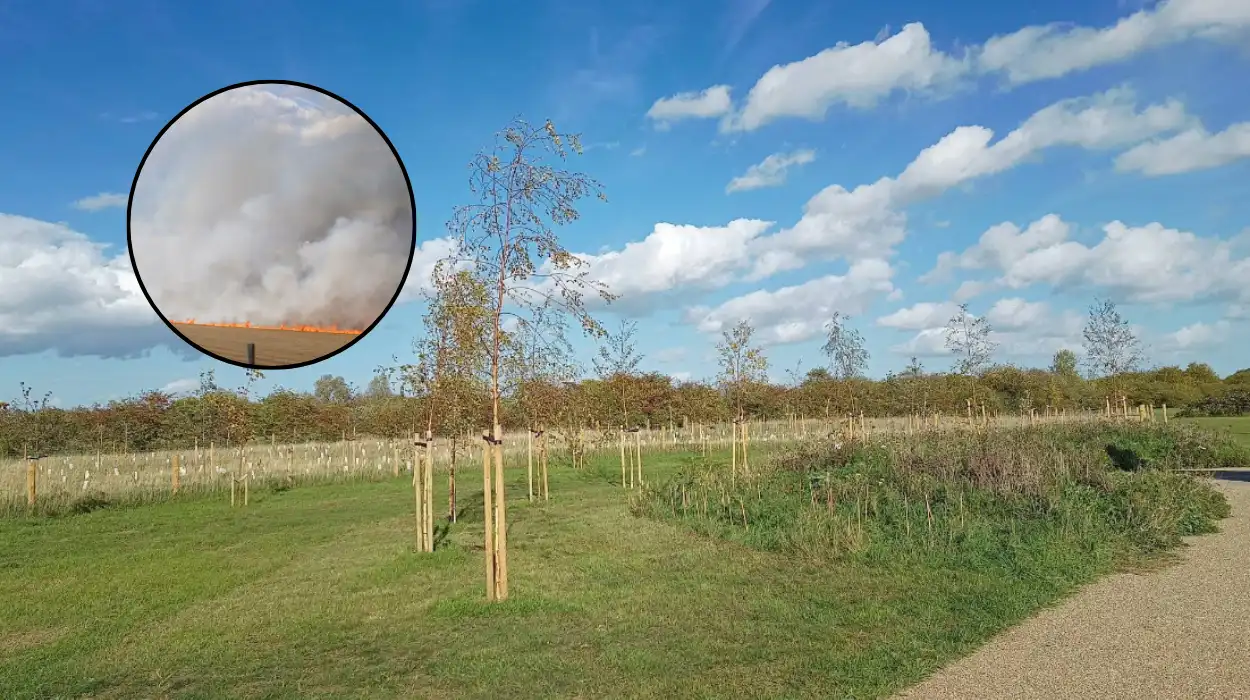
- Dramatic images and footage showed fast-moving fires ripping through extensive grassland and woodland near Hornchurch Country Park.
- The fresh outbreaks follow the London Fire Brigade’s busiest 24-hour period of the year, during which crews responded to over 500 incidents and 63 separate grass fires in a single day.
- The capital is officially classified as being in a state of drought, with a Natural England fire severity index warning that the risk of blazes remains “very high”.
- Investigations into the exact causes of both the Hornchurch and Rainham fires are currently ongoing.
- Emergency services and local authorities continue to urge the public to exercise extreme caution outdoors, avoiding disposable barbecues and safely discarding cigarettes.
London (The Londoner News) July 31, 2026 — Scores of firefighters battled more large grass fires across east London on Thursday, fighting to contain fast-spreading blazes as the British capital remains gripped by severe drought conditions.As reported by journalists at The Standard, dramatic pictures captured the terrifying scale of the emergency as a ferocious fire ripped across open grassland in Hornchurch, while a separate, destructive blaze decimated a large area of woodland and land in Rainham. These intense outbreaks in the London Borough of Havering followed hot on the heels of a punishing 24-hour period for the London Fire Brigade (LFB), which marked its busiest day of the year after approximately 120 firefighters tackled two major grass fires in Romford just a day prior. With official bodies confirming that the capital is enduring dry, drought-stricken conditions, Natural England’s fire severity index has designated the current risk of further blazes across the city as “very high”.
What Caused the Fresh Outbreaks of Wildfires in East London?
While emergency response teams remain heavily stretched, the precise triggers behind the latest incidents are still being scrutinized. As detailed in updates from the London Fire Brigade, the cause of both major fires within the London Borough of Havering is currently under active investigation.
The escalation follows a grueling stretch for emergency services across the metropolitan area. According to data released by the London Fire Brigade and covered widely in regional reports, Control Officers answered more than 1,300 emergency calls, while frontline firefighters responded to over 500 separate incidents in a single 24-hour window.
Out of those, 218 calls specifically concerned spreading grass fires, with crews mobilized to 63 separate grass fire incidents across London. North-east London bore the brunt of the crisis, with Havering recording an alarming 47 separate grass fires, closely followed by Barking and Dagenham with 16.
How Are Firefighters Tackling the Escalating Crisis in Havering?
The scale of the devastation required a massive multi-agency response, utilizing specialized tactical equipment to combat the rough terrain and rapid fire spread. In Hornchurch, approximately 60 firefighters across eight fire engines rushed to tackle a massive grass fire near South End Road, where flames eventually consumed around six hectares of land at their peak height.
As noted in operational logs from the London Fire Brigade, tactical innovations played a crucial role in suppressing the flames.
Crews utilized backpack blowers—which operate similarly to leaf blowers—to push active flames back into already burned areas, a method designed to provide a faster, more efficient attack on open wildfires. Firefighters also deployed traditional wildfire beaters, comprising long handles with flat rubber ends designed to starve the fire of oxygen and cool down the burning front.
Additionally, specialized Terrain Support Vehicles equipped with off-road capabilities were rushed to the scene. As explained by the London Fire Brigade, these vehicles carry roughly 475 litres of water alongside misting lance technology, allowing crews to pump water while driving to safely combat wildfires on open ground.
The Brigade’s Drone Team was also deployed overhead, supplying Incident Commanders with crucial real-time aerial surveillance.
Meanwhile, down in Rainham, six fire engines and roughly 40 firefighters battled a severe woodland fire near Berwick Pond Road, which threatened areas close to Hornchurch Country Park. While that specific blaze was brought under control, the constant cycle of callouts has left local infrastructure heavily strained.
Explore More London Fire News
Garden Wildfire Warning and Barbecue Ban Issued in London 2026
Kent Specialist Fire Height Vehicle Returns to Duty, Maidstone 2026
What Are Authorities Saying About the Ongoing Drought and Wildfire Risk?
The compounding effect of weather patterns has created a tinderbox environment across British green spaces. High temperatures exceeding 30 degrees Celsius, paired with a notably dry spell following a fluctuating winter, have left vegetation intensely vulnerable.
Addressing the severe environmental threat, London Fire Brigade Assistant Commissioner Paul McCourt issued a stern warning to the public. As quoted in official communications released by the London Fire Brigade, Mr McCourt stated:
“We had a wetter-than-usual winter, which allowed vegetation to grow, followed by one of the driest Aprils on record, so the risk of wildfire is very real.”
Mr McCourt further emphasized the collective responsibility required to safeguard local environments, adding:
“The Natural Hazards Partnership has assessed there is a heightened risk of wildfires in London so we must all play our part to protect our green spaces and surrounding communities. In particular, we’d encourage parents to talk to their children about our advice, to help young people to stay safe.”
Echoing these urgent sentiments, other regional media reports highlighted appeals from safety officials and local leaders urging residents to modify outdoor behaviors. Experts note that simple human actions can inadvertently trigger catastrophic local disasters during dry spells.
How Can Residents Help Prevent Further Grass Fires in London?
With the threat level remaining elevated, emergency services have published explicit guidance outlining what citizens must do to prevent further outbreaks. Fire authorities have reiterated that public vigilance is the frontline defense against urban and suburban wildfires.
Key preventative measures emphasized by the London Fire Brigade include:
- Ban on Barbecues: Residents are strictly advised against using disposable barbecues in public parks, open spaces, or on balconies, as these are primary catalysts for accidental grass fires.
- Cigarette Safety: Smokers are urged to take extra care to ensure that cigarettes are completely extinguished and disposed of safely rather than tossed into dry brush.
- Litter and Glass Management: Clear glass bottles and materials must never be left in direct sunlight, as they can act as magnifying lenses and spark dry grass fires. All rubbish and picnic waste should be taken home if public bins are full.
- Immediate Reporting: Anyone who discovers a wildfire is instructed to move immediately to a safe place away from smoke and vegetation, stay calm, and dial 999 with precise location details—recommended via tools like the what3words app—rather than attempting amateur firefighting.
As meteorological forecasts indicate that hot, dry conditions will persist across the capital, the London Fire Brigade remains on high alert, urging Londoners to treat local green spaces with utmost care to prevent further tragedies.