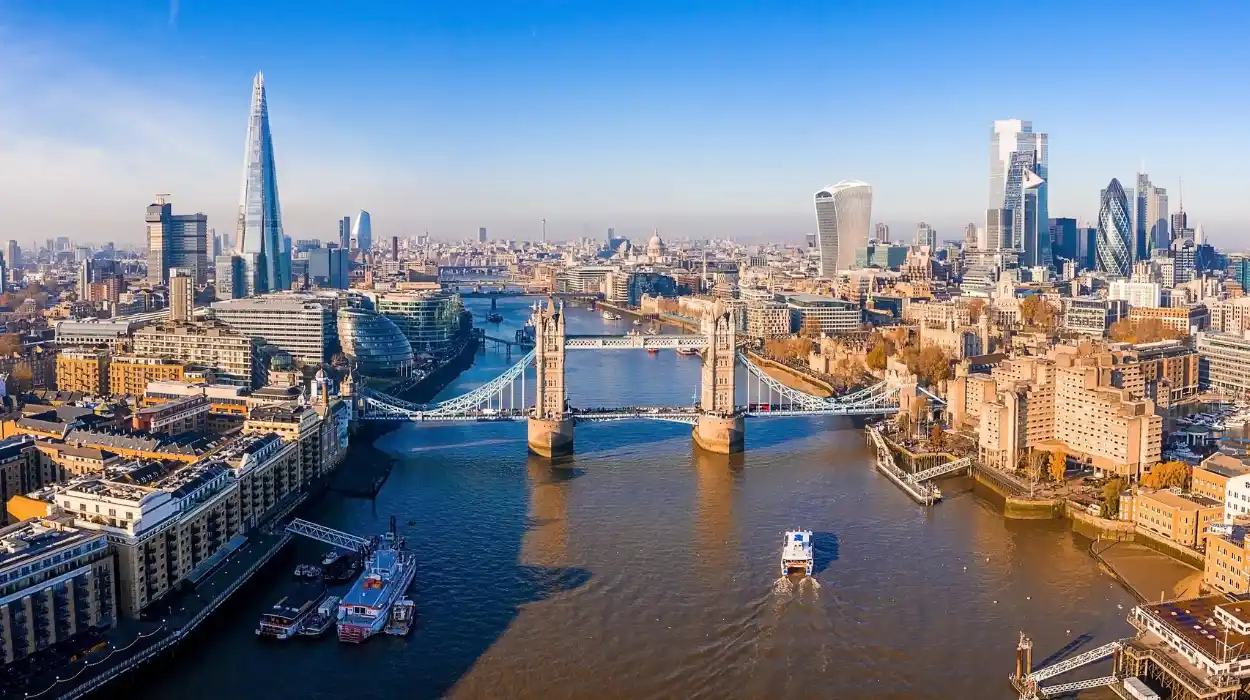
The River Thames is a tidal river stretching approximately 346 kilometres (215 miles) from Gloucestershire to the North Sea. Within London, its tidal section created one of Europe’s most important natural trading corridors. The river offered navigable access between inland Britain and continental Europe, making it an ideal location for settlement, commerce, and administration.
- Why Did the Romans Establish Londinium on the River Thames?
- How Did the Thames Shape Medieval London’s Economy?
- How Did Maritime Trade Transform London into a Global City?
- How Did the Thames Influence London’s Transport Network?
- Why Did London’s Docks Drive Industrial and Urban Expansion?
- How Did Engineering Projects Change the River Thames?
- How Did the Thames Influence London’s Social and Cultural Development?
- What Evidence of London’s Trading Past Still Survives Along the Thames?
- Why Does the Thames Remain Central to Understanding London’s History?
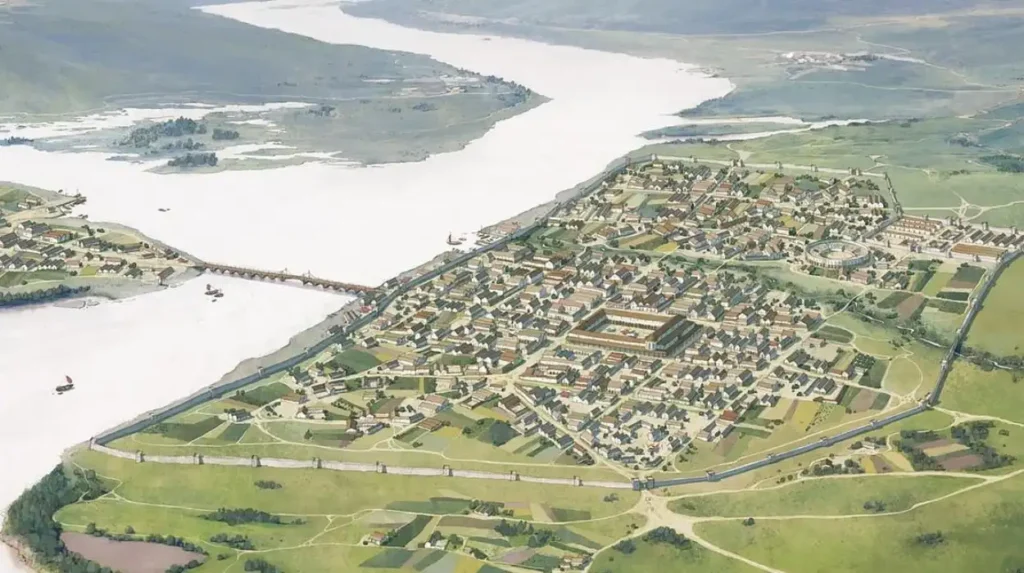
London’s history began with the Roman settlement of Londinium around AD 47. Roman engineers selected the Thames crossing because it represented the lowest practical bridging point while remaining accessible to seagoing vessels. This combination allowed merchants to transport goods inland while maintaining maritime connections with the wider Roman Empire.
The river also shaped London’s physical geography. Development concentrated along both banks before expanding northward and southward through successive centuries. Major roads, markets, warehouses, government buildings, and defensive structures emerged beside the water because river access determined economic value.
Throughout history, the Thames remained London’s principal transport network. Before widespread railway construction during the nineteenth century, moving goods by water cost significantly less than transporting them over land. Coal, timber, grain, wine, wool, stone, and manufactured products entered and left London through the river system.
Archaeological excavations conducted around the City of London continue to reveal Roman quays, medieval wharves, Tudor dock structures, and Victorian embankment engineering, illustrating continuous commercial activity across almost two millennia.
Why Did the Romans Establish Londinium on the River Thames?
The Romans founded Londinium because the Thames provided a defensible crossing, reliable navigation, commercial opportunities, and efficient military logistics. These combined advantages transformed a frontier settlement into Roman Britain’s leading administrative and trading centre within decades of its establishment.
How did geography influence the Roman decision?
Roman forces invaded Britain in AD 43 under Emperor Claudius. Around AD 47, military engineers established Londinium near the first permanent bridge across the Thames.
The chosen site possessed several strategic advantages.
The river narrowed sufficiently for bridge construction while remaining deep enough for trading vessels. Elevated ground reduced flood risks compared with surrounding marshland. Nearby roads connected southeastern Britain with expanding Roman territories.
The first London Bridge linked important Roman roads including Watling Street and Ermine Street, integrating Britain into the wider imperial transport network.
How did trade expand under Roman rule?
Roman Londinium rapidly became Britain’s principal commercial centre.
Imported goods included olive oil from Hispania, wine from Gaul, pottery from Germany, glassware from Italy, and luxury items from across the Mediterranean. Exports included metals, wool, leather, grain, and agricultural products.
By the second century AD, Londinium contained extensive riverside warehouses, public baths, forums, temples, and administrative buildings. Historians estimate that the city’s population reached between 30,000 and 45,000 people, making it one of the largest settlements in Roman Britain.
How Did the Thames Shape Medieval London’s Economy?
The Thames became medieval London’s commercial highway by supporting international trade, fishing, river transport, taxation, and market distribution. Royal authority, merchant guilds, and expanding port facilities transformed the river into England’s busiest economic corridor between the eleventh and fifteenth centuries.
Following the Norman Conquest in 1066, London experienced sustained commercial growth.
The medieval Port of London handled increasing volumes of wool exports, wine imports, spices, cloth, salt, timber, and metals. Merchant ships arrived from the Hanseatic League, France, Flanders, Scandinavia, and the Iberian Peninsula.
The Hanseatic merchants operated from the Steelyard, a fortified trading enclave established on the north bank of the Thames. Their commercial privileges significantly influenced England’s overseas trade during the Middle Ages.
The construction of stone London Bridge between 1176 and 1209 improved communications across the river. The bridge contained houses, shops, and a chapel while serving as London’s only permanent crossing for centuries.
River traffic remained intense. Thousands of passengers crossed daily using watermen who operated small boats before additional bridges existed.
Fishing also contributed to London’s food supply. Salmon, eels, lampreys, and freshwater species supported local markets before industrial pollution affected river ecosystems.
How Did Maritime Trade Transform London into a Global City?
International maritime trade converted London from a regional capital into the centre of a global commercial empire. Expanding overseas commerce increased population, generated wealth, financed infrastructure, and strengthened London’s political influence between the sixteenth and nineteenth centuries.
How did exploration influence trade?
During the Tudor period, England expanded maritime exploration.
The establishment of overseas trading companies—including the English East India Company in 1600—created direct commercial links with Asia, Africa, and the Americas.
The Thames became the primary entry point for imported tea, coffee, sugar, tobacco, silk, spices, cotton, porcelain, and luxury goods.
Exports included textiles, metal products, manufactured goods, and machinery.
Why did the Port of London become internationally important?
By the eighteenth century, the Port of London ranked among the world’s busiest ports.
Its extensive dock system processed enormous quantities of international cargo.
Commercial growth encouraged banking expansion, insurance development, and financial innovation. Institutions including the Bank of England, founded in 1694, benefited from London’s expanding international trade networks.
Shipping industries supported thousands of occupations including shipbuilding, rope making, sail manufacturing, warehousing, customs administration, insurance, finance, and legal services.
Population growth reflected commercial success. London’s population increased from approximately 200,000 in 1600 to more than one million by the early nineteenth century.
How Did the Thames Influence London’s Transport Network?
The Thames served as London’s primary transport corridor before modern roads and railways. Passenger boats, freight barges, ferries, bridges, canals, and later steam-powered vessels created an integrated transport system supporting rapid urban and economic expansion.
Before railways transformed Britain during the nineteenth century, water transport dominated freight movement.
Heavy building materials including stone, bricks, timber, coal, and iron travelled efficiently along the river because boats carried substantially larger loads than horse-drawn wagons.
Professional watermen transported passengers between riverside communities.
The Company of Watermen and Lightermen, formally established by royal legislation in 1555, regulated navigation standards, licensing, and apprenticeships.
Successive bridge construction altered London’s geography.
Examples include Westminster Bridge (1750), Blackfriars Bridge (1769), Waterloo Bridge (1817), Southwark Bridge (1819), and Tower Bridge (1894). These bridges improved mobility while supporting expanding residential and commercial districts.
The arrival of steam-powered vessels during the nineteenth century increased passenger capacity and reduced travel times across the metropolitan area.
Why Did London’s Docks Drive Industrial and Urban Expansion?
London’s dock system supported industrialisation by improving cargo handling, reducing theft, increasing storage capacity, and encouraging manufacturing. Purpose-built enclosed docks enabled continuous commercial growth while attracting workers, housing developments, factories, and supporting infrastructure throughout East London.
Why were enclosed docks constructed?
Congestion became severe along the open river during the eighteenth century.
Cargo often remained unloaded for weeks because vessels competed for limited riverside space.
To solve this problem, enclosed dock systems were constructed.
Examples include:
- West India Docks (1802)
- London Docks (1805)
- East India Docks (1806)
These facilities provided secure warehouses, controlled access, customs inspection, and specialised cargo handling.
How did docks change East London?
Dock construction accelerated urbanisation.
Entire neighbourhoods developed around shipping industries.
Workers migrated from across Britain and overseas, creating culturally diverse communities.
Industrial employers established warehouses, engineering workshops, food processing facilities, ship repair yards, and manufacturing plants close to the docks.
By the late nineteenth century, the Port of London handled tens of millions of tons of cargo annually, making it one of the world’s largest commercial ports.
How Did Engineering Projects Change the River Thames?
Major engineering projects reduced flooding, improved sanitation, increased navigation efficiency, and modernised London’s waterfront. Victorian infrastructure transformed the Thames into a cleaner, safer, and more reliable river while supporting continued population growth and commercial development.
The nineteenth century presented major urban challenges.
Rapid population growth increased sewage disposal directly into the Thames.
The resulting pollution culminated in the Great Stink of 1858, when hot weather intensified odours along the river.
Civil engineer Sir Joseph Bazalgette designed an extensive sewer network that intercepted waste before it entered central London.
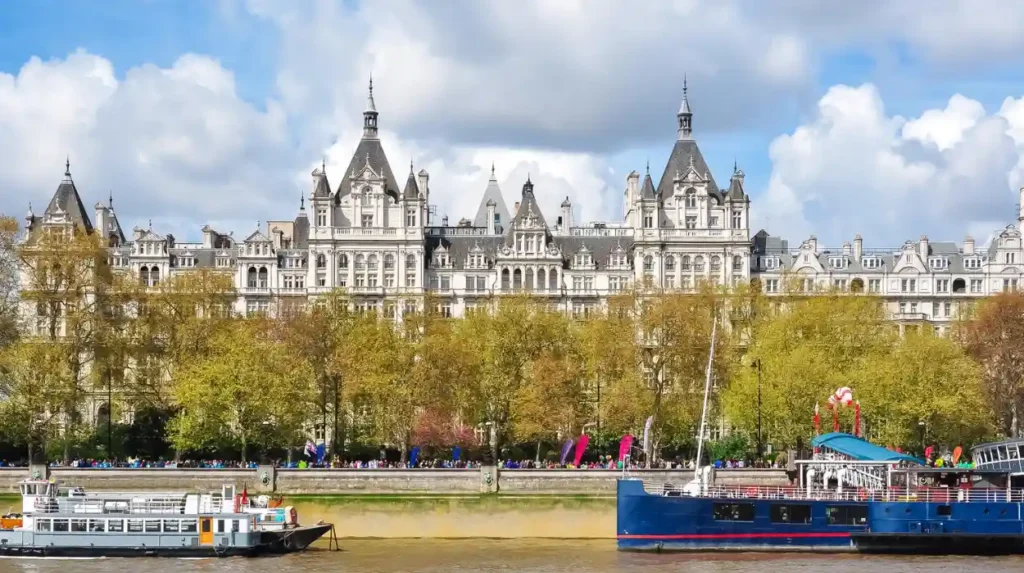
Construction included major embankments along the river.
Examples include Victoria Embankment, Chelsea Embankment, and Albert Embankment.
These projects reclaimed land, improved road transport, protected infrastructure, and concealed modern sewer systems beneath newly constructed roads.
Engineering improvements also strengthened flood protection while creating public spaces that continue serving London today.
How Did the Thames Influence London’s Social and Cultural Development?
The Thames shaped London’s identity through work, recreation, religion, literature, ceremonies, and public life. The river connected diverse communities while inspiring artists, writers, engineers, and political leaders across successive historical periods.
The river influenced everyday life across all social classes.
Royal ceremonies frequently travelled by water before improved roads existed.
State processions, diplomatic receptions, and civic celebrations regularly used the Thames as London’s ceremonial route.
Writers including William Shakespeare, Samuel Pepys, Charles Dickens, and Joseph Conrad described the Thames in works documenting London’s changing society.
Artists including J. M. W. Turner and Claude Monet produced internationally recognised paintings depicting London’s waterfront and atmospheric river scenes.
The Thames also supported leisure activities.
Examples include rowing competitions, riverside festivals, public fairs, and recreational boating.
Annual traditions continue today, reflecting centuries of cultural continuity.
To experience this historic landmark in person today, consult our comprehensive [Best Royal Experiences Beyond Buckingham Palace Every Visitor Should Add to Their Itinerary] for itineraries and visiting parameters.
What Evidence of London’s Trading Past Still Survives Along the Thames?
Historic buildings, dock infrastructure, archaeological discoveries, bridges, warehouses, and preserved waterfront districts demonstrate the Thames’ enduring commercial significance. These surviving landmarks provide direct physical evidence of London’s continuous relationship with river-based trade across nearly two thousand years.
Many historic locations remain visible.
Examples include the Tower of London, Custom House, St Katharine Docks, Billingsgate’s historic trading area, and surviving warehouse districts around Wapping.
Excavations undertaken during infrastructure projects—including the Crossrail archaeological programme—have uncovered Roman docks, medieval river walls, Tudor artefacts, ship timbers, coins, ceramics, and commercial goods preserved beneath modern London.
The Museum of London Docklands interprets the history of London’s maritime economy through archaeological collections, historical documents, and preserved dock architecture.
Tower Bridge, completed in 1894, continues operating as both a transport crossing and engineering landmark while reflecting Victorian responses to increasing river traffic.
Preservation programmes managed by heritage organisations protect riverside structures for future generations.
Why Does the Thames Remain Central to Understanding London’s History?
The Thames explains London’s historical success because it united geography, commerce, governance, engineering, migration, and culture within one interconnected system. Understanding the river provides essential context for interpreting London’s evolution from Roman settlement to global metropolitan capital.
No other natural feature influenced London’s development more consistently than the Thames.
Every historical era introduced new functions while preserving the river’s central importance.
Roman engineers established strategic infrastructure.
Medieval merchants expanded European commerce.
Tudor explorers connected England to global markets.
Victorian engineers modernised sanitation and transport.
Twentieth-century regeneration transformed former industrial docks into commercial and residential districts while preserving significant elements of maritime heritage.
Modern developments including Canary Wharf demonstrate how former docklands adapted to changing economic priorities without erasing their historical foundations.
The Thames also remains environmentally significant.
Current restoration programmes have improved water quality dramatically since the mid-twentieth century. Scientific monitoring records the return of numerous wildlife species, including seals, seahorsses, and over 120 species of fish, reflecting successful environmental management alongside continued urban use.
Understanding the Thames therefore provides a comprehensive framework for understanding London’s political development, commercial expansion, engineering innovation, demographic growth, and cultural identity.
From the Roman bridge built nearly two millennia ago to today’s regenerated waterfront districts, the River Thames has remained the defining force behind London’s evolution. Its waters carried merchants, monarchs, migrants, engineers, and ideas that collectively shaped one of the world’s most influential cities.
As preserved docks, bridges, embankments, archaeological discoveries, and historic riverside landmarks continue to survive, the Thames remains both a living transport corridor and an enduring historical record of London’s remarkable growth through trade, transport, and urban expansion.
Why is the River Thames important to London’s history?
The River Thames is the foundation of London’s historical development. It enabled trade, transportation, defence, and urban expansion from the Roman period to the modern era, helping London become one of the world’s leading cities.