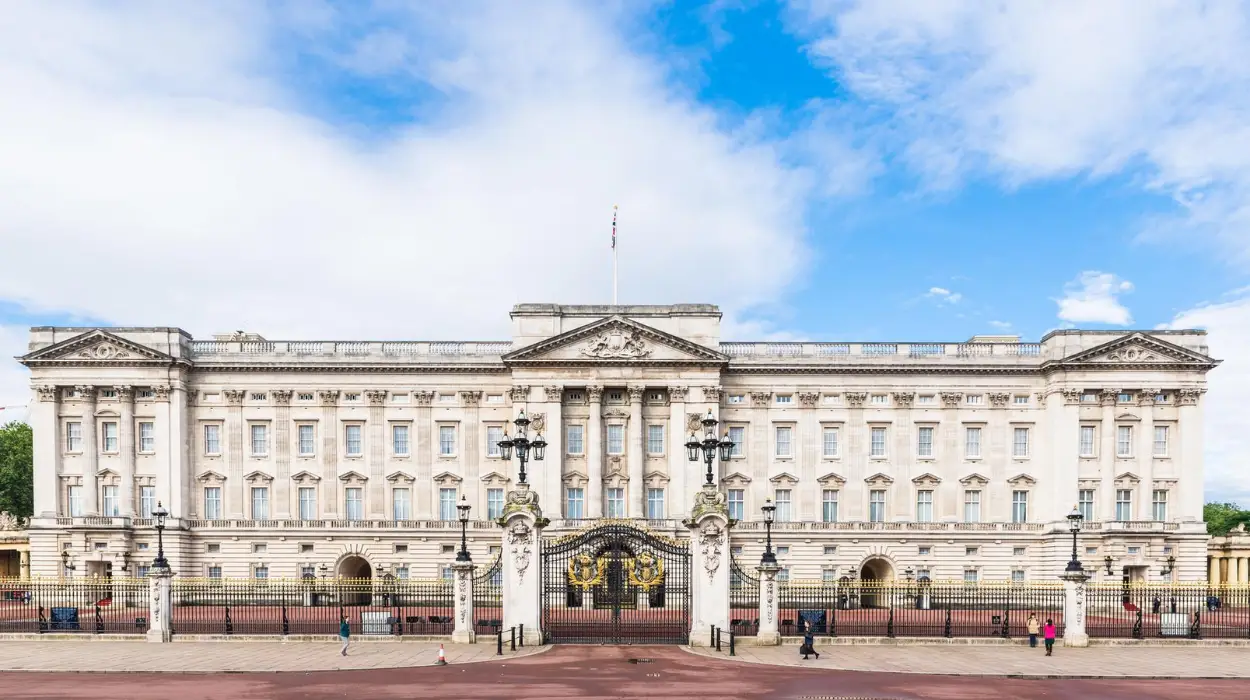
London’s royal heritage extends far beyond Buckingham Palace. For more than 1,000 years, the British monarchy has shaped the city’s architecture, politics, religion, ceremonial traditions, and public spaces. While Buckingham Palace remains the monarch’s official London residence, numerous palaces, fortresses, ceremonial landmarks, royal parks, chapels, and museums preserve different chapters of Britain’s constitutional and dynastic history.
- Why should visitors explore royal experiences beyond Buckingham Palace?
- Which historic royal palaces deserve equal attention?
- How does the Tower of London explain royal authority?
- Why is Westminster Abbey central to Britain’s royal history?
- What can visitors learn from London’s royal ceremonial traditions?
- Why are London’s Royal Parks historically significant?
- How did royal collections become public cultural treasures?
- Which royal chapels and churches reveal Britain’s religious history?
- How did royal architecture influence London’s urban development?
- Why does Britain’s constitutional monarchy remain historically important?
These sites collectively explain how the monarchy evolved from medieval kingship into a modern constitutional institution. They also preserve coronation traditions, military ceremonies, royal collections, state diplomacy, and architectural masterpieces spanning the Norman, Tudor, Stuart, Georgian, Victorian, and contemporary periods.
Visitors who explore these landmarks gain a broader understanding of British history while experiencing locations that continue to play active roles in royal life today.
Why should visitors explore royal experiences beyond Buckingham Palace?
Buckingham Palace represents only one chapter of Britain’s royal story. London’s wider royal landscape includes medieval fortresses, ceremonial abbeys, royal parks, historic palaces, museums, and working government buildings that collectively illustrate over one thousand years of constitutional, architectural, and cultural development.
Buckingham Palace became the monarch’s principal London residence only in 1837 when Queen Victoria ascended the throne. Before then, numerous royal residences served English and British monarchs, each reflecting different political priorities, architectural styles, and historical events.
Exploring multiple royal sites reveals how monarchy adapted across successive periods including the Norman Conquest (1066), the Tudor dynasty (1485–1603), the Stuart period (1603–1714), the Georgian era (1714–1837), the Victorian age (1837–1901), and the modern constitutional monarchy.
London’s royal heritage also demonstrates the close relationship between monarchy, Parliament, religion, military institutions, diplomacy, and urban development. These connections remain visible through preserved buildings, ceremonial routes, public monuments, and annual state events.
To experience these historic landmarks in person today, consult our comprehensive [The Thames and London’s Growth Through Trade, Transport, and Urban Expansion History] for itineraries and visiting parameters.
Which historic royal palaces deserve equal attention?
Several royal palaces preserve different phases of British monarchy. Kensington Palace, Hampton Court Palace, St James’s Palace, the Palace of Westminster, and the Banqueting House each document distinct political, architectural, and ceremonial developments spanning more than five centuries.
Kensington Palace
Kensington Palace became a royal residence in 1689 when King William III and Queen Mary II purchased Nottingham House. Architect Sir Christopher Wren expanded the property into a fashionable royal palace suitable for the growing capital.
The palace served as the birthplace or childhood home of several monarchs including Queen Victoria, who was born there in 1819 and spent her early years within its apartments.
Today, Kensington Palace remains an official royal residence while selected State Apartments welcome visitors. Historic exhibitions explain Georgian court life, royal fashion, and the lives of Queen Victoria, Princess Diana, and other members of the Royal Family.
Hampton Court Palace
Although located southwest of central London, Hampton Court Palace remains one of Britain’s most significant royal residences.
Originally built by Cardinal Thomas Wolsey in the early sixteenth century, the palace passed to King Henry VIII in 1529. Henry transformed it into one of Europe’s grandest royal courts.
Visitors encounter Tudor kitchens, the Great Hall, royal apartments, formal gardens, and later Baroque additions commissioned by William III and Mary II.
The palace preserves two distinct architectural periods within one estate, illustrating changing royal tastes over nearly two centuries.
St James’s Palace
Built during the reign of Henry VIII between 1531 and 1536, St James’s Palace remains the most senior royal palace in ceremonial precedence.
Although the monarch no longer resides there, official proclamations and diplomatic functions continue within the palace complex.
Foreign ambassadors remain formally accredited to the Court of St James’s rather than Buckingham Palace, preserving centuries-old constitutional tradition.
Banqueting House
The Banqueting House stands as the sole surviving element of the former Palace of Whitehall, once Europe’s largest palace complex.
Designed by Inigo Jones and completed in 1622, the building introduced classical architecture inspired by Renaissance Italy into England.
Peter Paul Rubens later painted the magnificent ceiling celebrating King James I.
Outside the building, King Charles I was executed in 1649 following the English Civil War, making the site central to Britain’s constitutional evolution.
How does the Tower of London explain royal authority?
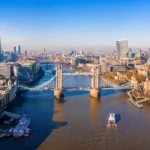
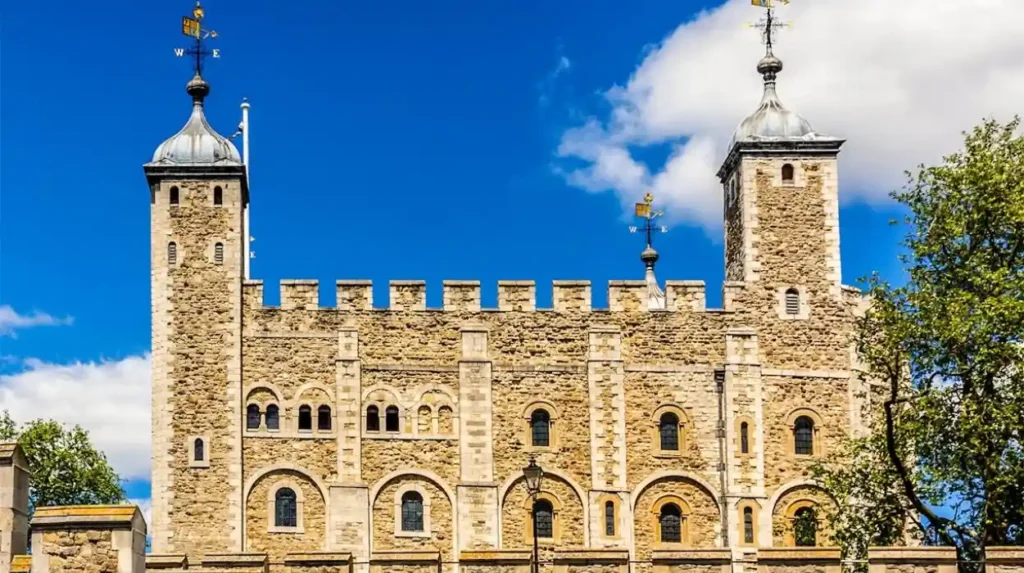
The Tower of London demonstrates how monarchy exercised military, judicial, financial, and ceremonial authority. Built after 1066, the fortress served simultaneously as royal residence, treasury, prison, armoury, mint, and secure repository for the Crown Jewels.
William the Conqueror ordered construction of the White Tower shortly after the Norman Conquest to establish military control over London.
Over subsequent centuries, successive monarchs expanded the fortress with defensive walls, towers, gates, and moats.
The Tower fulfilled numerous royal functions.
It protected valuable state documents.
It housed the Royal Mint.
It imprisoned political rivals.
It safeguarded military equipment.
It accommodated monarchs before coronation ceremonies.
Perhaps its greatest modern attraction is the Crown Jewels collection.
These ceremonial objects include St Edward’s Crown, the Imperial State Crown, sovereign sceptres, royal orbs, swords of state, and coronation regalia.
Many items remain actively used during coronations and the annual State Opening of Parliament.
The Yeoman Warders, popularly known as Beefeaters, continue traditions dating back centuries while serving ceremonial and security roles.
Why is Westminster Abbey central to Britain’s royal history?
Westminster Abbey has hosted nearly every English and British coronation since 1066. It also serves as the burial place of monarchs, national leaders, scientists, writers, and military figures, making it Britain’s foremost ceremonial church.
King Edward the Confessor established the original abbey during the eleventh century.
The present Gothic church largely dates from the reign of Henry III, beginning in 1245.
Since William the Conqueror’s coronation on Christmas Day 1066, almost every monarch has been crowned inside Westminster Abbey.
The Coronation Chair, commissioned by Edward I around 1300, remains one of Britain’s oldest surviving pieces of ceremonial furniture.
Royal weddings have also shaped the abbey’s international significance.
The marriage of Prince William and Catherine Middleton in 2011 introduced the abbey to millions of global television viewers.
Royal burials illustrate changing dynastic history.
Seventeen monarchs rest within the abbey alongside queens, princes, statesmen, military commanders, scientists including Sir Isaac Newton, and writers honoured in Poets’ Corner.
The building therefore preserves both royal and national memory within a single monument.
What can visitors learn from London’s royal ceremonial traditions?
Royal ceremonies demonstrate constitutional continuity through carefully preserved traditions involving Parliament, the military, the Church of England, and the monarchy. These public events reinforce institutional stability while maintaining historical customs dating back several centuries.
The Changing of the Guard remains one of London’s best-known ceremonial events.
The ceremony transfers responsibility for protecting royal residences between soldiers from active Household Division regiments.
Its origins lie in practical military security rather than entertainment.
The State Opening of Parliament combines monarchy and representative government.
During this annual ceremony, the monarch travels from Buckingham Palace to the Palace of Westminster using the Gold State Coach on selected occasions.
Inside the House of Lords, the monarch delivers the King’s Speech outlining the government’s legislative programme.
Trooping the Colour celebrates the Sovereign’s Official Birthday.
The tradition developed during the seventeenth and eighteenth centuries when military regimental colours served as battlefield rallying points.
Today, more than 1,400 soldiers, examples including the Grenadier Guards, Coldstream Guards, Scots Guards, Irish Guards, and Welsh Guards, participate alongside military bands and mounted units.
These ceremonies illustrate how historical traditions continue functioning within modern constitutional governance.
Why are London’s Royal Parks historically significant?
London’s Royal Parks originated as private hunting grounds for monarchs before gradually becoming public landscapes. Today they preserve historic monuments, ceremonial routes, formal gardens, wildlife habitats, and centuries of urban planning within central London.
Eight Royal Parks collectively cover approximately 5,000 acres.
Hyde Park originated as part of Westminster Abbey before Henry VIII acquired it in 1536.
Originally reserved for royal hunting, it opened to the public under James I during the early seventeenth century.
Adjacent Kensington Gardens evolved from Hyde Park after Queen Caroline commissioned extensive landscape improvements during the eighteenth century.
St James’s Park, developed by Charles II, introduced elegant French-inspired landscaping before later redesigns created today’s picturesque lakes and tree-lined pathways.
Green Park remains distinctive because it contains comparatively few formal flower displays.
Richmond Park, established by Charles I in 1637, continues supporting hundreds of free-ranging red and fallow deer.
Bushy Park, Greenwich Park, and Regent’s Park each preserve unique historical features connecting royal recreation with London’s expanding urban environment.
These landscapes demonstrate changing attitudes toward conservation, leisure, and public access across successive centuries.
How did royal collections become public cultural treasures?
Royal collections evolved through centuries of artistic patronage, diplomacy, inheritance, and state ceremony. Many collections now appear in museums and galleries where visitors study European art, decorative objects, manuscripts, and ceremonial artefacts previously reserved for royal households.
The Royal Collection ranks among the world’s largest privately held art collections held in trust by the Sovereign for the nation.
Its holdings include paintings by Leonardo da Vinci, Rembrandt, Vermeer, Canaletto, and many other European masters.
The King’s Gallery at Buckingham Palace hosts rotating exhibitions drawn from these collections.
The Royal Mews preserves one of the world’s finest working collections of historic state coaches and ceremonial vehicles.
The Gold State Coach, completed in 1762, remains one of Britain’s most recognisable ceremonial objects.
Visitors also encounter royal harnesses, horse-drawn carriages, and modern state vehicles used during official occasions.
These collections illustrate changing artistic tastes, diplomatic gift exchanges, and technological development across several centuries.
Which royal chapels and churches reveal Britain’s religious history?
Royal chapels preserve the close relationship between monarchy and the Church of England. These religious buildings hosted baptisms, weddings, funerals, state ceremonies, and daily worship while reflecting changing theological and architectural traditions across British history.
The Chapel Royal at St James’s Palace has served monarchs since the Tudor period.
Although relatively small, it hosted significant baptisms and royal services.
The Chapel Royal also maintains an internationally respected choir continuing musical traditions established centuries ago.
The Queen’s Chapel, designed by Inigo Jones during the seventeenth century, introduced classical architectural influences into royal religious buildings.
The Chapel of St Peter ad Vincula inside the Tower of London contains the remains of several notable historical figures executed during the Tudor period.
Among them are Anne Boleyn, Catherine Howard, and Lady Jane Grey.
These chapels preserve powerful evidence of the political and religious upheavals accompanying the English Reformation and Tudor succession crises.
How did royal architecture influence London’s urban development?
Royal building programmes transformed London’s physical landscape through new palaces, ceremonial roads, public parks, government buildings, bridges, and planned neighbourhoods. These projects established architectural standards that influenced urban expansion for centuries.
The medieval Palace of Westminster anchored royal government beside the River Thames.
Whitehall Palace later expanded into Europe’s largest palace complex before fire destroyed most buildings in 1698.
Buckingham House evolved into Buckingham Palace through successive enlargements undertaken by architects John Nash, Edward Blore, and Aston Webb.
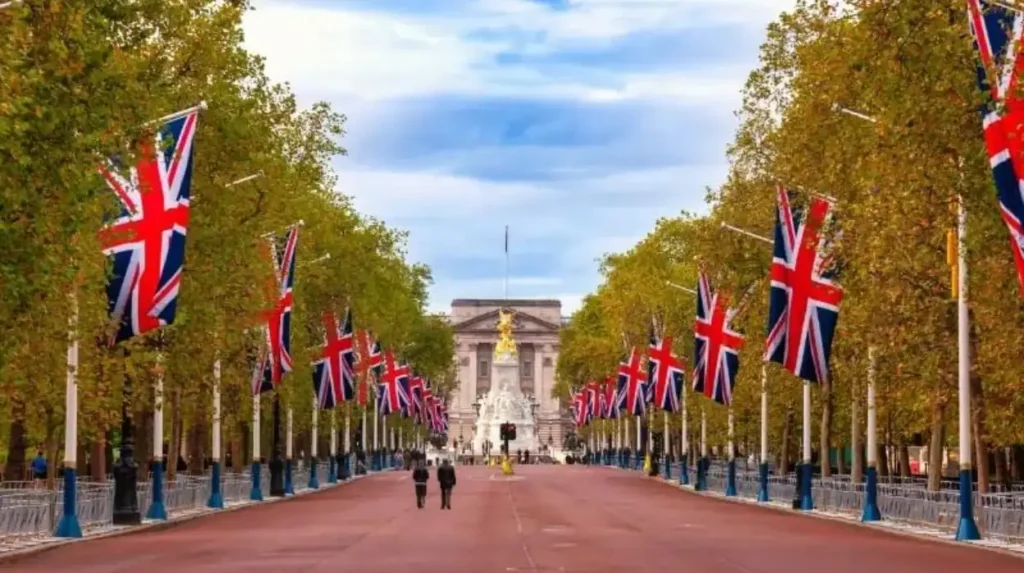
The creation of ceremonial routes including The Mall connected royal residences with government institutions and public parks.
The Victoria Memorial, completed in 1911, established a monumental civic space outside Buckingham Palace while celebrating Queen Victoria’s sixty-three-year reign.
Royal patronage also encouraged development of museums, galleries, educational institutions, and charitable organisations that strengthened London’s cultural identity.
Urban planning surrounding royal precincts influenced housing, transport, landscaping, and public squares throughout central London.
Why does Britain’s constitutional monarchy remain historically important?
Britain’s constitutional monarchy represents centuries of political evolution balancing royal authority with parliamentary democracy. Historic royal sites illustrate this gradual transformation while preserving institutions that continue serving ceremonial, diplomatic, charitable, and constitutional functions today.
The constitutional settlement emerged gradually rather than through a single event.
Important milestones include Magna Carta in 1215, examples including limitations on royal taxation and legal authority; the English Civil War (1642–1651), examples including parliamentary military victory and constitutional debate; the Glorious Revolution (1688), examples including parliamentary supremacy and the Bill of Rights 1689; and successive Reform Acts during the nineteenth century, examples including expanded electoral representation.
Today, the monarch performs constitutional duties including appointing the Prime Minister, granting Royal Assent to legislation, receiving ambassadors, hosting state visits, and supporting charitable organisations.
Historic royal landmarks therefore remain active constitutional spaces rather than preserved monuments alone.
Their continued use strengthens public understanding of institutional continuity while supporting heritage conservation, education, tourism, and international diplomacy.
London’s royal landscape demonstrates how architecture, ceremony, governance, religion, and national identity developed together across more than a millennium. Visitors who look beyond Buckingham Palace discover a richer historical narrative preserved within palaces, fortresses, abbeys, chapels, parks, museums, ceremonial routes, and royal collections that continue connecting Britain’s past with its present.
What are the best royal attractions to visit beyond Buckingham Palace?
The most significant royal attractions include the Tower of London, Westminster Abbey, Kensington Palace, Hampton Court Palace, St James’s Palace, the Royal Mews, the King’s Gallery, and London’s Royal Parks. Together, they showcase more than 1,000 years of British royal history.