
Key Points
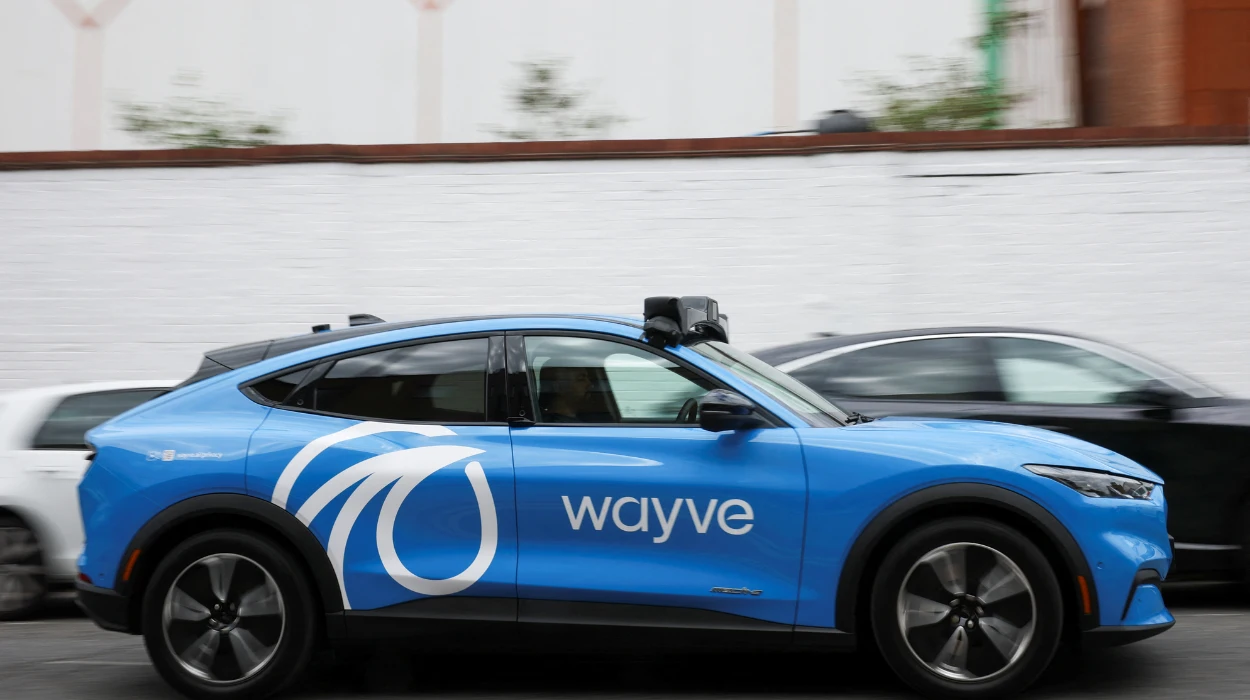
- Transport for London (TfL) has granted private hire vehicle (PHV) licences to a fleet of autonomous, pure-electric Ford Mustang Mach-E vehicles.
- The vehicles are developed by the British artificial intelligence startup Wayve and operated in partnership with the ride-hailing app Uber.
- The commercial robotaxi service is scheduled to launch on the streets of London “later this summer”.
- During the initial phased introduction, a qualified human safety driver will remain behind the wheel to monitor the vehicle and ensure safety.
- More than 100,000 Londoners have already signed up on an expression-of-interest waiting list to experience the self-driving rides.
- Uber and Wayve are competing against tech giants such as Google-owned Waymo and China’s Baidu Apollo Go to dominate the capital’s emerging autonomous transport sector.
London (The Londoner News) August 5, 2026 – Autonomous robotaxis are officially poised to make their debut on the busy streets of the British capital after a fleet of pure-electric Ford Mustang Mach-E vehicles equipped with advanced artificial intelligence secured private hire vehicle licences from Transport for London. The regulatory milestone marks a crucial step forward for urban mobility, bringing commercial self-driving transport closer to reality in Europe for the very first time. Developed by British autonomous driving pioneer Wayve and deployed through the global ride-hailing platform Uber, the vehicles have successfully passed rigorous safety assessments by municipal regulators. However, despite the granting of these critical minicab licences, initial passenger journeys will still feature a licensed human operator seated behind the wheel to monitor the technology during a phased rollout.
How Did Transport for London Approve the Licences?
Transport for London confirmed that safety remains its absolute top priority as the city works towards its “Vision Zero” target of eliminating all deaths and serious injuries across local roads by 2041. According to a municipal spokesperson cited by ITV News reporter Matt Watts, technical modifications made by Wayve to the Ford Mustang Mach-E platform—including a configuration of six surround cameras and radar sensors—were thoroughly evaluated by independent experts.
As reported by Jasper Jolly of The Guardian, TfL ultimately granted 15 private hire vehicle licences after verifying that the specialized artificial intelligence software and sensor setups do not compromise passenger safety.
Elaborating on the regulatory approval, Sarah Gates, Wayve’s vice-president for global affairs and assurance, stated in an announcement covered by Standard.co.uk journalist Matt Watts:
“This licence is an important step towards giving Londoners the chance to experience autonomous driving technology.”
Gates further emphasized the broader environmental and municipal benefits expected from the project, explaining as reported by ITV News:
“The responsible deployment of these vehicles will bring us safer, cleaner and quieter streets, and we’re proud to continue working alongside regulators, communities and the public as we take the next steps towards making autonomous rides a reality in the capital.”
What Can Passengers Expect When the Service Launches This Summer?
With the regulatory hurdles cleared, Uber has announced that a portion of the more than 100,000 local customers who registered on its interest waiting list will be offered trial rides “later this summer,” preceding a wider public launch.
As noted by the Digital Journal and reiterated by Reuters, users matched with a Wayve autonomous vehicle on the app will have the choice to accept the ride or switch to a conventional human-driven service at no additional cost.
Annie Duvnjak, Uber’s global head of autonomous mobility operations, described the achievement as a major corporate milestone. As reported by ITV News, Duvnjak stated:
“This licence is a key milestone in bringing autonomous rides to London on Uber.”
She added, regarding public enthusiasm:
“Our interest list has seen an incredible response from Londoners who are excited to experience Wayve’s British-built autonomous driving technology.”
Despite the excitement, full driverless operations will not happen immediately. Wayve confirmed that a trained, licensed safety driver must stay present in the driver’s seat during the initial phase. Transitioning to a truly driverless commercial service will necessitate a separate, rigorous application process for an automated passenger services permit via the government’s Driver and Vehicle Standards Agency (DVSA).
Explore More London Local News
Cellist Sues Starbucks for £2M in London 2026
Taro Holloway Road Japanese Restaurant Review, London 2026
Why Is London Becoming a Global Battleground for Robotaxis?
The commercial introduction of Wayve and Uber’s fleet places London at the epicentre of an intense international race involving major American and Asian technology developers.
London stands out as one of the very first major global metropolitan areas where Western and Eastern autonomous driving systems will compete directly on the same complex municipal roadways. Wayve, originally founded in 2017 by University of Cambridge PhD graduates, distinguishes itself through an AI model that learns from driving experience rather than relying strictly on heavily pre-mapped geographic routes.
Kaity Fischer, Wayve’s vice president of commercial and operations, highlighted the readiness of the British startup’s technology when speaking to international media. As documented by Digital Journal, Fischer noted:
“We’re hopeful to be launching in the next couple of months. We’re ready to go. We’re just waiting for a couple last approvals.”
Fischer also expanded on the foundational nature of their neural network, explaining:
“Wayve’s AI learns from experience like a human driver, enabling it to adapt to new roads, vehicles, weather conditions.”
While Wayve moves forward with Uber, competing entities such as Alphabet’s Google-owned Waymo and Chinese giant Baidu’s Apollo Go (partnered with Lyft) are also plotting aggressive strategies to roll out their own driverless operations across the British capital.
What Are the Concerns Surrounding the Rise of Autonomous Fleets?
Not all reactions to the regulatory decision have been positive. Traditional minicab and black cab drivers have voiced sharp concerns over how mass deployment of autonomous vehicles could threaten their livelihoods and job security. Transport unions and independent labor representatives argue that pushing forward with automated technology risks destabilising the traditional workforce without adequate safeguards.
As highlighted in reporting by The Guardian journalist Jasper Jolly, critics argue:
“We can’t go charging ahead with new technologies without considering the implications of autonomous vehicles on all parties.”
Industry analysts point out that while Uber abandoned its own internal self-driving vehicle development unit back in 2020, the San Francisco-headquartered giant has pivoted toward a multi-partner strategy globally, committing billions of dollars toward autonomous mobility integrations.
As these technological ecosystems converge on London’s historic streets over the coming months, the success or failure of the Wayve-Uber partnership will likely set a decisive global precedent for how densely populated urban centers manage the complex transition into an automated transportation future.