
Key Points
- Strategic Partnership: There is a new formal partnership between the Royal Borough of Greenwich, Greater London Authority (GLA) and Transport for London (TfL).
- Goals: The 20-year regeneration programme will see the creation of 8,000 new homes and 1,000 new jobs.
- Infrastructure Development: New schools, community amenities, increased green spaces and improved access to the River Thames are among the proposals for the project.
- Future of the Area: The project seeks to ensure that the area retains its importance as a significant centre for industry and creativity whilst simultaneously developing its residential sector.
- Public Sector Interventionist: The council is presenting itself as an “interventionist” public sector partner by taking the initiative in planning, assembling land and infrastructure in order to “lead the market”.
- Status of Project: A Memorandum of Understanding (MoU) has been signed and the establishment of a Strategic Partnership Board has been announced.
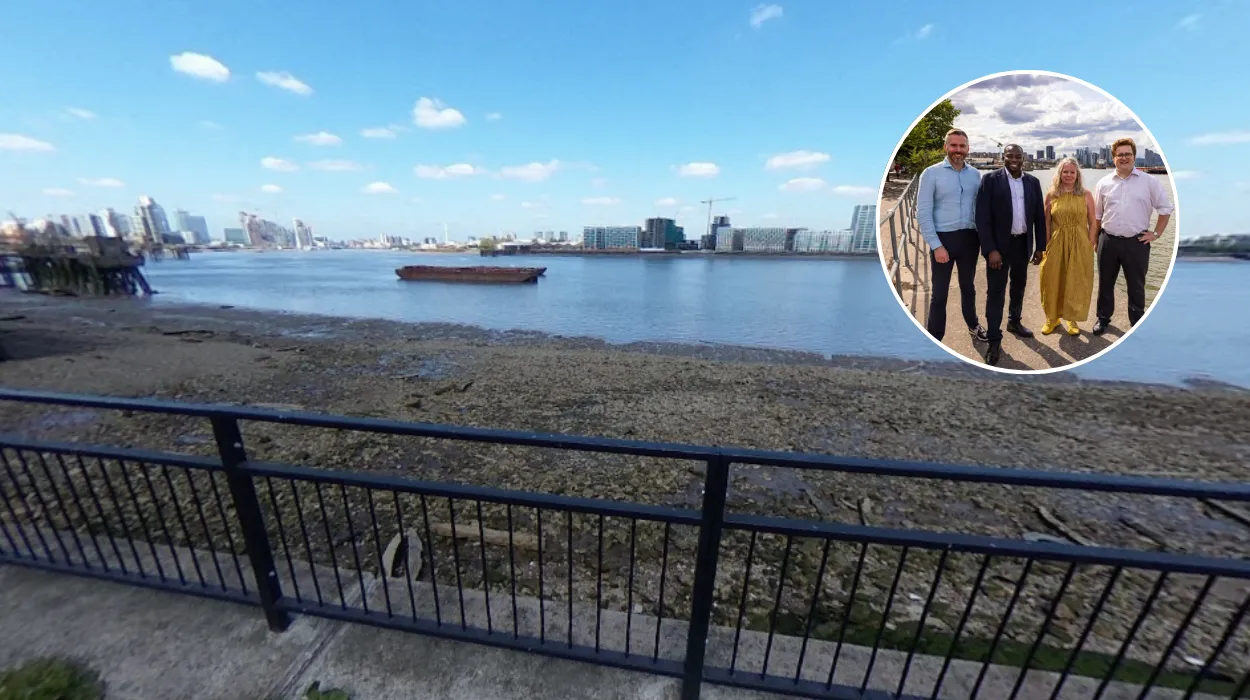
London (The Londoner News) August 8, 2026 – A major public-sector-led initiative has been launched to revitalise the Charlton Riverside, a long-neglected stretch of the Thames between the Greenwich Peninsula and Woolwich, with a vision to create a vibrant neighbourhood of 8,000 homes and 1,000 new jobs over the next two decades.
- Key Points
- Why has the Charlton Riverside regeneration been delayed for so long?
- What is the new strategy for delivering these 8,000 homes?
- What will the new neighbourhood look like?
- How will transport links be improved for future residents?
- What are ‘meanwhile’ uses, and will they be used here?
- What happens next?
The partnership, bringing together the Royal Borough of Greenwich, the Greater London Authority (GLA), and Transport for London (TfL), aims to address historical delays in the area’s development by creating a unified strategic plan for the mostly industrial site.
Why has the Charlton Riverside regeneration been delayed for so long?
Plans for the redevelopment of Charlton Riverside are not new; proposals to transform the area have been circulating since as early as 2012. However, progress has been historically sluggish, with only two blocks of flats completed in the intervening years.
As reported by Amy Houghton for Time Out, the primary obstacles to development have included a fragmented land ownership structure, which made coordinating large-scale projects difficult, alongside a notable lack of essential infrastructure to support such a high-density population. Local authorities have previously cited these infrastructure gaps as a major bottleneck, preventing the area from reaching its potential as a residential hub.
What is the new strategy for delivering these 8,000 homes?
To overcome these long-standing barriers, the Royal Borough of Greenwich has taken a more active role in the development process. The council has been purchasing land in the area and is now one of the largest landowners in Charlton Riverside, placing the public sector “firmly in the driving seat,” as described by the council.
According to the Royal Borough of Greenwich’s official press release, the partnership is taking three concrete steps to transition from vision to delivery: establishing a Strategic Partnership Board, signing a Memorandum of Understanding (MoU) to formalise their shared commitment, and developing a “public sector-led landowners’ partnership”.
Councillor Anthony Okereke, Leader of the Royal Borough of Greenwich, stated: “Over the last four years we’ve rebuilt momentum around Charlton Riverside and brought together the partners needed to turn long-held ambitions into delivery”.
Councillor Okereke further emphasised the council’s shift in philosophy, telling the council’s own media team: “I believe the public sector should lead the market, not simply respond to it… Charlton Riverside deserves good growth, good jobs and better transport. That won’t happen by accident – it requires leadership”.
What will the new neighbourhood look like?
The long-term vision is to create a multi-functional space that balances residential needs with the area’s established economic identity. Alongside the 8,000 new homes, the master plan incorporates new schools, community facilities, and “greener public spaces”.
A critical aspect of the project is the preservation of Charlton Riverside’s status as a key industrial location. As noted by Cameron Blackshaw in MyLondon, construction materials currently arrive at the site by ship and are distributed via rail and road—a logistical function the partners intend to retain while simultaneously fostering the area’s growing creative industries.
Tom Creswell, Greenwich Council’s cabinet member for planning and development, highlighted the dual nature of the vision. As reported by Time Out, Councillor Creswell noted: “Charlton Riverside gives us the opportunity to create new streets, parks, schools, workplaces and homes alongside better connections to the Thames, while strengthening its role as one of London’s key industrial locations and supporting the continued growth of creative industries already practising their craft here”.
How will transport links be improved for future residents?
Transport infrastructure is central to the viability of such a large-scale project. The area is already served by several bus routes, including the Superloop 11 service that connects North Greenwich and Abbey Wood. Additionally, ongoing work to extend ‘Cycleway 4’ is expected to provide a continuous, segregated cycle route between Greenwich and Woolwich, improving connectivity for residents and workers alike.
Tom Copley, Deputy Mayor of London for Housing and Residential Development, expressed strong support for the initiative. As reported by Show House, Mr Copley said:
“I am delighted that the long-term vision for Charlton Riverside has moved a step forward today as City Hall joins with partners to help unlock one of London’s biggest regeneration sites… By bringing planning, transport, infrastructure and regeneration together, we’re laying the foundations for a place that’s better connected, better designed and built for the future”.
Explore more South London News:
Park Upgrade Plans Submitted for Tooting, 2026
Bold Tendencies 20th Anniversary Rooftop Festival in Peckham 2026
What are ‘meanwhile’ uses, and will they be used here?
Recognising that a 20-year project can be daunting for the existing community, the partnership is exploring “meanwhile” (temporary) uses for the land to activate sites and build confidence before permanent construction begins.
According to reporting by Time Out, one such proposal currently awaiting approval involves converting an old storehouse site into an outdoor events space capable of hosting film screenings, gigs, and sporting events. This approach is designed to create an immediate sense of place and community value rather than leaving the land derelict during the long planning and construction phases.
What happens next?
While the signing of the Memorandum of Understanding is a significant milestone, it is not a final planning approval for the entire development. The partners have made it clear that while this provides a framework for cooperation, future planning applications will still need to be submitted and scrutinised.
The project serves as a test case for whether a collaborative, public-sector-led approach can successfully overcome the complexities of regenerating London’s remaining industrial riverside land. With the backing of the GLA, TfL, and the Royal Borough of Greenwich, stakeholders are optimistic that the “long-held ambitions” for Charlton Riverside are finally entering a phase of tangible delivery.
As the project moves into the planning stage, the focus will remain on balancing the need for massive housing delivery with the preservation of the area’s essential industrial and creative contributions to the capital’s economy.