Key Points
- Description of the Conflict: Friends of Burgess Park, a local community group, is requesting a reconsideration of the events policy of Southwark Council because, according to the group, large-scale music events are “trashing” the park.
- Scale of the Issue: The number of people attending such events has already reached 15,000 people per day, and according to locals, this is too much for a 56-hectare green space.
- Environmental Consequences: Locals say that the park becomes bare, damaged ground for weeks after the events, particularly because of the recent hot and dry weather.
- Residents’ Argument: Susan Crisp, Chair of Friends of Burgess Park, says that the scale of events, its size, number of visitors, and time of holding the event causes irreparable harm to the park.
- Council’s Point of View: Cllr Vanessa Threadgold, Southwark Council’s Executive Member for Parks and Recreation, insists that events are crucial for the economy and diversity of the region, and adds that the organizers pay for the restoration and ecological impact.
- Current Situation: While restoration projects of the council and organizers are being held, the residents keep on insisting on a change in the policy.
South London (The Londoner News) August 19, 2026 – Residents and community groups in Southwark have launched a campaign demanding a major policy review regarding the use of Burgess Park for large-scale commercial events, citing severe environmental damage and the degradation of the borough’s largest green space. The call for action follows a summer season that saw thousands of festival-goers descend on the Camberwell park, leaving behind what local advocates describe as “trashed” land that remains in poor condition long after the event infrastructure is removed.
Is the current scale of events at Burgess Park sustainable?
As reported by Louis Dargavel Corbett for MyLondon, the Friends of Burgess Park argue that the park, which serves as a critical retreat for local families throughout the year, is no longer able to withstand the pressure of hosting events with nearly 15,000 daily attendees. The group asserts that while they previously worked alongside the council to mitigate negative impacts, the recent, significant increase in event size has rendered the current management approach inadequate.
Susan Crisp, the Chair of the Friends of Burgess Park, told MyLondon that the situation has deteriorated markedly over the last two years.
“It’s been ongoing for a number of years, and during that time, the council has intentionally increased the size of events taking place in Burgess Park, and that therefore has had a bigger impact,”
Ms Crisp stated. She acknowledged that event companies have historically been responsive to community concerns, but argued that the sheer volume of visitors has outgrown the park’s capacity.
What is the environmental impact on the park’s grounds?
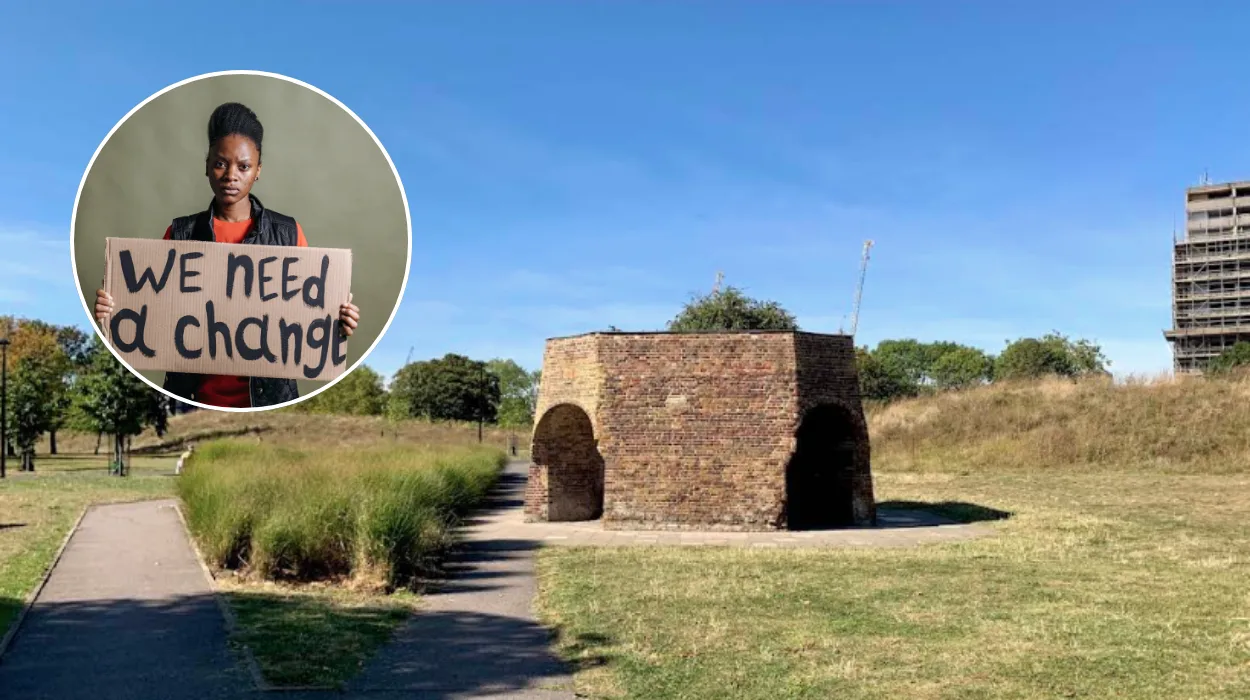
The physical toll of these events is a primary source of frustration for the local community. Residents note that large swathes of the 56-hectare park are frequently cordoned off behind three-metre-high barriers for extended periods to accommodate stage builds and festival infrastructure.
“They come in and fence for that amount of time, but then you have the period beyond that when the ground is particularly trashed,” Ms Crisp explained to MyLondon. While she conceded that the recent hot, dry weather has negatively affected all parks in London, she emphasised that the presence of thousands of people significantly accelerates the damage to the grass and soil. According to the Friends of Burgess Park, this leaves the ground in a “really poor condition” for weeks, lingering long after the event has concluded and before any restorative work can take hold.
Explore more South London News:
Victorian House Renovation in Peckham, South London 2026
London Bus Drivers Strike Over Heatwave Conditions in South London 2026
How does Southwark Council justify these events?
In response to the growing unrest, Southwark Council has defended its current events strategy, highlighting the cultural and economic benefits these gatherings bring to the borough.
As reported by MyLondon, Cllr Vanessa Threadgold, the Executive Member for Parks and Recreation, stated that the council takes all consultation feedback into account alongside its legal, licensing, and environmental obligations. “We understand concerns about the impact they can have on our parks,” Cllr Threadgold told MyLondon. “That’s why our officers monitor ground conditions throughout the year, as well as before, during, and after events.”
Cllr Threadgold further explained the financial mechanisms in place to mitigate the damage. “Event organisers are required to fund restoration works, and all major commercial events are required to pay an environmental impact fee, which is invested back into our parks,” she noted. She also stressed the broader social value of the events, telling MyLondon that they “positively contribute to the celebration of diversity, promote local talent, boost our economy, and create a strong sense of community for all ages.”
Will there be a change to the events policy?
Despite the council’s emphasis on the economic and social necessity of the events, the Friends of Burgess Park remains firm in its demand for a structural review of the governing policy. Ms Crisp argued that the council’s existing policy frames the actions of the production companies and is therefore the root cause of the current conflict.
“Our position is that this is too big, the footprint is too big, and the number of people is too big, the timing of it as well, cuts through the summer holidays,” Ms Crisp told MyLondon. The group is now calling for a formal reassessment of how these events are permitted, managed, and scheduled to ensure that the park’s natural integrity is not sacrificed for commercial interest.
For its part, Southwark Council has signalled a willingness to remain in dialogue with the community. “We are committed to balancing access to high-quality cultural events with the protection of our green spaces and the interests of local communities,” Cllr Threadgold stated to MyLondon, promising that the council “will continue to engage with residents to ensure that concerns are properly considered.”
As the summer season progresses, the tension between the necessity of community-building events and the preservation of public green spaces remains a pivotal issue for residents of Camberwell and the wider Southwark community.