Key Points
- New Development: A notable 180MW data centre project has been launched in East London, adding to the capital’s rapidly growing digital ecosystem.
- Market Dynamics: The UK data centre industry is witnessing a boom in construction activity as a result of the rising need for AI, cloud computing, and digitalisation.
- Focal Point: The East London area, especially the Docklands, is emerging as a hub for hyperscale data centres and mega projects worth billions of pounds.
- Regeneration: Such developments are now being promoted as major regeneration projects that will offer much more than just digital capabilities but will also include public realm enhancements and job creation.
- Market Pipeline: Industry information reveals that the UK data centre market will have a strong pipeline worth over £5 billion of proposed data centres.
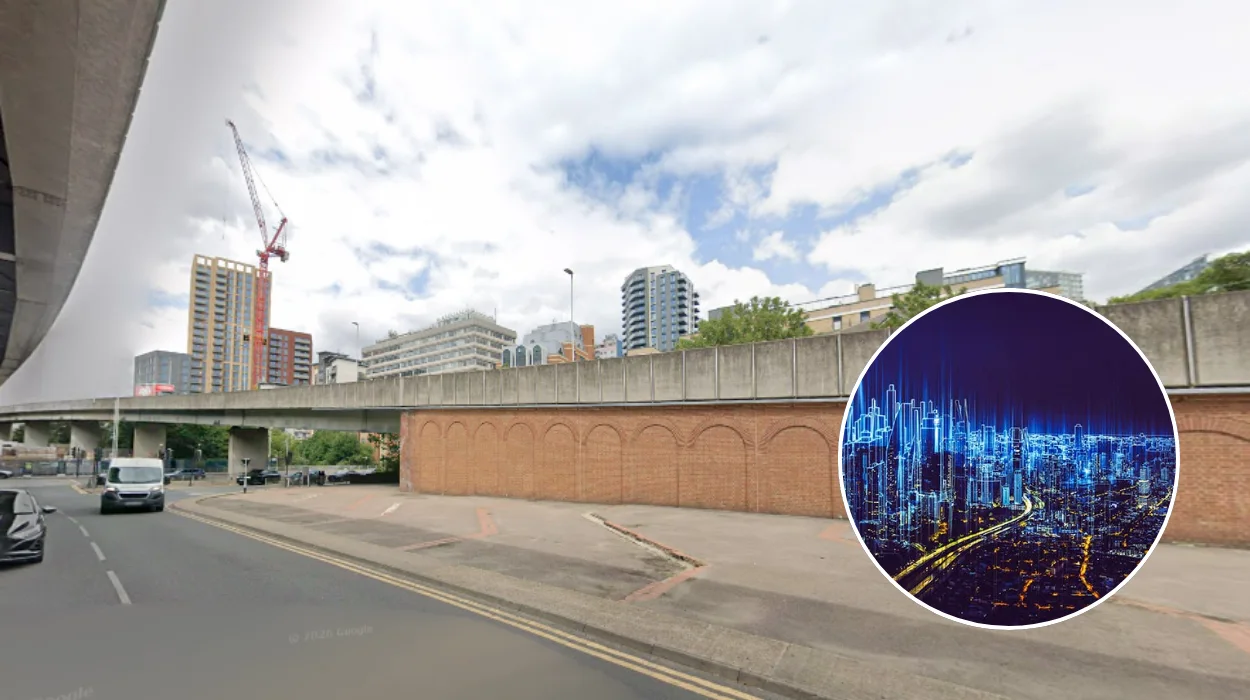
London (The Londoner News) August 19, 2026 – The landscape of East London’s digital infrastructure is set for a substantial transformation as plans have been filed for a new 180MW data centre development, highlighting the UK’s accelerating momentum in the hyperscale computing sector.
- Key Points
- Why is East London becoming a global data centre hotspot?
- What does the broader UK data centre pipeline look like?
- How are developers balancing environmental impact and community needs?
- What are the challenges for future data centre construction?
- What is the outlook for the UK data centre market?
As reported by DataCenterDynamics, the filing represents the latest in a series of ambitious infrastructure projects aimed at quenching the UK’s massive thirst for AI-ready capacity. This development is part of a broader, multi-billion-pound investment trend currently reshaping the capital, with developers increasingly targeting post-industrial brownfield sites to house the server farms that underpin the modern digital economy.
Why is East London becoming a global data centre hotspot?
The concentration of data centre activity in East London is no accident. The area’s historical role as a connectivity hub, combined with the availability of large, previously underutilised industrial sites, makes it a prime location for hyperscale operations.
According to analysis from Barbour ABI, the broader Docklands area is already home to landmark initiatives such as the £3bn G Park Docklands masterplan. This project, which includes the 210MW “Project Olympus” campus, demonstrates how these facilities are evolving from simple server warehouses into complex, integrated regeneration projects. These sites now frequently incorporate public realm improvements, dedicated community buildings, and substantial upgrades to local transport and utility infrastructure.
What does the broader UK data centre pipeline look like?
The 180MW East London filing arrives amidst a nationwide boom. Research from Glenigan, as cited in recent industry reports, indicates that the UK data centre construction pipeline has now surpassed the £5 billion mark.
As noted by Build News, this surge is not limited to the capital. While major projects like the Segro and Pure Data Centres £1 billion London proposal continue to draw attention, the South East, Scotland, and the North West are also seeing significant activity. For instance, the proposed £3.9 billion facility at the former Ravenscraig Steelworks in Scotland represents one of the largest single proposals in the country.
Industry experts suggest that this sustained growth is a direct response to the “new era” of computing. The rise of generative AI, the expansion of cloud services, and the push for digital transformation across government and private sectors have turned data centres into a critical component of national infrastructure.
How are developers balancing environmental impact and community needs?
One of the most notable shifts in the industry is the increased focus on sustainability and community integration. Modern data centre planning is no longer just about power density; it is about how these structures fit into the urban fabric.
Projects like the East Havering Data Centre Campus and Ecology Park—a massive scheme involving an extensive 113-hectare ecology park—illustrate a new model of development. The London Borough of Havering has emphasised that such projects, when developed in partnership with local communities, can serve as catalysts for green technology and local economic growth, potentially creating thousands of jobs and generating significant annual income for local councils.
Furthermore, technical design has moved toward greater efficiency. As highlighted by Cundall, previous high-rise projects in East London’s docklands have pioneered the use of indirect air cooling (IAO) across multiple storeys, a move designed to reduce reliance on greenhouse-gas-emitting refrigerants. The integration of such innovations is becoming a standard requirement for securing planning approvals and achieving high BREEAM ratings.
Explore more East London News:
Massive Grass Fire Tears Through Hornchurch Country Park, Hornchurch, 2026
Barking and Dagenham Named England’s Unfriendliest Place: Analysis and Reaction 2026
What are the challenges for future data centre construction?
Despite the clear economic incentives, the road to project completion is rarely straightforward. Developers are navigating a complex environment defined by land contamination issues, the presence of legacy infrastructure (such as underground tunnels), and the necessity of robust, lawful planning processes.
As stated by Cundall’s Andrew Moore in a technical review of previous London docklands developments,
“There were significant challenges in land contamination; potential for unexploded ordnance and the presence of the East India Road tunnel.”
These realities underscore the complexity involved in transforming historical sites into modern digital hubs.
Moreover, the planning process remains the primary gatekeeper. With local authorities and strategic planning committees increasingly scrutinising energy usage, community benefits, and environmental impact, developers are expected to provide comprehensive, transparent proposals. The ongoing consultation regarding the East Havering Data Centre campus serves as a prime example of the rigorous path these developments must tread before they can proceed to construction.
What is the outlook for the UK data centre market?
The consensus among industry analysts is that the demand for digital infrastructure will continue to outpace supply for the foreseeable future. The UK’s status as a global leader in cyber security and its position as a communications interchange between North America and Europe provide a strong foundation for continued investment.
For contractors and the supply chain, this translates into a sustained period of opportunity. From ground remediation and civil engineering to high-density server fit-outs, the data centre sector has effectively become a cornerstone of the UK’s construction economy.
As the industry looks toward the next decade, the focus will likely remain on the “hyperscale” trend—building bigger, faster, and more efficiently. Whether through the massive, multi-phased masterplans in the Docklands or the innovative, community-integrated proposals in the outer boroughs, the narrative of the UK’s data centre sector is one of rapid, essential, and high-stakes evolution. With every new filing—like the 180MW development recently unveiled—the UK cements its position as a central node in the global data economy.