Key Points
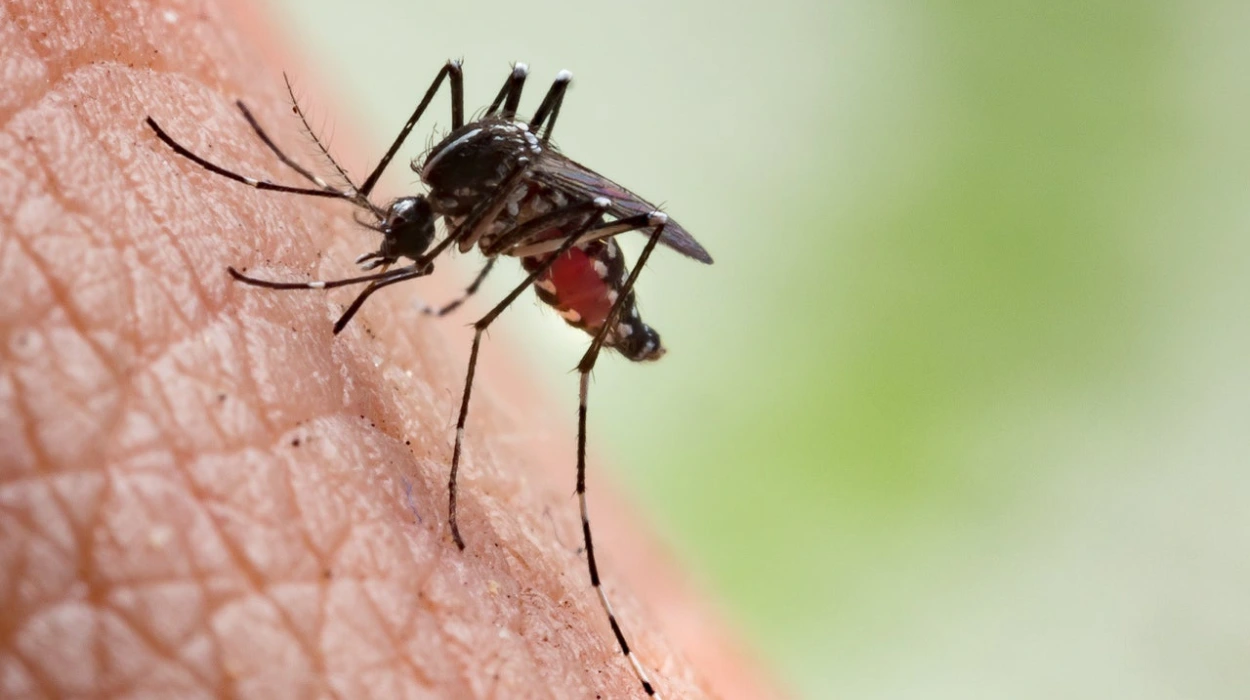
- First Ever Discovery: The UK Health Security Agency (UKHSA) discovered that Aedes aegypti mosquitoes and their larvae were breeding at residential premises in east London. This has become the first ever occurrence where this particular species of mosquitoes was found breeding in the UK.
- Risks of Disease Transmission: Aedes aegypti is known as the yellow fever mosquito which can spread serious and even fatal diseases like dengue, chikungunya, yellow fever, and Zika virus.
- Contributing Factors: Health experts claim that such an unprecedented situation is being caused by heat waves occurring in the city of London.
- Quick Action Taken: Rapid actions, like killing larvae, trapping, and increased surveillance, have already been taken by the authorities to deal with the situation.
- Public Risk Evaluation: According to the UKHSA, there is a very low level of public health risk at the moment because there is no record of anyone having been infected by the mosquitoes or they being able to survive due to cold climate of the UK.
- Protected Location: For security reasons, the specific location of the neighborhood in east London has been kept secret by the health officials.
London (The Londoner News) September 3, 2026 – In a historic and concerning development for British public health, invasive Aedes aegypti mosquitoes—known vectors for deadly tropical diseases—have been discovered breeding inside residential properties in east London. As reported by health correspondents, the UK Health Security Agency (UKHSA) raised an urgent alarm regarding the discovery following a series of unprecedented heatwaves that swept across the capital. Authorities have officially ordered enhanced surveillance, targeted trapping, and rigorous containment activities after detecting the invasive insects and their larvae at multiple domestic sites.
Why Is This Discovery Unprecedented for the UK?
Health chiefs have stressed that this incident represents a critical milestone in British entomology and public health tracking. As highlighted by the UK Health Security Agency, it is the absolute first time that Aedes aegypti has been officially identified breeding anywhere within the United Kingdom. While there have been sporadic modern-day incursions of individual invasive mosquitoes “hitchhiking” into the country via commercial transport, discovering an active breeding population with live larvae signifies a novel escalation.
As reported by Dr Jolyon Medlock, head of zoonoses ecology at the UKHSA, in coverage by the Daily Mirror,
“We believe these mosquitoes are accidental importations. Invasive mosquitoes can hitchhike in vehicles, baggage and imported plants, and if they find a suitable climate, can survive.”
Dr Jolyon Medlock further explained to media outlets that years of warnings regarding climate change-driven northward insect migrations across Europe are now manifesting physically on British soil.
What Diseases Can Aedes aegypti Spread?
The species in question, Aedes aegypti, is globally infamous for its capacity to carry and transmit several high-consequence viral pathogens. According to detailed health briefings released by the UKHSA, the mosquito is capable of spreading dengue fever, chikungunya, yellow fever, and the Zika virus.
Dengue fever can cause debilitating joint pain, high fever, and—in severe cases—life-threatening internal bleeding or organ failure. Meanwhile, Zika virus infection during pregnancy is famously linked to severe congenital malformations, including microcephaly, where babies are born with abnormally small heads. Because of these heavy pathogen profiles, the physical presence of the vector brings immediate scrutiny from epidemiologists worldwide.
Explore more East London News:
Tigermilk Brings Hacienda Grandeur to Spitalfields London 2026
Inside East London’s Secret Film Haven in London 2026
How Are Health Authorities Responding to the Outbreak?
In response to the residential detections, environmental health teams and medical entomologists have executed rapid emergency protocols. Control measures to immediately destroy the active larvae and curb further maturation cycles were implemented straight away.
As detailed in official UKHSA bulletins, the exact area of east London where the mosquitoes were located is being kept confidential to maintain operational integrity, though it is being monitored intensely. Teams are utilizing specialized ovitraps (water-filled containers designed to attract egg-laying females) alongside adult mosquito traps within a tightly managed perimeter to ensure no vectors escape into wider public zones.
Should the British Public Panic About the Risk of Infection?
Despite the alarming nature of finding tropical disease vectors in domestic British homes, health authorities are urging calm. As emphasized by the UKHSA, the immediate risk to the general public has been formally assessed as very low.
Elaborating on this assessment, Dr Jolyon Medlock of the UKHSA stated to the Daily Mirror,
“Despite evidence of breeding in this local area and the recent heatwaves, the species is not established in the UK and cannot survive long-term in the typical UK climate, which is too cold overall.”
Government health guidelines reiterate that there is currently zero evidence of any locally acquired human infections linked directly to this east London cluster, nor are there signs of the bugs spreading into nearby public parks or open spaces.
What Lies Ahead for the UK Climate and Invasive Insects?
While experts agree that the British winter will ultimately act as an effective barrier against the permanent establishment of Aedes aegypti—which typically only survives European winters in localized Mediterranean pockets—the future points toward recurring challenges.
Dr Jolyon Medlock cautioned reporters from the Daily Mirror regarding long-term trajectories, noting,
“However it is expected that in a warming climate, we will continue to see incursions of invasive mosquitoes, and increased reports of them being able to survive in the UK.”
For now, the UKHSA’s Medical Entomology and Zoonoses Ecology team continues its vigilant monitoring strategy across ports, airports, service stations, and urban environments to intercept future arrivals before they can take root.