Greenwich is one of London’s most historically concentrated districts. Its identity extends far beyond the National Maritime Museum and Royal Observatory. Royal palaces, landscaped parkland, Baroque architecture, churches, markets, Georgian houses, archaeological remains and working riverside spaces form a connected historical landscape.
- What makes Greenwich historically important beyond its major museums?
- How can visitors explore Greenwich Park beyond the Royal Observatory?
- Why should visitors see the Queen’s House and its architectural setting?
- What can visitors discover at the Old Royal Naval College without focusing on naval museums?
- Why is St Alfege Church important to Greenwich history?
- What makes Greenwich Market historically significant?
- What lesser-known Greenwich attraction reveals Georgian social and artistic history?
- How can visitors understand Greenwich’s townscape through its streets and historic buildings?
- What role does conservation play in preserving Greenwich’s historical identity?
- Why does Greenwich remain historically relevant today?
- Frequently Asked Question
The district sits on the south bank of the River Thames in southeast London. Its historic core developed around a royal palace, later becoming associated with naval administration, scientific research, public recreation and commerce. Maritime Greenwich was inscribed as a UNESCO World Heritage Site in 1997. The designated property covers 109.47 hectares and includes Greenwich Park, the Queen’s House, the Old Royal Naval College, the Royal Observatory and parts of the town centre.
For visitors interested in history, Greenwich offers an unusually broad sequence of evidence. Roman archaeology, Anglo-Saxon burial mounds, Tudor royal associations, Stuart architecture, eighteenth-century commerce, Victorian public life and twentieth-century wartime remains all survive within a compact area.
What makes Greenwich historically important beyond its major museums?
Greenwich is historically important because its surviving royal, architectural, archaeological and commercial sites document more than a thousand years of development, from Roman occupation and Anglo-Saxon burial activity to Tudor monarchy, Stuart planning, Georgian commerce, Victorian public life and modern conservation.
Greenwich Park provides the earliest visible archaeological evidence. The Royal Parks records traces of a Roman temple in the southern part of the park, excavated in 1999. More than 30 Anglo-Saxon burial mounds also survive on the western side. These remains establish Greenwich as a significant archaeological landscape before its royal period.
The royal phase became especially important after Humphrey, Duke of Gloucester, inherited the land in 1427. He enclosed Greenwich Park in 1433 and constructed a tower on the site now occupied by the Royal Observatory. After his death in 1447, Margaret of Anjou acquired the estate and renamed it the Manor of Pleasance, or Placentia.
Greenwich Palace became closely connected with the Tudor monarchy. Henry VIII was born at Greenwich in 1491. His daughters Mary I and Elizabeth I were also born there. The palace therefore represents a direct physical connection between Greenwich and the political history of sixteenth-century England.
The later transformation of Greenwich was equally significant. In the seventeenth century, royal patronage reshaped the park and riverside landscape. Inigo Jones designed the Queen’s House, while Christopher Wren developed the architectural plan for the Royal Hospital for Seamen. André Le Nôtre influenced the formal landscape design of Greenwich Park. UNESCO identifies this combination of architecture and landscape as central to the World Heritage Site’s Outstanding Universal Value.
How can visitors explore Greenwich Park beyond the Royal Observatory?
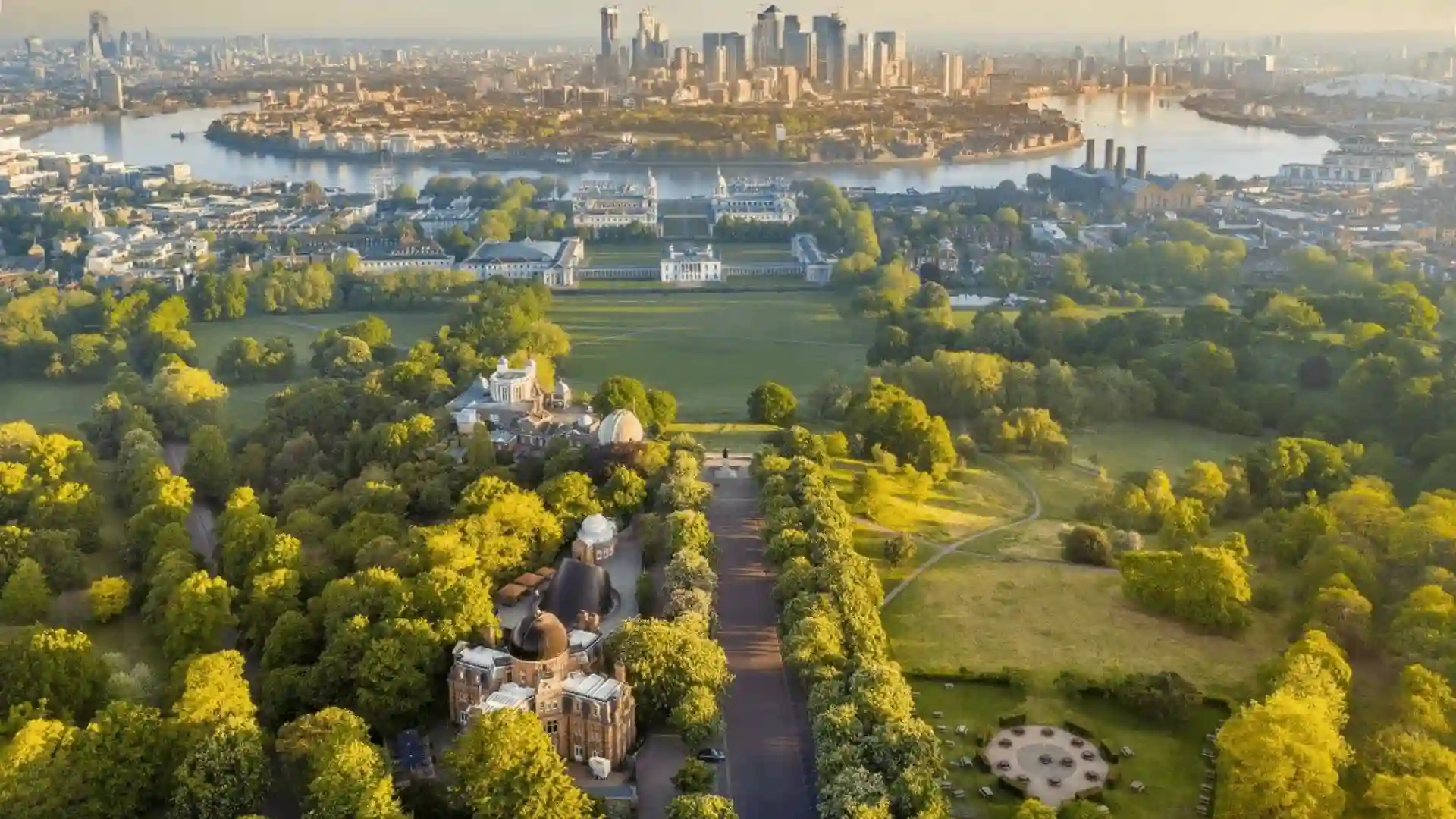
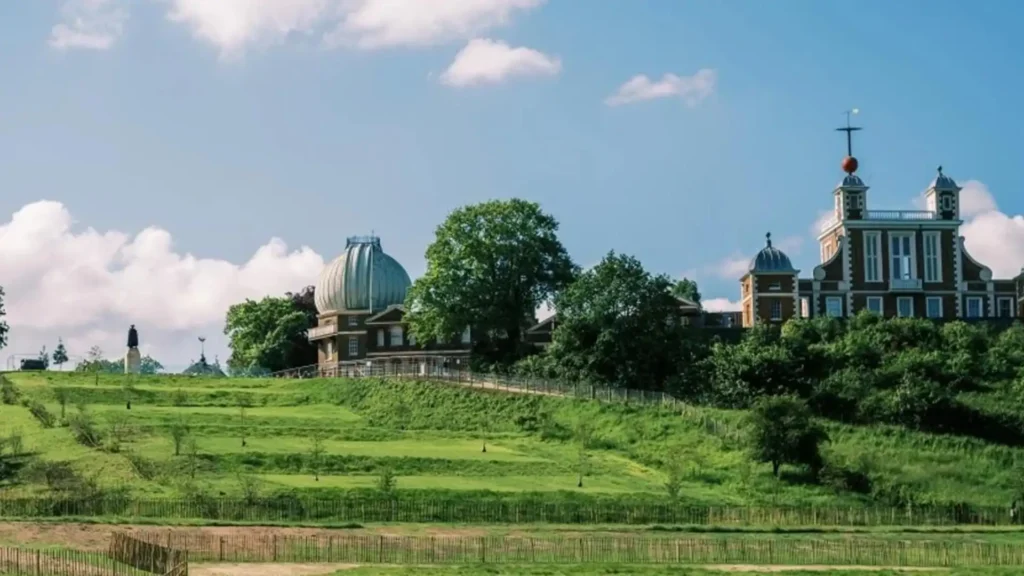
Visitors can explore Greenwich Park through its archaeological remains, formal avenues, historic trees, gardens, viewpoints, monuments and landscape features. The park combines Roman and Anglo-Saxon archaeology with Tudor royal history and a seventeenth-century French-influenced landscape design that remains visible today.
Greenwich Park is one of London’s eight Royal Parks and covers a historic landscape that has developed over many centuries. The park was enclosed under Humphrey, Duke of Gloucester, in 1433. Its royal associations continued through the Tudor and Stuart periods. Henry VIII introduced deer to the park, reinforcing its role as a royal hunting landscape.
The park changed substantially during the reign of Charles II. In the 1660s, the landscape was reorganised into formal avenues, banks and designed spaces. André Le Nôtre, the French landscape designer associated with the gardens of Louis XIV, is connected with this transformation. The resulting geometry remains one of the defining characteristics of Greenwich Park.
The park contains more than 3,000 trees, including the Queen Elizabeth Oak, dated by The Royal Parks to approximately 1290. The landscape also contains the longest herbaceous border in London. These features provide evidence of both historic horticultural management and later public-park development.
Archaeology adds another layer. The Roman temple traces in the southern park and the Anglo-Saxon burial mounds demonstrate that the site predates the royal estate by many centuries. The surviving earthworks are particularly important because they preserve archaeological evidence within an actively used urban park.
Greenwich Park also contains twentieth-century wartime evidence. During the First World War, parts of the park were converted to allotments. During the Second World War, three air-raid shelters served local residents. Archaeologists and Royal Parks volunteers uncovered a major shelter near the Queen’s House in 2019, demonstrating the survival of wartime infrastructure beneath the modern landscape.
The park’s conservation history is also significant. The Greenwich Park Revealed programme invested £12 million in restoring and protecting its historic seventeenth-century landscape while improving environmental conditions and community facilities. The project demonstrates how historic parks function as living heritage rather than static monuments.
Why should visitors see the Queen’s House and its architectural setting?
The Queen’s House is important because Inigo Jones designed it as the first Palladian building in England, introducing a classical architectural language that influenced British country houses and public buildings. Its surviving structure connects Greenwich directly with seventeenth-century royal patronage and architectural change.
The Queen’s House was commissioned in 1616 by Queen Anne of Denmark and designed by Inigo Jones. Construction continued after Anne’s death, with Charles I later giving the house to Queen Henrietta Maria. The building introduced architectural principles derived from Renaissance Italy into the English royal environment.
Palladianism refers to an architectural tradition based on the work of Andrea Palladio, the sixteenth-century Italian architect. The Queen’s House became an important early British example of this classical approach. UNESCO identifies it as the first Palladian building in Britain and notes its influence on classical houses and villas during the following two centuries.
The building is particularly valuable because its significance depends on its setting. The Queen’s House stands within the formal relationship between Greenwich Park and the riverside complex. Its position demonstrates how royal architecture, landscape design and ceremonial planning were combined.
The surrounding landscape also reveals the relationship between architecture and royal power. The Queen’s House sits below the hill occupied by the Royal Observatory. Across the park and towards the Thames, the formal arrangement establishes long visual relationships between major historic structures.
The Queen’s House also forms part of the broader World Heritage ensemble. UNESCO lists the Queen’s House, Old Royal Naval College, Royal Observatory, Royal Park and associated town-centre buildings within the protected property. The designation recognises the combined architectural and landscape value rather than treating each structure as an isolated attraction.
For students of architectural history, the building provides a direct case study in the transfer of European classical ideas into England. For heritage researchers, it demonstrates how royal buildings can retain historical significance through architecture, spatial planning and surviving fabric.
What can visitors discover at the Old Royal Naval College without focusing on naval museums?
The Old Royal Naval College provides evidence of royal, military, architectural and social history through its Baroque buildings, Painted Hall, Chapel, riverside setting and earlier palace foundations. Its history extends from Greenwich Palace through the Royal Hospital for Seamen to naval education.
The Old Royal Naval College occupies the site of Greenwich Palace, also known as the Palace of Placentia. The palace was associated with Tudor monarchs including Henry VIII and Elizabeth I. Its later redevelopment transformed the riverside estate into one of England’s most important Baroque architectural groups.
Christopher Wren developed the master plan for the Royal Hospital for Seamen in the late seventeenth century. The hospital was established to provide accommodation and care for retired sailors, known historically as Greenwich Pensioners. Construction continued over several decades and involved architects including Wren and Nicholas Hawksmoor.
The Painted Hall is one of the most important interiors within the complex. Its decorative programme illustrates political and imperial themes through monumental painting and architecture. The Chapel provides another important surviving interior and retains the formal character of the original institutional complex.
The site later became the Royal Naval College. Naval education operated there from the nineteenth century, establishing another phase in the building’s history. This transition demonstrates how a royal charitable institution became an educational centre connected to Britain’s naval establishment.
The architecture is also important for understanding the relationship between Wren and Hawksmoor. Wren, born in 1632, was one of the leading English architects of the late seventeenth and early eighteenth centuries. Hawksmoor, his younger collaborator, developed several major Baroque buildings and contributed to the continuing construction of the Greenwich complex.
UNESCO describes the Old Royal Naval College as part of an outstanding Baroque group and highlights the preservation of original form, design and materials, particularly within the Painted Hall and Chapel.
The site also supports research into social history. Greenwich Pensioners were former naval personnel who lived within the hospital community. Their presence created a distinctive institutional population connected to Britain’s maritime workforce.
Archaeological evidence continues to add detail. Recent work in Greenwich Park has identified objects associated with Greenwich Hospital, including a pensioner’s button. Research into historic water infrastructure has also identified conduits that supplied the hospital complex.
To experience this historic district in person today, consult our comprehensive [How Richmond Became London’s Favourite Royal Riverside Escape Throughout British History] for itineraries and visiting parameters.
Why is St Alfege Church important to Greenwich history?
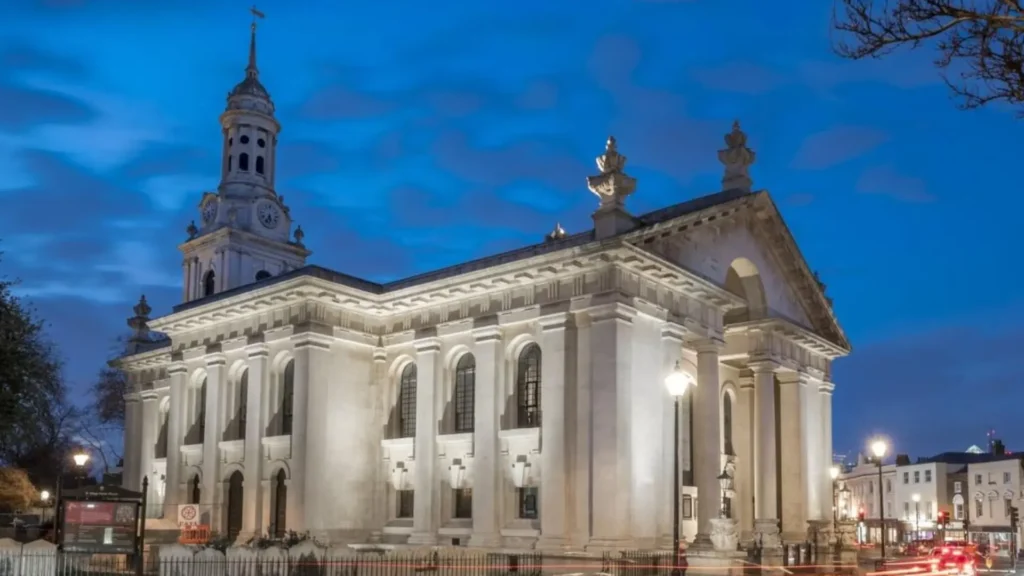
St Alfege Church is historically important because its present structure was designed by Nicholas Hawksmoor and rebuilt between 1712 and 1714. The church represents Greenwich’s eighteenth-century urban expansion and remains a major architectural element within the World Heritage Site.
St Alfege Church stands within the historic town centre, close to the commercial streets that developed around the former royal palace. Its dedication commemorates Alfege, an eleventh-century Archbishop of Canterbury who was killed at Greenwich in 1012.
The medieval church occupied an important position within the developing settlement. The existing building dates from the early eighteenth century and was designed by Nicholas Hawksmoor. Reconstruction took place between 1712 and 1714.
Hawksmoor’s design belongs to the English Baroque tradition. The building uses monumental proportions and classical architectural principles to create a strong civic and ecclesiastical presence. UNESCO specifically identifies St Alfege’s church and its surrounding formal terraces as part of the historic urban setting of Maritime Greenwich.
The church also provides evidence of Greenwich as a residential and commercial settlement rather than simply a royal or naval destination. Its location among streets, houses and businesses demonstrates how the town grew around the royal estate.
For genealogical researchers, parish churches have particular importance because historical parish records provide evidence of births, marriages and burials. St Alfege therefore belongs to the documentary infrastructure through which generations of Greenwich residents can be traced.
The church’s survival also illustrates the importance of conservation within a changing urban environment. Its architectural value is reinforced by its relationship with nearby terraces and streets. These buildings form part of the approach to the principal World Heritage monuments.
What makes Greenwich Market historically significant?
Greenwich Market is historically significant because regulated trading was established by Royal Charter in 1700, while the present market formally opened in 1737. Its continuous commercial role connects eighteenth-century Greenwich with the modern town’s independent retail and cultural economy.
Greenwich Market developed from earlier trading activity. Market stalls operated in Greenwich from at least the fourteenth century. A Royal Charter granted in December 1700 established a regulated market associated with the Commissioners of the Royal Hospital for Seamen. The market formally opened on 3 September 1737.
The original market was positioned beside the Old Royal Naval College. Sixty stallholders sold meat, fruit and vegetables, while other traders offered pottery and household goods. This arrangement reflected the practical needs of a growing institutional and residential population.
Parliament strengthened the market’s administrative framework in 1849. An Act gave the Commissioners of Greenwich Hospital greater powers to regulate markets, collect rents and create by-laws. The change illustrates the increasingly formal management of urban commerce during the Victorian period.
The market underwent structural changes in the twentieth century. In 1902, its deteriorated timber roof was replaced by three glazed roofs supported by steel trusses. These structures remain important to the market’s architectural identity.
Trading patterns changed again after the Second World War. By 1985, the market had become an occasional one-day-a-week operation focused increasingly on antiques and arts and crafts. Its later revival restored the market as a major part of Greenwich’s visitor economy.
Greenwich Market now occupies a protected position within the Maritime Greenwich World Heritage Site. Its Grade II heritage listing and restored roof demonstrate how commercial buildings can retain historical significance while accommodating contemporary uses.
The market is valuable for cultural historians because it links economic history with everyday life. Unlike monumental royal buildings, markets document ordinary consumption, craft production, retail activity and social interaction.
What lesser-known Greenwich attraction reveals Georgian social and artistic history?
The Fan Museum reveals Georgian social and artistic history through its collection of fans, historic townhouses and research into fan making. Established in 1991, it occupies two Grade II listed Georgian houses dating from 1721 and preserves more than three thousand years of fan culture.*
The Fan Museum occupies two early Georgian townhouses at 10 and 12 Crooms Hill. The buildings were constructed in 1721 and retain important architectural features, including façades, staircases, panelled rooms, courtyard elements and wrought-iron railings.
The museum opened to the public in 1991. It is devoted entirely to the history, culture and craft of fans and is accredited by Arts Council England. Its collection provides an unusual route into social history because fans functioned as accessories, status objects and works of decorative art.
The history of fans reaches far beyond Britain. The museum documents fan traditions extending back thousands of years, including representations from ancient Egypt and surviving archaeological examples associated with the tomb of Tutankhamun.
The collection also illuminates eighteenth-century Britain. Fan leaves carried printed and painted imagery, including landscapes, social scenes and decorative designs. Such objects provide evidence of fashion, artistic production, international trade and elite consumption.
The museum’s buildings are equally significant. Georgian townhouses provide evidence of domestic architecture in the period when Greenwich developed as a fashionable residential district around the royal and naval complex.
The Fan Museum therefore expands the historical definition of Greenwich. It demonstrates that heritage extends beyond royal institutions and maritime history into decorative arts, domestic architecture, manufacturing and social customs.
How can visitors understand Greenwich’s townscape through its streets and historic buildings?
Greenwich’s townscape preserves the relationship between royal institutions, residential development and commercial activity. Historic terraces, churches, market buildings and streets around the former palace demonstrate how a royal settlement developed into a permanent urban community serving residents, workers, students and visitors.
Greenwich town grew around the gates of the royal palace. UNESCO identifies its villas, formal stuccoed terraces and town-centre buildings as part of the setting of the World Heritage Site. This urban fabric is essential because it connects the monumental riverside buildings with everyday residential and commercial life.
The eighteenth century was particularly important for Greenwich’s urban development. The reconstruction of St Alfege Church, the growth of formal terraces and the expansion of commerce created a recognisable Georgian townscape.
The architecture reflects social hierarchy. Large terraces and villas accommodated wealthier residents, while commercial streets supported shops, markets, trades and services. The proximity of the Royal Hospital generated demand for food, clothing, accommodation and other goods.
Greenwich’s riverside location also shaped its economy. The Thames provided transport, employment and access to London’s wider commercial network. The Royal Hospital and later Royal Naval College strengthened the connection between the town and national maritime institutions.
The town centre also experienced twentieth-century disruption. UNESCO records that parts of the urban pattern were damaged by Second World War bombing and later reinstated. Conservation therefore involves maintaining both surviving historic fabric and carefully restored buildings.
The World Heritage designation provides a framework for protecting this urban relationship. UNESCO identifies development pressure and tall buildings within the wider setting as threats to the visual and architectural integrity of the property.
Walking through Greenwich town therefore provides a practical method of reading historical change. Streets, terraces, market structures and churches reveal the gradual transition from royal settlement to an established London district.
What role does conservation play in preserving Greenwich’s historical identity?
Conservation preserves Greenwich as a connected historical landscape rather than a collection of isolated monuments. Archaeology, listed buildings, designed parkland, restored interiors and World Heritage management protect evidence spanning Roman occupation, royal history, Georgian development, naval institutions and modern public life.
Maritime Greenwich was inscribed on the UNESCO World Heritage List in 1997 under four criteria recognising artistic achievement, architectural influence, historical landscape and scientific endeavour. The designated property covers 109.47 hectares, with a 174.85-hectare buffer zone.
The designation recognises the interaction between buildings and landscape. The Queen’s House, Old Royal Naval College, Royal Observatory, Greenwich Park and town centre form one historical system. Their significance depends partly on their visual and spatial relationships.
Greenwich Park demonstrates the complexity of landscape conservation. The park retains elements of its seventeenth-century formal design while supporting recreation, biodiversity, events and public access. Restoration work therefore balances historical accuracy with contemporary public use.
The Royal Parks completed Greenwich Park Revealed after four years of projects and £12 million of investment. The programme restored historic landscape features, improved the natural environment and created community facilities and learning opportunities.
Archaeological conservation is equally important. Roman remains, Anglo-Saxon burial mounds, wartime shelters and historic water conduits show that significant evidence survives beneath or within the modern landscape. Excavation and archaeological recording provide information that visible architecture alone cannot supply.
The Old Royal Naval College demonstrates another conservation model. UNESCO records that its Painted Hall and Chapel retain original form, design and materials to a high degree. The Greenwich Foundation manages the buildings for conservation, maintenance and public interpretation.
Greenwich Market illustrates adaptive heritage use. Its historic market function continues while the building accommodates modern traders and visitors. The restoration of its roofs in 2016 supported the preservation of an important Grade II heritage structure.
These examples demonstrate why Greenwich remains important for educators and researchers. The district contains physical evidence for studying architecture, archaeology, royal government, naval administration, urban economics, religion, landscape design and public heritage.
Why does Greenwich remain historically relevant today?
Greenwich remains historically relevant because its surviving buildings, landscapes and archaeological remains connect national history with everyday urban life. Its World Heritage designation, conservation programmes and continuing public uses ensure that Roman, royal, architectural, naval and commercial evidence remains accessible.
Greenwich represents several major historical processes within a compact geographical area. Roman occupation established early activity. Anglo-Saxon burial practices left archaeological evidence. Medieval royal ownership created the foundations of the later palace estate. Tudor monarchs strengthened the royal association.
The seventeenth century produced the architectural and landscape framework that defines modern Greenwich. Inigo Jones introduced Palladian architecture through the Queen’s House. Christopher Wren and Nicholas Hawksmoor created the Baroque Royal Hospital complex. André Le Nôtre influenced the formal design of Greenwich Park.
The eighteenth and nineteenth centuries expanded the town beyond royal use. Markets, churches, terraces, shops and public institutions established Greenwich as a functioning urban community. Greenwich Market’s history illustrates this transformation particularly clearly, from its regulated eighteenth-century foundation to its present commercial role.
The twentieth century added new layers. Wartime shelters and allotments demonstrate how historic landscapes were adapted during national emergencies. Later conservation programmes recognised the importance of retaining these physical traces.
Today, Greenwich functions simultaneously as a residential district, visitor destination, educational environment, conservation area and World Heritage Site. Its historical importance does not depend exclusively on museum collections. Streets, trees, archaeological earthworks, churches, market structures and architectural interiors all contribute evidence.
For history enthusiasts, Greenwich provides a chronological landscape that can be examined through physical remains. For educators, it provides accessible examples of architectural history, archaeology, monarchy, urbanisation and conservation. For genealogical researchers, parish institutions, residential streets and commercial records provide pathways into the lives of earlier communities.
The strongest historical understanding therefore comes from looking beyond the district’s best-known institutions. Greenwich Park reveals archaeological and landscape history. The Queen’s House demonstrates architectural innovation. The Old Royal Naval College records royal and institutional transformation. St Alfege Church preserves ecclesiastical and civic history. Greenwich Market documents commerce. The Fan Museum provides evidence of decorative arts and Georgian domestic culture.
Together, these sites demonstrate why Greenwich remains one of London’s most significant historic districts. Its value lies in the survival and interaction of different historical layers. The result is a living urban environment in which archaeological evidence, royal architecture, public landscapes and everyday commercial spaces continue to define the character of Greenwich.
UNESCO’s assessment captures this integrated significance by identifying Greenwich as an exceptional ensemble of architecture and landscape associated with English artistic, scientific and political development during the seventeenth and eighteenth centuries. Its continued conservation ensures that this historical evidence remains available for future research, education and public interpretation.
Frequently Asked Question
Is Greenwich Park worth visiting for history?
Yes. Greenwich Park contains Roman archaeological remains, more than 30 Anglo-Saxon burial mounds, historic trees, formal avenues and remnants of its seventeenth-century landscape design. The park was enclosed in 1433 and became an important royal hunting ground under the Tudor monarchy.