- Nigerian industrial giant Dangote Cement Plc officially suspended its proposed secondary listing and share offering on the London Stock Exchange (LSE), citing prevailing market conditions and strategic corporate priorities.
- The decision halts early-stage plans explored earlier in the year for an estimated multibillion-dollar London debut, though the company affirmed that its ordinary shares remain actively traded on the Nigerian Exchange Limited (NGX).
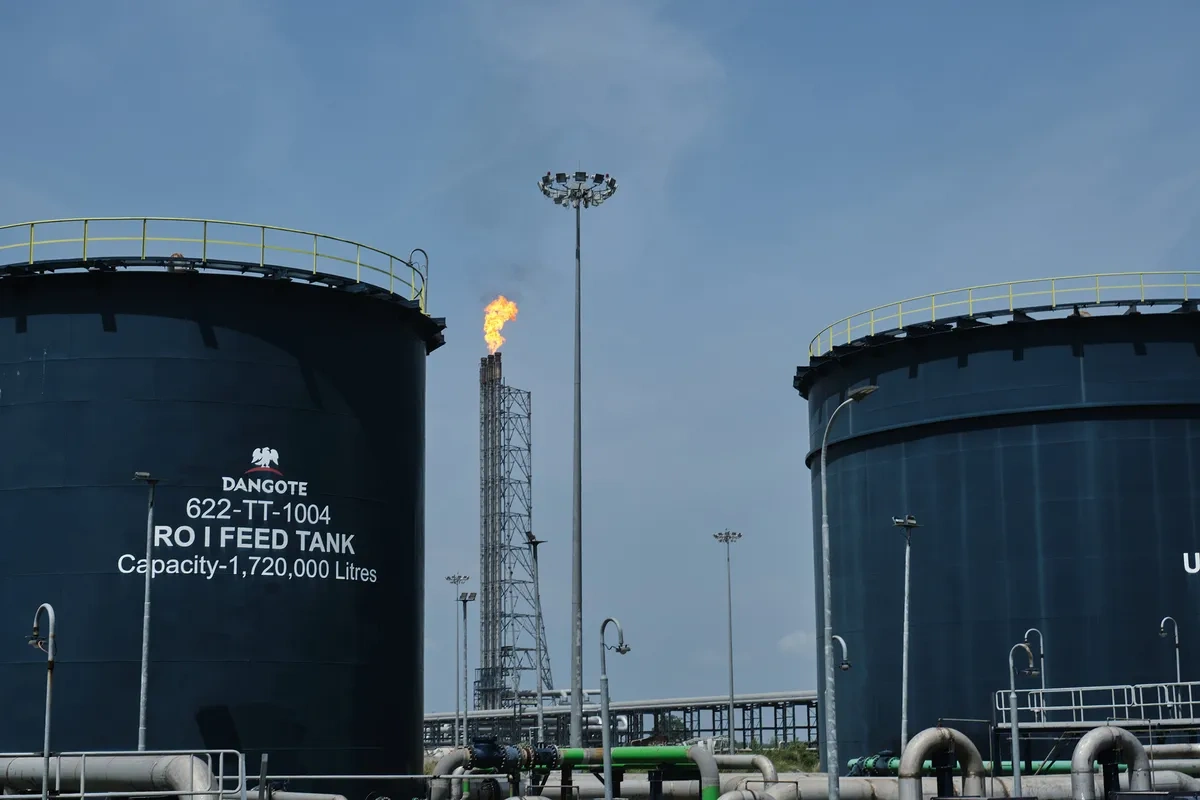
- In stark contrast to the paused London move, the landmark initial public offering (IPO) of the Dangote oil refinery attracted over $4.1 billion in investor orders, nearly tripling its initial target.
- The refinery offering secured massive domestic and regional support—including $1.9 billion from African investors and strong participation from institutional funds like South Africa’s Public Investment Corporation—highlighting deep domestic capital mobilization.
- Financial analysts view the divergence between the two corporate actions as a pivotal stress test for African market liquidity, contrasting international macro volatility against burgeoning domestic capital strength.
London (The Londoner News) November 11, 2026 – Nigerian billionaire Aliko Dangote’s business empire has delivered a striking dichotomy to global capital markets, illustrating the contrasting fortunes of domestic versus international fundraising avenues. While Dangote Cement Plc formally scrapped its highly anticipated secondary listing on the London Stock Exchange due to unfavorable market volatility and shifting strategic priorities, the flagship Dangote oil refinery IPO smashed regional records by pulling in more than $4.1 billion in orders. The simultaneous maneuvers underscore a broader structural evolution across African finance, where major enterprises increasingly find robust, high-volume capital demand within domestic and continental bourses even as traditional Western financial hubs face prolonged issuance headwinds.
- Why Did Dangote Cement Withdraw Its Planned London Listing?
- How Does the Refinery IPO Compare in Scale and Investor Participation?
- What Are Regional Exchanges Doing to Expand Access?
- Background of the Particular Development After the News
- How This Development Can Affect African Issuers, Regional Investors, and Global Bourses
According to corporate disclosures filed with the Nigerian Exchange Limited (NGX) and reported by financial news services, Dangote Cement and its parent company, Dangote Industries Limited (DIL), jointly resolved to step back from the proposed London transaction. As reported by Global Cement correspondent news desks following the board update, Dangote Cement stated that it was no longer pursuing a UK listing “at this time,” pointing directly to “current market conditions and the company’s strategic priorities”.
The decision brings a sudden halt to preparations that had gained momentum throughout 2026, including a high-profile capital markets day hosted in London. Industry analysts tracking European and African exchanges noted that the aborted secondary offering represents an additional blow to the London Stock Exchange, which has struggled to retain major issuers amid a broader wave of de-listings, corporate buyouts, and subdued IPO activity. However, company executives reiterated that the withdrawal does not affect day-to-day operations, financial health, or business plans, emphasizing that Dangote Cement—valued at approximately ₦24.79 trillion ($18.42 billion)—maintains a solid anchor on the domestic exchange where it delivered a 31% jump in nine-month profits.
Conversely, the simultaneous rollout of the Dangote oil refinery’s $1.6 billion primary share offering demonstrated unprecedented investor appetite. As reported by Bloomberg and regional financial correspondents, the offering drew staggering order books totaling $4.1 billion, nearly triple its original fundraising target. Domestic investors alone accounted for $1.9 billion in orders, while international interest pushed foreign allocations past capacity.
Why Did Dangote Cement Withdraw Its Planned London Listing?
The decision to shelve the London Stock Exchange secondary listing stems from a complex intersection of international market headwinds and strategic realignment:
- Global Macro Volatility: Financial experts tracking cross-border equities noted that post-election market turbulence in major Western economies triggered sharp equity sell-offs, dampening institutional risk appetite for emerging-market cross-listings.
- Valuation and Execution Timing: Management determined that prevailing conditions on European bourses did not offer an optimal valuation environment to justify the immense cost and dilution of a major secondary international offering.
- Strength of Domestic Liquidity: With Dangote Cement posting robust financial results—including revenues exceeding ₦3.8 trillion ($2.8 billion) over nine months—leadership concluded that leaning on its established domestic shareholder base on the NGX provided sufficient stability without external geographic expansion.
How Does the Refinery IPO Compare in Scale and Investor Participation?
While the cement division retreated from London, the oil refinery IPO established a new benchmark for capital raising across the African continent. The transaction’s composition highlights a paradigm shift in where major industrial assets source their backing:
| Offering Metric | Dangote Cement Proposed London Move | Dangote Refinery Landmark IPO |
| Target Asset | Africa’s largest cement producer (NGX-anchored) | Strategic mega-refinery and downstream complex |
| Fundraising Scope | Multibillion-dollar secondary liquidity event | $1.6 billion baseline target (scaling toward $2.1 billion via over-allotment) |
| Total Order Book | Suspended prior to final bookbuilding due to market conditions | $4.1 billion (nearly 3x subscribed) |
| Key Investor Base | Intended global institutional funds in London | $1.9B domestic, $2.1B international, alongside South Africa’s PIC and regional pension funds |
As detailed in market intelligence reports, the refinery IPO succeeded by mobilizing nearly 4 million applications across Africa’s 54 countries, supplemented by major institutional participation from South Africa’s Public Investment Corporation (PIC) and Nigerian pension funds representing roughly 11 million members.
What Are Regional Exchanges Doing to Expand Access?
In tandem with the refinery’s record-breaking domestic performance, capital market authorities across Africa are actively working to capture and retain intra-continental wealth.
As reported by CNBC Africa journalists covering regional integration, Dangote representatives initiated strategic discussions with cross-border bourses—such as the Abidjan-based BRVM—to explore frameworks allowing wider multi-country participation in major industrial floats. Edoh Kossi Amenounve, CEO of the BRVM, noted that diversifying capital markets beyond traditional banking and telecommunications into industrialization, energy, and agriculture is critical for the continent’s long-term financial resilience.
Background of the Particular Development After the News
The contrasting trajectories of Dangote’s cement and refinery assets reflect a transformative era for African capital markets. For decades, major African corporations looked almost exclusively to London, New York, or Toronto to raise hard currency and secure global visibility. However, protracted regulatory burdens, stagnant valuations on Western exchanges, and rising domestic institutional liquidity have altered executive calculations.
In late 2026, Nigerian capital markets experienced a wave of heightened activity, driven by robust corporate earnings, regulatory reforms, and structural efforts to channel massive domestic pension and retail savings into productive industrial assets. Against this backdrop, Dangote Cement’s pivot away from London demonstrates corporate pragmatism, choosing not to force an international listing during a period of global market jitters, while the refinery’s massive domestic oversubscription signals that African capital markets have matured enough to bankroll world-class mega-projects internally.
How This Development Can Affect African Issuers, Regional Investors, and Global Bourses
The outcome of Dangote’s dual-market strategy will trigger profound structural adjustments across international and domestic financial ecosystems:
1. African Corporate Issuers and Capital Strategy
For emerging-market conglomerates, the successful oversubscription of the refinery IPO proves that heavy reliance on Western financial centers is no longer a prerequisite for large-scale capital mobilization. Future African mega-listings are increasingly likely to prioritize primary domestic and regional bookbuilding, turning to Western exchanges only when macro conditions guarantee premium valuations.
2. Regional Institutional and Retail Investors
For institutional funds, pension administrators, and retail participants across Africa, channeling over $4.1 billion into domestic industrial equity builds deep local capital pools. This retention of wealth fosters greater financial independence, deepens secondary market liquidity, and ensures that ordinary citizens share directly in the dividends generated by continent-defining infrastructure assets.
3. Western Bourses and London Market Competitiveness
For the London Stock Exchange and other European financial hubs, the withdrawal of a premier asset like Dangote Cement highlights an ongoing competitive vulnerability. As international issuers grow wary of volatile Western market sentiment and sluggish local valuations, traditional exchanges risk losing out on high-growth emerging-market giants unless regulatory frameworks and listing incentives become more flexible.