Key Points
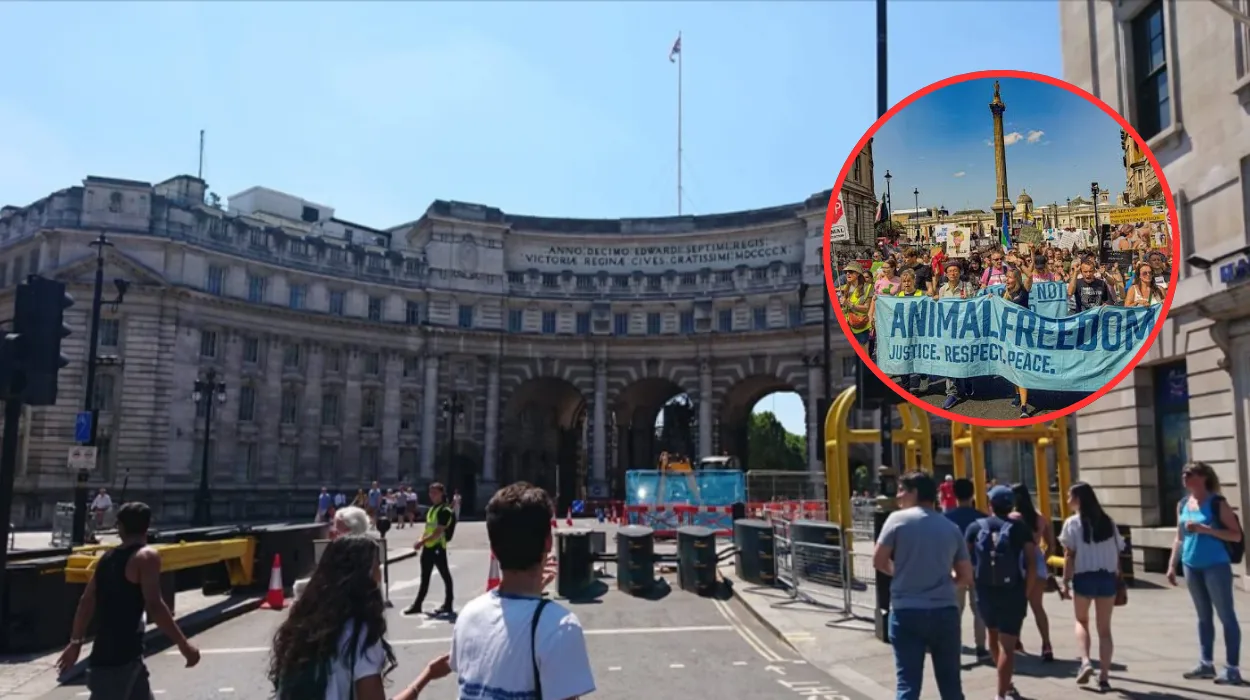
- Mass Mobilisation: Hundreds of animal rights activists converged in central London, staging coordinated demonstrations across high-profile locations including Trafalgar Square, Parliament Square, and luxury commercial districts.
- Core Demands: Protesters vocally demanded an immediate transition away from factory farming, an end to animal testing, and strict governmental policy shifts toward a plant-based food system.
- Direct Action Tactics: Activists utilized eye-catching civil disobedience methods, including theatrical displays with fake blood, banners declaring animals are “not property”, and peaceful sit-ins to capture public and political attention.
- Official and Legal Pushback: The demonstrations coincide with mounting tensions between animal welfare charities, legal advocates, and state authorities over tightening restrictions and proposed regulatory amendments regarding protest rights near sensitive agricultural and scientific testing sites.
London (The Londoner News) August 22, 2026 — In a vivid display of public dissent that rattled the heart of the British capital, a coalition of animal rights campaigners and environmental activists mobilized across central London to stage large-scale demonstrations calling for sweeping legislative and cultural reforms regarding animal welfare.
The coordinated rallies, which brought together various grassroots factions and prominent advocacy networks, saw participants target iconic public spaces and major commercial hubs. Activists unfurled bold banners, engaged in street theatre, and delivered impassioned speeches condemning what they described as systemic institutional cruelty and government inaction on ecological and ethical farming crises. The demonstrations highlight an intensifying clash between civic groups pushing for aggressive systemic changes and established commercial and governmental frameworks.
Why Are Animal Rights Activists Protesting in Central London?
The primary catalyst behind the capital-wide mobilization centers on deep-seated frustrations regarding the government’s environmental policies and the continued state backing of intensive agricultural practices. Demonstrators argued that current legislative measures fail to address the catastrophic ecological and ethical tolls exacted by modern farming industries.
As reported by senior correspondents covering the demonstrations, activists underscored that the ongoing exploitation of animals poses an existential threat not only to wildlife and livestock but to global public health. Protesters utilized striking visual elements, such as placards reading “Animals are not property” and graphic demonstrations highlighting the realities of the fur, leather, and vivisection industries.
Elaborating on the core objectives of the mobilization, a spokesperson for the organizing coalitions stated that the demonstrations were designed to force lawmakers to wake up to mounting ecological emergencies. As stated by campaign representatives during the rally and noted in agency reports,
“The government must urgently address the hidden devastation caused by industrial agriculture, shifting our societal focus toward sustainable, plant-based alternatives before structural damage to our climate and ecosystems becomes irreversible.”
Explore more Local London News:
Top Art Exhibitions to See in London, 2026
Northolt Post Office Redevelopment Approved by Ealing Council Northolt 2026
What Specific Industries and Locations Were Targeted?
The protests were strategically distributed across multiple high-traffic zones in London to maximize public visibility and disrupt normal commercial operations. Key focal points included Parliament Square, major high-street shopping destinations like Regent Street and Oxford Street, and government administrative corridors.
At several high-end retail locations, activists staged theatrical die-ins and display setups featuring mock animal skins, fake blood, and symbolic models to draw a direct line between consumer habits and industrial slaughter. Journalists on the ground noted that demonstrators specifically targeted storefronts associated with the trade of animal-derived products, including luxury leather goods and commercial wool lines.
Detailing the intent behind these commercial site selections, field reporters documented how participants sought to challenge everyday consumer complacency. According to statements gathered by wire service reporters from participating activists,
“Every purchase of animal-derived material supports a hidden chain of immense suffering. We are bringing these realities straight to the doorsteps of those profiting from cruelty so that the public can no longer look away.”
How Are Legal Authorities and Civil Liberties Groups Responding?
The demonstrations in London unfold against a complex legal backdrop characterized by tightening state restrictions on public assemblies, particularly near sensitive agricultural, research, and institutional facilities. Civil liberties organizations and legal advocacy groups have expressed mounting alarm over legislative amendments that critics argue are designed to muzzle peaceful dissent.
Legal experts representing welfare charities have pointed out that recent regulatory shifts risk criminalising fundamental rights to protest under the guise of public order. As highlighted in legal commentary covered by specialized legal and investigative reporters, the government has faced heavy criticism for pushing through sweeping statutory changes without adequate public consultation from affected welfare sectors.
Weighing in on the broader legal implications of these restrictions, Edie Bowles, a solicitor at Advocates for Animals representing prominent welfare groups, remarked that the state measures
“risk criminalising peaceful protest without proper legal basis.”
Bowles further noted, as documented by legal affairs journalists, that
“the government has sought to expand serious public order offences through a broad amendment, following a consultation process that excluded the very groups most affected.”
What Lies Ahead for the Animal Rights Movement in the UK?
As the dust settles on the latest wave of demonstrations in London, organizers have vowed to maintain intense pressure on policymakers through a combination of direct action, legal challenges, and public awareness campaigns. With ongoing friction between activist networks and corporate entities, the debate over the future of farming, scientific testing, and public protest rights remains a deeply polarized flashpoint in British society.
Media analysts and political observers suggest that as public concern over climate change and ethical consumption continues to grow, authorities will face increasing pressure to balance public order with the fundamental democratic right to protest. For now, activist groups maintain that their campaigns will persist until substantial legislative frameworks are enacted to safeguard animal welfare across the United Kingdom.