Key Points
- Strategic Expansion: British disputes specialist firm Candey has officially launched a new office in Singapore, establishing a physical presence across four of the world’s primary financial and legal hubs.
- Conflict-Free Specialist Position: Operating as a disputes-only specialist law firm, Candey maintains a conflict-free model, allowing it to take on complex litigation and arbitration mandates that larger, transaction-heavy international firms must decline.
- Leadership Appointment: International disputes expert Christopher Bailey has been named managing partner of the Singapore office, bringing 25 years of legal experience, including two decades operating within the Asia-Pacific (APAC) region.
- Diverse Regional Caseload: Prior to this office opening, Candey already maintained an active APAC portfolio, including major infrastructure and energy projects across Indonesia, the Philippines, and Myanmar, alongside representing roughly 6,000 Chinese clients in the £3.8 billion ($5.1 billion) Bluesky cryptocurrency fraud case.
- Market Differentiation: While the Singapore legal market remains highly competitive with numerous international entrants, Candey aims to position itself as a collaborative referral partner rather than a direct competitor to traditional full-service global law firms.
Singapore (The Londoner News) May 19, 2026 – British disputes specialist law firm Candey has expanded its international footprint by launching a new office in Singapore, finalizing a strategic network designed to span four of the world’s most dominant financial and legal hubs. The London-founded firm, which operates on a strictly conflict-free basis by focusing exclusively on high-stakes litigation and international arbitration, intends to leverage this new presence to capture growing Asian dispute volumes. By adding Singapore to its existing bases in London, New York, and the British Virgin Islands (BVI), Candey places itself within an elite, highly concentrated circle of boutique, disputes-only practices operating physical outposts across the globe’s premier arbitration centres.
- Key Points
- Why Is Candey Expanding to Singapore Now?
- What Is Candey’s Global Strategy Across Major Financial Hubs?
- Who Is Leading Candey’s New Singapore Office?
- What Is Christopher Bailey’s Professional Legal Background?
- What Does Leadership Say About the Move?
- What Is Candey’s Existing Track Record in the Asia-Pacific Region?
- What Notable Regional Projects and Lawsuits Has the Firm Handled?
- How Is Candey Involved in the Bluesky Cryptocurrency Fraud Case?
- How Will Candey Compete in the Crowded Singapore Disputes Market?
- How Do Candey’s Fee Structures Benefit Client Mandates?
The strategic expansion comes amid a broader influx of international legal firms into Southeast Asia, drawn by Singapore’s ascendancy as a preferred neutral venue for cross-border commercial friction. To steer the new office, Candey has secured the services of veteran disputes lawyer Christopher Bailey, who will take up the mantle of managing partner in Singapore alongside his existing roles heading the firm’s global energy and infrastructure practice. As multinational corporations increasingly seek specialized, conflict-free representation unencumbered by the sprawling corporate client lists of full-service institutional firms, Candey’s move marks a deliberate play to disrupt the traditional referral architecture of the legal market across the Asia-Pacific region.
Why Is Candey Expanding to Singapore Now?
The decision to establish a physical brick-and-mortar office in Singapore represents the culmination of Candey’s multi-year effort to build an interconnected global dispute-resolution platform.
In an official organizational statement released by the firm, representatives explained that the expansion places Candey among a small group of disputes-only specialist firms with a presence across the principal international arbitration centres.
By grounding itself in Singapore, the firm addresses an accelerating demand for specialized dispute resolution services in Asia, where cross-border trade, infrastructure investment, and digital asset markets have generated increasingly complex legal friction.
Rather than servicing these regional clients remotely from London or its Caribbean output, the firm’s leadership determined that local, on-the-ground capability was vital to sustaining its growth trajectory.
What Is Candey’s Global Strategy Across Major Financial Hubs?
The firm’s overarching commercial blueprint rests on maintaining a highly visible presence in locations where capital flows and legal frameworks intersect most intensely.
As detailed in the firm’s corporate literature, Candey now possesses fully operational offices in London, New York, the British Virgin Islands, and Singapore.
Each of these jurisdictions represents a vital cog in international commercial dispute resolution:
- London and New York remain the traditional engines of global banking, finance, and corporate litigation.
- The British Virgin Islands serves as a vital offshore jurisdiction where a massive volume of international holding companies are registered, frequently necessitating complex asset recovery and shareholder litigation.
- Singapore acts as the indisputable gateway for Asian capital, state-backed infrastructure projects, and emerging technology disputes.
Who Is Leading Candey’s New Singapore Office?
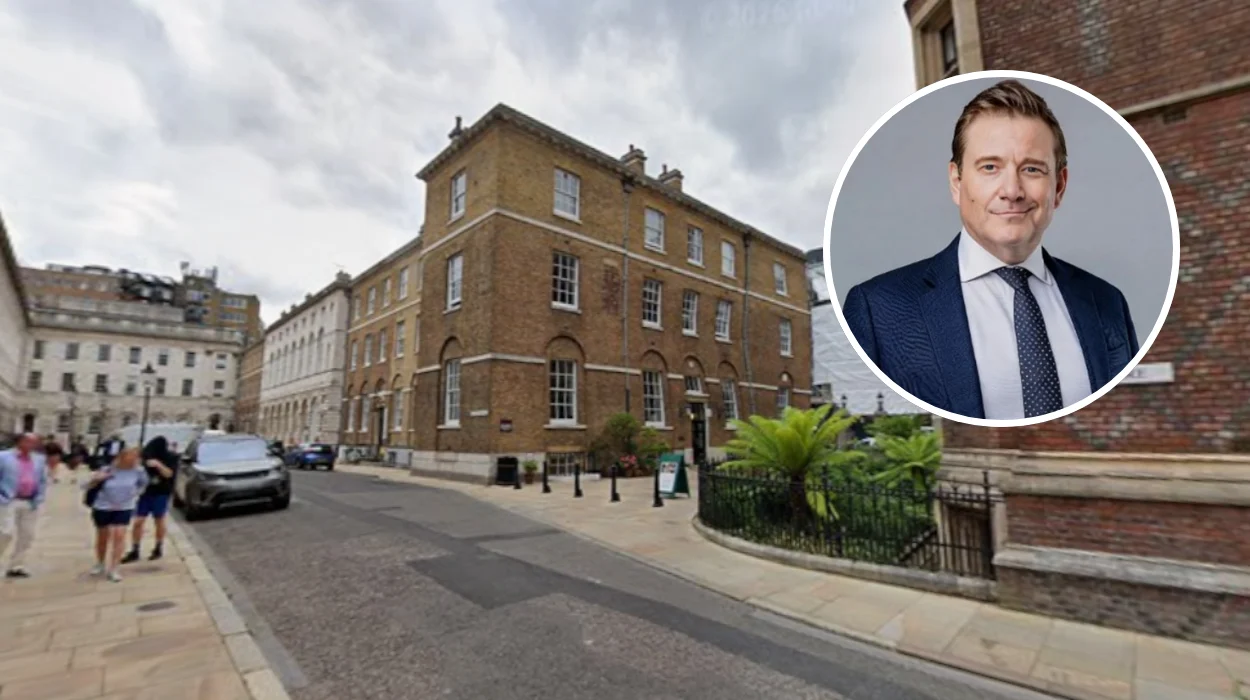
To command its new Southeast Asian hub, Candey has appointed Christopher Bailey as the managing partner of the Singapore office.
Bailey is a highly regarded disputes specialist with 25 years of professional experience under his belt, including two decades dedicated specifically to navigating the complex legal, regulatory, and cultural landscapes of the Asia-Pacific region.
In addition to his management duties for the new office, Bailey will continue to lead Candey’s global energy and infrastructure practice and maintain a seat on the leadership team of its international arbitration practice. His deep ties to regional arbitral institutions are expected to provide Candey with immediate institutional credibility in a market known for its high barriers to entry.
What Is Christopher Bailey’s Professional Legal Background?
Bailey possesses a distinguished pedigree within the international elite legal market, having spent years operating within top-tier global law firms before transitioning to Candey’s specialized platform.
As reported by legal industry correspondents tracking lateral partner movements, Bailey originally joined Candey in January 2025, transitioning from the Singapore office of Stephenson Harwood. Before that tenure, he operated out of Tokyo for nearly six years as a partner at King & Spalding, having joined that firm in 2015 from Ashurst to help spearhead the launch of King & Spalding’s new office in the Japanese capital.
Furthermore, Bailey is a highly credentialed neutral within international arbitration circles. He is a formally recognized Fellow of the Chartered Institute of Arbitrators (FCIArb) and regularly sits as an independent arbitrator on panels for several of the region’s most prominent dispute forums.
These include the Japan Commercial Arbitration Association (JCAA), the Korean Commercial Arbitration Board (KCAB), and the Singapore International Arbitration Centre (SIAC).
What Does Leadership Say About the Move?
The establishment of the Singapore office is being framed by Candey’s executive leadership as a transformative milestone that radically alters the firm’s positioning vis-à-vis traditional full-service legal conglomerates.
As reported by editorial staff detailing the expansion, Ashkhan Candey, the global managing partner and original founder of the firm, stated that the opening marked a significant moment for the firm’s international ambitions:
“With our office in Singapore, we have a unique position in the global legal market as the only conflict-free disputes-only specialist law firm to be physically present in all of the major four financial hubs of London, New York, Singapore and the BVI.”
This structural independence is the cornerstone of Candey’s identity, allowing the firm to pursue litigation against major financial institutions and multinational corporations without running into the institutional client conflicts that routinely hamstring larger law firms.
For Bailey, the move to lead the Singapore outpost represents a highly tactical alignment between his established regional practice and a nimble, conflict-free institutional framework. As reported by legal sector analysts covering the launch, Christopher Bailey stated that the firm’s platform was the right one for the next stage of his career, noting:
“CANDEY has the perfect global and regional platform for my practice — built on two decades in the Asia-Pacific — and I am delighted to be leading this exciting next chapter for the firm.”
What Is Candey’s Existing Track Record in the Asia-Pacific Region?
While the physical office in Singapore is a new development, Candey is far from a novice observer of the Asia-Pacific legal market. Founded originally in London’s historic Lincoln’s Inn in 2009, the firm has steadily expanded to command a roster of roughly 50 specialized litigators and arbitrators.
Over the years, this lean team has developed an extensive caseload across the APAC region, managing heavy litigation and arbitration work long before choosing to anchor themselves permanently in Singapore.
Explore More Central London News
Home Grown Launches Immersive Streetwear Pop-Up at Size: London 2026
Shein Sues Temu Over Copyright Theft in London High Court 2026
What Notable Regional Projects and Lawsuits Has the Firm Handled?
Candey’s historical regional portfolio covers an array of high-value infrastructure, energy, and sovereign-adjacent disputes. According to the firm’s disclosed case histories, its active regional caseload has included:
- Indonesia: Managing high-value infrastructure matters and regulatory friction.
- The Philippines: Overseeing complex disputes linked to renewable energy infrastructure and generation projects.
- Myanmar: Advising on legal disputes tied to major cross-border rail and transport developments.
- Turkey: Representing key stakeholders in relation to nuclear energy megaprojects.
How Is Candey Involved in the Bluesky Cryptocurrency Fraud Case?
Beyond traditional brick-and-mortar infrastructure disputes, Candey has positioned itself at the absolute forefront of massive, multi-jurisdictional digital asset litigation. Most notably, the firm currently acts for approximately 6,000 Chinese clients in relation to the infamous Bluesky cryptocurrency fraud matter.
This sprawling, highly complex asset recovery action is valued at an astronomical £3.8 billion ($5.1 billion). Managing a multi-plaintiff action of this magnitude requires a highly sophisticated understanding of cross-border asset tracing, offshore corporate vehicles, and international enforcement mechanisms—capabilities that Candey aims to scale directly out of its new Singapore hub.
How Will Candey Compete in the Crowded Singapore Disputes Market?
The Singapore legal market is notoriously crowded, characterized by intense competition among domestic powerhouses, established international firms, and arriving boutiques. Bailey openly acknowledged that the Singapore disputes market has attracted a growing number of international entrants, but he remained firm that Candey’s unique operating model completely sets it apart from the rest of the field.
Rather than viewing the arrival of other international law firms as a competitive threat, Candey views them through a cooperative lens. As reported by legal industry journalists, Christopher Bailey explained that
“we consider larger global firms expanding in the region to be potential clients.”
Bailey noted that many international firms arrive in Asia focused primarily on transactional work—such as mergers and acquisitions, capital markets, and corporate finance. Because these full-service firms represent a vast web of banks, conglomerates, and corporate boards, they are frequently hit with severe client conflicts the moment a dispute arises.
As a result, Candey’s conflict-free structure makes it an incredibly attractive referral partner for these exact firms when they find themselves ethically or commercially unable to act. By strictly limiting its practice to disputes, Candey can ingest these high-value referrals, resolve the litigation, and return the client to the referring firm for transactional matters without any risk of poaching corporate business.
How Do Candey’s Fee Structures Benefit Client Mandates?
In addition to its conflict-free status, Candey relies heavily on flexible funding and alternative fee arrangements to secure high-value mandates that traditional firms are often too rigid to entertain.
As noted by reporters analyzing the boutique firm model, Christopher Bailey added that Candey’s unique fee structures gave it access to a broader range of mandates than larger firms typically pursue. Traditional global firms often rely heavily on rigid hourly billing requirements, which can deter clients involved in highly volatile, high-stakes disputes.
By utilizing creative fee structures—including conditional fee agreements, damages-based agreements, and third-party litigation funding partnerships—Candey can align its commercial incentives directly with those of its clients. This agility allows the firm to take on massive, complex mandates, like the multi-billion-pound Bluesky fraud case, with a level of entrepreneurial risk and speed that traditional law firms simply cannot match.