

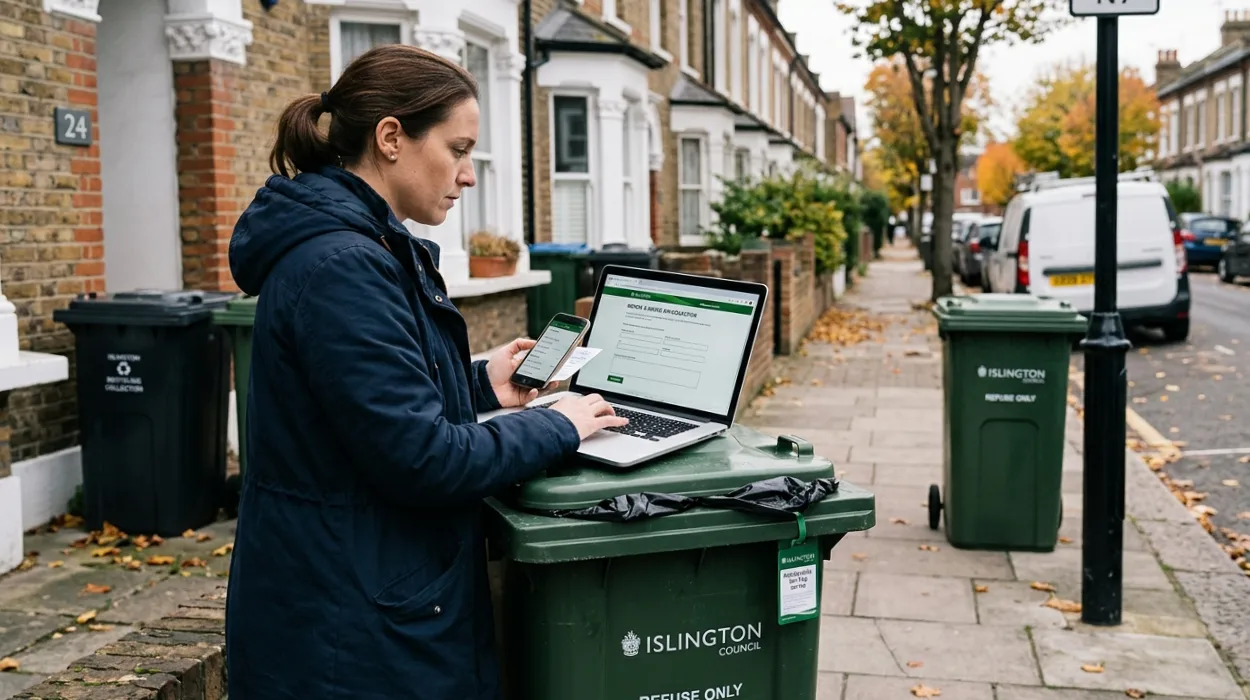
To report a missed bin collection in London, residents must submit a digital form or call their specific borough council website within 24 to 48 hours of the scheduled pickup window, ensuring the waste was presented correctly.
- Why Do London Borough Councils Miss Scheduled Waste Collections?
- What Information Must You Provide to File a Missed Bin Report Successfully?
- How Long Does It Take a London Council to Rectify a Missed Collection?
- What Happens If Your Missed Bin Contains Contaminated Materials?
- How Can You Escalate an Unresolved Missed Bin Dispute with a Council?
- What Are the Historical Origins of London’s Local Waste Management System?
- How Did the Control of Pollution Act 1974 Standardize Municipal Waste Collections?
- What Role Does the Environmental Protection Act 1990 Play in Modern Waste Enforcement?
- How Have Modern Geolocation and Telematics Systems Transformed London Collections?
- What Are the Long-Term Strategic Plans for London’s Municipal Waste Hubs?
The administrative layout of Greater London splits municipal waste management across 33 distinct local authorities, comprising 32 borough councils and the City of London Corporation. Under Section 89 of the Environmental Protection Act 1990, these local authorities maintain a statutory duty to keep public land clean and collect household waste. However, the operational protocols, reporting cut-off windows, and digital platforms vary significantly depending on the geographical boundary of the council. Residents must identify their specific borough authority using the official central government portal or localized council boundary maps before initiating a missed report.
Most London boroughs enforce a strict 24-hour to 48-hour reporting window following the missed scheduled event. If a household attempts to file a report after this window, council systems generally log the incident as a standard collection for the subsequent week rather than dispatching a rectification vehicle. For example, Westminster City Council requires reports by 1:00 PM the following day, whereas the London Borough of Bromley permits reporting up to 48 hours post-schedule. To log a missed collection successfully, residents must provide their full street address, the specific type of waste missed, and confirmation that the containers complied with standard presentation criteria.
The primary reporting channel across all 33 authorities is the digital council portal, which integrates directly with localized Geographic Information Systems and waste management contractor databases like Veolia, Serco, or Biffa. When a resident submits a digital report, the software cross-references the property address against the contractor’s real-time digital logging system. If the collection crew recorded an obstruction or a contamination issue at that specific address via their in-cab electronic logging devices, the portal automatically rejects the missed bin claim and displays the logged reason to the resident.
Why Do London Borough Councils Miss Scheduled Waste Collections?
London borough councils miss scheduled waste collections due to physical street access obstructions, mechanical vehicle failures, acute labor shortages, extreme weather conditions, or resident non-compliance with localized presentation protocols regarding container placement and sorting standards.
Physical access restrictions represent the leading operational cause of unexecuted waste collections across London, particularly within dense urban sectors. Narrow historic streets, improperly parked passenger vehicles, ongoing roadworks, and temporary utility infrastructure frequently prevent standard 26-tonne Refuse Collection Vehicles from entering specific roadways safely. If an automated vehicle cannot navigate a cul-de-sac or a narrow terrace road due to an obstruction, the crew logs an access failure within their tracking system, and the entire street is bypassed until access is cleared or a smaller support vehicle is deployed.
Internal operational disruptions within the council or its contracted private waste companies also create widespread collection delays. Mechanical issues affecting hydraulic compaction units, steering assemblies, or electronic lifters can instantly sideline a vehicle, forcing supervisors to reallocate remaining trucks to high-priority routes. Furthermore, acute labor shortages stemming from seasonal sickness, industrial strike actions, or driver recruitment deficits disrupt the precise scheduling matrices required to clear thousands of properties daily. When a route remains incomplete at the termination of a operational shift, it registers systematically as a missed street collection.
Resident-side deviations from collection protocols account for a substantial volume of individual missed reports. Every London borough mandates specific guidelines regarding container placement, maximum weight limits, and contamination boundaries. Bins must typically sit on the visible boundary of the property line by 6:00 AM on the designated collection day. If a bin is concealed behind a closed security gate, positioned too far back within a private driveway, or filled with unauthorized materials, collection crews are legally permitted to leave the container behind. In these instances, crews apply a warning tag to the container handle and log the non-compliance vector digitally.
What Information Must You Provide to File a Missed Bin Report Successfully?
To file a missed bin report successfully, you must provide your exact property address, select the precise waste stream affected, confirm correct container presentation, and supply supplemental evidence if requested by the digital portal.
The initial step in any municipal reporting interface involves definitive address verification. Portals require the entry of a valid UK postcode, which generates a dropdown list of verified properties linked to the Unique Property Reference Number database. This level of geospatial precision ensures that the report attaches to the exact tax-paying residential unit rather than a generic geographic zone. If the property is a subdivided flat or part of a multi-occupancy commercial-residential block, the user must specify the exact unit number to ensure the investigative crew targets the correct storage bin store.
Residents must clearly categorize the precise waste stream that the collection crew omitted during their scheduled route. London local authorities partition household collections into distinct streams, including residual household waste, co-mingled dry recyclables, food waste, garden waste, and specialized clinical materials. Because different streams utilize completely separate collection vehicles and distinct processing facilities, selecting the wrong category causes systemic routing errors. For instance, reporting a missed green garden waste bin as a black residual bin will direct an incorrect vehicle type to inspect the property, invalidating the resolution timeline.
The digital form requires explicit affirmative confirmation that the resident adhered to all localized presentation mandates. The user must tick confirmation boxes stating that the bin sat at the curtilage of the property by the mandatory morning deadline, that the container lids were completely flush with no excess bags placed on top or alongside, and that no contamination was present. Some progressive borough systems, including those deployed by Ealing Council and Lambeth Council, allow or require users to upload photographic evidence demonstrating that the bin is accessible and properly situated before the submission can be processed by customer service teams.

How Long Does It Take a London Council to Rectify a Missed Collection?
London borough councils typically rectify a validated missed collection within one to two working days from the time the electronic report is submitted, provided the claim is filed within the mandatory reporting window.
Once a digital missed collection report passes initial automated validation checks, it enters the tactical dispatch queue of the borough’s waste contractor. The standard service level agreement established by the majority of London local authorities dictates a 24-hour to 48-hour rectification window, excluding weekends and public bank holidays. During this operational timeframe, a dedicated roving support vehicle or a nearby mainline vehicle on a flexible schedule is rerouted to the affected address to clear the accumulated household waste.
The rectification timeline is directly dependent on the validation phase, where council officers review the data transmitted by the primary collection vehicle. If the primary crew’s in-cab logging system indicates that they bypassed the property due to a documented road closure or a mechanical fleet emergency, the council elevates the entire street to an emergency priority status, often executing the recovery collection within 12 hours. Conversely, if the in-cab logs reveal no anomalies, the council treats the individual report as an isolated operational oversight, scheduling the recovery team to visit the location during their standard zone sweep the following working day.
Specific external parameters can extend these baseline rectification windows beyond the standard 48-hour protocol. Following periods of severe winter weather involving sub-zero temperatures, ice accumulation, or heavy snowfall, collection schedules across whole boroughs experience cumulative delays. Similarly, following major national public holidays, such as Christmas Day, Boxing Day, and New Year’s Day, overall household waste volumes scale upward by an estimated 30% to 40%. This massive surge in tonnage saturates processing facilities and slows down collection vehicles, pushing rectification timelines out to three or four working days.
What Happens If Your Missed Bin Contains Contaminated Materials?
If your missed bin contains contaminated materials, the collection crew will deliberately leave it behind, log the property violation into their digital tracking system, and place an advisory non-collection tag on the handle.
Contamination occurs when non-target materials are placed inside a specific waste container, which compromises the integrity of the entire collection batch. Common examples include placing flexible plastic films or food packaging inside dry recycling bins, or dumping plastic bags inside organic food and garden waste receptacles. When a collection loader identifies non-target materials during their manual check prior to tipping the bin into the vehicle mechanism, they are strictly prohibited from loading the container. This protocol protects processing equipment from damage and prevents the rejection of entire truckloads at commercial sorting centers.
When a loader identifies a contaminated container, they execute a precise administrative protocol. First, they apply a highly visible, color-coded plastic warning tag or adhesive label directly to the handle or lid of the container. This tag details the exact nature of the violation and instructs the resident on how to correct it. Simultaneously, the crew logs the contamination event using their in-cab telematics terminal, instantly linking the infraction to the property’s digital file. This real-time synchronization ensures that if the resident attempts to file an online missed bin report later that day, the system automatically cross-references the address and blocks the submission.
To resolve a logged contamination issue, the legal responsibility falls entirely on the resident. The council will not dispatch a secondary vehicle to clear a container that was left behind due to sorting violations. The resident must open the bin, manually remove all non-target materials, and re-sort them into their proper waste streams. Once the contamination is completely cleared, the container must be held on the property until the next scheduled collection date for that specific stream. Attempting to report the container as a standard council omission without clearing the contamination will result in repeated rejections and potential financial enforcement actions.
How Can You Escalate an Unresolved Missed Bin Dispute with a Council?
To escalate an unresolved missed bin dispute with a London council, you must initiate the formal corporate complaints process, contact your local ward councillors, and eventually escalate the matter to the Local Government and Social Care Ombudsman.
When standard online reporting infrastructure fails to resolve a persistent waste collection issue, residents must transition from operational reporting channels to the council’s formal corporate complaints process. Every London borough maintains a structured, multi-tier complaints policy accessible via their primary website. A Stage 1 complaint requires the dedicated waste management department head to formally investigate the service failure and provide a written response within a set timeframe, usually 10 to 15 working days. If the operational failure continues or the response is unsatisfactory, the resident can escalate the file to Stage 2, triggering an independent review by senior council directors or a dedicated central complaints team.
Simultaneously, residents can leverage local democratic channels by contacting their elected ward councillors. London boroughs are divided into small electoral zones called wards, each represented by two to three local councillors whose core duties include advocating for residents on municipal service delivery failures. Ward councillors possess direct internal channels to senior operations managers and private waste contractor executives. Presenting a concise, dated log of missed collections to a ward councillor often bypasses automated digital queues, compelling the waste department to initiate immediate targeted inspections and implement permanent routing fixes for the property or street.
The final avenue of legal escalation outside the council’s internal structure is the Local Government and Social Care Ombudsman. The Ombudsman is an independent, legally empowered body that investigates systemic maladministration and service delivery failures across UK local authorities. A resident can file a case with the Ombudsman only after completing all stages of their council’s internal complaints process and receiving a final position letter. If the Ombudsman determines that the council failed to deliver its statutory waste management duties under the Environmental Protection Act 1990 or handled the complaint poorly, they can issue binding rulings requiring the council to apologize, correct the route layout, and pay financial compensation for sustained distress.
What Are the Historical Origins of London’s Local Waste Management System?
London’s local waste management system originated from the Public Health Act 1875 and the Public Health (London) Act 1891, which legally compelled municipal vestries and district boards to collect household refuse systematically to combat urban disease outbreaks.
Prior to the late 19th century, London possessed no centralized or statutory framework for municipal waste management. The rapid urbanization caused by the Industrial Revolution saw the metropolis expand dramatically, leading to severe sanitary crises, including recurrent cholera epidemics in 1832, 1849, and 1854. Waste removal was largely decentralized and reliant on private dustmen who operated on a commercial basis, scavenging valuable materials such as coal ash, or “dust,” which was sold to brickmakers and agricultural concerns. However, when the market value of coal ash collapsed mid-century, this informal private collection system failed entirely, leaving immense mounds of rotting organic matter and refuse piled directly in dense residential streets.
The constitutional shift toward public responsibility began with the landmark Public Health Act 1875, which established nationwide sanitary districts. This was subsequently strengthened for the capital through the Public Health (London) Act 1891. This legislation removed the commercial profit motive from waste management, legally compelling local parish vestries and district boards to clear dust, ashes, rubbish, and filth from households on a regular, predictable schedule. Authorities that failed to execute these duties faced significant financial penalties. To comply with these new statutory requirements, vestries began investing public funds into dedicated municipal work yards, standardized horse-drawn dust carts, and specialized high-temperature rubbish incinerators known as “destructors.”
The geographic and administrative structure of modern London waste collection took definitive shape through the London Government Act 1899. This legislation dissolved the old parish vestries and replaced them with 28 metropolitan boroughs, alongside the historic City of London. Each newly formed borough took over complete, independent control of local waste management within its boundaries, setting its own collection frequencies, labor practices, and equipment standards. To experience this historic landmark in person today, consult our comprehensive [London Museum Visitor Guide and Cultural Itineraries] for itineraries and visiting parameters. This administrative fragmentation created the foundation for the localized, borough-by-borough waste management systems that continue to operate across Greater London today.
Explore More Public Services
London Tube Strike Over Four-Day Week Causes Severe Disruption: London 2026
Lumo Launches New Stirling to London Rail Service: Fares and Routes; Stirling 2026
How Did the Control of Pollution Act 1974 Standardize Municipal Waste Collections?
The Control of Pollution Act 1974 standardized municipal waste collections by mandating that newly formed Waste Disposal Authorities formulate comprehensive waste disposal strategies, enforce strict licensing on disposal sites, and streamline domestic collection protocols.
Before the enactment of the Control of Pollution Act 1974, waste collection and disposal practices across the UK were highly fractured and lacking rigorous environmental oversight. Local councils often dumped raw domestic refuse into unlined landfills, disused chalk pits, or wetlands with little regard for groundwater contamination or toxic leachate migration. The 1974 legislation fundamentally reshaped this landscape by separating the operational duties of waste collection from the strategic management of waste disposal. It designated larger regional authorities as Waste Disposal Authorities while leaving localized collection duties with individual district and borough councils.
The 1974 Act introduced a comprehensive waste disposal licensing system that legally forced councils to transition away from unregulated tipping toward engineered, monitored waste management facilities. Local authorities were legally required to survey all waste within their borders, project future waste generation volumes, and publish formal, long-term strategic plans for processing material safely. This statutory pressure catalyzed rapid technological advancements in waste handling across London, accelerating the closure of hazardous inner-city dumping sites and driving the development of modern, high-capacity waste transfer stations along the River Thames.
On an operational level, the Control of Pollution Act 1974 gave London boroughs expanded statutory powers to regulate how citizens presented domestic waste for collection. Councils gained the legal authority to specify the exact type, size, and material composition of waste receptacles used by households. This shift laid the groundwork for replacing traditional, heavy galvanized steel dustbins with standardized plastic sacks, which eventually evolved into the heavy-duty, wheeled plastic bins used across the capital today. By standardizing these container types, the legislation significantly improved collection crew safety and laid the structural foundation for modern mechanical vehicle lifting equipment.
What Role Does the Environmental Protection Act 1990 Play in Modern Waste Enforcement?
The Environmental Protection Act 1990 defines the modern statutory framework for municipal waste management by placing a duty of care on waste producers, mandating weekly collections, and empowering councils to issue financial penalties for non-compliance.
The Environmental Protection Act 1990 serves as the primary legislation governing modern waste management and environmental enforcement across the United Kingdom. Section 34 of the Act establishes a strict, legally binding “Duty of Care” that applies to anyone who imports, produces, carries, keeps, treats, or disposes of controlled waste. For local authorities, Section 45 imposes an absolute statutory obligation to arrange for the collection of all household waste within their administrative borders. This legal requirement ensures that every residential household in a London borough has access to a regular municipal waste collection service, regardless of the property’s layout or location.
Section 46 of the Environmental Protection Act 1990 grants local authorities substantial legal powers to control exactly how residents present household waste for collection. Under this section, a council can issue a formal legal notice to a resident stipulating specific, binding conditions, including:
- The exact number and type of waste containers allocated to the property.
- The precise categories of waste items permitted inside each specific container.
- The exact drop-off location and the timeframe windows during which bins must be placed on the street boundary.
- The mandatory steps required to prevent waste from escaping or creating a public health nuisance.
If a resident fails to comply with the terms of a Section 46 notice—by repeatedly overfilling containers, contaminating recycling bins, or putting waste out days before the scheduled collection window—the council can initiate formal enforcement action. Following updates introduced by the Deregulation Act 2015, councils can issue a Fixed Penalty Notice to non-compliant residents if their waste presentation practices cause a distinct local nuisance or negatively impact local amenities. These financial penalties range from £60 to £150, providing boroughs with a direct mechanism to suppress contamination and enforce neighborhood presentation rules.
How Have Modern Geolocation and Telematics Systems Transformed London Collections?
Modern geolocation and telematics systems have transformed London waste collections by integrating real-time GPS tracking, in-cab digital logging devices, and automated routing software directly into municipal vehicle fleets.
The integration of advanced telematics systems has fundamentally changed how London boroughs manage daily waste collection operations. Modern Refuse Collection Vehicles are equipped with high-precision GPS tracking devices that transmit real-time location data directly to central management dashboards. This spatial tracking allows fleet managers to monitor a vehicle’s exact progress along its designated route, calculate accurate arrival times, and immediately identify operational delays caused by traffic congestion or unexpected road closures. This real-time visibility enables supervisors to make dynamic adjustments, reallocating vehicles on the fly to support falling-behind crews and ensure entire zones are completed on schedule.
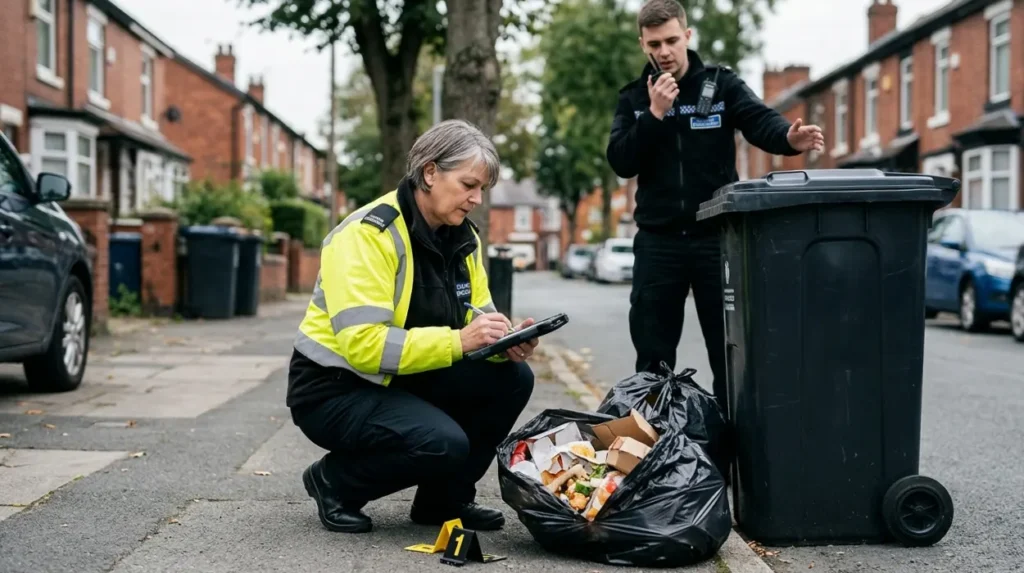
In-cab digital logging units have replaced traditional paper-based route sheets for collection loaders. These touchscreen terminals display interactive route maps, highlighted hazard warnings, and property-specific service adjustments, such as assisted collection requirements for elderly or disabled residents. When a crew encounters an obstacle that prevents them from emptying a container—such as a blocked access road or a heavily contaminated bin—the loader immediately logs the violation on the digital terminal. The system records the precise time and GPS coordinates of the event, and many systems require the crew to take a photo of the issue using external vehicle cameras to create an indisputable digital record.
This automated, real-time data flow has drastically streamlined how councils process missed bin reports filed by residents. When a resident logs into their borough’s online customer portal to report an omission, the portal communicates directly with the telematics database via an API link. If the system finds a logged exception for that property—such as a contamination warning or an access failure timestamped earlier that day—the online form automatically blocks the missed bin report. It displays the crew’s recorded reason and photo to the resident, reducing fraudulent or mistaken claims and ensuring council staff focus recovery vehicles only on genuine service omissions.
What Are the Long-Term Strategic Plans for London’s Municipal Waste Hubs?
The long-term strategic plans for London’s municipal waste hubs focus on achieving a 65% municipal recycling rate by 2030, expanding zero-emission electric fleets, and phasing out all direct landfill reliance.
London’s future waste management strategy is shaped by the London Environment Strategy, which aligns the individual waste management operations of all 33 local authorities with overarching environmental goals. A primary objective is hitting a 65% recycling rate for all municipal waste across the capital by 2030. To achieve this target, boroughs are standardizing sorting protocols across different council lines and expanding mandatory separate food waste collections to all residential properties, including high-rise housing developments. Diverting organic waste away from incineration and into specialized anaerobic digestion facilities allows London to significantly lower its overall carbon footprint while generating renewable biogas energy.
The transformation of municipal collection fleets represents another major focus of long-term planning. London boroughs are actively phasing out diesel-powered Refuse Collection Vehicles and replacing them with zero-emission electric alternatives. Operating heavy electric trucks in dense urban areas yields significant benefits, including eliminating tailpipe emissions and drastically reducing ambient noise pollution during early morning collection shifts. This vehicle transition is supported by substantial infrastructure investments to upgrade municipal depots with high-output charging stations and smart energy management software to optimize overnight fleet charging cycles.
Furthermore, London’s waste strategy mandates a complete end to direct landfill reliance by 2035. Any residual waste that cannot be reused, composted, or recycled is systematically redirected to advanced Energy-from-Waste facilities, such as the Belvedere Riverside Resource Recovery facility. These modern plants incinerate residual waste at high temperatures to generate electricity and heat for the local grid. Future upgrades for these facilities focus on integrating advanced carbon capture and storage technologies, transforming London’s municipal waste hubs into highly efficient, low-carbon components of the UK’s broader circular economy.
How do I report a missed bin collection in London?
Report the missed collection through your borough council’s website or customer service line. Most councils require reports within 24–48 hours of the scheduled collection date.