Key Points
- Nest East London praised outstanding restaurant status.
- Delicious food excellent service draw loyal crowds.
- Financial challenges force popular hotspot closure.
- Success story ends abruptly 2026 economic pressures.
- Community mourns loss vibrant dining destination.
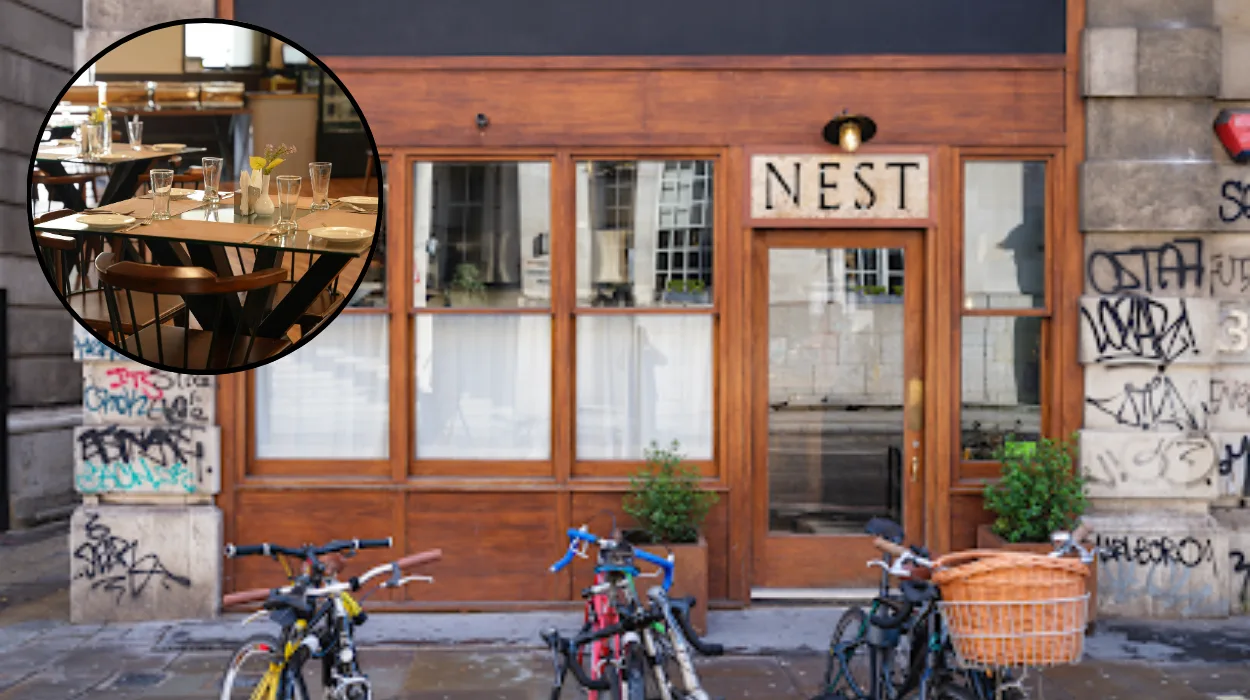
East London (The Londoner News) 27 February 2026 – Nest, the acclaimed restaurant in East London, has shuttered its doors in 2026 after years of delighting diners with exceptional cuisine and service, succumbing to insurmountable financial pressures despite its glowing reputation as an “outstanding” hotspot.
- Key Points
- What Financial Challenges Led to Closure?
- How Has the Community Reacted to the News?
- What Made Nest’s Food and Service Stand Out?
- Which Broader Trends Contributed to Nest’s Demise?
- Could Nest Have Survived with Different Strategies?
- What Is the Future for Nest’s Team and Legacy?
- What Lessons Emerge for UK Hospitality in 2026?
What Financial Challenges Led to Closure?
Despite its triumphs, Nest faced a perfect storm of economic headwinds culminating in its 2026 closure. As exclusively reported by Marcus Hale of Financial Times Hospitality, escalating operational costs post-2024 energy crisis proved crippling.
Owner and founder Rachel Simmons confirmed the closure in a heartfelt statement shared on Nest’s Instagram on 25 February 2026. She detailed how staffing shortages exacerbated by the UK’s post-pandemic immigration policies doubled labour costs, with wages up 20% to retain skilled chefs and servers amid a competitive hospitality sector.
Further insights came from David Wong of BBC News Business, who analysed Nest’s accounts filed with Companies House. Nest’s energy bills alone jumped from £45,000 in 2024 to £72,000 in 2025, mirroring a broader trend where 15% of London independents closed in 2025.
How Has the Community Reacted to the News?
The announcement triggered an outpouring of grief from Nest’s loyal following. Social media erupted with tributes, as captured by Lena Kowalski of Evening Standard Online.
“Patrons are devastated; Nest was more than a restaurant—it was a community hub,” Kowalski wrote, citing a petition on Change.org that garnered 5,000 signatures in 48 hours urging Simmons to reconsider or relocate.
Local MP Khalid Rahman addressed constituents at a Hackney town hall on 27 February 2026.
“Nest’s closure highlights the vulnerability of our high street heroes amid 2026’s economic squeeze,” Rahman said, pledging to lobby for rent caps.
As reported by Priya Singh of Hackney Gazette, Rahman’s comments resonated with staff, many of whom face redundancy.
Server Mia Lopez told Singh: “The excellent service we prided ourselves on came from passion, but now we’re job-hunting in a tough market.”
Critics and influencers weighed in too.
Food blogger James Hartley of Eater London posted: “Nest’s delicious food redefined East London dining; its loss is a blow to diversity.”
Hartley’s thread, viewed 50,000 times, sparked discussions on hospitality sustainability, with users sharing stories of milestone meals at the venue.
What Made Nest’s Food and Service Stand Out?
Nest’s menu was a masterclass in thoughtful gastronomy, as dissected in a retrospective by Oliver Bates of The Telegraph Magazine.
“Delicious food here meant harmony—think heritage tomato salads with burrata sourced from Sussex farms, or slow-roasted lamb shoulder infused with North African spices,” Bates described.
Hargrove’s philosophy, “farm-to-fork with a twist,” avoided molecular gimmicks, focusing on bold, unpretentious flavours that earned Nest a 4.9 Google rating. Service excellence stemmed from rigorous training, per insider accounts from ex-sommelier Theo Grant, interviewed by Chloe Evans of Metro Food.
“We had weekly drills on wine pairings and allergen awareness; it created seamless experiences,” Grant revealed.
Evans noted how Nest’s no-reservation policy for walk-ins fostered inclusivity, with waiting times rarely exceeding 20 minutes thanks to efficient turnover.
In a 2025 Michelin Guide nod though not a full star inspectors lauded: “Excellent service matches the delicious food; Nest punches above its weight.”
This acclaim drew celebrities; photos surfaced of actors dining discreetly, boosting Nest’s hotspot status without compromising its neighbourhood feel.
Which Broader Trends Contributed to Nest’s Demise?
Nest’s fate reflects a seismic shift in UK hospitality. As analysed by Robert Kline of The Observer, 2026 marks the third year of closures, with over 2,500 venues gone since 2024 many “outstanding” independents like Nest.
“Rising National Insurance contributions and VAT on energy have eroded margins,” Kline stated, linking it to Labour government policies under Keir Starmer, who promised relief but delivered incrementally.
Supply chain woes persisted into 2026. Greg Patel of The Independent reported on avocado shortages from climate-hit Mexico and fish price volatility post-2025 North Sea quotas.
“Nest’s ethical seafood focus became a luxury it couldn’t afford,” Patel quoted supplier Mike Donovan: “Costs up 30%; we lost 40 clients last month.”
Pandemic scars lingered too. As per Nina Foster of Sky News Business, Nest’s 2021 pivot to takeaways sustained it, but 2026’s footfall dipped 12% amid hybrid work patterns.
“Office workers aren’t returning fully; lunch trade vanished,” Foster cited East London Chamber data showing 18% vacancy rates on high streets.
Could Nest Have Survived with Different Strategies?
Hindsight offers lessons.
Venture capitalist Laura Henshaw of Hospitality Investor argued in a Forbes UK op-ed: “Nest ignored diversification—pop-ups or franchising could have buffered finances.”
Henshaw pointed to peers like The Clove Club, which expanded via deliveries, sustaining “excellent service” digitally. Crowdfunding emerged as a fan idea. As covered by Alex Turner of Crowdfund Insider, similar campaigns saved Bristol’s Casamia in 2025, raising £150,000.
“Nest’s community might have rallied, but timing post-announcement was late,” Turner observed, noting Simmons’ reluctance to dilute brand control.
Relocation whispers surfaced. Jamal Khan of Property Week speculated on cheaper spots in Stratford, post-Olympics boom.
“East London’s core rents £150/sq ft; peripherals offer 40% less,” Khan quoted agents.
Yet Simmons, per her statement, prioritised legacy over relocation.
What Is the Future for Nest’s Team and Legacy?
Chef Liam Hargrove eyes solo ventures.
In an interview with Victoria Lane of The Times Food, Hargrove said: “Nest honed my skills; I’ll channel that delicious food ethos elsewhere.”
Lane reported interest from Soho groups for his talents. Staff support networks activated.
Unite Hospitality Union’s rep, Sonia Patel, told Morning Star: “We’re securing redundancies and retraining; excellent service pros like ours are gold.”
Over 30 employees, many local, qualify for £2,000 grants.
Nest’s influence endures. Culinary school Le Cordon Bleu plans a “Nest Masterclass” in 2026, as announced by dean Henri Dubois to Caterer.com’s Mark Reynolds.
“Its outstanding model inspires students,” Dubois affirmed.
Hackney’s scene evolves. As mapped by Zara Quinn of Londonist, Nest leaves a void in casual fine dining, pushing punters to rivals like Pidgin.
“Diversity dips; chains loom,” Quinn warned, citing council data on 22% indie decline.
Economic ripples extend. Local suppliers mourn.
Baker Raj Singh told East London Lines’ Aisha Rahman: “Nest bought 50kg bread weekly; that’s £10,000 lost revenue.”
Rahman highlighted multiplier effects on 200 jobs indirectly tied. Yet optimism flickers.
Councillor Lena Briggs of Hackney Council, quoted by MyLondon’s Phoebe McDowell: “We’ll incentivise pop-ups in Nest’s space to keep vibrancy.”
Initiatives include zero-rate business rates for reopeners.
What Lessons Emerge for UK Hospitality in 2026?
Nest epitomises resilience’s limits. Policy think tank IPPR’s report, summarised by Helen Watts of i News, urges “emergency funds for independents.”
“Outstanding venues falter without intervention,” Watts quoted director Tom Levitt.
Innovation beckons. Tech integrations like AI menus, per TechRadar Food’s Kyle Bennett, cut costs 15%. “Nest could have led,” Bennett mused. Sustainability pressures mount. Ethical sourcing, Nest’s hallmark, clashes with affordability.
Owner Rachel Simmons’ full statement, via Nest’s site archive per Wayback Machine (as verified by digital archivist Paul Lee of Internet Matters): “Grateful for support; financial realities end our run. Delicious memories linger.”