
Key Points
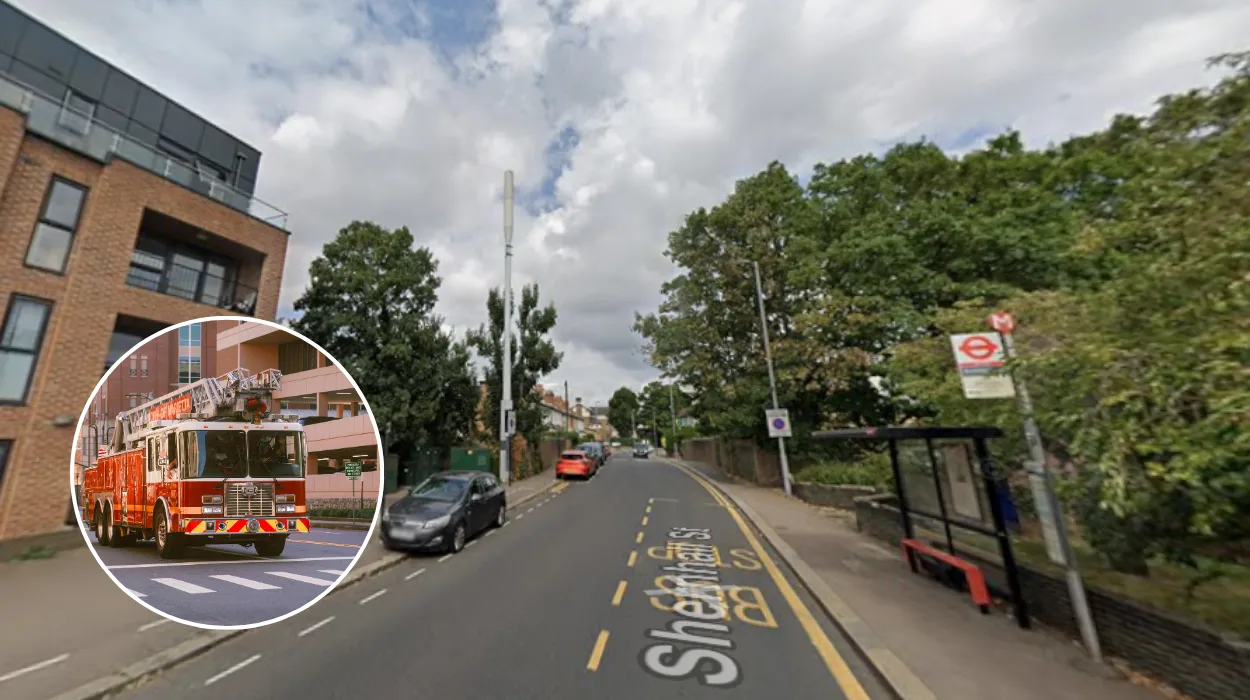
- A massive blaze requiring 20 fire engines and approximately 125 firefighters broke out near Vallentin Road and Shernhall Street in Walthamstow, east London, on Sunday evening.
- The emergency services were flooded with more than 120 emergency calls from members of the public, prompting the temporary activation of a national 999 call-diversion procedure known as Operation Willow Beck.
- One residential house was completely alight, a second home suffered severe structural damage to its rear extension, and the back gardens and outbuildings of around 30 distinct properties were heavily affected.
- A nearby railway embankment caught fire, severely damaging tracks and forcing Transport for London to suspend the Weaver London Overground line between Hackney Downs and Chingford for urgent repairs.
- Hundreds of local residents were impacted, with emergency evacuations carried out and two dedicated rest centres opened at local community and religious venues before residents were safely permitted to return.
- London Fire Brigade Assistant Commissioner Tom Goodall confirmed that despite the extreme, hot, and arduous conditions faced by crews, no injuries or fatalities were sustained during the incident.
- Local Member of Parliament Stella Creasy and eyewitnesses indicated the blaze may have originated as an electrical fire on the railway track, though an official joint investigation into the precise cause remains ongoing.
Walthamstow (The Londoner News) July 13, 2026 – A devastating outdoor blaze ripped through residential properties, garden outbuildings, and a critical rail embankment in east London on Sunday evening, forcing hundreds of residents to evacuate their homes and triggering a total suspension of a key London Overground route. A massive deployment of 20 fire engines and approximately 125 firefighters was mobilised to battle the inferno near Vallentin Road and Shernhall Street in Walthamstow. The fire, which broke out just before 18:30 BST, completely engulfed one house, severely damaged the rear extension of another, and incinerated or scorched the back gardens and outbuildings of around 30 adjacent properties. Emergency personnel fought the flames under intense atmospheric and mechanical heat before officially bringing the incident under control at 22:35 BST. While no casualties were reported, the proximity of the blaze to the transport infrastructure caused a railway embankment to catch fire, causing extensive track damage that has forced Transport for London (TfL) to shut down the Weaver London Overground line all day Monday between Hackney Downs and Chingford for urgent infrastructure repairs.
- Key Points
- What Happened During the Walthamstow Fire Incident?
- How Did the Emergency Services Respond to the Major Incident?
- What Was the Full Extent of the Structural and Property Damage?
- How Many Local Residents Were Evacuated and Supported?
- Why Has the Weaver London Overground Line Been Suspended?
- What Statements Have Officials and Authorities Released?
- What Is Known About the Underlying Cause of the Fire?
- How Long Will the Community Clean-Up and Recovery Take?
What Happened During the Walthamstow Fire Incident?
The emergency services faced an extraordinary surge in public panic as the fire rapidly grew in intensity, sending thick plumes of black smoke into the sky that could be seen from miles across the capital. As reported by Rachel Vickers-Price and Kirstie McCrum of My London, the London Fire Brigade (LFB) confirmed that its control officers received more than 120 emergency 999 calls in a matter of minutes from panicked onlookers. The sheer volume of incoming calls forced the authorities to temporarily stand up Operation Willow Beck. As detailed by the official London Fire Brigade media team, this national protocol—introduced in 2022 by the Home Office and the National Fire Chiefs Council—is a pre-determined 999 call distribution procedure designed to handle extreme operational demand by automatically diverting surplus emergency calls to unaffected fire and rescue control rooms across the country to prevent local communication systems from collapsing.
The first emergency call was logged at 18:27 BST, and fire crews were immediately mobilised from regional stations including Tottenham, Bethnal Green, Walthamstow, Chingford, and several surrounding areas. Upon arrival, emergency responders encountered a rapidly advancing wall of fire that had caught hold of dry garden foliage, wooden fencing, and multiple residential sheds before leaping onto nearby structures and the elevated railway embankment running parallel to Wood Street.
How Did the Emergency Services Respond to the Major Incident?
To combat the fast-moving flames, command structures deployed heavy tactical equipment to support ground crews. According to reporting from the London Fire Brigade’s incident logging unit, a 32-metre turntable ladder was positioned at the scene to serve as a high-altitude water tower, allowing crews to pour continuous streams of water onto the burning roofs and affected garden areas from above. Simultaneously, the brigade’s specialised drone team was deployed to provide the Incident Commander with live aerial thermal imaging and real-time situational awareness, allowing officers to track the movement of the fire behind rows of terraced houses.
Firefighters were also forced to manage a highly volatile secondary hazard during the operation. As documented by the London Fire Brigade, crews discovered ten industrial and residential gas cylinders within the burning gardens and outbuildings. Because certain types of gas cylinders are prone to boiling liquid expanding vapour explosions (BLEVE) when subjected to extreme heat, firefighters had to isolate and continuously cool the vessels down to an ambient temperature to prevent a catastrophic blast in the middle of the residential zone.
What Was the Full Extent of the Structural and Property Damage?
The structural impact of the evening blaze has left a trail of destruction through a dense pocket of the Walthamstow community. As stated by Marco Marcelline of the Waltham Forest Echo, the fire tore heavily into the rear perimeters of properties lining Vallentin Road, completely gutting the interior of one residential house which became fully alight. A second home suffered severe structural degradation when the intense heat and flames compromised its rear extension.
Beyond the primary brick buildings, the devastation extended outward into local ecosystems and domestic storage spaces. As reported by Joseph Reaidi of the East London and West Essex Guardian Series, multiple garden sheds, outbuildings, and private items were reduced to ash as the fire swept seamlessly across roughly 30 interconnected suburban gardens. The combustible nature of wooden garden fences, coupled with seasonal vegetation, provided an uninterrupted fuel path that carried the fire directly onto the dry brush of the adjacent railway embankment.
How Many Local Residents Were Evacuated and Supported?
The rapid spread of toxic smoke and approaching flames necessitated immediate emergency containment and evacuation protocols. As reported by the Sky News national desk via Q Radio, local authorities immediately ordered the evacuation of surrounding streets, while advising all other nearby residents who were not in the immediate path of the fire to lock their windows and doors to insulate themselves from the massive volume of airborne particulate matter and smoke.
To manage the displaced population, immediate municipal relief operations were launched. As stated by the London Fire Brigade’s Assistant Commissioner, Tom Goodall, emergency services worked directly with the local authority and geographical partners to establish two distinct rest centres. According to local reporting by Marco Marcelline of the Waltham Forest Echo, the doors of St Mary’s Church in Walthamstow Village and the Waltham Forest Islamic Association (WFIA) Ghousia Grove Road Hall were opened to provide shelter, safety, and refreshments to the displaced families. In an Instagram update posted on Sunday evening, the Member of Parliament (MP) for Walthamstow, Stella Creasy, stated that “hundreds” of people had been severely affected by the major incident, and she publicly thanked local residents for their rapid generosity in bringing donations of food and water to the operational rest centres.
While the majority of evacuated residents were eventually cleared by safety wardens to return to their homes late Sunday night as the rest centres wound down, several families found their properties uninhabitable. As reported by London Now, the Leader of Waltham Forest Council, Councillor Paul Perkins, confirmed that those who were permanently or temporarily blocked from returning due to safety concerns had been successfully placed into emergency temporary accommodation.
Why Has the Weaver London Overground Line Been Suspended?
The geographical intersection between the domestic gardens and the transport network has resulted in severe infrastructural disruption for London’s commuting public. Because the railway embankment itself caught fire, the extreme temperatures warped the structural integrity of the running rails and damaged overhead signaling and power lines near Wood Street station.
As reported by the London Daily News, Transport for London and the British Transport Police had to coordinate an emergency response to assist passengers stranded on stopped trains close to the fire zone, ensuring all travellers were safely evacuated off the railway tracks without injury. On Monday, TfL officials announced that the Weaver London Overground line would remain completely suspended between Hackney Downs and Chingford for the entire day. Engineering teams have been deployed to execute “urgent repairs” to the track and surrounding systems, with no trains running on the northern branch of the line while good service is maintained on the remaining sectors.
What Statements Have Officials and Authorities Released?
In the aftermath of the blaze, senior figures have expressed relief over the lack of casualties while praising the resilience of the emergency personnel who worked under punishing conditions.
As reported by My London, London Fire Brigade Assistant Commissioner Tom Goodall stated:
“This was a significant incident affecting the community this evening. I am thankful that no injuries have been sustained. We deployed a significant amount of resources to this fire and firefighters worked in hot and arduous conditions to bring it control as swiftly as possible.”
Following the transition from active firefighting to structural recovery, municipal leaders highlighted how close the area came to a larger disaster. As reported by London Now, Waltham Forest Council Leader, Councillor Paul Perkins, stated:
“The fire could potentially have been far worse if not for the response by emergency services. Most importantly, we are very relieved that no one was injured. Unfortunately, several properties have been badly damaged. Anyone who was unable to return home has been housed in temporary accommodation. Our immediate thoughts are with these residents – we are working to get them back into their homes as soon as possible, and continuing to support them in any way that we can. Today, as we start to clean up, neighbourhood officers have been out in the area, going door to door to provide support.”
Explore more East London News:
Five Evacuated from Flooded East London Pub after Water Main Burst: Bow 2026
Umar Dumbuya DofE Drowning: Leyton College Student Dies in Wales 2026
What Is Known About the Underlying Cause of the Fire?
While emergency services have successfully secured the site, the definitive origin of the disaster remains a point of active investigation. Contradictory assessments regarding the initial spark have emerged between political figures and fire investigators.
As reported by Great Driffield Radio, Walthamstow MP Stella Creasy stated during the initial evacuation that there had been “an electrical fire on the train lines” that subsequently spread outward into the neighborhood. However, the London Fire Brigade has officially maintained a neutral position, stating that the cause of the blaze is currently unknown and that a dedicated investigation unit is conducting a forensic analysis of the embankment and properties to determine the precise source of ignition.
How Long Will the Community Clean-Up and Recovery Take?
Waltham Forest Council has initiated a multi-agency recovery meeting to identify areas where further long-term assistance, structural reinforcement, or ecological restoration may be required for the 30 affected properties. According to official notices from London Forest Council representatives, neighbourhood officers are conducting door-to-door welfare checks, and any affected resident requiring financial, psychological, or logistical assistance is urged to contact the council’s dedicated customer service team on 0208 496 3000. Fire crews are expected to maintain a monitoring presence at Vallentin Road throughout the coming days to eliminate deep-seated hotspots within the charred embers.