Key Points
- Canary Wharf Underground station in East London has been temporarily rebranded as “KANEary Wharf” as part of a high-profile commercial marketing campaign.
- The station takeover is a promotional collaboration between global footwear brand Skechers and England national football team captain Harry Kane.
- The stunt coincides with the buildup to England’s highly anticipated 2026 FIFA World Cup quarter-final match against Norway.
- This commercial rebrand follows a similar activation earlier in the tournament when Bellingham station in South East London was temporarily renamed to honour midfielder Jude Bellingham.
- Public reactions have flooded social media platforms like TikTok, balancing fan excitement with local commuter debates regarding network legibility and accessibility.
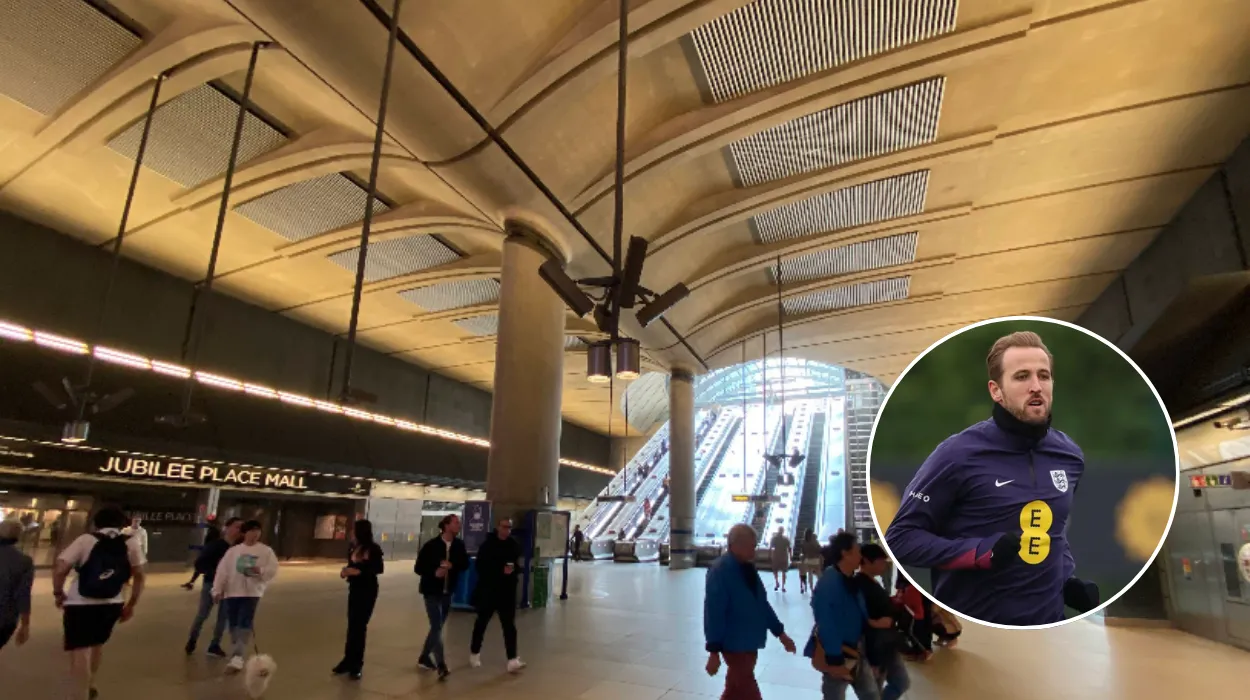
London (The Londoner News) July 13, 2026 – One of London’s busiest financial hub transit points, Canary Wharf Underground station, has undergone a temporary visual transformation, rebranding its iconic transport signage to “KANEary Wharf” in honour of England football captain Harry Kane. The high-profile marketing initiative, executed in partnership with footwear manufacturer Skechers, has transformed the familiar London Underground roundels across the station to capture the attention of thousands of daily commuters and football fans alike. The commercial takeover comes at a critical juncture for English sports, aligning with the national squad’s progression to the quarter-final stages of the 2026 FIFA World Cup, where they are scheduled to play a decisive match against Norway.
- Key Points
- Why Was Canary Wharf Station Rebranded to ‘KANEary Wharf’?
- What is the Context Behind the 2026 FIFA World Cup Campaign?
- How Have Commuters and Football Fans Reacted to the Rebrand?
- What are the Operational Guidelines for Transport for London Station Takeovers?
- How Does This Compare to the Jude Bellingham Station Activation?
- What are the Long-Term Implications for Commercial Branding in Public Spaces?
The activation marks a significant investment in experiential sports marketing, capitalizing on the immense public attention surrounding the national team’s tournament run. By blending corporate sponsorship with civic transport infrastructure, the campaign highlights the growing intersection of corporate athletic endorsements and public spaces during major international sporting events.
Why Was Canary Wharf Station Rebranded to ‘KANEary Wharf’?
The primary objective behind the temporary alteration of the prominent transport hub is to celebrate the athletic achievements of Harry Kane while simultaneously driving visibility for his commercial partner, Skechers. As reported by senior reporter Poppy Huggett of London Now, the temporary station renaming in central London was orchestrated directly ahead of England’s eagerly awaited 2026 FIFA World Cup quarter-final showdown. The marketing layout deliberately leverages wordplay on the geographic location of the financial district to embed the sports star’s surname into the daily commutes of Londoners.
The commercial underpinnings of the event tie back to a long-term endorsement contract executed between the Bayern Munich striker and the American footwear giant. Skechers has utilised the peak viewing windows of the international football tournament to anchor its brand identity within the United Kingdom’s football culture. By altering physical infrastructure at a station that sees millions of passengers annually, the campaign ensures maximum eye-level engagement that standard billboard or digital advertising campaigns struggle to replicate.
What is the Context Behind the 2026 FIFA World Cup Campaign?
The structural timing of the “KANEary Wharf” launch is explicitly linked to the high-stakes sports narrative unfolding across the Atlantic. As reported by sports correspondent Holly Brencher of London Now, national excitement has continued to climb exponentially during Kane’s active campaign with the England squad. The tournament context has created a highly commercialised atmosphere throughout London, with corporate sponsors vying for visibility as public enthusiasm reaches its peak.
The sporting narrative framing this specific activation involves a highly publicised individual rivalry. As further detailed by reporter Poppy Huggett of London Now, England’s showdown with Norway has been billed across international sports desks as a direct clash between two of the world’s most prolific forwards. Harry Kane has maintained an extraordinary competitive season for both his club, Bayern Munich, and the England national team, accumulating an impressive tally of 73 goals for club and country, which includes six goals scored during the current World Cup cycle.
Who is Harry Kane Facing in the Tournament?
Standing directly in the path of the England squad is Manchester City’s star striker, Erling Haaland. According to metrics published by reporter Poppy Huggett of London Now, the Norwegian forward has struck 58 times over the course of his domestic and international season, including seven goals within the tournament itself to guide Norway to its historic first-ever World Cup quarter-final appearance. This statistical backdrop has transformed the promotional campaign from a standard product advertisement into a cultural milestone tied directly to immediate sports history.
How Have Commuters and Football Fans Reacted to the Rebrand?
The physical manifestation of the campaign has generated immediate engagement across both physical spaces and digital networks, drawing varying assessments from the public. As observed by photojournalist Suzanne Plunkett of Reuters, everyday commuters and football enthusiasts have been seen utilizing the space dynamically, with numerous people choosing to sit on benches positioned directly beneath the temporarily rebranded “KANEary Wharf” signs to absorb the atmosphere or capture photographs.
On digital platforms, the campaign achieved rapid viral status. As reported by reporter Poppy Huggett of London Now, the rebrand has sparked plenty of reaction on TikTok, with fans sharing their explicit excitement ahead of the critical international match. For instance, an analytical review of digital interactions highlighted comments from individual users expressing immense faith in the squad’s leadership. As recorded by reporter Poppy Huggett of London Now, one social media user wrote that “Kane and Jude gonna lead us to glory,” while another commentator simply declared, “That’s my captain.”
Was There an Earlier Viral Precursor to This Stunt?
The physical implementation by Skechers was actually preceded by a grassroots social media moment earlier in the summer. As reported by sports writer Holly Brencher of London Now, an earlier viral social media post had previously transformed the station’s famous roundel into “KANEary Wharf” in a digital tribute. That initial display was created by the popular community social media page @allontheboard, which wrote the pun onto a physical whiteboard located within the station grounds before sharing it online.
According to records compiled by reporter Holly Brencher of London Now, the original grassroots post stated:
“To pay tribute to Harry Kane saving England’s World Cup dream we have decided to change Canary Wharf station to KANEary Wharf station. Come on England.”
That specific electronic post secured more than 78,000 likes and generated hundreds of secondary discussions, proving to corporate marketers that the linguistic connection between the transit hub and the football captain carried immense commercial viability.
What are the Operational Guidelines for Transport for London Station Takeovers?
The transformation of public transport signage into commercial real estate requires strict coordination with municipal authorities, specifically Transport for London (TfL). While corporate entities finance these campaigns to achieve deep cultural penetration, the regulatory framework governing the transit network requires that safety, structural clarity, and passenger navigation remain uncompromised during the installation window.
Historically, TfL has permitted limited, temporary rebrandings of major stations to celebrate significant national sporting events, cultural milestones, or major commercial partnerships. However, these choices are closely monitored due to operational impacts. As noted within transport analytical circles on platforms like Reddit’s r/LondonUnderground, community discussions frequently arise regarding the potential consequences of altering established geographical markers on transport maps.
Does Station Renaming Cause Issues for Passengers with Disabilities?
The practice of altering station names for commercial purposes has faced structural criticism from passenger advocacy groups. As highlighted by a transport analyst contributing to the r/LondonUnderground community under the designation daz1987, there are historical concerns regarding how these stunts impact vulnerable travelers:
“I thought TfL had to stop doing this kinda stuff because it could easily confuse passengers who are unfamiliar with the network, or suffer from disabilities? I might be wrong but I’m sure I seen a news article on it.”
This perspective underscores a persistent institutional tension within urban governance: balancing the substantial non-fare advertising revenue generated from corporate giants like Skechers against the foundational mandate of maintaining a universally accessible, easily navigable public transit system for individuals with cognitive disabilities, visual impairments, or those unfamiliar with the English language.
Explore more Local London News:
Cyclist Critically Injured Following Severe Car Collision in Croydon 2026
Harry Kane Station Renamed Kaneary Wharf Before World Cup: London 2026
How Does This Compare to the Jude Bellingham Station Activation?
The “KANEary Wharf” campaign does not exist in isolation, but rather forms part of a broader, structured marketing trend observed throughout the 2026 tournament cycle. Corporate brands have increasingly sought to link specific athletes to geographically relevant or phonetically similar transit locations across the capital to build a cohesive narrative.
As reported by journalist Poppy Huggett of London Now, this specific rebrand comes just days after midfielder Jude Bellingham received similar recognition within the capital’s transit network. During that preceding activation, Bellingham station, located in South East London, was temporarily renamed in honour of the Real Madrid star immediately prior to England’s World Cup last-16 victory over Mexico.
| Station Name | Temporary Rebrand | Associated Player | Commercial/Event Context |
| Canary Wharf | KANEary Wharf | Harry Kane | Skechers Football / World Cup Quarter-Final |
| Bellingham | Bellingham (Tribute) | Jude Bellingham | Adidas/National Campaign / World Cup Last-16 |
This systemic approach to utilizing London’s transport infrastructure indicates that sports marketing has shifted away from traditional print and television mediums, moving decisively toward experiential, real-world physical takeovers that demand direct physical interaction from urban populations.
What are the Long-Term Implications for Commercial Branding in Public Spaces?
The execution of the Skechers campaign featuring Harry Kane represents a sophisticated evolution in commercial corporate sponsorships. By successfully modifying public transit landmarks, brands are capable of generating substantial earned media value that far outlasts the physical duration of the display itself. The widespread dissemination of the imagery across global news wires like Reuters and social platforms ensures that the financial investment yields international reach.
As the 2026 FIFA World Cup progresses, the intersection of corporate enterprise, national sports identity, and public infrastructure is likely to deepen. While fans continue to celebrate these urban tributes as expressions of national solidarity and sporting pride, transport regulators will face ongoing pressure to ensure that commercial takeovers do not obscure the essential utility of public services. For now, “KANEary Wharf” stands as a vivid testament to Harry Kane’s cultural footprint within British society and the undeniable power of modern sports marketing.