Key Points
- Permanent Residence Decision: King Charles III and Queen Camilla have officially chosen to permanently reside at Clarence House, breaking nearly two centuries of royal tradition by refusing to move into Buckingham Palace after its extensive renovations are completed.
- Massive Restoration Cost: The historic London landmark is currently undergoing a comprehensive ten-year renovation project valued at 369 million pounds (approximately $500 million), scheduled for completion in March 2027.
- Transition to an Administrative Hub: While the 775-room palace will no longer serve as the personal home or “resting head” of the reigning monarch, it will remain the official operational headquarters, or “beating heart,” of the British monarchy, functioning primarily as a high-end office building and ceremonial venue.
- Increased Public Access: Palace officials have indicated that the transition from a private domestic residence to an administrative site is intended to allow greater public and tourist access, though exact details remain undisclosed.
- Generational Shift: The move reflects a broader trend within the contemporary royal family, as Prince William and Catherine, Princess of Wales, have similarly established Windsor’s Forest Lodge as their “forever home,” further shifting the monarchy’s residential core away from central London’s sprawling historical palaces.
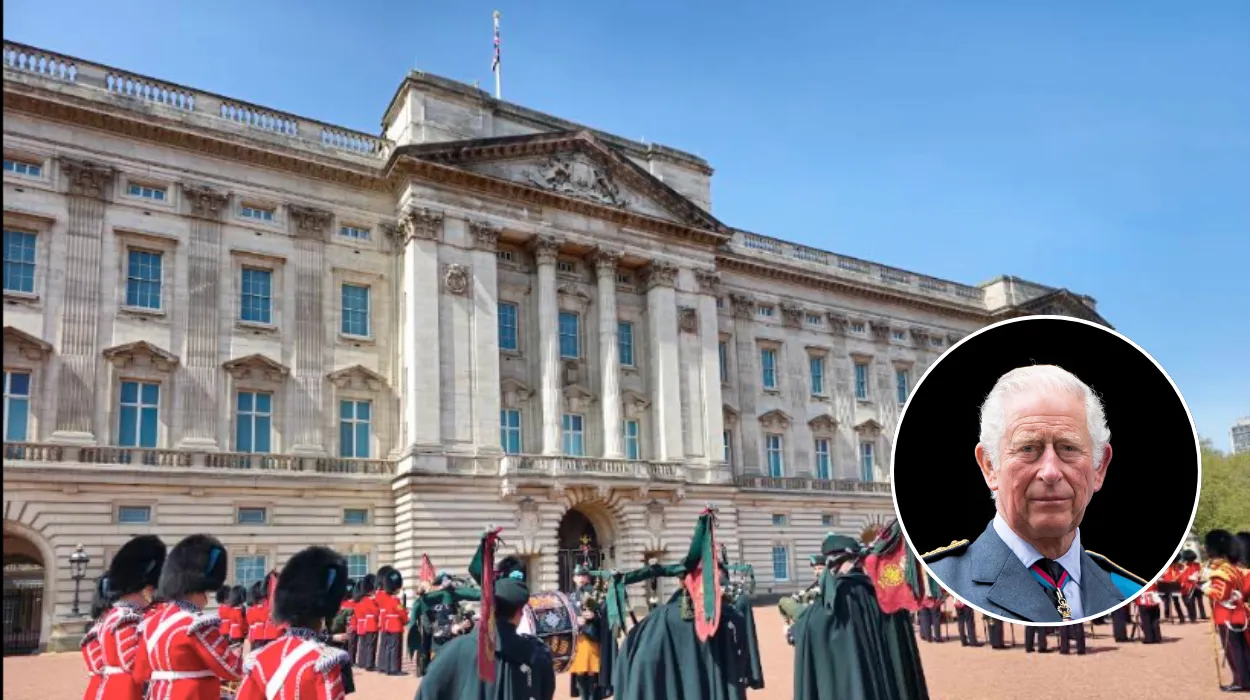
London (The Londoner News) July 13, 2026 – Buckingham Palace, the world-famous architectural symbol of the British monarchy, is officially transitioning into one of the United Kingdom’s most opulent administrative office buildings. Following years of speculation surrounding the domestic arrangements of the royal family, palace officials have formally confirmed that King Charles III and Queen Camilla will not occupy the historic 775-room estate as a personal residence upon the completion of its ongoing 369 million pound (approximately $500 million) renovation project. Instead, the monarchical couple will permanently maintain their London home at the nearby, more intimate Clarence House. The decision marks a historic structural shift for the institution, ending nearly two centuries of tradition established in 1837 when Queen Victoria declared the palace the official sovereign residence. While the grand edifice will continue to serve as the bureaucratic and ceremonial center of the state—hosting state banquets, foreign dignitaries, and iconic balcony appearances—it will cease to function as a private home, fundamentally altering its modern identity into a highly functional corporate and diplomatic headquarters.
- Key Points
- Why did King Charles III decide to abandon Buckingham Palace as a residence?
- What do former palace staff say about living inside the historic estate?
- How will Buckingham Palace function if no monarch lives there?
- What are the financial details of the ongoing palace renovations?
- How will public and tourist access change after the renovations are complete?
- Is this part of a wider royal trend away from London palaces?
As reported by Karla Adam of The Washington Post, James Chalmers, the Keeper of the Privy Purse, whose official real-life role manages the royal household’s financial accounts, recently informed journalists during a briefing on the monarchy’s annual financial report that the King and Queen have decided not to adopt Buckingham Palace as a personal residence and will instead continue to use Clarence House as their London home. This revelation, buried within the technical data of the annual sovereign grant accounts, quickly ignited a storm of commentary across the British press corps. Writing for the Daily Express, editorial teams declared across the front pages that the “Palace is not fit for a king.” Concurrently, journalists at The Sun immediately deployed a snap public poll asking their readership: “Is King right to quit Buckingham Palace? VOTE NOW,” underscoring the deep public fascination and institutional shock accompanying the formal vacancy of Britain’s premier royal address.
Why did King Charles III decide to abandon Buckingham Palace as a residence?
In explaining the reasoning behind this shift, administrative staff have highlighted both institutional strategy and personal preference. As reported by Karla Adam of The Washington Post, an anonymous spokesman for Buckingham Palace clarified that the operational division of the estate was a deliberate choice to align the institution with modern civic engagements. Speaking on the conditional requirement of anonymity in strict accordance with royal custom, the spokesperson stated that “the Palace will continue in every traditional way to be the beating heart of the monarchy, just not its resting head,” adding that the newly modernised compound “will be a buzzing hive of activity in every other way.”
Furthermore, financial and administrative reports indicated that the King’s choice was heavily influenced by a desire to expand public interaction with the crown’s physical heritage. By removing the strict security and privacy perimeters required for a living monarch, the palace can accommodate wider commercial and educational traffic. However, seasoned royal observers note that personal comfort played an equally significant role. Historically, generations of British royals have expressed a profound dislike for Buckingham Palace, describing it as cold, drafty, and distinctly lacking in privacy due to its central London location, which remains perpetually surrounded by thousands of international tourists.
What do former palace staff say about living inside the historic estate?
The psychological and structural challenges of treating Buckingham Palace as a literal home have long been documented by those who managed its interior operations. As reported by Karla Adam of The Washington Post, Dickie Arbiter, the former press secretary to the late Queen Elizabeth II, provided direct insight into the domestic atmosphere of the building, observing that the structure entirely lacks a cozy or homey ambiance. Speaking directly to the publication, Arbiter stated:
“It’s enormous. At nighttime it’s quite eerie. It feels more like a hotel.”
This sentiment reinforces historical accounts from previous monarchs, including King George VI and Queen Elizabeth II, who initially preferred their private residences at Piccadilly and Clarence House before being forced by institutional duty to relocate to the palace. The sheer scale of the building—featuring 775 rooms, 78 bathrooms, and miles of corridors—demands highly regimented, formal staff procedures and complex internal planning just to execute basic domestic tasks. For a contemporary monarch who has spent decades cultivating a more streamlined personal routine, the prospect of living above a bustling office workspace and tourist site held little appeal.
How will Buckingham Palace function if no monarch lives there?
Despite the lack of royal slippers inside its residential wings, the palace is not facing abandonment or institutional retirement. According to data published within the monarchy’s latest annual financial accounts, the building remains an incredibly busy operational asset. During the last financial year alone, Buckingham Palace successfully hosted 827 official events, drawing a combined audience of nearly 97,000 guests. These activities include investitures where state honors are bestowed, formal diplomatic receptions, and the famous royal garden parties that see thousands of citizens mingling on the expansive palace lawns.
The administrative distinction between the palace as a workplace and a home was further highlighted by royal reporters during recent family visits. As covered in The Washington Post report, team members representing Prince Harry, the Duke of Sussex, briefed the media that he would be accommodated at Buckingham Palace during a short stay in London. This highlighted that while the building is no longer an active family home, it retains its utility as a secure, fully staffed state guesthouse and office hub for visiting members of the royal family, foreign heads of state, and hundreds of daily administrative workers.
What are the financial details of the ongoing palace renovations?
The decision to convert the palace into a permanent office comes amidst a massive, taxpayer-funded infrastructural overhaul. The Sovereign Grant has allocated 369 million pounds (roughly $500 million) toward a complex, ten-year master plan aimed at replacing obsolete wiring, aging plumbing, and historical heating systems that posed severe fire risks. At the inception of the project, and as recently as the coronation of King Charles III, palace communications teams had consistently assured the public that the monarch’s relocation was simply delayed by the construction.
As reported by Karla Adam of The Washington Post, palace officials had previously cited these extensive renovations to explain the delay in the monarch’s physical move, telling reporters at the time that “it remains the expectation they will do so when the work is complete.” The sudden reversal, confirming that Charles and Camilla will stay at Clarence House indefinitely, represents a major pivot in royal public relations. It reveals that the half-billion-dollar modernization project is ultimately updating a state-of-the-art corporate and ceremonial headquarters rather than restoring a private domestic residence.
Explore more Local London News:
Harry Kane Station Renamed Kaneary Wharf Before World Cup: London 2026
Bridgerton Filming Location West Wycombe Park Reopens: High Wycombe 2026
How will public and tourist access change after the renovations are complete?
While the Keeper of the Privy Purse, James Chalmers, confirmed that the transition would facilitate greater public entry, the royal household has yet to publish the granular operational details of these upcoming tourism programs. The multi-million-pound renovation project is scheduled to formally conclude in March 2027, at which point new public access pathways are expected to be unveiled.
Speculation among tourism experts and architectural historians suggests that the palace may significantly expand its seasonal openings. Currently, the public can tour the magnificent State Rooms during the summer months, alongside limited recent openings of the East Wing. With the King residing permanently elsewhere, options under consideration could include extended year-round gallery tours, expanded access to the royal gardens, or public picnics on the grounds. Tourists gathered outside the palace gates have expressed immense enthusiasm for the shift, noting that the opportunity to see more of the interior art collections and historic architecture outweighs the traditional novelty of having the monarch physically sleeping inside the building.
Is this part of a wider royal trend away from London palaces?
The decision by King Charles III to reject Buckingham Palace as a home is not an isolated incident of modern royal domestic planning; rather, it reflects a broader geographical shift among the core members of the House of Windsor. Prince William and Catherine, the Princess of Wales, have similarly structured their lives away from the traditional urban palaces of central London. The heir to the throne has consolidated his family’s primary residence at Forest Lodge, situated within the secure perimeters of Windsor Great Park.
As noted in the comprehensive coverage by The Washington Post, Prince William has reportedly described the Windsor estate as his family’s “forever home.” This collective migration away from historic capitals like Buckingham Palace and Kensington Palace suggests that the future of the British monarchy lies in a decentralized model: maintaining rural or suburban estates for private family life, while utilizing the grand historical fortresses of London strictly as professional, ceremonial backdrops. James Chalmers re-emphasised this dual reality by stating that while private rooms will still be kept for daytime use by the family, “in all other ways the Palace will continue to be both the ceremonial and operational centre of royal life.”