Key Points
- Downing Street Summit: British Prime Minister Keir Starmer hosted a major reception at 10 Downing Street to address the ongoing antisemitism crisis and reinforce community safety.
- Foreign Proxy Exposure: The UK Government officially blamed an Iran-backed proxy known as the IMCR for seven high-profile arson and vandalism attacks against Jewish institutions and a Persian media outlet.
- New Sanctions and Bans: The UK is moving to formally ban both the IMCR and the Islamic Revolutionary Guard Corps (IRGC), alongside introducing life sentences for state-sponsored proxy sabotage.
- Russian Links Discovered: Under the new foreign proxy laws, Downing Street has also targeted a Russian-linked GRU Volunteer Corps to combat “thugs for hire.”
- Mixed Community Reaction: While mainstream organizations like the Board of Deputies of British Jews welcomed the operational acceleration, other advocacy groups criticized the event as prioritizing rhetoric over systemic reform.
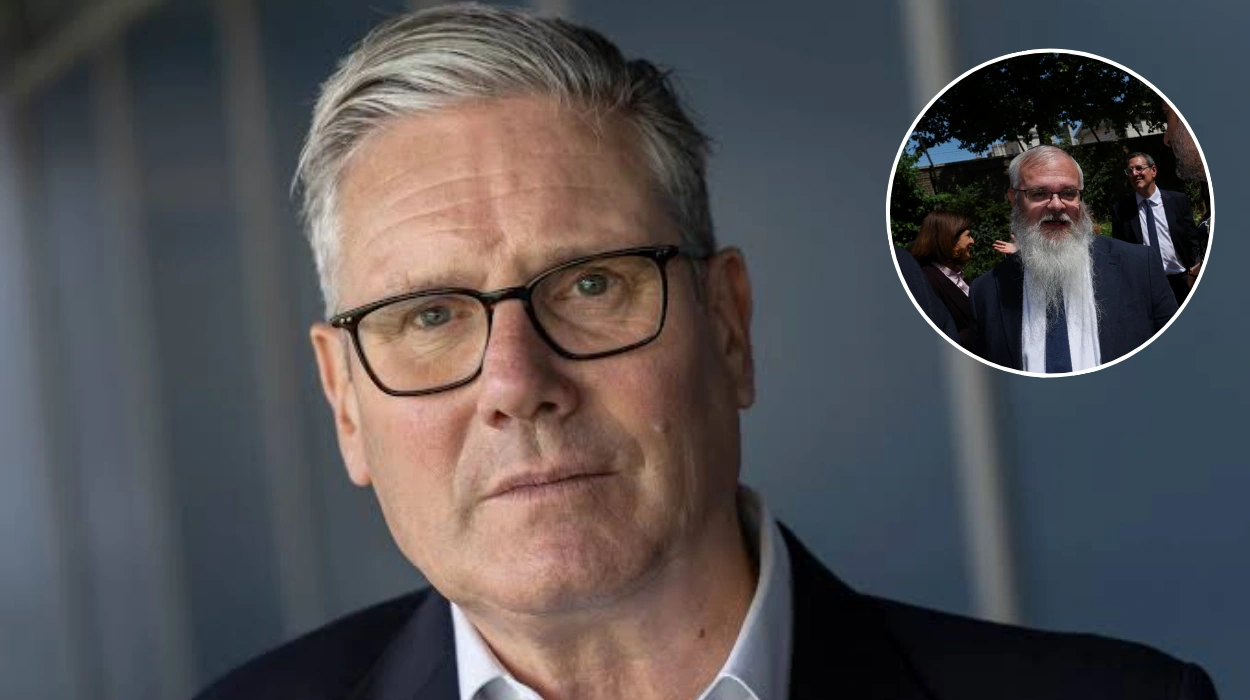
London (The Londoner News) July 13, 2026 – Prime Minister Keir Starmer held a high-profile reception with prominent leaders of the British Jewish community at 10 Downing Street today to announce decisive legislation tackling antisemitism and state-sponsored proxy networks. The event, marked by a poignant moment where the Prime Minister embraced attendees, served as the platform for a major intelligence disclosure: the UK government officially attributes a series of recent arson and vandalism attacks targeting Jewish communities to an Iranian-backed proxy group operating inside Europe.
- Key Points
- How Is the UK Government Responding to Foreign Threats Against Jewish Communities?
- What Are the Details of the New Anti-Sabotage Legislation?
- Why Was an Emergency Summit Required to Address Antisemitism?
- How Have Major Jewish Leadership Organizations Reacted to Downing Street’s Commitments?
- What Broader Measures Are Being Enforced in Public Sectors?
How Is the UK Government Responding to Foreign Threats Against Jewish Communities?
The reception was held amidst heightened national anxiety following a string of violent incidents across the United Kingdom. As reported by Jill Lawless of the Los Angeles Times, British counter-terrorism officials revealed that a little-known proxy group backed by Iran, identified as the Islamic Movement for Conflict Resolution (IMCR), has been linked to at least seven coordinated arson and vandalism attacks. These attacks targeted synagogues, Jewish charitable buildings, and an independent Persian-language media outlet situated in London and other European hubs.
According to intelligence briefings shared during the Downing Street summit, officers from the Metropolitan Police Counter Terrorism Command believe that Iran’s Revolutionary Guard Quds Force “almost certainly” directed these proxy networks. In response, the government has fast-tracked sweeping national security legislation aimed at shifting the legal landscape for state-sponsored actors operating on British soil.
In an official statement released by the Prime Minister’s Office, Keir Starmer declared:
“We have already taken tough action against the Iranian regime and those linked to it, and against Russian operatives and networks targeting our country. These new powers will make it easier to prosecute and lock up anyone carrying out their dirty work here in Britain.”
What Are the Details of the New Anti-Sabotage Legislation?
The legal measures introduced during the reception mark a major expansion of the UK’s judicial and intelligence toolkit. Under a freshly amended framework designed to penalise foreign-led interference, individuals convicted of sabotage or espionage on behalf of hostile states could now face maximum penalties of life imprisonment.
As detailed by reports from the Los Angeles Times, the strategy goes beyond Middle Eastern threats. The Prime Minister announced that the new legislation will also formally designate a Russian-linked entity known as the GRU Volunteer Corps. Government officials described the network as a pool of “thugs for hire” utilized by Moscow to carry out covert disruption campaigns across Western Europe.
By categorizing these networks as proscribed terrorist organizations, British law enforcement will gain the authority to freeze assets, criminalise membership, and arrest anyone suspected of providing material or financial support to foreign proxies.
Why Was an Emergency Summit Required to Address Antisemitism?
Today’s reception follows a broader institutional push that began earlier this spring. As reported by Mathilda Heller of The Jerusalem Post, Starmer had previously convened an emergency roundtable at Downing Street on May 5, 2026, following a severe terrorist attack in north London. In that incident, which occurred in the predominantly Jewish neighborhood of Golders Green, a lone assailant seriously wounded 76-year-old Moshe Shine and 34-year-old Shloime Rand in broad daylight.
The Golders Green stabbing followed a dangerous pattern of escalation. In public logs published by the Prime Minister’s Office on GOV.UK, Starmer listed multiple targeted attacks that led to the current security threshold:
- An arson attack on a communal facility in Hendon.
- A direct attack on the Jewish Ambulance Service (Hatzola).
- A fireball thrown at the Kenton United Synagogue.
- A fatal assault in Heaton Park, Manchester, where two Jewish men were killed.
Reflecting on these events during a transcript recorded by GOV.UK staff, Starmer told representatives from business, healthcare, culture, higher education, and policing:
“Yesterday, Britain’s Jewish community suffered yet another vile terrorist attack… It is part of a pattern of rising antisemitism that has left our Jewish communities feeling frightened, angry, and asking whether this country, their home, is safe for them. This crisis – it is a crisis for all of us.”
Explore more Politics News:
Andy Burnham to Become Prime Minister Unopposed: London 2026
Nigel Farage and Reform UK Face Funding Investigation: Clacton 2026
How Have Major Jewish Leadership Organizations Reacted to Downing Street’s Commitments?
The reception brought together regional religious and civic authorities, including Rabbi Daniel Walker, leader of the Heaton Park Hebrew Congregation in Manchester. While the mood inside the state rooms was cooperative, the wider community remains split on whether legislative adjustments will translate into safety on British streets.
As reported by Mathilda Heller of The Jerusalem Post, the Board of Deputies of British Jews (BoD) and the Jewish Leadership Council issued a joint statement describing the summit as an “important moment to demonstrate a change in approach.” The leadership presented a three-step action plan to the government, focusing heavily on:
- Accelerated Justice: Speeding up the criminal justice system to ensure swift arrest, processing, and sentencing for individuals inciting racial or religious hatred.
- Institutional Accountability: Forcing universities and public funding bodies to actively police extremist rhetoric on campuses and public venues.
- Community Partnership: Formally recognizing and challenging modern, evolving manifestations of antisemitism, specifically targeting the state actors funding domestic division.
What Criticisms Do Advocacy Groups Have Regarding the Government’s Strategy?
Despite the unified front presented at Downing Street, some prominent campaign groups expressed deep skepticism. As noted in The Jerusalem Post’s coverage, the Campaign Against Antisemitism (CAA) praised Starmer for acknowledging that antisemitism stems from multiple extremist vectors—including the far-right, the far-left, and Islamist extremism—but argued that active enforcement remains sluggish.
A representative for the Campaign Against Antisemitism stated to reporters:
“The police have had the powers to ban marches all along, and it should not have taken a spate of stabbings and arson attacks for the Charity Commission to act against extremist mosques or for the Arts Council to stop funding venues that spread hate.”
The organization further alleged that the Prime Minister deliberately omitted certain campaigning groups from the guest list to avoid uncomfortable policy questions, remarking that they “would play no part in any choreographed spectacle that puts words before action.”
What Broader Measures Are Being Enforced in Public Sectors?
To satisfy demands for widespread structural reform, the government has detailed specific mandates across public entities that receive state support. During the policy rollouts, the Prime Minister emphasized a policy of “zero tolerance for inaction.”
How Will Higher Education Institutions and Cultural Venues Be Regulated?
According to government briefs published on GOV.UK, the administration is introducing strict performance metrics for academic and cultural organizations:
- Universities: Higher education institutions must demonstrate clear, documented protocols for handling antisemitic harassment. Failure to act against hate speech on campuses will result in direct administrative and financial intervention by regulatory bodies.
- Cultural Institutions: Where public funds are distributed via the Arts Council, the government has authorized the body to utilize its full compliance powers to suspend, withdraw, or claw back funding from any venue or project found to be platforming antisemitic material.
- Charity Regulation: The Charity Commission has been granted enhanced enforcement powers to rapidly audit and close down charitable trusts found to be promoting or enabling extremist views.
In his concluding remarks from the Downing Street briefings, Starmer reiterated that community cohesion cannot rest on passive statements of solidarity, stating that British values “are not a gift handed down generation to generation. They are something we earn each day through action.”