London is one of the world’s oldest continuously inhabited capital cities. Its identity has evolved through nearly two thousand years of political transformation, religious change, commercial expansion, warfare, and cultural innovation. Historic landmarks across the city preserve physical evidence of these developments, allowing modern visitors and researchers to trace the evolution of British society from Roman occupation to the contemporary constitutional monarchy.
- What makes historic landmarks essential to London’s identity?
- How did Roman London establish the city’s historical foundations?
- Which medieval landmarks transformed London into England’s political and commercial centre?
- How did royal institutions influence London’s architectural and political development?
- Why did the Great Fire of London reshape the city’s historic landscape?
- Which cultural landmarks demonstrate London’s artistic and intellectual evolution?
- How have historic landmarks survived modern urban development?
- What lasting influence do London’s historic landmarks have today?
Rather than existing as isolated monuments, London’s historic landmarks form an interconnected historical landscape. Roman walls established the city’s first boundaries. Medieval fortifications demonstrated royal authority. Religious buildings reflected shifts from Catholicism to Anglicanism. Parliamentary institutions established democratic traditions. Bridges, markets, and public squares supported commercial growth, while museums and conservation projects protect these places for future generations.
Understanding these landmarks provides insight into how London became a global political, financial, and cultural centre. Each site represents a specific period while contributing to the city’s broader historical narrative.
What makes historic landmarks essential to London’s identity?
Historic landmarks preserve London’s political, cultural, religious, architectural, and social development across nearly 2,000 years. They provide physical evidence of historical events, institutional continuity, urban growth, and national identity while supporting education, heritage conservation, tourism, and archaeological research throughout modern Britain.
Historic landmarks are places officially recognised for their historical, architectural, archaeological, or cultural significance. In London, these landmarks document successive periods of occupation, governance, economic development, and artistic achievement.
London’s recorded history began after the Roman conquest of Britain in AD 43. Around AD 47–50, the Romans established Londinium on the north bank of the River Thames because of its strategic crossing and access to maritime trade. Archaeological excavations indicate that Londinium rapidly became one of Roman Britain’s most important commercial settlements.
Following the Norman Conquest in 1066, William I introduced new defensive architecture and administrative institutions that reshaped London’s political landscape. During the medieval period, churches, monasteries, guild halls, and markets transformed the city into England’s commercial and religious centre.
The Tudor, Stuart, Georgian, Victorian, and modern periods each added new landmarks while adapting earlier structures to changing political and social needs. Today, hundreds of listed buildings and protected archaeological sites remain within Greater London.
Several organisations safeguard these landmarks, including Historic England, the Museum of London Archaeology (MOLA), local borough authorities, and UNESCO. Their work ensures that conservation balances modern urban development with historical preservation.
How did Roman London establish the city’s historical foundations?
Roman London created the city’s first organised settlement through roads, defensive walls, ports, markets, public buildings, and administrative institutions. These developments established London’s strategic importance, influencing urban planning, commerce, governance, and settlement patterns that continued long after Roman rule ended.
The Roman Empire founded Londinium shortly after invading Britain. Positioned along the River Thames, the settlement quickly became a vital commercial hub linking Britain with continental Europe.
The first London Bridge, constructed primarily from timber around AD 50, enabled trade across the Thames. Roman engineers also built extensive roads connecting Londinium to other major settlements, including Verulamium (St Albans), Camulodunum (Colchester), and Eboracum (York).
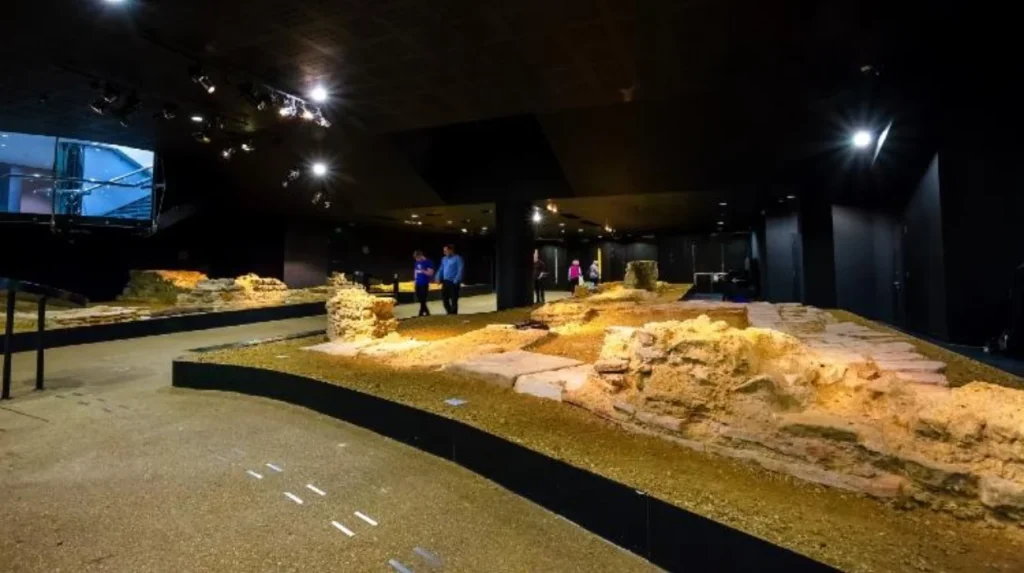
Around AD 190–225, the Romans constructed the London Wall, enclosing approximately 330 acres. Much of this defensive structure remained in use throughout the medieval period. Sections survive today near Tower Hill, Barbican, and the Museum of London.
Roman Londinium also featured a basilica, forum, amphitheatre, bathhouses, temples, warehouses, and sophisticated drainage systems. Archaeological excavations have uncovered mosaics, coins, pottery, inscriptions, and imported goods demonstrating extensive trade with Europe and the Mediterranean.
Following the Roman withdrawal around AD 410, many public buildings deteriorated. However, roads, settlement patterns, and defensive walls continued influencing London’s later development.
Which medieval landmarks transformed London into England’s political and commercial centre?
Medieval landmarks established royal authority, religious influence, commercial regulation, and civic governance. Castles, churches, markets, bridges, and guild institutions created the administrative framework that positioned London as England’s dominant political and economic capital throughout the Middle Ages.
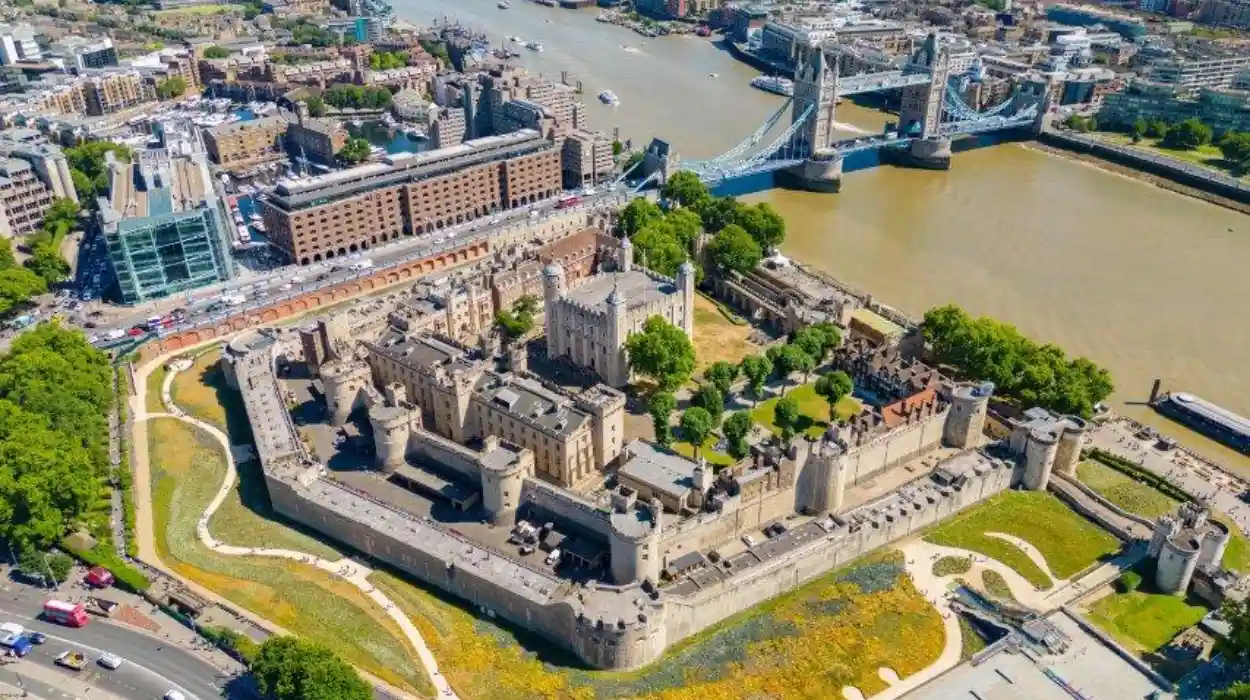
The Norman Conquest marked a turning point in London’s development. William I commissioned the construction of the Tower of London shortly after 1066 to secure military control over the city.
The White Tower remains one of Europe’s best-preserved Norman keeps. Over centuries, the Tower of London served as a royal residence, treasury, armoury, prison, and symbol of royal authority.
Westminster developed separately from the City of London but became the political centre of England. Westminster Hall, completed in 1099 and later rebuilt with its famous hammerbeam roof during the reign of Richard II, remains one of Europe’s largest surviving medieval halls.
Religious institutions also shaped London’s identity. Medieval St Paul’s Cathedral became one of England’s largest churches before its destruction during the Great Fire of London in 1666. Monasteries such as Westminster Abbey served religious, educational, and administrative functions.
London Bridge supported both transportation and commerce. Medieval buildings constructed directly on the bridge housed shops and residences, creating one of Europe’s most distinctive urban landscapes.
Guild halls regulated trade, maintained professional standards, and influenced municipal governance. Merchant organisations strengthened London’s growing role within England’s expanding economy.
How did royal institutions influence London’s architectural and political development?
Royal institutions shaped London’s architecture by constructing palaces, fortifications, ceremonial spaces, administrative buildings, and religious monuments. These developments reinforced monarchy, expanded government functions, influenced urban planning, and established many landmarks that continue serving constitutional roles today.
Royal authority consistently influenced London’s built environment.
The Palace of Westminster evolved from a medieval royal residence into Britain’s parliamentary centre. Although much of today’s structure dates from the nineteenth-century Gothic Revival following the 1834 fire, Westminster Hall survives from the medieval palace.
Westminster Abbey has hosted every English and later British coronation since William the Conqueror’s coronation in 1066, except for Edward V, who was never crowned. The abbey also serves as the burial place for numerous monarchs, scientists, writers, and national figures.
The Banqueting House in Whitehall represents one of London’s most important surviving Jacobean buildings. Designed by Inigo Jones and completed in 1622, it introduced classical Renaissance architecture into England.
Royal parks including Hyde Park, St James’s Park, Green Park, Richmond Park, and Kensington Gardens originated as hunting grounds or royal estates before becoming public spaces.
Buckingham Palace evolved from Buckingham House, purchased by King George III in 1761 and expanded substantially during the nineteenth century into the monarch’s principal London residence.
Why did the Great Fire of London reshape the city’s historic landscape?
The Great Fire of 1666 destroyed medieval London, enabling extensive rebuilding that introduced improved urban planning, fire-resistant construction, wider streets, and new architectural styles while permanently transforming London’s appearance and influencing modern city development.
The Great Fire began on 2 September 1666 in Pudding Lane and continued for four days.
The disaster destroyed approximately 13,200 houses, 87 parish churches, St Paul’s Cathedral, the Royal Exchange, and numerous public buildings across the medieval City of London.
Although fewer than twenty confirmed deaths were officially recorded, historians believe the actual number was higher because many casualties went undocumented.
Architect Sir Christopher Wren became central to London’s reconstruction. His most celebrated achievement was the present St Paul’s Cathedral, completed in 1710 after approximately 35 years of construction.
The Monument to the Great Fire, designed by Christopher Wren and Robert Hooke, commemorates the disaster near its point of origin.
Rebuilding regulations required wider streets, brick and stone construction instead of timber, and improved building standards that reduced future fire risks.
To experience this historic landmark in person today, consult our comprehensive [London’s Most Beautiful Libraries Every Book Lover Should Visit During Their London Journey] for itineraries and visiting parameters.
Which cultural landmarks demonstrate London’s artistic and intellectual evolution?
London’s cultural landmarks reflect centuries of artistic achievement, scientific discovery, education, literature, and public learning. Museums, theatres, libraries, galleries, and educational institutions preserve collections and traditions that document Britain’s evolving cultural influence and global connections.
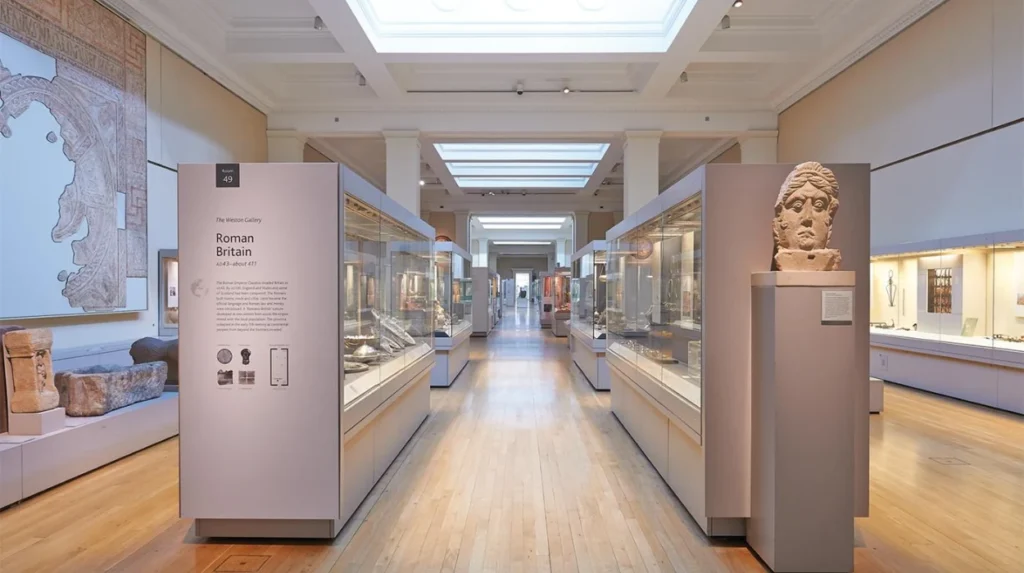
The British Museum, founded in 1753, became the world’s first national public museum. Its collections include approximately eight million objects representing human history across multiple continents.
Shakespeare’s Globe reconstructs the Elizabethan theatre associated with William Shakespeare. Although the original Globe opened in 1599, the modern reconstruction opened in 1997 near its historical location.
The Royal Observatory Greenwich, established in 1675 by King Charles II, became internationally significant for astronomy and navigation. The Prime Meridian, designated longitude 0°, passes through the observatory.
The National Gallery, established in 1824, houses more than 2,300 paintings spanning the thirteenth through early twentieth centuries.
The British Library preserves over 170 million collection items, including medieval manuscripts, historical maps, newspapers, and literary archives documenting Britain’s intellectual history.
These institutions demonstrate how London’s identity extends beyond politics into science, literature, visual arts, education, and international scholarship.
How have historic landmarks survived modern urban development?
Historic landmarks survive through conservation legislation, archaeological investigation, restoration programmes, UNESCO recognition, listed-building protection, and public investment. These measures balance heritage preservation with urban growth while ensuring historically significant structures remain accessible for education and cultural tourism.
London continuously evolves as one of Europe’s largest metropolitan areas. Infrastructure expansion, commercial development, and population growth create ongoing challenges for heritage preservation.
The Planning (Listed Buildings and Conservation Areas) Act 1990 provides statutory protection for significant historic buildings throughout England.
Historic England maintains the National Heritage List for England, recording listed buildings, scheduled monuments, registered parks, battlefields, and protected wreck sites.
UNESCO recognises several London heritage locations, including the Tower of London, Westminster Palace, Westminster Abbey, and Maritime Greenwich, acknowledging their outstanding universal value.
Museum of London Archaeology conducts excavations before major construction projects, allowing researchers to document Roman, medieval, Tudor, and later remains before development proceeds.
Digital technologies, including three-dimensional scanning, laser surveying, geographic information systems, and digital archives, increasingly support conservation planning and historical documentation.
What lasting influence do London’s historic landmarks have today?
London’s historic landmarks continue shaping education, tourism, national identity, civic memory, economic activity, and international heritage conservation. They connect contemporary society with centuries of historical development while preserving evidence that informs future archaeological, architectural, and historical research.
Historic landmarks remain integral to London’s economy and cultural identity.
Millions of visitors travel annually to experience landmarks associated with Roman Britain, the medieval monarchy, parliamentary democracy, scientific discovery, literature, and the British Empire. Heritage tourism contributes significantly to London’s visitor economy while supporting museums, conservation projects, educational programmes, and local businesses.
Educational institutions use these landmarks as primary resources for teaching archaeology, architecture, urban planning, political history, religious history, and conservation science. Students examine original buildings rather than relying solely on written records, providing direct evidence of changing construction methods, artistic styles, and governmental institutions.
Genealogical researchers also benefit from London’s preserved churches, cemeteries, parish records, municipal archives, and historic neighbourhoods. These sources assist families tracing ancestral connections spanning several centuries.
Climate change, environmental pollution, and increasing visitor numbers present new preservation challenges. Conservation specialists employ scientific monitoring, sustainable restoration techniques, and preventive maintenance to minimise deterioration while preserving historical authenticity.
International collaboration continues strengthening London’s heritage protection. Archaeologists, architects, historians, engineers, and conservation scientists exchange expertise through academic research, museum partnerships, and cultural heritage organisations.
The city’s landmarks also influence contemporary architecture. Modern developments frequently incorporate archaeological discoveries into public spaces, allowing historic remains to coexist with new construction. This approach demonstrates that preservation and urban growth can complement one another when guided by careful planning.
London’s historical landscape therefore represents more than a collection of famous buildings. It forms an interconnected record of political authority, commercial expansion, religious transformation, scientific progress, artistic achievement, and civic development extending across nearly two millennia.
From Roman defensive walls to medieval castles, from Gothic churches to parliamentary institutions, and from world-class museums to protected archaeological sites, these landmarks collectively define London’s identity. Their continued preservation ensures future generations can understand how one of the world’s most influential cities developed through centuries of political and cultural change.
As conservation efforts advance and archaeological discoveries continue, London’s historic landmarks remain living evidence of the city’s remarkable historical continuity. They preserve the stories of rulers, merchants, architects, craftspeople, scholars, and ordinary residents whose contributions shaped the capital into the internationally recognised metropolis it is today.
What is the oldest historic landmark in London?
The oldest surviving historic landmarks in London include sections of the Roman Wall, built around AD 190–225, and the Tower of London, which dates to the late 11th century following the Norman Conquest.