
London’s nighttime illumination reflects more than two centuries of technological innovation, urban planning, and public safety reform. From oil-lit streets and the world’s first large-scale gas lighting network to electric lamps and today’s energy-efficient LED systems, the capital’s lighting history transformed how people lived, worked, travelled, and experienced the city after dark. Modern London’s illuminated skyline remains rooted in engineering achievements that began during the Industrial Revolution.
- What did London’s streets look like before public lighting?
- How did gas lighting transform London during the nineteenth century?
- Why did London’s gas lighting become internationally significant?
- How did electricity replace gas lamps across London?
- Which historic gas lamps still survive in London today?
- How did wartime conditions affect London’s nighttime lighting?
- How has modern technology changed London’s city lighting?
- Why is London’s nighttime illumination important for cultural heritage?
- What is the lasting legacy of London’s nighttime illumination?
What did London’s streets look like before public lighting?
Before organised street lighting existed, London’s streets became extremely dark after sunset. Residents relied on handheld lanterns, candles, and moonlight for navigation. Crime increased in poorly lit districts, while local parishes introduced limited oil lamps during the seventeenth century to improve public safety.
For much of medieval and early modern London, nighttime travel remained dangerous. Most streets lacked permanent lighting, leaving pedestrians dependent on portable lanterns or servants carrying torches. The River Thames also presented hazards because river crossings and waterfronts remained largely unlit.
The first attempts at organised street illumination emerged during the late seventeenth century. Individual parishes became responsible for installing oil lamps in selected streets. These lamps generally burned whale oil, vegetable oil, or other combustible oils housed inside glass lanterns mounted on wooden or metal posts.
The system remained inconsistent because each parish controlled its own maintenance and funding. Wealthier districts often maintained better lighting than poorer neighbourhoods. Many lamps operated only during winter months or when the moon was absent.
Poor illumination affected commerce as well as security. Shops closed earlier, theatres depended on private lanterns, and transport remained limited after sunset. London’s rapidly expanding population during the eighteenth century exposed the need for a coordinated lighting system.
Public authorities increasingly recognised illumination as an essential urban service rather than a private convenience. This shift laid the foundation for one of the most important technological changes in London’s history.
How did gas lighting transform London during the nineteenth century?
Gas lighting revolutionised London by providing brighter, more reliable, and longer-lasting illumination than oil lamps. Beginning in the early nineteenth century, extensive gas networks expanded across the city, extending commercial activity, improving public safety, and supporting rapid urban growth throughout Victorian London.
The breakthrough arrived through advances in manufactured coal gas. Coal heated without oxygen produced combustible gas that could be distributed through underground pipes.
German-born engineer and inventor Frederick Albert Winsor became one of the leading promoters of gas illumination in Britain. His public demonstrations convinced investors and officials that gas lighting offered substantial advantages over oil lamps.
The establishment of the Gas Light and Coke Company in 1812 marked a turning point in urban infrastructure. It became the world’s first public gas utility supplying towns with manufactured gas.
Westminster Bridge became one of London’s earliest major locations illuminated by gas lamps. Soon afterwards, gas lighting spread across commercial districts including the Strand, Pall Mall, and the City of London.
Victorian engineers constructed extensive underground gas mains beneath expanding streets. Iron lamp posts became common features throughout residential neighbourhoods, commercial centres, and major transport routes.
Gas lamps produced stronger, steadier light than oil lamps. Shops extended business hours. Railway stations became safer after sunset. Markets operated later into the evening. Entertainment venues welcomed larger crowds because visitors could travel more safely.
By the middle of the nineteenth century, tens of thousands of gas lamps illuminated London’s streets. Municipal authorities increasingly standardised maintenance, replacing fragmented parish responsibility with organised public management.
Gas lighting also symbolised industrial progress. Foreign visitors frequently described illuminated London as one of the world’s most modern cities.
Why did London’s gas lighting become internationally significant?
London developed one of the world’s largest urban gas lighting systems. Engineers, utility companies, and municipal authorities created an infrastructure that influenced cities across Europe, North America, and the wider British Empire throughout the nineteenth century.
Industrial-scale gas production required coordinated engineering across multiple sectors. Coal arrived from British mining regions before being processed at gasworks located near waterways and rail connections.
Underground distribution networks expanded continuously alongside London’s growing population. Engineers improved pressure regulation, pipe materials, and burner efficiency.
British expertise became internationally influential. Engineers exported knowledge to expanding industrial cities including Paris, Berlin, Melbourne, Sydney, and New York.
London’s lighting network demonstrated how modern utilities could reshape cities. Water supply, sewer construction, electricity generation, and telecommunications later followed similar infrastructure models.
Gas lighting also influenced architecture. Buildings increasingly incorporated decorative exterior lamps, illuminated entrances, and ornamental lanterns. Public squares became evening gathering places rather than locations avoided after sunset.
Police forces benefited from improved visibility. While lighting alone did not eliminate crime, illuminated streets increased surveillance opportunities and supported expanding urban policing throughout the Victorian era.
How did electricity replace gas lamps across London?
Electric lighting gradually replaced gas illumination between the late nineteenth and twentieth centuries. Electric lamps delivered brighter light, lower maintenance requirements, and greater efficiency, leading London authorities to modernise streets, transport infrastructure, and public buildings over several decades.
Electric illumination emerged during the late Victorian period following advances in electrical engineering.
Inventors including Joseph Swan and Thomas Edison contributed to practical incandescent lighting technologies adopted internationally.
London experimented with electric street lighting during the 1880s. Early installations focused on prominent commercial streets where stronger illumination justified higher installation costs.
Electricity required generating stations, underground cables, transformers, and distribution systems rather than gas mains.
Transition occurred gradually because London’s enormous gas infrastructure represented substantial financial investment. Existing gas lamps often remained operational while new electric systems expanded district by district.
During the early twentieth century, electric lighting became increasingly common around government buildings, shopping streets, railway stations, bridges, and civic landmarks.
The spread accelerated after the First World War as electrical generation became more efficient and equipment costs declined.
By the mid-twentieth century, electric street lighting dominated central London, although selected gas lamps survived in historic locations.
Which historic gas lamps still survive in London today?
Several historic gas lamps continue operating across London as protected heritage features. These surviving installations preserve nineteenth-century engineering traditions while demonstrating how Victorian public infrastructure shaped the capital’s urban landscape for future generations.
London retains one of the world’s largest collections of operational historic gas lamps.
Among the best-known concentrations appear around Westminster, St James’s Park, Covent Garden, and several royal parks.
Many historic lamp columns receive statutory protection through listed building legislation because they possess architectural and engineering significance.
Specialist engineers continue maintaining surviving gas infrastructure using traditional techniques combined with modern safety standards.
Preservation organisations recognise these lamps as important examples of Victorian industrial heritage. Their continued operation demonstrates historical continuity within an otherwise modern lighting network.
To experience this historic landmark in person today, consult our comprehensive [Best Rainy Day Attractions in London for Fun Indoor Adventures Throughout Every Season] for itineraries and visiting parameters.
Historic gas lamps also contribute to London’s distinctive night-time character by preserving authentic nineteenth-century streetscapes.
How did wartime conditions affect London’s nighttime lighting?
Both World Wars dramatically altered London’s nighttime illumination through compulsory blackout regulations. Street lighting was reduced or extinguished to protect civilians from aerial attacks, fundamentally changing urban life until normal lighting gradually returned after hostilities ended.
During the First World War, limited blackout measures appeared in response to Zeppelin air raids.
The Second World War introduced far stricter regulations.
Following the outbreak of war in September 1939, Britain implemented nationwide blackout requirements. Windows required blackout curtains, vehicle headlights received shields, and public lighting was extinguished or significantly reduced.
The objective prevented enemy aircraft from identifying strategic targets.
Blackout conditions increased road accidents because pedestrians, cyclists, and motorists travelled with minimal visibility.
Civil defence organisations developed guidance for safe nighttime movement, while local authorities balanced security with public safety.
Following victory in Europe during 1945, London gradually restored normal street illumination.
Post-war reconstruction presented opportunities to modernise electrical infrastructure alongside rebuilding damaged districts.
How has modern technology changed London’s city lighting?
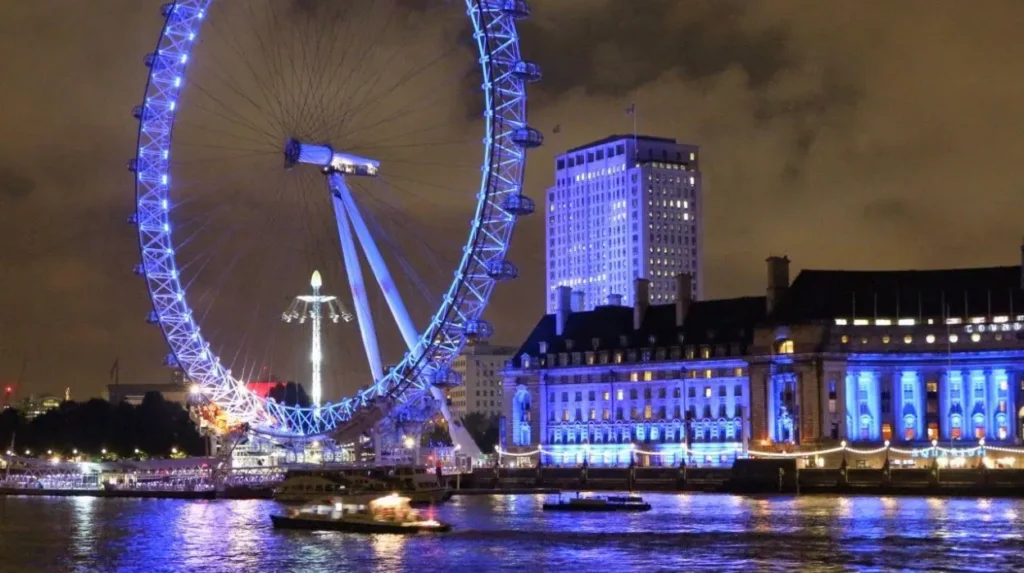
Modern London combines efficient LED technology, intelligent lighting controls, architectural illumination, and environmental sustainability. Contemporary systems reduce energy consumption while improving visibility, preserving heritage features, and supporting one of the world’s busiest twenty-four-hour metropolitan environments.
Today’s lighting network serves far more purposes than simple visibility.
LED technology consumes substantially less electricity than traditional sodium or incandescent lamps while providing longer operational life.
Smart lighting systems adjust brightness according to pedestrian activity, weather conditions, traffic volumes, and maintenance requirements.
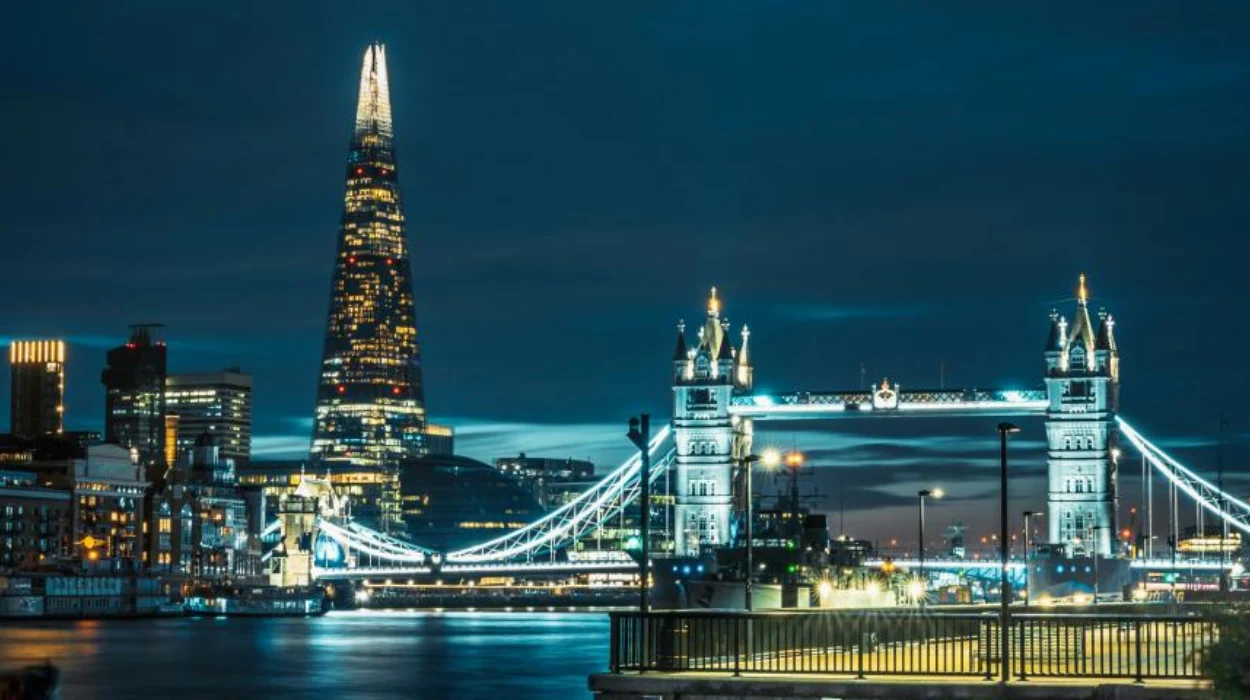
Architectural lighting highlights internationally recognised landmarks including Tower Bridge, St Paul’s Cathedral, and The Shard.
Energy-efficient lighting also supports environmental objectives by lowering electricity demand and reducing maintenance frequency.
Lighting designers increasingly consider biodiversity by reducing unnecessary light spill into rivers, parks, and wildlife habitats.
Modern illumination therefore balances heritage preservation with sustainability objectives.
Why is London’s nighttime illumination important for cultural heritage?
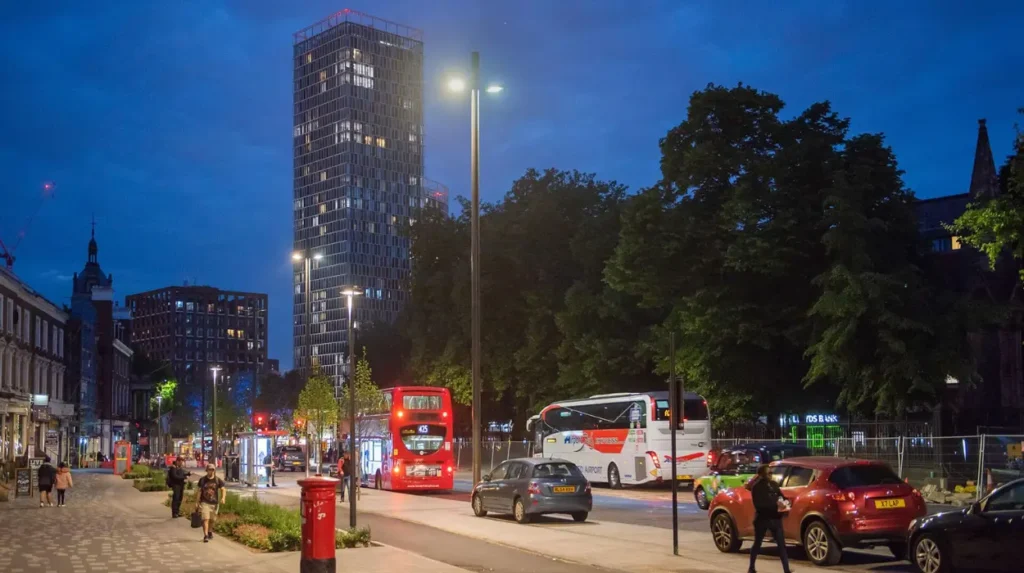
London’s lighting history illustrates changing relationships between technology, architecture, governance, and public life. Surviving lamps, historic infrastructure, and illuminated landmarks preserve evidence of industrial innovation while strengthening public understanding of the capital’s historical development across successive generations.
Street lighting represents an often-overlooked component of urban archaeology.
Historic lamp posts reveal changing manufacturing methods, decorative styles, municipal boundaries, and engineering standards.
Museums, archives, and conservation specialists preserve original lighting equipment including burners, mantles, lamp standards, maintenance tools, engineering drawings, and municipal records.
Historic photographs demonstrate how illumination altered London’s appearance throughout different periods. Researchers studying genealogy also benefit because municipal lighting improvements often correspond with residential expansion recorded in census returns and local government archives.
Lighting transformed social behaviour by extending shopping hours, encouraging evening entertainment, supporting newspaper distribution, and enabling safer public transport.
Architectural conservation increasingly recognises historic lighting as part of broader streetscape preservation rather than isolated objects.
What is the lasting legacy of London’s nighttime illumination?
London’s nighttime illumination created a global model for urban infrastructure that influenced public utilities worldwide. Its transition from oil lamps to gas, electricity, and LED technology demonstrates continuous innovation while preserving important historic features that remain visible throughout the modern capital.
London’s lighting history reflects broader developments in science, engineering, governance, and public administration.
Each technological transition improved urban functionality while introducing new engineering challenges.
Gas lighting established organised utility networks.
Electricity transformed infrastructure management.
Modern digital systems optimise energy efficiency and environmental performance.
Historic gas lamps remain physical reminders of Victorian innovation, while illuminated landmarks continue attracting millions of visitors annually.
The capital’s lighting evolution also demonstrates the importance of balancing technological progress with heritage conservation. London’s authorities increasingly integrate historic preservation into infrastructure planning, ensuring that nineteenth-century lamp standards can coexist alongside twenty-first-century smart lighting systems.
The story continues as sustainable lighting technologies evolve to meet future environmental targets. Yet the foundations remain visible in London’s surviving gas lamps, historic streets, and protected public spaces, connecting contemporary city life with more than two centuries of engineering achievement.
When did London first introduce public street lighting?
London began installing organised public street lighting during the late 17th century, when local parishes placed oil lamps along selected streets. A large-scale transformation began in the early 19th century with the introduction of gas lighting.