Key Points
- Strategic Resignation: Reform UK Leader Nigel Farage has dramatically stepped down as the Member of Parliament (MP) for Clacton-on-Sea to trigger an immediate local by-election, framing the vote as a direct confrontation between everyday citizens and the political elite.
- Escalating Financial Scrutiny: The resignation occurs as Farage faces two intense investigations by the parliamentary standards watchdog concerning multi-million-pound undeclared funding and financial gifts from prominent cryptocurrency investors.
- Opposition Boycott Strategy: In an unprecedented counter-move, mainstream political rivals—including the governing Labour Party and the opposition Conservatives—have announced a total boycott of the special election, branding it a tactical stunt designed to evade institutional accountability.
- Watchdog Inquiries Paused: While the Parliamentary Commissioner for Standards must temporarily suspend active investigations because Farage is no longer a sitting lawmaker, rules dictate that the probes will immediately reactivate if he wins re-election.
- Divided Public Response: Fresh nationwide polling reveals that the British public remains highly skeptical of Farage’s financial transparency, with a substantial majority viewing the sudden resignation as an unprincipled evasion tactic rather than a heroic populist crusade.
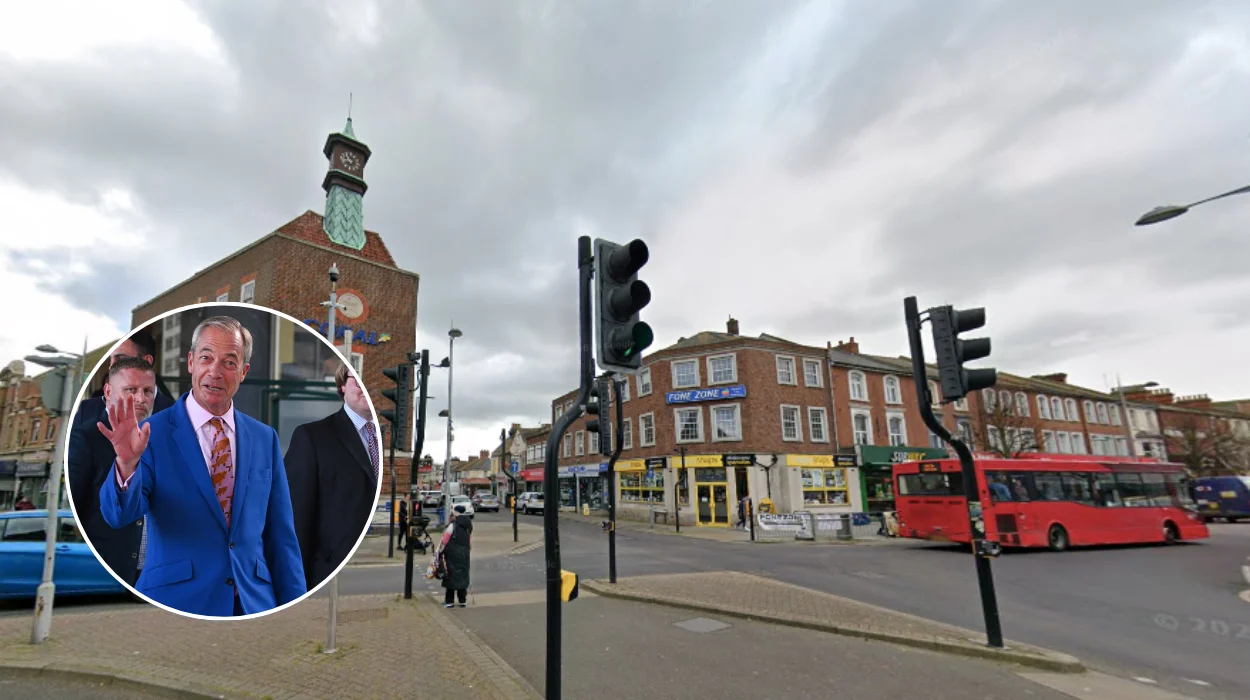
London (The Londoner News) July 8, 2026 – In a high-stakes move that has upended British politics, Reform UK leader Nigel Farage announced his resignation as a Member of Parliament on Tuesday, forcing a sudden by-election in his coastal constituency of Clacton-on-Sea. The prominent right-wing populist figurehead, who has spent decades rallying against Westminster systems, claimed his decision is a deliberate attempt to let the electorate pass final judgement on his conduct rather than leaving his fate to parliamentary committees. The announcement comes as Farage faces mounting regulatory pressure and twin official investigations into major financial gifts, including a multi-million-pound undeclared donation from a cryptocurrency billionaire.
- Key Points
- Why Did Nigel Farage Decide to Resign from Parliament?
- What Financial Scandals Led to This High-Risk Decision?
- How Have Mainstream Political Rivals Responded to the Gambit?
- Will the Official Investigations Against Farage Continue?
- How Does the British Public View Farage’s Conduct?
- What Do Political Analysts Predict for Reform UK’s Future?
Why Did Nigel Farage Decide to Resign from Parliament?
As reported by Jill Lawless of the Associated Press, the eurosceptic leader has chosen to quit his hard-won legislative seat to clear his name through a public vote instead of awaiting the outcome of formal ethics panels. Speaking directly to voters during a televised address on Tuesday afternoon, Farage positioned his departure not as a retreat, but as a proactive counter-offensive against an administrative apparatus he claims is weaponised against him.
In his speech, Farage framed the upcoming local ballot in highly adversarial terms. Farage stated that:
“I’ve decided that the people of Clacton should be the judges of my actions. This will be a people versus the establishment by-election. It’s a chance to stick two fingers up to the entire establishment to frankly tell them where to go and that is why I will be putting my name forward to stand in this by-election.”
By shifting the battleground from a closed parliamentary committee room to the open streets of Clacton, Farage hopes to secure a fresh democratic mandate that would functionally neutralise any future political sanctions. Legal and political analysts note that a definitive victory at the ballot box would allow the populist leader to claim complete vindication by the public, thereby reducing any official regulatory findings to mere partisan bickering.
Furthermore, as noted by Dr Lawrence McKay, a lecturer in Comparative Politics at the University of Reading, the tactical maneuver stops the immediate threat of a citizen-led recall petition. Under normal British parliamentary rules, if an oversight committee hands down a suspension of ten days or more, local voters can force a recall election under conditions outside the politician’s control. By choosing the exact moment of his exit, Farage recaptures the narrative timetable and compels an increasingly fractious Reform UK apparatus to fall in line behind his centralized leadership.
What Financial Scandals Led to This High-Risk Decision?
The political crisis surrounding Farage has been compounding for several months, driven heavily by detailed investigative reporting into his private financial arrangements. As explained by political correspondent Alexandra Topping of The Guardian, Farage was already the subject of a formal standards inquiry regarding a £5 million ($6.7 million) gift from Thailand-based cryptocurrency investor Christopher Harborne. The substantial funds were transferred to Farage just weeks prior to the 2024 general election, prompting intensive regulatory scrutiny over whether the money should have been registered as an official entry under parliamentary transparency laws.
Farage has continuously rejected claims of rule-breaking, stating on various media platforms that the massive financial influx was an unconditional personal asset meant to cover escalating private protection costs. According to transcripts compiled by The Guardian, Farage dismissed concerns during an interview on LBC Radio by asserting:
“I can spend it on Ferraris if I want. That’d be entirely up to me. I can do what I want with it. I can put it on the horses.”
However, opposition parties have robustly countered that any major financial support received within twelve months of entering the House of Commons must be transparently disclosed to ensure public integrity.
Compounding this initial dilemma are fresh allegations concerning another close associate. As reported in The Guardian, the Parliamentary Commissioner for Standards recently opened a second distinct inquiry into undeclared benefits-in-kind linked to George Cottrell, a convicted financial fraudster and long-time aide who has been spotted at numerous high-profile Reform UK events. Additionally, separate reporting by The Sunday Times alleged further rule violations regarding undisclosed luxury gifts, including interactions with a 32-year-old convicted individual, adding a layer of sensationalized press coverage that Farage claims has severely harassed his family.
How Have Mainstream Political Rivals Responded to the Gambit?
Rather than engaging Farage in a fierce campaign along the Essex coast, Britain’s established political parties have orchestrated an unexpected administrative counter-strategy: a total ballot-box boycott. By refusing to field candidates in the snap election, the mainstream parties are actively attempting to starve the Reform UK leader of the media spotlight and deny him an opponent against whom he can rail.
Outgoing Labour Prime Minister Keir Starmer led the rhetorical charge against the move. As recorded by multiple political reporters in London, Starmer described the resignation as:
“A desperate stunt from a man up to his neck in sleaze. Nigel Farage is engulfed in a sleaze scandal and he’s desperately trying to change the subject. It’s pathetic, and the Labour Party is not going to indulge it.”
Concurrently, the Conservative Party has adopted a matching hands-off approach. Conservative leader Kemi Badenoch publicly confirmed that the Tories would skip the contest to avoid legitimising what she deemed a diversionary theatrical production. Badenoch stated that:
“Our party will not be standing a candidate in the fake by-election that Farage is causing to distract people from what is happening. I think the reason why Nigel Farage has resigned is because he’s terrified that he’s going to be found to have done something wrong. There should not be a by-election on his terms. There should be a by-election if the investigation finds him guilty.”
This coordinated absence presents a unique challenge for Farage. Tim Bale, a prominent political scientist at Queen Mary University, summarized the structural irony of the situation for the financial press. As reported in the Financial Times, Bale observed:
“Farage was hoping to take on the establishment, but if the establishment doesn’t turn up for the fight, it’s pretty embarrassing. Maybe he thought he wouldn’t have to face the music, but eventually the fat lady will sing.”
Will the Official Investigations Against Farage Continue?
From a procedural standpoint, Farage’s immediate resignation alters the timeline of the institutional inquiries but does not erase them entirely. Daniel Greenberg, the Parliamentary Commissioner for Standards, is obligated under current rules to pause active proceedings concerning the £5 million Harborne gift and the Cottrell benefits because Farage is no longer a functioning Member of Parliament subject to daily code restrictions.
However, the House of Commons standards protocol features explicit safeguards against using resignation as a permanent escape hatch. If Farage successfully wins the upcoming Clacton by-election and returns to Westminster, the frozen investigations will instantly reactivate. The Commissioner retains full authority to finish the evaluation of evidence and present a final report to the cross-party Standards Committee.
Consequently, Farage faces a complex legal loop: he could easily win a summer by-election due to lack of opposition, only to have the watchdog find him guilty of serious disclosure breaches a few months later. If that scenario unfolds, he could face a second, mandatory recall petition—forcing yet another by-election later in the year under far more adversarial conditions where rival parties would certainly participate.
Explore more Politics News:
Nigel Farage Resigns MP Seat Over Crypto Funding Probe: London 2026
Prince Harry Denied Buckingham Palace Stay During London Visit 2026
How Does the British Public View Farage’s Conduct?
Data published on Wednesday by the polling organization YouGov indicates that Farage’s anti-establishment messaging may be losing its traditional efficacy outside his core support base. The comprehensive snap poll revealed that 43% of British citizens actively oppose his choice to trigger an expensive special election, while only 24% express approval.
The data highlights profound polarization regarding Farage’s personal integrity:
- Perceived Dishonesty: Fully 60% of all surveyed Britons believe that Farage has been fundamentally dishonest or evasive regarding his personal financial affairs.
- Core Party Loyalty: Reform UK voters remain his stauchest defenders, with 57% backing the snap election and 74% agreeing with Farage’s claim that the domestic press corps maintains a systemic bias against him.
- Wider Skepticism: Conversely, between 81% and 88% of Labour, Liberal Democrat, and Green voters view him as untrustworthy, while Conservative voters lean heavily toward finding him dishonest by a margin of 44% to 21%.
Furthermore, while 50% of the public acknowledges that Farage possesses a decisive character, clear majorities across multiple tracking metrics now define him as unprincipled and unlikable. This shifting sentiment suggests that while his “man-of-the-people” political brand remains resilient within specialized right-wing pockets, the broader electorate increasingly views his latest maneuvers through the lens of standard political self-preservation.
What Do Political Analysts Predict for Reform UK’s Future?
The long-term impact of this tactical gambit remains highly unpredictable. Supporters within Farage’s inner circle have praised the decision as an act of political bravery. As reported by the British press, Reform UK’s home affairs spokesperson, Zia Yusuf, lauded the move as:
“History being made. Nigel Farage has laid down the gauntlet to the establishment, with the future of the United Kingdom at stake.”
To combat accusations of wasting public money, Reform UK officials have stated that the party is entirely willing to cover the £250,000 administrative cost of running the local election out of its own accounts.
Nevertheless, external political experts argue that the strategy carries immense systemic risks for a party trying to build institutional permanence. Dr Miriam Sorace, an Associate Professor in Comparative Politics at the University of Reading, pointed out that Farage is using a textbook populist playbook that could ultimately backfire if the underlying financial details turn out to be legally damning. Sorace commented that:
“Nigel Farage’s resignation looks like an attempt to use an election to clear his name. If Farage wins a new vote, he can, and probably will argue, that voters have settled the matter… This is a classic populist tactic. For Labour, the opportunity is to make the Clacton contest about honesty and integrity, and to present Reform not as a movement against the elite, but as a front for elite financial interests.”
Ultimately, Farage’s dramatic resignation represents a dangerous bet on his personal popularity. While he is statistically favored to retain his Clacton seat against minor independent candidates, his decision to freeze out the standard systems of parliamentary accountability leaves his broader political credibility exposed to the impending conclusions of the standards commissioner.