
Key Points
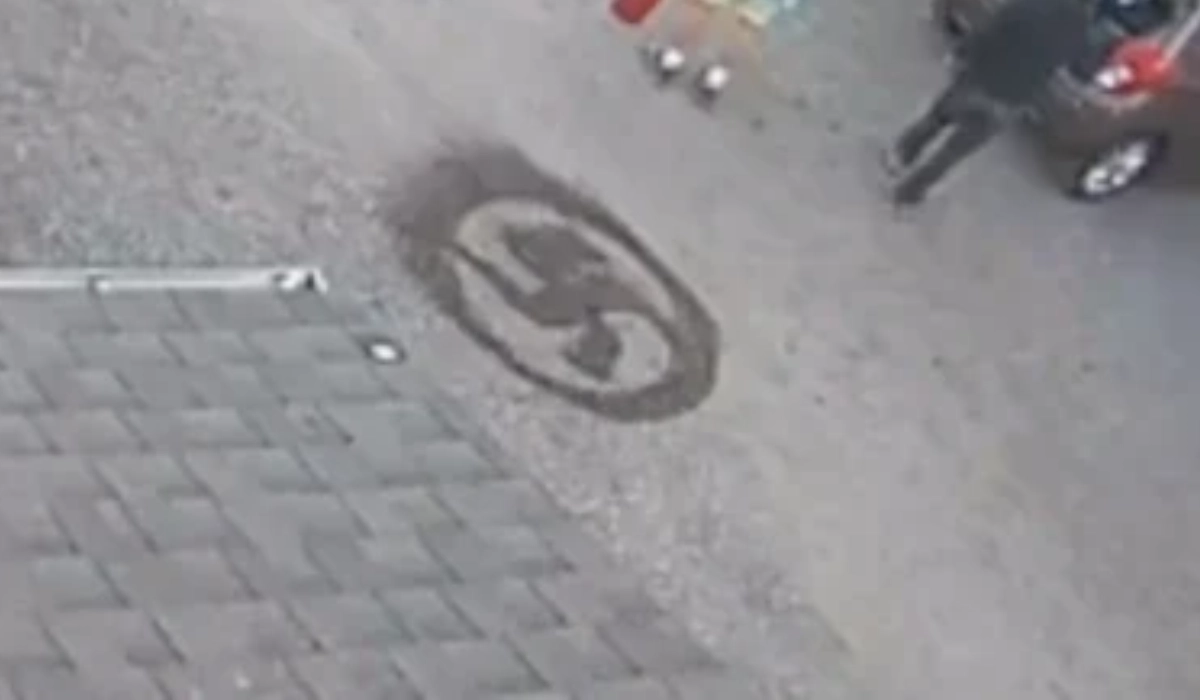
- Arrest Made in Hate-Motivated Incident: London Police Service arrested 56-year-old Gordon Botaitis on 23 October 2026 in connection with a hate-motivated incident involving a swastika created outside student housing near Western University.
- Criminal Charges Filed: Botaitis was charged with one count of an offence motivated by hatred after allegedly using construction equipment, believed to be a pressure washer, to draw the symbol in a gravel parking lot serving student residences.
- Investigation and Maximum Penalties: The London Police Service Hate Crime Unit took over the case. Police confirmed the underlying charge is mischief to property, which carries a potential sentence of up to five years imprisonment for a hate-motivated conviction under $5,000.
- Second Individual Present: Video footage shows a second person present during the act, though police confirmed there are currently no grounds to lay charges against that individual, while remaining open to investigating new evidence.
- Student and Community Reaction: Jewish students and parents expressed deep concern over the incident occurring directly at their places of residence, while local organizations rallied to provide support.
- Chabad Response: Following the incident, Chabad at Western University distributed and installed dozens of mezuzot on students’ doorposts across the neighbourhood as an act of community resilience.
- Court Date Scheduled: The accused was released from custody and is scheduled to make a court appearance in London, Ontario, on 18 January 2027.
LONDON (The Londoner News) October 27, 2026 – Police in London, Ontario, have arrested and charged a 56-year-old construction worker after a symbol resembling a Nazi swastika was created outside student housing accommodating Western University students in a heavily populated Jewish neighbourhood. The London Police Service confirmed that Gordon Botaitis of London was taken into custody on 23 October 2026 following an investigation led by the department’s Hate Crime Unit. According to law enforcement authorities, the suspect allegedly used specialized equipment—likely a pressure washer—to draw the hate symbol in a gravel parking lot serving several residential student housing units on 22 October. Botaitis faces one count of an offence motivated by hatred and was released from custody ahead of a scheduled court date on 18 January 2027.
- Key Points
- What Are the Details Surrounding the Charges Filed by London Police?
- How Have Students and Parents Reacted to the Incident Outside Western University Housing?
- What Mobilization Took Place Within the Local Jewish Community Following the Incident?
- Background of the Particular Development
- How This Development Can Affect Post-Secondary Institutions, Construction Contractors, and Local Communities
What Are the Details Surrounding the Charges Filed by London Police?
As reported by reporter Rikki Zagelbaum of The Canadian Jewish News (The CJN), police were alerted on 22 October 2026 after residents captured video footage and photographs of a man creating a hate symbol in a parking lot situated between several student housing properties.
The property owner was notified, attended the site, and removed the symbol shortly thereafter.
As reported by Rikki Zagelbaum of The CJN, Superintendent Chris Churney, head of the London Police Service frontline division, outlined the legal framework governing the case.
As reported by Rikki Zagelbaum of The CJN, Superintendent Chris Churney stated: “In this particular incident, the underlying offense would be mischief to property and interfering with other people’s ability to enjoy that property”.
Superintendent Churney further added: “Spraying a hate symbol which is known to be directed towards members of the Jewish community obviously would have a severe negative impact on those members”.
According to Superintendent Churney, the maximum sentence for an individual convicted of mischief under $5,000 where the act is proven to be a hate-motivated offence is up to five years imprisonment.
Regarding security camera footage provided to investigators showing a second individual standing nearby while Botaitis allegedly created the symbol, Superintendent Churney clarified that police currently do not have grounds to establish that the second person committed a criminal offence. However, Churney emphasized that in open and active cases, law enforcement will evaluate any new information regarding additional individuals as appropriate.
In a formal public statement, the London Police Service affirmed: “Hate has no place in our city. The London Police Service is committed to protecting the safety and well-being of all members of our community and recognizes the significant harm that hate-motivated incidents can cause”.
How Have Students and Parents Reacted to the Incident Outside Western University Housing?
As reported by reporter Rikki Zagelbaum of The CJN, students residing in the affected residential complex expressed profound distress over the act taking place outside their homes.
A third-year Western University business student, who lives in an adjacent property and spoke on the condition of anonymity due to safety concerns, described his reaction upon discovering the symbol.
As reported by Rikki Zagelbaum of The CJN, the student stated: “It made me sick knowing someone could use a symbol representing so much pain, hatred and suffering so carelessly”.
The student added: “What made it even more disturbing was that the man was working on our property, walking around our home, and laughing while committing the act”.
As reported by Rikki Zagelbaum of The CJN, Darren Slavens, a Toronto real estate broker whose two daughters attend Western University and reside in nearby housing, received a video of the incident directly from one of his daughters on 22 October.
In an Instagram post on 23 October, Slavens remarked that antisemitic incidents “hit different” when they directly affect one’s own children.
In statements given to The CJN and reported by Rikki Zagelbaum, Darren Slavens stated: “I think they’re strong and they were raised right, and they’re courageous. It pissed me off because I’m used to it. I deal with it on a daily basis. I don’t want my kids to have to see that shit”.
Slavens further expressed concern over broader campus dynamics, stating that allowing dehumanizing narratives regarding Israel and Jewish people to persist across university environments leads to an increase in targeted incidents against Jewish students.
Addressing the broader societal impact, the anonymous Western University student told The CJN: “Antisemitism isn’t just something we read about in history books. It’s happening today, in our own communities, and we cannot allow it to become the new normal”.
What Mobilization Took Place Within the Local Jewish Community Following the Incident?
As reported by reporter Rikki Zagelbaum of The CJN, local communal organizations responded by launching supportive outreach initiatives for students residing in the neighbourhood.
Darren Slavens highlighted that Chabad at Western University worked quickly to support affected residents, describing how the organization “took a negative and turned it into a positive” by placing traditional mezuzot on students’ doorways on the night of the incident.
As reported by Rikki Zagelbaum of The CJN, Darren Slavens stated: “All the kids in the surrounding area were buoyed by that. We don’t run and hide. We get more in your face. We’re stronger, we’re more proud, and I think that’s the response that we’ve seen”.
As reported by Rikki Zagelbaum of The CJN, Rabbi Mordechai Silberberg, director of Chabad at Western University, explained that non-student members of the broader local community who learned of the event also reached out to request mezuzot for their homes.
As reported by Rikki Zagelbaum of The CJN, Rabbi Mordechai Silberberg stated: “The mezuzah has some special blessing of safety and security, and that’s why we put it on our doors. This is a natural Chabad response”. Rabbi Silberberg confirmed that by the evening of 23 October, Chabad representatives had affixed several dozen mezuzot across the neighbourhood.
Additionally, joint statements issued by advocacy organizations were reported by news outlets. As reported by JNS news service, the Centre for Israel and Jewish Affairs (CIJA) and the London Jewish Federation issued a joint statement noting: “Targeting the homes of Jewish students outside Western University with a Nazi swastika was not only an act of antisemitism, but also an attack on the inclusive, democratic values that all Canadians share”. The organizations added that “enforcement must be consistent nationwide and extremism must be stopped before it takes root”.
Background of the Particular Development
The incident in London, Ontario, comes amid a broader documented rise in hate-motivated occurrences and antisemitic reports across post-secondary campuses and municipalities throughout Canada. Civil rights watchdogs, including B’nai Brith Canada and the Centre for Israel and Jewish Affairs, have consistently tracked heightened levels of targeted harassment, vandalism, and hate symbols in public spaces surrounding academic institutions.
Under Canadian criminal law, Section 718.2 of the Criminal Code provides that evidence that an offence was motivated by bias, prejudice, or hate based on race, national or ethnic origin, language, colour, religion, sex, age, mental or physical disability, sexual orientation, or gender identity or expression constitutes an aggravating factor for sentencing purposes. Municipal police services across Ontario, including London, maintain specialized Hate Crime Units specifically dedicated to investigating bias-motivated offences, gathering digital evidence, and coordinating with provincial prosecutors to ensure applicable hate-motivation designations are applied in court proceedings.
How This Development Can Affect Post-Secondary Institutions, Construction Contractors, and Local Communities
The charges filed against Gordon Botaitis and the legal proceedings set for January 2027 are expected to influence operational standards and safety protocols across several sectors:
- Post-Secondary Institutions and Student Housing Operators: Universities and private property management companies serving student populations in Ontario are likely to increase security measures, including enhanced closed-circuit television (CCTV) coverage and improved lighting around off-campus housing clusters. Property owners will face greater pressure from parent associations and student groups to enforce strict vendor vetting protocols to ensure third-party contractors do not pose safety risks to residents.
- Construction Firms and Contracting Companies: Commercial contractors and sub-contractors operating in municipal and residential zones will likely implement stricter code-of-conduct clauses and background verification processes for their workforce. Companies whose employees engage in bias-motivated conduct face severe reputational damage, potential loss of municipal licenses, and immediate contractual termination from property developers seeking to avoid liability.
- Municipal Law Enforcement and Hate Crime Enforcement Units: The outcome of this case in the Ontario court system will serve as a legal reference point for how property mischief using specialized industrial tools is classified and prosecuted under hate-crime legislation. A successful prosecution carrying formal hate-motivation enhancements may set a clear precedent, encouraging municipal police forces across Canada to pursue criminal hate-crime designations for public vandalism and property harassment targeting religious minorities.