Key Points
- Development Approval: Hillingdon Council’s Planning Committee has officially granted planning permission for the construction of five new three-bedroom family homes.
- Controversial Location: The project is sited on a patch of vacant brownfield land located at the end of a quiet residential cul-de-sac adjacent to 7 Wepham Close in Yeading, West London.
- Mass Local Opposition: A total of 109 statutory objections were formally lodged by local residents, consisting of a joint petition carrying 91 signatures and 18 individual letters of complaint.
- Core Community Concerns: Neighbors raised sharp grievances over the architectural layout, loss of privacy, overlooking into existing gardens, noise, traffic disruption, diminished daylight, and low-quality landscaping.
- Legal Conditions Imposed: The development has been approved subject to a Section 106 legal agreement to secure off-site biodiversity units, alongside strict adherence to an officially mandated Construction Management Plan.
- Planning Framework Materiality: Council officials dismissed objections regarding decreased property values and temporary construction disturbances, citing that they fall outside the statutory definition of material planning considerations.
- Official Assessment: Municipal planning officers defended the project as a high-quality, “mews-style” development that conforms to the London Plan’s parking quotas and preserves the overarching character of the residential neighborhood.
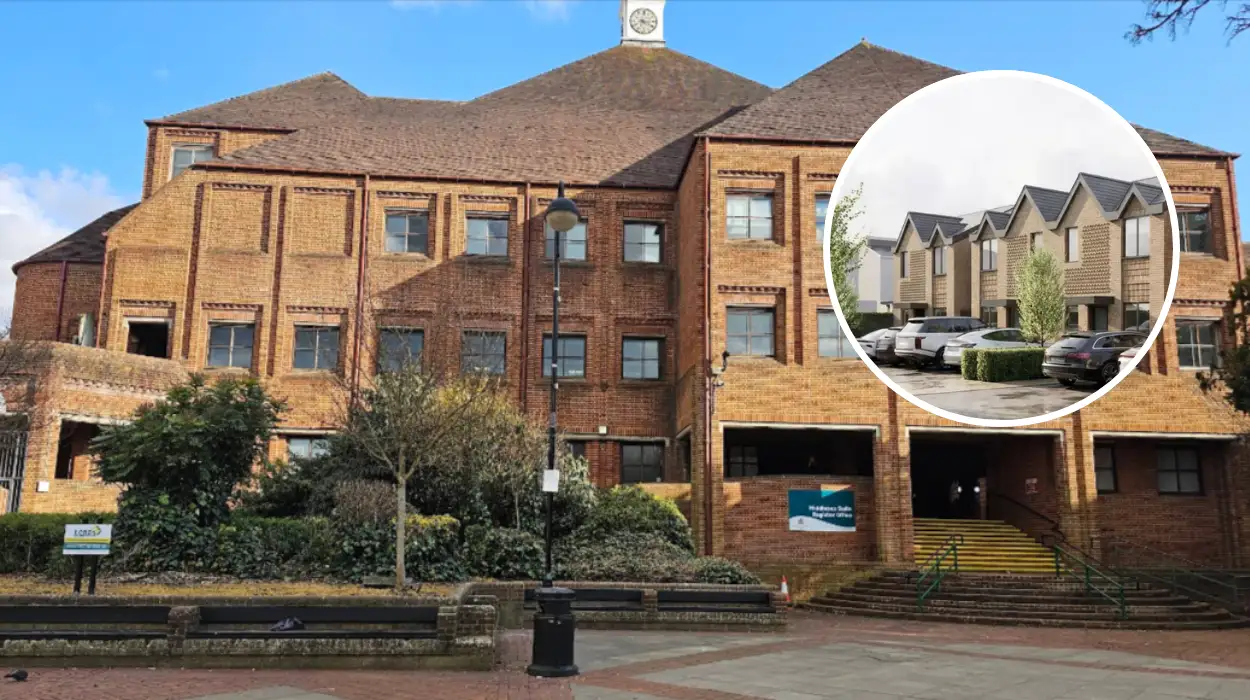
Yeading (The Londoner News) June 8, 2026 – A controversial housing development comprising five three-bedroom family homes has been cleared for construction at the terminal point of a residential West London cul-de-sac, overriding a fierce local counter-campaign marked by 109 formal public objections. The London Borough of Hillingdon’s Planning Committee formally ratified the proposal for the vacant brownfield site situated directly adjacent to 7 Wepham Close in Yeading during its late-night committee session on Thursday, 4 June 2026. The decision comes despite an intense grassroots pushback from long-standing residents who argue that the sudden introduction of multi-story family units into a confined, overgrown plot will irreversibly compromise the infrastructure, parking layout, and visual privacy of their secluded neighborhood.
- Key Points
- Why Did Residents File 109 Formal Objections Against the Wepham Close Project?
- What Design and Amenity Issues Were Raised by Local Neighbors?
- How Did Council Planning Officers Respond to Local Opposition?
- Which Local Grievances Were Dismissed as “Non-Material” Under UK Law?
- Was the Statutory Public Consultation Process Carried Out Correctly?
- What Legal Safeguards and Construction Conditions Have Been Put in Place?
The conflict pits municipal house-building targets against local residential preservation efforts, spotlighting the friction surrounding urban “back-land” or brownfield infill projects across Greater London. Municipal planning documentation confirms that the plot of land—currently an enclosed, unmaintained patch of overgrown grass shielded by perimeter security fencing—will be entirely cleared to make way for a contemporary row of family dwellings. To balance local pushback with statutory spatial demands, committee members resolved to grant planning permission subject to the completion of a Section 106 legal agreement. This contract legally binds the undisclosed developer to fund off-site biodiversity units to offset local ecological loss and forces them to cover all administrative costs incurred by the local authority during negotiations.
As reported by Sally Robbins of the Open Council Network, the local authority’s decision-making panel pushed the application through after verifying that the technical specifications of the “mews-style” layout satisfied regional housing quotas and configurations. However, the approval has exposed a deep divide between the professional assessments of local authority planning officers and the daily lived experiences of the suburban community surrounding Wepham Close. Opponents of the scheme have expressed profound disappointment at what they describe as a structural disregard for localized architectural harmony and the collective anxieties of the existing 24 households that populate the quiet close.
Why Did Residents File 109 Formal Objections Against the Wepham Close Project?
The public consultation window triggered a wave of community resistance, culminating in a dual-pronged filing of localized complaints to the planning department. According to localized registry entries published by regional housing analysts, a meticulously organized 91-signature petition was formally delivered to Hillingdon Council, running alongside 18 highly detailed independent letters of objection from immediately impacted neighbors.
The primary battleground for residents centers on spatial constraints and the physical realities of the cul-de-sac layout. Property owners argue that adding five dense, three-bedroom houses to the end of a street already serving established terraced and semi-detached properties will overwhelm the surrounding infrastructure. The objections outlined a complex web of structural, environmental, and financial anxieties, pointing to a perceived erosion of their standard of living.
Explore More West London News
Beavers Save London Tube Station from Flooding: West London 2026
Hillingdon Council Approves Disputed Cul-de-Sac Housing Scheme: Yeading 2026
What Design and Amenity Issues Were Raised by Local Neighbors?
The physical appearance and spatial alignment of the new properties drew significant scrutiny during the public comment phase. In a series of formal case evaluations synthesized by municipal records, objectors characterized the proposed architectural drawings as mismatched with the existing architectural context of Yeading. The row of houses west of Wepham Close features a uniform appearance and design dating back to their construction in the late 1990s. Residents argued that the new layout represents an overly dense configuration that fails to respect the original architectural spacing.
Furthermore, complaints focused heavily on a “low quality of landscaping” associated with the developer’s submitted layout plans. Residents stated that replacing natural, albeit overgrown, brownfield green space with a dense residential layout would worsen local aesthetic standards. Long-term property owners argued that the proposed landscaping elements lacked proper density and maturity, failing to provide an adequate visual buffer between old and new properties.
What Are the Community Concerns Regarding Parking and Traffic Congestion?
Of all the issues raised by neighbors, the potential impact on vehicular parking and cul-de-sac traffic flow remains the most contentious. Wepham Close is a narrow residential artery where off-street parking spaces and small driveways are highly utilized by current households. Residents alleged that introducing five multi-bedroom family homes would inevitably bring an influx of secondary vehicles, delivery vans, and visitor traffic that the narrow turning head of the cul-de-sac is physically unequipped to absorb safely.
The petition warned that any overflow from the new properties would spill down the narrow neck of the close, blocking emergency vehicle access, complicating waste collection routes, and forcing existing neighbors into daily parking disputes.
How Will the Infill Development Affect Daylight, Privacy, and Overlooking?
The structural height and proximity of the five dwellings to existing boundaries have triggered significant anxiety regarding personal privacy and residential amenity space. Immediate neighbors, particularly those located at 7 Wepham Close and adjacent structures, voiced concerns over:
- Overlooking: The positioning of upper-floor windows and rear-facing rooms would allow direct lines of sight into established private gardens.
- Loss of Privacy: Existing rear patios, which have remained unobserved for decades due to the vacant nature of the brownfield plot, would be exposed to the new units.
- Loss of Daylight: The massing of the properties could create substantial shadows, reducing natural light entry into the ground-floor living spaces of nearby homes.
How Did Council Planning Officers Respond to Local Opposition?
In the official evaluative report compiled for the Hillingdon Planning Committee, professional planning officers explicitly countered the community’s claims, advising elected councillors that the project was structurally sound and legally compliant. As noted in the final case briefing by Case Officer Rhian Thomas of the Hillingdon Planning Department, the overall layout of the scheme was determined to be an appropriate, high-quality response to a “back-land” urban location.
The officer’s written evaluation concluded that the “mews-style” configuration effectively mirrors the density and alignment seen throughout the wider Hayes and Yeading locales. The assessment stated that the spatial relationship between the proposed elevations and the surrounding properties satisfies the minimum privacy distance thresholds set out in the Hillingdon Local Plan: Part Two. Consequently, the department ruled that the layout would not cause undue harm to the overarching character or day-to-day visual amenities of the existing streetscape.
Which Local Grievances Were Dismissed as “Non-Material” Under UK Law?
A significant source of frustration for the objecting residents was the structural dismissal of several core arguments by the committee, based on UK planning law parameters. Under the statutory framework governing English planning authorities, certain issues are classified as “non-material considerations” and cannot legally be used as a basis for refusing an application.
As documented within the published decision records of the London Borough of Hillingdon, residents’ concerns regarding a potential drop in local property values were dismissed by the panel. The committee reiterated that under national planning guidance, the fluctuating market value of private real estate is not a material planning consideration.
Similarly, long-term disruption from construction activities—including temporary acoustic noise, vibrating heavy machinery, and localized dust—was dismissed as a valid ground for refusal. While acknowledging these factors as real inconveniences for neighbors, officers clarified that temporary construction impacts do not dictate the permanent, long-term suitability of a housing development on a piece of land.
Was the Statutory Public Consultation Process Carried Out Correctly?
During the heated planning committee meeting, residents questioned the legitimacy and reach of the public notification process. Objectors argued that the council had failed to adequately alert the full scope of the neighborhood, leaving some households unaware of the scale of the proposed build until late in the planning cycle.
To settle this dispute, a senior council planning officer addressed the committee to present an official timeline of the statutory actions taken by the local authority. The officer confirmed that the borough had met or exceeded all legal notification requirements under the Town and Country Planning Order.
Municipal logging data presented to the committee confirmed that a physical site notice was displayed at Wepham Close on January 26, 2026. Furthermore, 26 neighboring properties received direct letters via post detailing the plans. The council also initiated a mandatory 14-day re-consultation phase following subsequent amendments to the developer’s architectural blueprints, allowing residents to view and comment on the revised designs.
What Legal Safeguards and Construction Conditions Have Been Put in Place?
To mitigate the impact on residents, the planning committee attached several strict conditions to the approval. These conditions must be fully resolved by the applicant before any physical excavation or construction work begins on the Yeading site.
The primary mechanism for managing day-to-day issues is a comprehensive, legally enforceable Construction Management Plan (CMP). The CMP requires the developer to submit a detailed operational framework to the council for approval, outlining specific measures to minimize temporary environmental impacts.
Mandatory Provisions of the Wepham Close Construction Management Plan:
- Acoustic Noise Control: Strict limits on permissible working hours, banning heavy drilling and loud machinery during evenings, weekends, and bank holidays.
- Dust Suppression: Continuous watering of open soil zones and vehicle wheel-washing systems to prevent mud and debris from tracking onto public highways.
- Vehicle Logistics Management: Coordinated arrival schedules for heavy goods vehicles (HGVs) to ensure construction traffic does not block access to Wepham Close.
Additionally, the development is bound by standard statutory delivery timelines. As outlined in typical Hillingdon delegated decision formats, the developer must begin construction within three years of the official approval date.
The finalized blueprints also carry explicit restrictions revoking certain permitted development rights. This means the future owners of the five homes are legally blocked from constructing additional rear extensions, roof dormers, or outbuildings without undergoing a full, independent planning application review. This measure aims to protect the surrounding community from future overdevelopment.