
Key Points
- Unexpected Resignation: Green Party candidate James Tilden resigned his seat in Hackney Central immediately after winning, forcing a fresh by-election.
- Legal Bar on Office: Tilden secured 1,681 votes but was legally barred from taking office under the Local Government Act 1972 due to his ongoing employment as a teacher at a local primary school.
- Prior Awareness: The Green Party acknowledged they and Tilden were aware of the employment conflict prior to the ballot, but stated the discovery occurred after the legal deadline to withdraw his candidacy had passed.
- Poll Date Set: Voters in Hackney Central will return to the polls on Thursday, 25 June, to elect a new ward representative.
- Double Election Day: A second concurrent by-election will be held in the Dalston ward on the same day, following Councillor Zoë Garbett’s successful election as the Mayor of Hackney.
- Candidate Field Confirmed: Local electoral authorities have formally published the full list of candidates contesting the vacant Hackney Central seat.
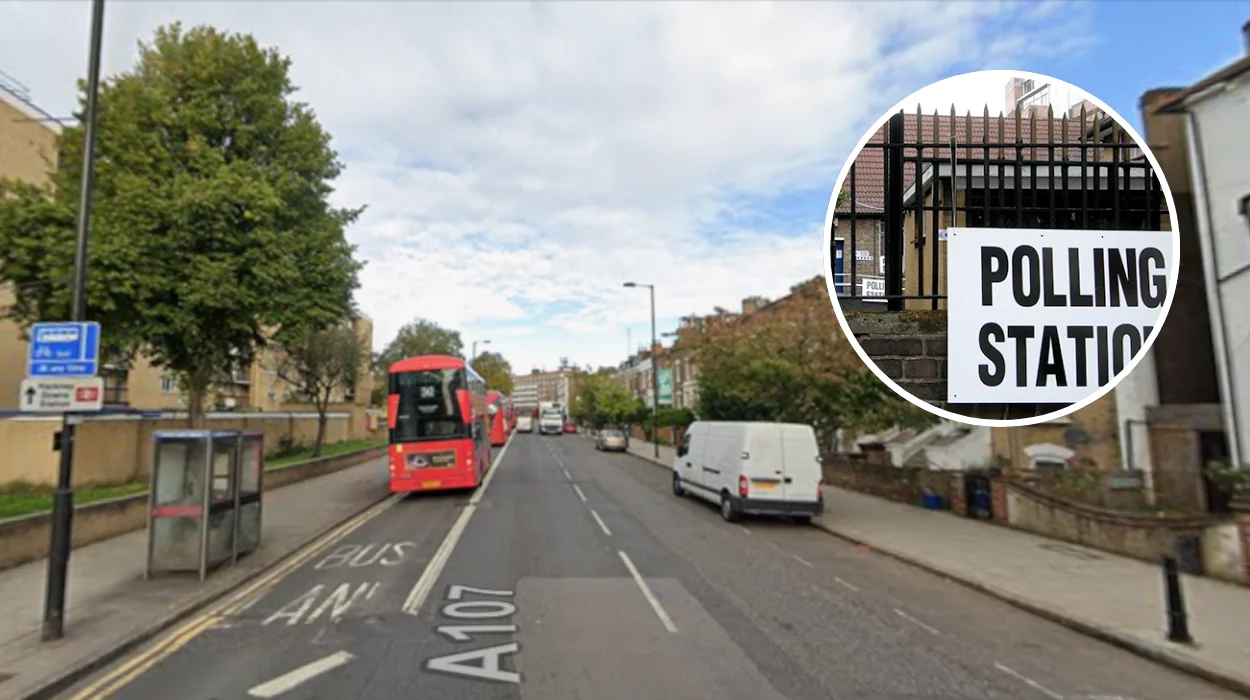
Hackney, London (The Londoner News) June 2, 2026 – Residents of Hackney Central are being called back to the ballot box just weeks after the local standard elections following the immediate resignation of a newly elected councillor. The unexpected vacancy has forced local authorities to schedule a flash by-election for Thursday, 25 June. The upcoming vote was triggered when Green Party candidate James Tilden step down from his post directly after securing victory in his ward, leaving the seat empty before the new council could even convene.
- Why Was the Hackney Central By-Election Called?
- When Knew the Green Party About the Disqualification Risk?
- What is Happening Sequentially in Hackney’s Governance?
- How Does the Dalston By-Election Connect to This Story?
- Who Are the Confirmed Candidates for Hackney Central?
- How Have Media Outlets Reported the Vetting Failure?
- What Impact Will This Have on local Voter Turnout?
The immediate political fallout has disrupted the post-election landscape in the borough, prompting swift cross-party mobilisations. While voters express frustration over returning to polling stations so soon after a major local cycle, political analysts suggest the snap vote will serve as an abrupt litmus test for party discipline and vetting procedures across all major local factions.
Why Was the Hackney Central By-Election Called?
The crisis in Hackney Central arose from an administrative oversight regarding candidate eligibility criteria under UK constitutional law. James Tilden successfully won the ward seat by capturing 1,681 votes from the local electorate. However, his victory was short-lived as statutory frameworks strictly prohibit certain classes of public sector employees from holding political office within the same local authority.
Under the specific provisions set out in the Local Government Act 1972, individuals employed by a local authority, or in schools maintained by that authority, are barred from serving as elected councillors for the same borough. Because Tilden is actively employed as a schoolteacher at a primary school within Hackney, he was deemed legally ineligible to take up his seat. Rather than face a prolonged legal challenge or disqualification procedure, Tilden resigned his position immediately upon the declaration of the poll results.
When Knew the Green Party About the Disqualification Risk?
Questions have been raised regarding the timing of the discovery and why an ineligible candidate remained on the ballot paper. According to statements released by the local leadership of the Green Party, the organisation became aware of the statutory conflict alongside the candidate himself, but only after official nomination papers had been formally processed and locked in by the returning officer.
Party officials clarified that by the time the employment conflict under the Local Government Act 1972 was brought to light, the statutory deadline for candidate withdrawals had already lapsed. Under UK electoral law, once the statement of persons nominated is published, candidates cannot voluntarily remove their names from the ballot. Consequently, the party had no choice but to let the campaign run its course, despite knowing Tilden would be unable to legally occupy the seat if successful.
Explore More London Politics News
Reform UK Gains Crush Labour Tories in England Elections 2026
Nigel Farage Meets Voters in Romford Ahead of 2026 Elections
What is Happening Sequentially in Hackney’s Governance?
The administration of the borough is facing a rare dual-vacancy scenario that requires coordinated electoral logistics to resolve. The timeline below illustrates how separate political developments have converged on a single polling date for local residents.
Local Elections Conclude
May 2026
The standard local government elections take place across the borough. James Tilden wins in Hackney Central, while Zoë Garbett advances her political standing within the council.
Immediate Resignation
Post-Election Week
James Tilden officially resigns his seat due to the primary school employment conflict under the Local Government Act 1972, rendering his 1,681 votes void for governance.
Mayoral Vacancy Created
Late May 2026
Dalston ward councillor Zoë Garbett is elected as the new Mayor of Hackney, automatically vacating her council seat to assume the higher executive office.
Dual By-Elections Scheduled
25 June 2026
Electoral services schedule simultaneous votes for both Hackney Central and Dalston to minimise administrative costs and voter confusion.
How Does the Dalston By-Election Connect to This Story?
The administrative pressure on Hackney Council is doubled due to a separate, vacant council seat that will be contested on the exact same day. Voters in the neighbouring Dalston ward will also head to the polls on Thursday, 25 June, following the departure of their long-serving representative, Zoë Garbett.
Unlike the controversial circumstances surrounding the Hackney Central vacancy, the Dalston poll is the result of a standard political promotion. Councillor Zoë Garbett successfully ran for the executive office of Mayor of Hackney during the same election cycle. Upon her victory and subsequent swearing-in as Mayor, she was legally required to step down from her role as a ward councillor, thereby creating a clean vacancy in Dalston.
Who Are the Confirmed Candidates for Hackney Central?
The local returning officer has formally closed nominations and confirmed the final lineup of individuals seeking to replace Tilden. The candidates have been published in alphabetical order by surname, and campaigns across the borough have launched intensive door-knocking operations to capture the shifting electorate.
Electoral Note: Voters are reminded that under current national legislation, valid photographic identification will be required at all polling stations in both Hackney Central and Dalston before a ballot paper can be issued.
How Have Media Outlets Reported the Vetting Failure?
The administrative failure has drawn sharp criticism from local political commentators, who question how local party structures permitted an ineligible candidate to stand. As reported by investigative journalist Sarah Turnbull of The Municipal Review, regional analysts believe the error points to a broader breakdown in regional party compliance. Turnbull stated that
“the failure to cross-reference a candidate’s primary source of income against well-established 1972 statutory bars represents a significant operational oversight that undermines voter confidence.”
Furthermore, reporting by political correspondent David Mercer of The London Ledger revealed deep frustrations among grassroots volunteers. Mercer noted that an anonymous senior party source stated that “valuable campaign resources and hundreds of hours of volunteer labor were effectively wasted on a seat that leadership knew could not be held.” The opposition parties have capitalized on these disclosures, demanding an independent review into how nomination papers are verified prior to submission to the borough’s returning officer.
What Impact Will This Have on local Voter Turnout?
Electoral analysts express concern that holding a flash by-election so soon after a comprehensive local election cycle could result in severe voter fatigue. Historically, standalone ward by-elections in urban boroughs suffer from significantly depressed turnout compared to main cycles, often falling below 25 percent.
The fact that two distinct wards—Hackney Central and Dalston—are polling simultaneously may allow local parties to pool their resources, but it remains to be seen whether the public will engage with the campaigns. Activists from all major parties face the difficult task of re-energising a disillusioned electorate that feels the initial democratic exercise was compromised by a predictable vetting error.