
Key Points
- Formal State Apology: Prime Minister Keir Starmer has delivered a historic, formal state apology in the House of Commons on behalf of successive British governments to the mothers and adult adoptees devastated by decades of forced adoption practices.
- Massive Scale of Abuse: Between 1949 and 1976, an estimated 185,000 unmarried mothers in England and Wales—many of them vulnerable teenagers—were systematically coerced, bullied, and pressured by state-funded institutions, religious groups, and health authorities into giving up their babies. Some sources, including ITV News, estimate the total figure between 1940 and 1980 reaches up to 250,000 women.
- Funding and Practical Redress: The formal apology is accompanied by a £4 million government support package distributed over three years. The funds will be utilised to ease access to adoption records via the Coram BAAF charity, expand family reconnection services like Family Connect, fund research and testimonial archives, and establish national, virtual, peer-led support networks.
- The “Shame is Ours”: In a direct address to the campaigners watching from the public gallery of the House of Commons, Starmer declared that the “shame” belongs entirely to the state and the nation, not to the mothers who were wrongfully branded as “unfit” or the children who grew up believing they were unwanted.
- Systemic Failures Acknowledged: The state officially accepted full accountability for funding, enabling, and legitimising highly coercive systems across local government, NHS health boards, and religious institutions, while completely failing to oversee them or prevent generational trauma.
- A Prime Minister’s Final Acts: Delivered in the final weeks of Starmer’s premiership following his June 2026 resignation announcement, the historic address brings Westminster in line with devolved administrations in Scotland and Wales, which issued their own apologies years prior.
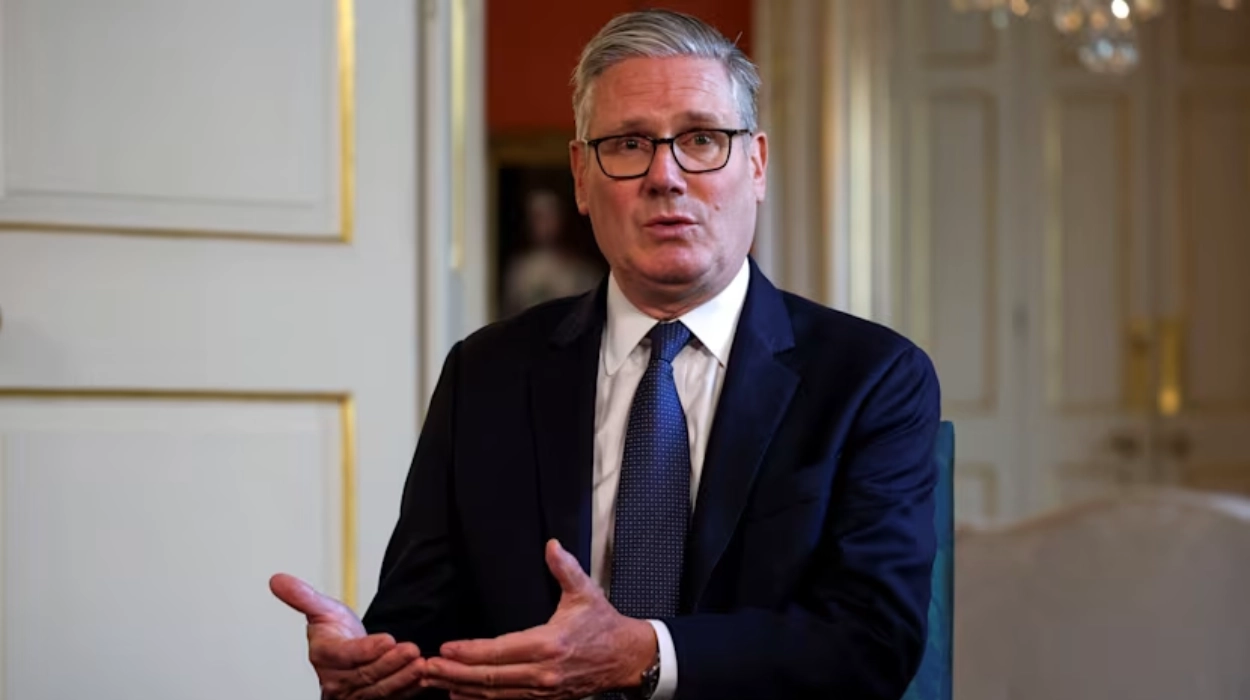
London (The Londoner News) July 2, 2026 – The British government has issued a comprehensive and profoundly emotional formal state apology for the “appalling historical injustice” of forced adoptions that tore apart hundreds of thousands of unmarried mothers and their newborn babies over a span of nearly four decades. Speaking in the House of Commons, Prime Minister Keir Starmer took full responsibility on behalf of the state for the systemic failures that enabled, funded, and legitimised the coercive practices that dominated post-war Britain between 1949 and 1976.
- Key Points
- Why Has the British Government Issued a Formal Apology Now?
- What Exactly Did Prime Minister Keir Starmer Say in Parliament?
- Who Are the Campaigners That Met with the Prime Minister at Downing Street?
- How Did Other Advocacy Groups and Survivors Respond to the Announcement?
- How Will the £4 Million Support Fund Be Distributed?
- What Grim Realities Have Modern Enquiries Uncovered About the Mother and Baby Homes?
- How Does Westminster’s Apology Compare to Other Global and Regional Responses?
The apology, which comes after more than a decade of tireless campaigning by survivors, was accompanied by a £4 million financial package spread across three years to provide immediate practical support, mental health care integration, and enhanced access to adoption and identity records. Affected mothers and adult adoptees watched the landmark proceeding directly from the public gallery, bringing an emotional conclusion to a decades-long fight to correct the official historical narrative of the United Kingdom.
Why Has the British Government Issued a Formal Apology Now?
As detailed in an official press release published by the Department for Education and the Prime Minister’s Office on 2 July 2026, the state apology marks an official acknowledgment of the severe role the government played in enabling these abusive systems. For decades, previous administrations had largely deflected blame onto historical societal attitudes, treating the forced separation of unmarried mothers from their children as an unfortunate byproduct of past social stigmas.
However, as reported by Social Affairs Correspondent Sarah Corker of ITV News, investigations and shifting political will have forced Westminster to confront the reality that the state actively funded a sweeping network of Mother and Baby Homes, Magdalene Laundries, and workhouses. By doing so, the state institutionalised what has since been termed a “silent scandal.”
The timing of the apology is also notable because it represents one of the final major legislative and moral acts of Sir Keir Starmer’s premiership. As noted by the Associated Press, Starmer is currently serving his final weeks as Britain’s leader following his formal resignation announcement on Monday, 22 June 2026. Campaigners had long feared that leadership transitions would further delay their quest for accountability, making Thursday’s parliamentary session an urgent and monumental turning point for families who have carried the burden of institutionalised shame for over fifty years.
What Exactly Did Prime Minister Keir Starmer Say in Parliament?
In his speech delivered directly to the House of Commons, Prime Minister Keir Starmer spoke candidly about his personal reaction to reading the historical accounts of survivors. According to the transcript released by 10 Downing Street, Starmer stated:
“I have to confess, as I said to them this morning, that I found it difficult to read the testimonies and to hear their stories. I found it particularly hard as a dad. How much harder it must have been for them to go through that, to set out their testimonies, and tell their stories over and over again.”
Starmer focused heavily on shifting the burden of historic stigma away from the victims. Addressing the campaigners directly, Starmer said:
“The shame is not yours. The shame was never yours. The shame is ours. And I say that on behalf of the whole country, I say it to every single person impacted, we are deeply and profoundly sorry.”
The Prime Minister explicitly acknowledged that the state bears direct institutional responsibility for the suffering inflicted upon families. As reported by The Guardian, Starmer remarked to parliamentarians that “the state did not prevent harm from continuing” and that it “bears responsibility for the systems it funded and legitimised, which enabled these practices to occur.” He expanded on the psychological warfare deployed against young women at the time, stating that mothers were “coerced, bullied or misled into feeling they had no choice but to have their children taken from them,” while their children subsequently “grew up believing they were unwanted.”
Who Are the Campaigners That Met with the Prime Minister at Downing Street?
Prior to delivering his speech in the House of Commons, the Prime Minister hosted a private, emotionally charged reception at 10 Downing Street for prominent campaigners who have spear-headed the movement for historical justice. Among the key figures present was Ann Keen, a former Labour Member of Parliament and former UK Health Minister. Keen was forced to surrender her baby boy for adoption in 1966 when she was just 17 years old, after facing immense societal and institutional coercion.
As reported by the Associated Press, Keen described the state apology as an essential step toward personal liberation, stating to the BBC that she looked forward to “being released from my shame.” Keen emphasised the historic gaslighting experienced by birth mothers, explaining:
“We need this apology, because we have always been accused of giving up our babies, and we didn’t give them up.”
In a poignant display of closure, Keen was joined in the House of Commons gallery by her biological son, Mark Lloyd-Fox, from whom she had been forcibly separated decades earlier. Speaking to ITV News, Lloyd-Fox expressed immense admiration for his mother and her fellow campaigners, stating:
“I’m just so proud of her for what she has done, what all of them have done, to bring something to the attention of people who are able to acknowledge what was done, and to be accountable for it.”
How Did Other Advocacy Groups and Survivors Respond to the Announcement?
While the atmosphere in Westminster was largely celebratory and historic, the response from various advocacy groups and adult adoptees highlighted that an apology is merely the first step on a long road to comprehensive rehabilitation.
What is the Perspective of the Adult Adoptee Movement?
In a public statement released on Thursday, the Adult Adoptee Movement welcomed the Prime Minister’s words but looked forward to future enforcement, observing that the apology marked “a fundamental correction of the narrative on historic adoption practices.” The group stated:
“This apology is for the adoptees who were taken at their most vulnerable and sent to strangers. For those who lost their wider family, medical history, culture, language or nationality. The measure of this apology will not be the words spoken today, but the actions taken tomorrow.”
What Did Adoption UK Demand Regarding Redress?
Emily Frith, the Chief Executive of Adoption UK, echoed the sentiment that words must be backed by a long-term, legally binding structure. As reported by The Guardian, Frith acknowledged that the apology “addresses a profound injustice that should never have happened,” but warned that the accompanying financial package remains restricted. Frith stated:
“But words alone are not enough. While today’s investment in improved support is welcome, it is limited in scope and time. An apology should not be the end of this story. It must be the beginning of justice, accountability and lasting change.”
Frith explicitly called upon the government to design a comprehensive programme of state redress, which would feature “trauma-informed, lifelong support” for everyone affected.
Why is the Apology Bittersweet for Adoptees Like Helen Phillips?
For some survivors, the historical reality of what they lost cannot be mitigated by a parliamentary speech. Helen Phillips, a 58-year-old adult adoptee who enjoyed a happy childhood with her adoptive parents but spent her life struggling with a severe loss of identity, shared her perspective with ITV News. Phillips stated:
“The apology is bittersweet. They are just words; they can’t undo the past. Alongside the apology, there needs to be a proper long-term commitment, including counselling, to birth mothers and adoptees, who had no choice and have had to live with this.”
How Will the £4 Million Support Fund Be Distributed?
According to detailed policy specifications released by Education Secretary Bridget Phillipson, the £4 million package will be distributed over a three-year cycle to fund targeted, practical interventions engineered to resolve the administrative and psychological hurdles faced by survivors.
| Funded Initiative / Entity | Core Function and Objective |
| Coram BAAF Charity | Streamlining and accelerating access to historical adoption records, many of which were previously lost, altered, or restricted. |
| Family Connect Intermediary Services | Expanding specialist tracing and intermediary services to safely reconnect adult adoptees with their biological families. |
| National Virtual Peer Support Groups | Establishing trauma-informed, peer-led networks specifically tailored for mothers and adult adoptees across England. |
| NHS England Integration | Training healthcare clinicians to identify, understand, and appropriately treat the unique psychological trauma of forced adoption. |
| Research & Testimonial Projects | Documenting and archiving the lifelong, multi-generational impacts of the scandal on British families. |
In an official ministerial statement, Education Secretary Bridget Phillipson emphasised the gravity of the state’s historical moral failures. Phillipson stated:
“The pain carried by mothers, adopted children and their families who suffered this appalling injustice is unimaginable. They were cruelly denied irreplaceable moments, shared experiences and relationships which should have been theirs, and were made to feel ashamed. Today, on behalf of the British state, we say with one voice: this was wrong, and we are sorry.”
Explore more Politics News:
Rutte and Starmer Hold Critical Defense Summit: London 2026
Andy Burnham Replaces Keir Starmer as UK Prime Minister: London 2026
What Grim Realities Have Modern Enquiries Uncovered About the Mother and Baby Homes?
The push for a formal state apology has been heavily reinforced by harrowing journalistic and statutory disclosures regarding the conditions inside state-sanctioned and church-run homes. As documented in long-running investigations broadcast by ITV News, the historical reality extended far beyond social pressure into severe institutional neglect, exploitation, and criminal abuse.
Journalistic probes uncovered the existence of hundreds of unmarked graves containing the remains of infants born in these institutions across England. The findings brought forward evidence of staggeringly high infant mortality rates within the homes, alongside allegations that premature or sick children were frequently left to die without adequate medical intervention because they were not deemed “desirable” or “marketable” for adoption to prospective families.
Furthermore, as revealed by ITV News’ independent research, systemic racial discrimination was rampant within the historic adoption pipeline. Some survivors came forward with accounts stating, “I wasn’t adopted because I was not white,” exposing how non-white children were frequently segregated or left completely unprotected without the oversight or basic human rights that should have been guaranteed to them by law.
How Does Westminster’s Apology Compare to Other Global and Regional Responses?
With Thursday’s formal declaration, the UK government has finally shut a major gap between England and its regional and international counterparts, who took accountability years earlier.
- Scotland and Wales: The semiautonomous governments in Edinburgh and Cardiff issued their own comprehensive, formal apologies to forced adoption victims in 2023. At that time, the Conservative-led UK government in Westminster declined to follow suit, leaving England as a prominent institutional outlier in Great Britain.
- Northern Ireland: The Northern Ireland Executive is currently advancing work to construct a comprehensive, statutory public inquiry into Mother and Baby Institutions, Magdalene Laundries, and Workhouses within its jurisdiction.
- International Precedents: Nations such as Australia and the Republic of Ireland implemented expansive national apologies, extensive compensation schemes, and institutional redress packages for similar historical adoption abuses years ago.
- Religious Institutions: The state apology arrives exactly two weeks after the Church of England and the head of the Catholic Church in England and Wales issued their own institutional expressions of profound remorse. Archbishop of Canterbury Sarah Mullally recently stated that the Church was “profoundly sorry” for its active involvement in running homes that forced vulnerable, unmarried women to surrender their children.
By accepting responsibility for the legislative and financial framework that allowed these entities to thrive, Starmer’s government has officially corrected the UK’s public record, establishing a legal and historic benchmark that legally validates the innocence of the families affected.