Key Points
- Fleet Transformation: Exactly 12 months after the nationalisation of South Western Railway (SWR), 45 of the 90 new £1 billion Arterio commuter trains are now in active service.
- Overcoming Delays: The Alstom-built Arterio fleet had been delayed for years under the previous private operator, FirstGroup, due to complex technical issues and prolonged disputes over union objections.
- Political Vindication: Rail Minister Peter Hendy argued at London Waterloo that the accelerated rollout since May 2025 demonstrates the clear structural benefits of the Great British Railways (GBR) integrated approach.
- Structural Reforms: Under the new state-controlled system, a single managing director holds direct accountability for both track operations and train management, eliminating fragmented private-sector red tape.
- Ongoing Reliability Concerns: Despite the introduction of the modernised, higher-capacity rolling stock, SWR continues to face significant scrutiny as punctuality initially plunged following a series of infrastructure, rolling stock, and staffing failures.
London (The Londoner News) May 25, 2026 – South Western Railway (SWR) has successfully introduced half of its new £1 billion Arterio commuter fleet into active service, marking the first anniversary of its high-profile transition into public ownership. The deployment of the 45th modernised train is being framed by government officials as a critical victory for the state-run model, directly countering intense public scrutiny over persistent network reliability, infrastructure faults, and staff shortages that have plagued the line over the past twelve months.
- Key Points
- What Changes Have Passengers Seen On South Western Railway?
- Why Were The £1bn Arterio Trains Delayed For So Long?
- How Does The Government Defend The GBR Renationalisation Strategy?
- Is South Western Railway Facing Continuing Reliability Issues?
- What Are The Next Steps For The SWR Commuter Fleet?
As the flagship network for the Labour administration’s broader rail renationalisation strategy, the performance of SWR is widely viewed as a litmus test for Great British Railways (GBR). While passengers on the network are beginning to experience tangible rolling stock upgrades—such as air-conditioned carriages and expanded passenger capacities—the political and operational stakes remain remarkably high. Operational performance data indicates that the transition has been far from seamless, with initial punctuality metrics dipping across the region as the newly unified management structure grappled with inherited systemic failures.
What Changes Have Passengers Seen On South Western Railway?
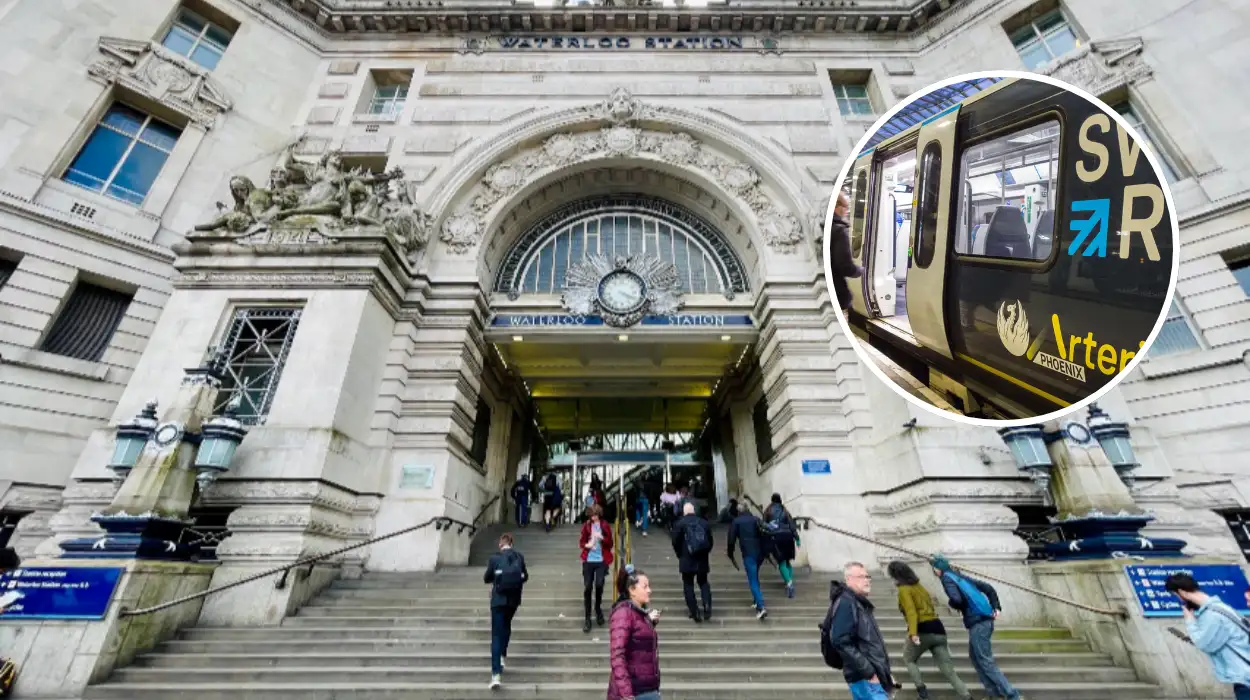
The physical manifestation of the network’s nationalised identity was on display at London Waterloo, where SWR unveiled its newest Arterio train. The rolling stock features a distinct, union jack-inspired Great British Railways livery that has already divided opinion among aesthetic critics. However, the interior configurations represent a substantial departure from the legacy fleet it replaces, focusing heavily on passenger comfort and heavy-volume commuting metrics.
The newly deployed 10-coach trains offer significantly enhanced passenger capacity compared to the older 8-coach models they replace. Internally, the carriages feature modern air-conditioning systems, wider walkways, and optimized spatial layouts designed to alleviate peak-hour congestion on some of the UK’s busiest commuter corridors. Officials confirmed that the older, obsolete trains have been permanently retired from the network and sent to scrap yards, locking in the transition to the new fleet.
Why Were The £1bn Arterio Trains Delayed For So Long?
The journey of the 90-train Arterio fleet to active service highlights the structural friction that characterized the twilight years of the privatized rail franchise system. Ordered in the previous decade from manufacturer Alstom, the first physical units were completed six years ago. However, under the stewardship of the last private operator, FirstGroup, the vast majority of the £1 billion fleet remained idle in storage sidings rather than transporting passengers.
The prolonged delay was driven by a complex mix of technical software glitches, infrastructure compatibility faults, and deep-seated industrial relations deadlocks. FirstGroup found itself caught between rigid contractual demands set by the Department for Transport and strong objections from rail unions regarding operational and safety changes associated with the new stock. This fragmented approach meant that when the state took direct control of SWR exactly one year ago, only six Arterio trains were authorized and running on the network.
Explore More Public services
Avanti Bids For Direct London Rail Services to Blackpool 2026
Kent Rail Line Closes For Nine Days For Upgrades: Kent 2026
How Does The Government Defend The GBR Renationalisation Strategy?
Standing at the launch event at London Waterloo, Rail Minister Peter Hendy offered a robust defence of the government’s intervention, arguing that the sudden acceleration of the fleet rollout since May 2025 provides clear evidence that structural reform is delivering results. As reported by the political reporting team of The Londoner News, Lord Hendy stated that the state-led intervention was explicitly “cutting red tape that held the railway back for decades.”
Under the unified Great British Railways framework, the traditional operational divide between track maintenance and train operations has been dissolved. Lord Hendy emphasized that a single managing director now commands absolute responsibility for both the physical rail infrastructure and the rolling stock. According to Lord Hendy, this single point of leadership means the executive team is directly “incentivised on running a decent service” rather than managing the complex, litigious boundaries of a private franchise contract.
Is South Western Railway Facing Continuing Reliability Issues?
Despite the optimistic political messaging surrounding the fleet milestone, SWR’s first year under public management has faced harsh criticism from passenger advocacy groups and transport analysts. The awarding of the Great British Railways badge was explicitly described by ministers as a privilege that had to be earned through consistent performance. Instead, the immediate aftermath of nationalisation saw passenger punctuality metrics drop sharply.
The network’s operational vulnerabilities were exposed by a cascading series of parallel failures. Over the past year, commuters have faced routine disruptions caused by aging track infrastructure, sudden mechanical failures within legacy rolling stock, and acute staffing shortages that restricted weekend timetables. This dip in daily reliability has fueled an intense debate over whether nationalisation can genuinely fix deep-seated physical infrastructure deficits, or if it simply shifts the blame from private boardrooms directly onto the desks of government ministers.
What Are The Next Steps For The SWR Commuter Fleet?
Achieving the 50 percent deployment threshold marks a clear operational turning point for the network, but the transition is only half complete. SWR management is now under pressure to maintain the current momentum and introduce the remaining 45 Arterio trains into daily passenger service to complete the full 90-vehicle order.
The upcoming phase of the rollout will test whether the integrated GBR management structure can successfully sustain accelerated driver training and technical safety certifications without causing further timetable disruptions. For ministers and rail executives alike, the focus must now expand beyond the symbolic rollout of new trains to proving that an integrated, publicly owned railway can deliver the daily punctuality and reliability that commuters demand.