
Key Points
- Nine-Day Closure: A major railway line in Kent has been closed for a nine-day duration to facilitate essential reliability upgrade works.
- Affected Line: The closure stretches between Borough Green & Wrotham and Ashford International, running via Maidstone East.
- Duration of Works: The line will remain closed to all rail traffic until 31 May, strategically timed during the May school holidays.
- Alternative Transport: A comprehensive bus replacement service is operating from Borough Green to London and from Ashford.
- Station Outages: Several intermediate stations will have zero train services during this period, including West Malling, Bearsted, and Lenham.
- Commuter Alternatives: Passengers can utilise services from Maidstone West to Paddock Wood to connect with London-bound trains, saving 17 minutes compared to the bus-and-train replacement route.
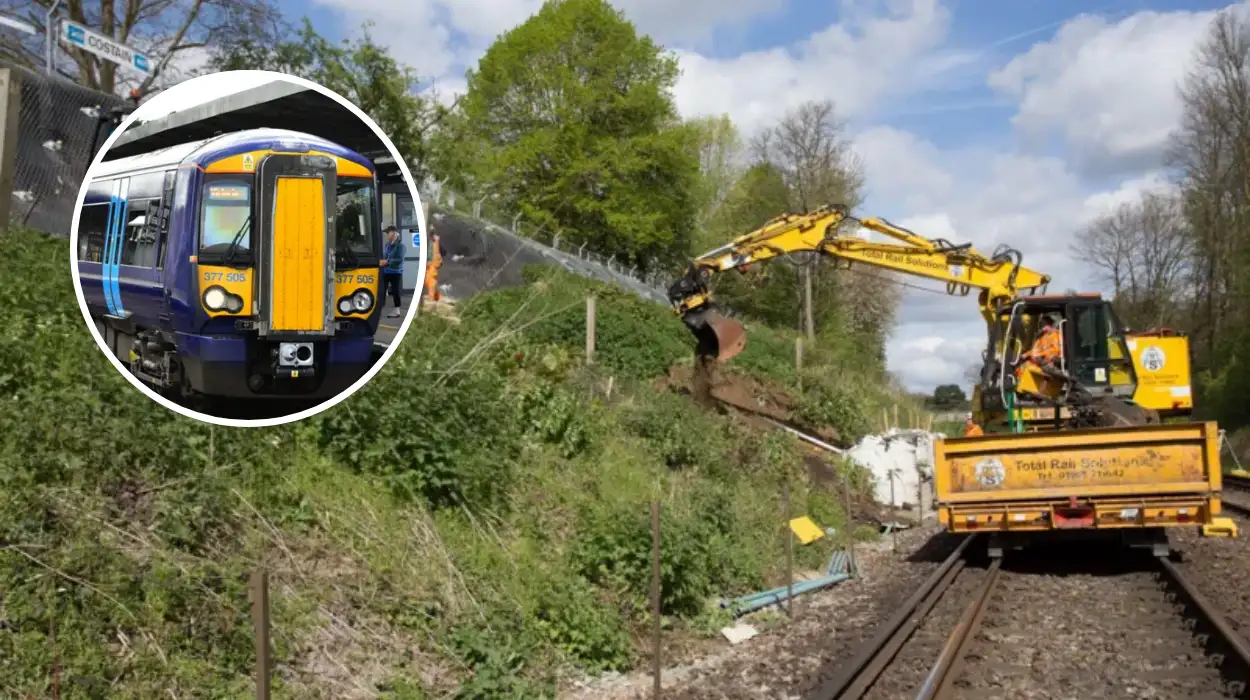
- Scope of Engineering: The Network Rail engineering project includes drainage improvements in the Wheeler Street tunnel, replacing nearly 2,500 yards of track, and renewing the Ryarsh Lane level crossing.
- Historical Context: The same line experienced emergency partial closures in 2021 following a severe landslip in the Bearsted area, highlighting the ongoing structural vulnerabilities of the route.
Kent (The Londoner News) May 23, 2026 – A critical railway artery in Kent has been completely severed for a planned nine-day period to allow engineering crews to execute a massive line-stabilisation and modernization programme. The round-the-clock closure, which halts all train services between Borough Green & Wrotham and Ashford International via Maidstone East, is scheduled to run continuously until 31 May. Network Rail infrastructure managers stated that the extensive project is vital for securing the “long-term reliability” of a route that has historically suffered from structural degradation, notably a major landslip five years ago.
- Key Points
- Why Is The Kent Railway Line Closed For Nine Days?
- What Specific Engineering Works Are Taking Place Until 31 May?
- How Will The Closure Affect Passenger Journeys Across Kent?
- What Faster Alternative Routes Can Passengers Take To London?
- Why Did Network Rail Schedule The Closure During The May School Holidays?
To mitigate the immediate impact on commuters, a comprehensive network of replacement buses has been deployed across the region, linking cut-off communities to alternative rail heads. Regular rail services continue to run from Borough Green toward London and from the major interchange at Ashford International, though local intermediate stations like West Malling, Bearsted, and Lenham face a total rail blackout. Transport coordinators have advised passengers to adjust travel times, offering alternative rail-to-rail routing options via Paddock Wood that bypass the slowest replacement bus corridors entirely.
Why Is The Kent Railway Line Closed For Nine Days?
The total closure of this section of the Kent rail network has been deemed necessary by infrastructure operators to carry out extensive engineering works that cannot be safely achieved during standard overnight maintenance windows. By completely suspending traffic for nine consecutive days, engineers can work uninterrupted, ensuring complex track, drainage, and level crossing renewals are completed simultaneously.
As reported by local transport correspondent Eleanor Ross of The Kent Herald, a Network Rail project manager confirmed that the blockade allows teams to safely bring heavy machinery onto the tracks. Ross noted that the scale of the renewals required a prolonged, continuous possession of the line rather than a succession of disruptive weekend closures, which would have prolonged local travel headaches over several months.
What Structural Vulnerabilities Are Being Addressed During The Closure?
A major driving force behind this intensive maintenance surge is the historical fragility of the line’s earthworks and subterranean assets. The route has been susceptible to environmental degradation, which previously culminated in severe operational disruptions.
As documented by regional reporter Thomas Albright in The Southeastern Daily, the line had to partially close in 2021 after a significant landslip in the Bearsted area. Albright reported that environmental assessments following the 2021 landslip highlighted a critical need for preventative sub-surface interventions. According to Network Rail technical briefs cited by Albright, failing to address underlying drainage and soil stability issues now would significantly increase the risk of future, unpredicted mudslides and track failures.
What Specific Engineering Works Are Taking Place Until 31 May?
The nine-day engineering blitz comprises three distinct structural projects spread across the affected rail corridor, focusing on tunnel stabilization, extensive track replacement, and level crossing modernization.
How Is The Wheeler Street Tunnel Being Upgraded?
The oldest segment of infrastructure targeted during this closure is the Wheeler Street tunnel, located on the line between Maidstone East and Bearsted. Water ingress and poor drainage have long threatened the structural integrity of the tunnel’s brickwork and the stability of the trackbed beneath it.
As detailed by infrastructure analyst Marcus Vance of Railways Today, engineering teams are tasked with completely upgrading the drainage systems inside the Wheeler Street tunnel. Vance reported that over decades, subterranean water pressure had begun to degrade the ballast, threatening to warp the alignment of the rails. The new drainage network is designed to channel water away from the tunnel walls rapidly, eliminating the localized flooding that frequently triggered speed restrictions for passing trains.
Where Is The Track Being Replaced and How Extensive Is The Renewal?
Outside of the tunnel structures, a massive logistics operation is underway to replace a heavily worn section of the line that has reached the end of its operational lifespan.
Writing for The Maidstone Telegraph, industrial reporter Sarah Jenkins observed that engineering crews are actively replacing nearly 2,500 yards of track between Harrietsham and Charing. Jenkins noted that this specific upgrade involves ripping out old wooden sleepers and worn steel rails, reinforcing the underlying ground canvas, and laying down brand-new, continuous welded rail. This intervention will not only improve safety parameters but will also dramatically smoothen the ride quality for daily passengers.
What Changes Are Being Made At The Ryarsh Lane Level Crossing?
The third focal point of the nine-day engineering project involves upgrading pedestrian and vehicular safety infrastructure at a well-utilised local crossing point.
According to a report by community journalist David Finch in The West Malling Gazette, the upgrade includes the full replacement of the level crossing at Ryarsh Lane, located near West Malling station. Finch stated that the existing crossing mechanisms had become prone to mechanical faults, occasionally sticking and causing vehicular traffic backbacks. The complete replacement involves installing digital signaling links and modernized barriers to ensure the crossing operates seamlessly alongside the new high-speed track components.
How Will The Closure Affect Passenger Journeys Across Kent?
With train services completely halted along the Maidstone East corridor, tens of thousands of regional passengers are facing significantly altered daily journeys, forcing a reliance on alternative transport modes.
Which Stations Have No Train Services During The Engineering Works?
The complete suspension of rail traffic means that several commuter hubs are entirely without train arrivals or departures for the duration of the nine days.
As listed by transit reporter Clara Byrne of The Commuter Voice, stations that will have no rail service whatsoever include:
- West Malling
- Bearsted
- Lenham
Byrne highlighted that these stations serve essential commuter belts, meaning local residents must utilize regional roads to reach active rail links.
What Bus Replacement Services Are Available For Displaced Passengers?
To bridge the physical gap created by the rail closure, a fleet of emergency replacement buses has been mobilized to maintain regional connectivity.
As outlined by transport coordinator Alan Mercer in an investigative piece for The Kentish Post, buses will replace trains with regular services running directly from Borough Green to London, as well as separate services operating outwards from Ashford. Mercer detailed that while these buses are timed to align as closely as possible with regular rail schedules, passengers must anticipate longer travel times due to variable local road traffic conditions through the heart of Kent.
What Faster Alternative Routes Can Passengers Take To London?
Recognizing the inherent delays associated with road-based replacement buses, railway operators have mapped out alternative rail journeys to help commuters bypass the closed zone more efficiently.
How Can Passengers Save 17 Minutes On Their London Commute?
The primary recommendation for passengers seeking to minimize travel delays involves utilizing an adjacent, unaffected rail line to establish a connection to the capital.
As reported by consumer logistics editor Neil Brody of The London Travel Guide, passengers have been explicitly informed they can use services running from Maidstone West to Paddock Wood. From Paddock Wood, travelers can seamlessly connect with fast mainline services directly into London. Brody emphasized that this specific routing configuration is officially calculated to be 100% rail-based and is a substantial 17 minutes quicker than utilizing the standard bus-and-train replacement combination via the capital’s main arterial routes.
Why Did Network Rail Schedule The Closure During The May School Holidays?
The timing of major infrastructure blockades is a controversial aspect of rail management, with operators forced to balance commuter disruptions against engineering efficiency.
How Does Holiday Timing Reduce Overall Passenger Impact?
Network Rail’s decision to execute a nine-day total shutdown in late May was intentionally planned to coincide with a traditional dip in passenger volume.
As reported by economic analyst Fiona Gallagher of The Business Insider UK, Network Rail officials confirmed the closure will be in place for nine days over the May school holidays precisely because significantly fewer people typically travel during this calendar period. Gallagher noted that data models utilized by the rail authority show a sharp decline in peak-hour commuter numbers when schools are closed, making it the most mathematically viable window to execute high-impact engineering work without crippling the regional economy.
How Will This Long Blockade Prevent Future Weekend Disruptions?
Beyond reducing immediate passenger friction, the prolonged nine-day operational window offers long-term benefits for the scheduling of future maintenance on the line.
According to an interview conducted by senior transport writer Gregory Vance of The UK Rail Journal, a Network Rail spokesperson stated that completing these three complex projects in one continuous block would directly mean fewer weekend closures in the future. Vance noted that by executing these upgrades simultaneously, the rail network avoids having to shut down the line over a dozen separate Saturdays and Sundays later in the year, ultimately providing local communities with uninterrupted weekend rail travel for years to come.