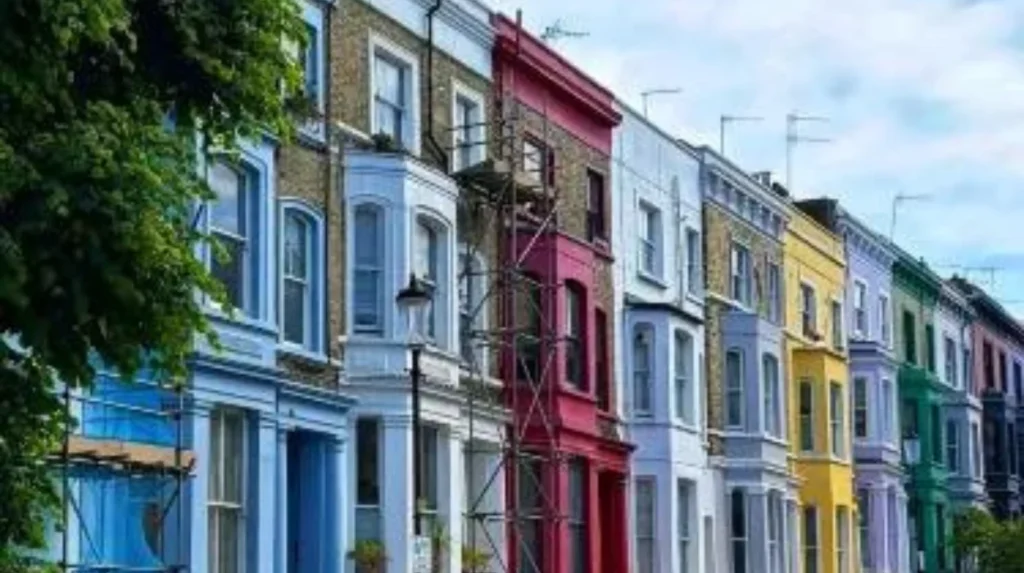
Notting Hill is one of West London’s most recognisable districts, but its historical identity extends far beyond painted Victorian terraces, Portobello Road Market and the film associations that shaped its modern international image. The area contains royal landscapes, Victorian artists’ homes, churches, conservation areas, post-war housing, transport infrastructure and multicultural landmarks.
- What is the historical background of Notting Hill?
- Which historic buildings should visitors see in Notting Hill?
- Why is Leighton House one of Notting Hill’s most important attractions?
- What can visitors learn from Holland Park?
- How does the Holland Park Circle explain Notting Hill’s artistic history?
- Why is Trellick Tower historically important?
- What does Notting Hill Gate reveal about London’s transport history?
- Which conservation areas are important around Notting Hill?
- Why is Golborne Road important beyond Portobello Road?
- How did migration and multiculturalism change Notting Hill?
- How is Notting Hill’s heritage being preserved today?
- What makes Notting Hill valuable for historical research?
- How can visitors understand Notting Hill beyond its most famous attractions?
- What is the long-term historical significance of Notting Hill?
- Frequently Asked Question
The district lies within the Royal Borough of Kensington and Chelsea. Its urban development accelerated during the nineteenth century as railways, roads and speculative housing transformed former fields and semi-rural settlements into dense residential neighbourhoods. The surviving built environment records several distinct phases of London’s growth.
Notting Hill also demonstrates how architecture changes when social conditions change. Victorian terraces reflect nineteenth-century suburban expansion. Underground railways altered accessibility. Twentieth-century migration reshaped local culture. Post-war redevelopment introduced modernist housing. Conservation policies later protected significant buildings and streetscapes.
For visitors interested in history, architecture and cultural geography, the area therefore offers a much wider field of study than its most photographed locations suggest.
What is the historical background of Notting Hill?
Notting Hill developed from rural land and small settlements into a densely built Victorian district, shaped by roads, railways, speculative housing, industry and migration. Its present character combines nineteenth-century architecture, twentieth-century social change, modernist redevelopment and extensive heritage conservation across West London.
Before large-scale urbanisation, the area west of London contained fields, lanes, farms and scattered settlements. Notting Hill was connected to London through roads running westwards, including routes that eventually became major transport corridors.
Notting Hill Gate has particularly deep transport history. Until 1864, it functioned as a turnpike toll gate on the old Roman Road leading west from London. A turnpike was a privately or publicly administered road barrier where travellers paid a toll for road maintenance. The site remained an important route into London after the toll gate disappeared.
The nineteenth century transformed the district. Railway expansion made West London more accessible, while new streets and terraces accommodated a growing population. The Great Western Railway, established in 1837, contributed to development farther north and west, including Kensal and surrounding districts.
The Ladbroke Estate became especially important to Notting Hill’s urban form. Developers created terraces, villas, squares and communal gardens during the nineteenth century. Much of this architecture remains visible today.
The borough now recognises several conservation areas in and around Notting Hill. These include Ladbroke, Pembridge, Norland and Oxford Gardens. Conservation-area designation identifies neighbourhoods with special architectural or historic interest and provides additional planning controls intended to protect their character.
This layered development explains why Notting Hill contains such contrasting architectural forms within a relatively compact geographical area.
Which historic buildings should visitors see in Notting Hill?
Historic buildings around Notting Hill include Victorian churches, preserved terraces, artists’ houses and distinctive modernist structures. Leighton House, Sambourne House, St John’s Church and Trellick Tower provide especially strong evidence of the district’s changing architectural, artistic and social history.
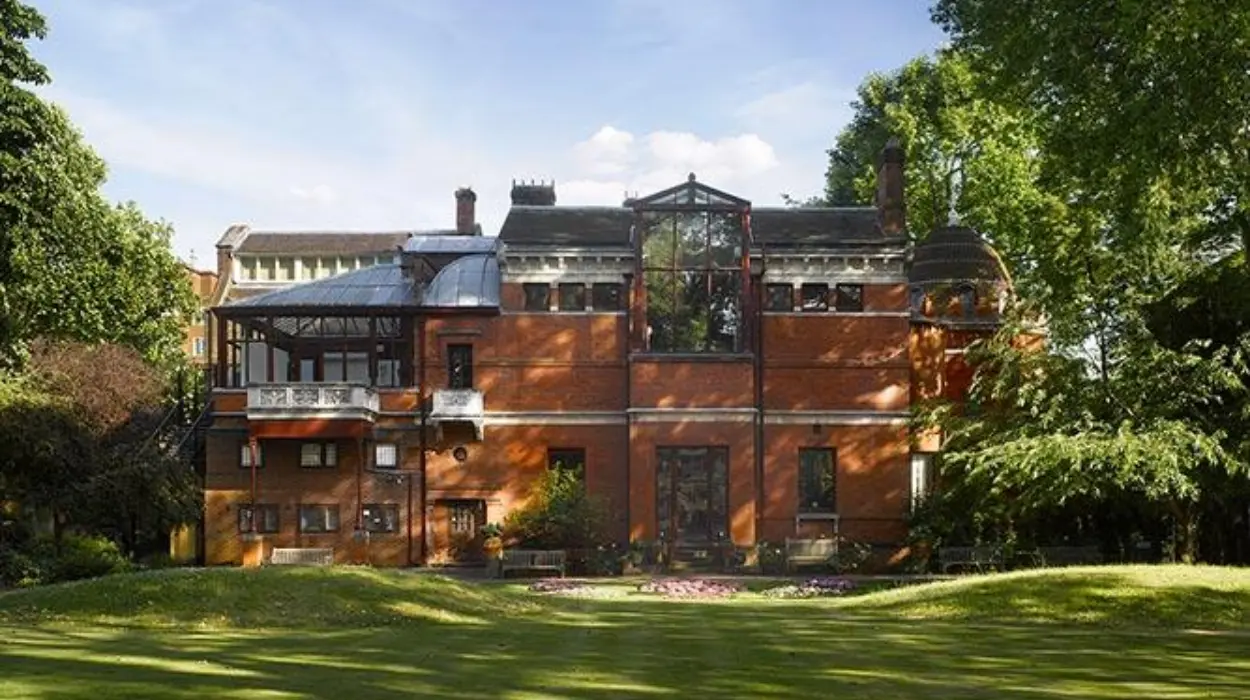
One of the strongest historical attractions is Leighton House on Holland Park Road. It was the home and studio of Frederic, Lord Leighton, the Victorian painter, sculptor and president of the Royal Academy.
Leighton acquired the site in 1864 and construction began in 1865. Architect George Aitchison designed the house as a purpose-built artist’s studio-home. The building developed through several extensions, reflecting Leighton’s changing artistic ambitions and growing collections.
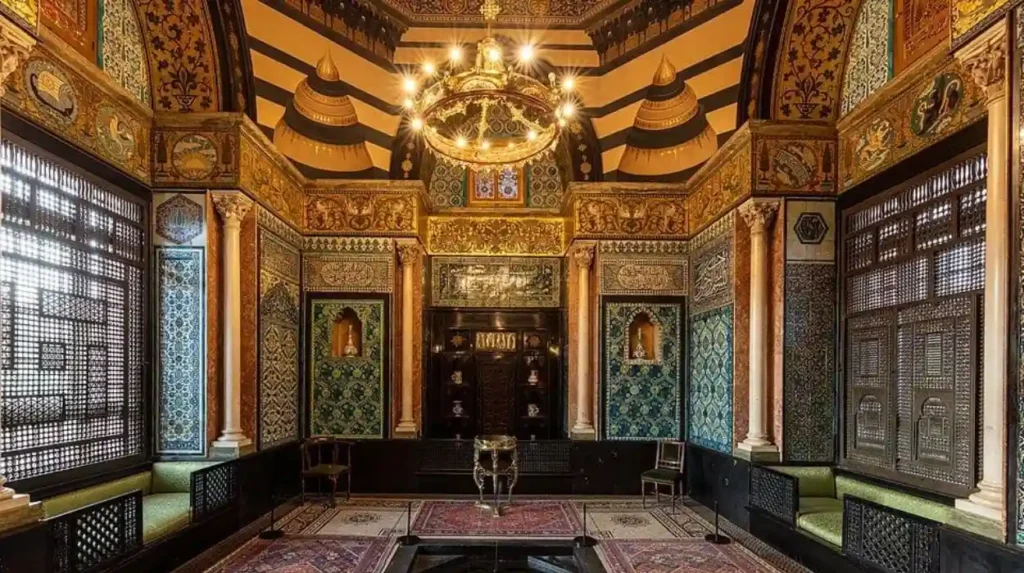
The Arab Hall is among its most significant spaces. Construction began in 1877 and incorporated decorative tiles and objects associated with Leighton’s travels and collecting activities. The house therefore represents both Victorian artistic culture and nineteenth-century British interest in artistic traditions from the Middle East and wider Islamic world.
Leighton House opened as a public museum in 1926. In 2026, the museum marks its centenary as a public museum under the governance of the Royal Borough of Kensington and Chelsea.
Sambourne House, at Stafford Terrace, offers another preserved Victorian domestic interior. It was the home of Edward Linley Sambourne, chief cartoonist for the satirical magazine Punch. Sambourne and Leighton lived as neighbours for more than two decades, connecting artistic and professional networks across the area.
The contrast between these buildings is historically important. Leighton House represents a purpose-built artistic environment of the Victorian elite, while Sambourne House preserves the domestic world of a successful illustrator and magazine artist.
St John’s Church, on Lansdowne Crescent, also contributes to the architectural history of Notting Hill. Its church architecture belongs to the nineteenth-century expansion of the district, when churches were established alongside new residential streets and growing communities.
These buildings show that Notting Hill’s heritage is not confined to commercial streets. Its historical significance is distributed through religious, domestic, artistic and civic architecture.
Why is Leighton House one of Notting Hill’s most important attractions?
Leighton House preserves the home, studio and collections of Frederic Leighton, a leading Victorian artist and Royal Academy president. Built from 1865 and repeatedly expanded, it records nineteenth-century artistic culture, architectural experimentation, collecting and elite domestic life in London.
Frederic Leighton lived at the house from the 1860s until shortly before his death in 1896. The building was designed around his professional requirements as a painter.
The original house contained living rooms and a substantial first-floor painting studio. Leighton later enlarged the studio and introduced additional rooms and decorative features. This process created an unusual building in which domestic life, artistic production and museum-like display existed together.
The Arab Hall became one of the defining additions. Leighton had travelled through regions including Turkey, Egypt and Syria and collected textiles, ceramics and other objects. The interior incorporated these materials into a highly elaborate architectural setting.
Leighton House also demonstrates the importance of artist colonies in Victorian London. Artists were increasingly able to establish purpose-built studios within expanding suburban districts. The surrounding Holland Park area became home to a group of prominent artists.
The Holland Park Circle included figures such as George Frederic Watts, Valentine Cameron Prinsep, Luke Fildes and William Burges. By Leighton’s death in 1896, ten artists had constructed purpose-built studio-houses on Holland Park Road and nearby Melbury Road.
The surviving buildings provide evidence of a wider cultural transformation. Artists were no longer simply occupants of conventional townhouses. Successful Victorian artists commissioned homes specifically designed around studios, collections, workshops and public-facing social activities.
Leighton House is consequently important as both a historic house and an architectural document of Victorian artistic culture.
What can visitors learn from Holland Park?
Holland Park preserves the remains of Holland House, a Jacobean mansion damaged during the Second World War, alongside gardens, woodland, cultural facilities and the Kyoto Garden. Its landscape records aristocratic ownership, wartime destruction, public park creation and international cultural exchange.
Holland Park occupies about 54 acres and incorporates land associated with the former Holland House estate. Sir Walter Cope built Cope Castle, a large Jacobean mansion, in the early seventeenth century. Cope served as Chancellor of the Exchequer under King James I.
The property later became known as Holland House after ownership passed through the Holland family. The estate remained a substantial private property before its landscape became part of the modern public park.
The Second World War dramatically altered the site. Holland House suffered severe bomb damage. One surviving wing was retained and later adapted for new uses. A section of the front terrace also survived and remains associated with public cultural events.
The park therefore provides a physical example of how historic landscapes survive through adaptation rather than complete preservation.
Another important feature is the Kyoto Garden. It was created in 1992 for the Japan Festival in London through cooperation between the Royal Borough of Kensington and Chelsea and the Kyoto Chamber of Commerce in Japan. A Japanese garden designer and team constructed the garden according to Japanese landscape principles.
The Kyoto Garden is not an ancient part of Holland Park. Its importance lies in twentieth-century cultural exchange and the reinterpretation of landscape traditions within a historic London estate.
For heritage visitors, Holland Park demonstrates how a historic private estate can become a public cultural landscape while retaining physical evidence of earlier ownership.
How does the Holland Park Circle explain Notting Hill’s artistic history?
The Holland Park Circle was a late nineteenth-century community of artists who built studio-houses around Holland Park Road and Melbury Road. Frederic Leighton, Valentine Prinsep, George Frederic Watts and William Burges formed part of this influential artistic environment.
The Holland Park Circle developed after artists began settling near Holland House and Little Holland House during the nineteenth century.
George Frederic Watts was among the early artistic figures associated with the area. He became a regular presence at Little Holland House, where the Prinsep family hosted artists, writers and intellectuals.
In 1864, Valentine Cameron Prinsep and Frederic Leighton acquired adjoining plots. Prinsep commissioned architect Philip Webb, while Leighton worked with George Aitchison. Their studio-houses helped establish the area as a concentrated artistic neighbourhood.
Other artists followed. The resulting buildings varied according to artistic practice. Sculptors required workshops, storage areas and external working spaces. Painters required large studios and controlled natural light.
William Burges created Tower House on Melbury Road in 1877. Unlike a conventional Victorian townhouse, it was designed as a highly individualised residence reflecting Burges’s medieval architectural interests.
Most of the original artist houses are private properties. Leighton House remains the principal studio-house in the group that operates as a public museum. The Royal Borough also uses walking tours and educational programmes to interpret the artistic history of the neighbourhood.
The Holland Park Circle therefore provides an essential historical connection between Notting Hill’s residential expansion and the development of Victorian London’s professional art establishment.
Why is Trellick Tower historically important?
Trellick Tower is a Grade II listed modernist housing complex designed by Ernő Goldfinger and built between 1968 and 1972. Its 217 flats and integrated community facilities represent post-war public housing, high-rise planning and architectural responses to urban housing shortages.*
Trellick Tower stands on Golborne Road and forms part of the Cheltenham Estate. Architect Ernő Goldfinger designed the tower and associated housing during a period when London authorities were building large numbers of new homes.
Historic England records 217 flats, six shops, an office, youth and women’s centres within the tower complex. The principal tower rises 31 storeys, while its separate service tower reaches 35 storeys.
The tower uses reinforced concrete and distinctive external forms. Goldfinger separated the service functions from the main residential structure, creating a visually prominent service tower containing lifts, stairs and refuse facilities.
The wider Cheltenham Estate occupies an 11-acre site. The area previously contained late nineteenth-century terraced housing. In 1963, the London County Council declared houses around Edenham Street unfit for habitation and acquired the land for redevelopment.
Construction of Trellick Tower took place between 1968 and 1972. The wider estate was built from 1969 to 1973 and provided 317 dwellings, combining the tower with houses, lower-rise flats and maisonettes.
The project reflected post-war planning ideas that combined different building heights with open space. This approach developed from planning concepts promoted by the London County Council during the mid-twentieth century.
Historic England listed Trellick Tower at Grade II* in 1998. The designation recognises its special architectural and historic interest.
For visitors, the tower is primarily an exterior architectural landmark. It should be understood as a working residential building rather than a conventional museum attraction.
What does Notting Hill Gate reveal about London’s transport history?
Notting Hill Gate developed as a major road and Underground interchange after centuries as a westbound route into London. Its nineteenth-century railway connections and twentieth-century redevelopment transformed the district from a toll-gate location into a major metropolitan transport centre.
Transport infrastructure is fundamental to understanding modern Notting Hill.
The original turnpike at Notting Hill Gate operated on an old Roman road leading west from London. Its removal in 1864 coincided with rapid urban transformation in surrounding districts.
Underground railway development strengthened the connection. The Hammersmith branch opened in 1864, with an intermediate station at Notting Hill, now known as Ladbroke Grove. The line initially operated through cooperation between the Great Western Railway and Metropolitan Railway.
Notting Hill Gate subsequently became associated with the District, Circle and Central lines. The Underground network reduced travel times and encouraged residential, commercial and employment growth across West London.
The physical appearance of Notting Hill Gate changed again during the twentieth century. Much of the modern retail centre received planning permission in 1957 and 1958 following road widening. The works also involved combining Central and District line stations into a new station beneath the road.
This redevelopment illustrates the competing priorities of post-war London: increasing road capacity, maintaining public transport connections and accommodating commercial activity.
The result is an area where Victorian buildings survive beside mid-century structures and modern redevelopment. The contrast makes Notting Hill Gate particularly valuable for studying urban change.
Which conservation areas are important around Notting Hill?
Ladbroke, Pembridge, Norland and Oxford Gardens conservation areas protect significant parts of Notting Hill’s historic townscape. Their Victorian and Edwardian streets, communal gardens, terraces and architectural variations preserve evidence of nineteenth-century suburban expansion.
Conservation areas are geographically defined places recognised for special architectural or historic interest. Planning controls within them aim to protect character while allowing appropriate change.
The Ladbroke Conservation Area covers a substantial section of northern Notting Hill. Its development occurred mainly during the nineteenth century and includes Victorian and Edwardian architecture.
The Pembridge Conservation Area is particularly important for understanding the relationship between residential architecture, commercial streets and communal open space. It contains a variety of building types and was among the earlier conservation areas designated within the Royal Borough.
The Pembridge Conservation Area appraisal identifies Pembridge Square’s communal garden as its largest green space. Smaller gardens and landscaped areas also contribute to the neighbourhood’s historic townscape.
Norland Conservation Area was designated on 29 January 1969. It includes the original Norland Estate developed up to 1852 and parts of St James’s Gardens dating from the later nineteenth century.
Oxford Gardens Conservation Area contains development from the final third of the nineteenth century and the first fifteen years of the twentieth century. Its buildings include Victorian and Edwardian architectural styles.
These areas are significant because they preserve the physical structure of residential development rather than isolated landmark buildings.
A visitor walking through them can examine building setbacks, railings, gardens, mews, terraces, corner buildings and street widths. These features reveal how Victorian developers organised housing and public-private space.
To experience this historic landscape in person today, consult our comprehensive [How Soho Evolved Into London’s Entertainment District Over Several Historic Centuries] for itineraries and visiting parameters.
Why is Golborne Road important beyond Portobello Road?
Golborne Road extends Notting Hill’s market and migration history northward, linking commercial activity with residential communities and modernist architecture. Its relationship with Portobello Road creates a continuous market environment that reflects decades of local commerce, immigration and neighbourhood change.
Golborne Road is historically important because it demonstrates that Notting Hill’s commercial identity extends beyond Portobello Road.
The road sits close to Trellick Tower and the Grand Union Canal. Its commercial environment developed alongside changing patterns of migration and local enterprise.
Royal Borough planning documents describe Portobello Road and Golborne Road as a continuous market area. Their combined commercial landscape contains shops, stalls, food businesses, clothing retailers, antiques and other specialist enterprises.
The area also provides evidence of the relationship between housing policy and local commerce. Trellick Tower and the Cheltenham Estate were constructed alongside established streets and businesses, creating a very different urban environment from the Victorian terraces farther south.
Golborne Road is therefore useful for studying the twentieth-century development of North Kensington. Its significance lies in the interaction between buildings, businesses, communities and transport routes.
The area also provides a strong architectural contrast. Low-rise commercial streets stand near Trellick Tower, one of Britain’s best-known examples of post-war high-rise housing.
That contrast is one of the clearest demonstrations of Notting Hill’s architectural chronology.
How did migration and multiculturalism change Notting Hill?
Migration transformed Notting Hill’s social and cultural identity during the twentieth century, particularly through Caribbean settlement and the development of community institutions. This history contributed directly to the area’s multicultural character and the emergence of Notting Hill Carnival.
Notting Hill’s twentieth-century history cannot be separated from migration.
After the Second World War, Caribbean migrants settled in North Kensington and surrounding districts. They established businesses, community networks, churches and cultural organisations.
The development of Caribbean cultural life became particularly significant during the late 1950s and 1960s. Notting Hill Carnival emerged from this broader context of community organisation and cultural expression.
The area also experienced serious social tensions. Housing conditions, racial discrimination and conflict affected North Kensington during the post-war period. These pressures formed part of the wider history of race relations in Britain.
Notting Hill Carnival subsequently became an internationally recognised annual cultural event. Its history is connected with Caribbean traditions, local community activism, music, dance and street culture.
The historical importance of this transformation extends beyond tourism. It demonstrates how migration can reshape the identity of a neighbourhood through institutions, commercial activity, cultural production and public events.
The Royal Borough’s planning documents explicitly describe Notting Hill Gate as having a bohemian heritage and note the contribution of immigrants from around the world to the area’s cultural identity.
For educators and researchers, this makes Notting Hill a valuable case study in twentieth-century urban multiculturalism.
How is Notting Hill’s heritage being preserved today?
Notting Hill’s heritage survives through listed buildings, conservation areas, museums, protected landscapes, adaptive reuse and public investment. Leighton House, Holland Park, Trellick Tower and historic residential districts demonstrate different approaches to preserving architectural and cultural evidence.
Preservation in Notting Hill operates at several levels.
Listed buildings receive statutory protection because of their special architectural or historic interest. Trellick Tower is Grade II*, while other historic structures across the district have different levels of designation.
Conservation areas protect broader townscapes rather than individual buildings. This approach is particularly important in Notting Hill because much of its heritage value comes from groups of terraces, gardens, streets and architectural details.
Museums provide another preservation mechanism. Leighton House preserves not only an historic building but also an artistic collection, interiors and evidence of Victorian cultural life. Its 2026 centenary as a public museum demonstrates the long-term value placed on the site.
Historic landscapes are also preserved through public parks. Holland Park retains surviving elements of Holland House and its former estate landscape while providing contemporary public facilities.
Preservation also involves infrastructure. In 2026, the Royal Borough approved £4.4 million of improvements for Portobello Road addressing safety, accessibility, flood resilience, lighting and greenery while seeking to protect the street’s historic character. Construction is expected to begin in January 2027.
This approach demonstrates that heritage conservation is not limited to freezing buildings in their historical condition. It involves managing change while retaining architectural character and historical evidence.
What makes Notting Hill valuable for historical research?
Notting Hill provides an unusually concentrated record of London’s urban development, combining rural origins, Victorian expansion, artistic communities, railway growth, migration, post-war housing, multicultural culture and conservation. Its surviving buildings allow these historical processes to be studied together.
For historical researchers, the district offers evidence from multiple periods within a compact urban landscape.
Architectural researchers can examine Victorian terraces, communal gardens, churches, artist studios and post-war modernism. Social historians can investigate migration, housing conditions, community institutions and cultural change.
Transport historians can trace the transformation of Notting Hill Gate from a turnpike location into a major Underground interchange. Planning researchers can compare nineteenth-century speculative development with twentieth-century comprehensive redevelopment.
Genealogical researchers also benefit from the surviving street pattern. Victorian streets, squares and terraces provide geographical frameworks for researching residents, occupations and household structures through census records, electoral registers, directories and local archives.
The district’s conservation areas add another research layer. Their appraisals document architectural character, development patterns and changes to individual streets.
Notting Hill is therefore not simply a tourist destination. It is a physical archive of London’s transformation.
Its importance lies in the survival of different historical layers rather than in any single landmark.
How can visitors understand Notting Hill beyond its most famous attractions?
Visitors can understand Notting Hill more completely by combining museums, parks, churches, conservation areas, transport landmarks and modernist architecture with its famous streets. This approach reveals the district as a historical landscape shaped by several centuries of urban change.
A broader visit begins with the district’s architectural geography.
Leighton House provides access to Victorian artistic culture. Holland Park connects the area with aristocratic estates, wartime destruction and twentieth-century landscape design. The Holland Park Circle adds evidence of an artist community that developed alongside residential expansion.
The conservation areas around Pembridge and Ladbroke demonstrate how nineteenth-century developers created terraces, villas, gardens and streets. These neighbourhoods remain important examples of historic London townscape.
Notting Hill Gate provides a different historical perspective through transport infrastructure and twentieth-century redevelopment. Its layered architecture shows how road traffic, Underground transport and commercial planning changed an established urban centre.
Golborne Road introduces another dimension through commerce, migration and community history. Trellick Tower then demonstrates the post-war response to housing shortages and the architectural ambitions of modernist public housing.
These attractions create a chronological sequence from estate landscapes and Victorian expansion to twentieth-century migration and post-war redevelopment.
The most valuable historical experience therefore comes from reading Notting Hill as a connected landscape rather than treating its landmarks as isolated attractions.
What is the long-term historical significance of Notting Hill?
Notting Hill’s long-term significance comes from its ability to preserve evidence of London’s changing society, architecture and infrastructure. Its Victorian streets, artistic heritage, multicultural institutions, public parks and modernist housing continue to document how West London evolved.
Notting Hill demonstrates that urban history is cumulative.
The district began with rural land, roads and small settlements. Victorian development created dense residential neighbourhoods. Railways increased accessibility and accelerated metropolitan integration. Artists established studios and cultural networks. Migration transformed local society. Post-war authorities replaced some housing with large-scale modernist estates. Conservation policies later protected important historic environments.
Each phase remains visible.
Trellick Tower records post-war housing policy. Leighton House records Victorian artistic ambition. Holland Park preserves an aristocratic estate landscape and later public cultural uses. Conservation areas protect nineteenth-century residential planning. Notting Hill Gate records transport-led redevelopment.
The district’s future historical value will depend on retaining this diversity while allowing buildings and public spaces to serve contemporary needs.
The Royal Borough continues to plan improvements for Notting Hill Gate and Portobello Road, demonstrating that the area remains an active urban environment rather than a preserved historical exhibit.
For history enthusiasts, cultural tourists, educators and researchers, this layered character is the central attraction.
Notting Hill is best understood not simply as the home of colourful houses and Portobello Road Market, but as a living record of London’s transition from rural fringe to Victorian suburb, from artistic enclave to multicultural neighbourhood, and from post-war redevelopment zone to protected heritage landscape.
Its most important attractions are therefore the places that reveal those transformations: Leighton House, Holland Park, the Holland Park Circle, conservation areas, Notting Hill Gate, Golborne Road and Trellick Tower.
Together, they establish Notting Hill as one of London’s most concentrated examples of architectural, social and cultural change.
Frequently Asked Question
What are the best attractions in Notting Hill beyond Portobello Road Market?
The best historical attractions include Leighton House, Holland Park, Trellick Tower, the Holland Park Circle, Golborne Road, Notting Hill Gate and the area’s conservation districts.