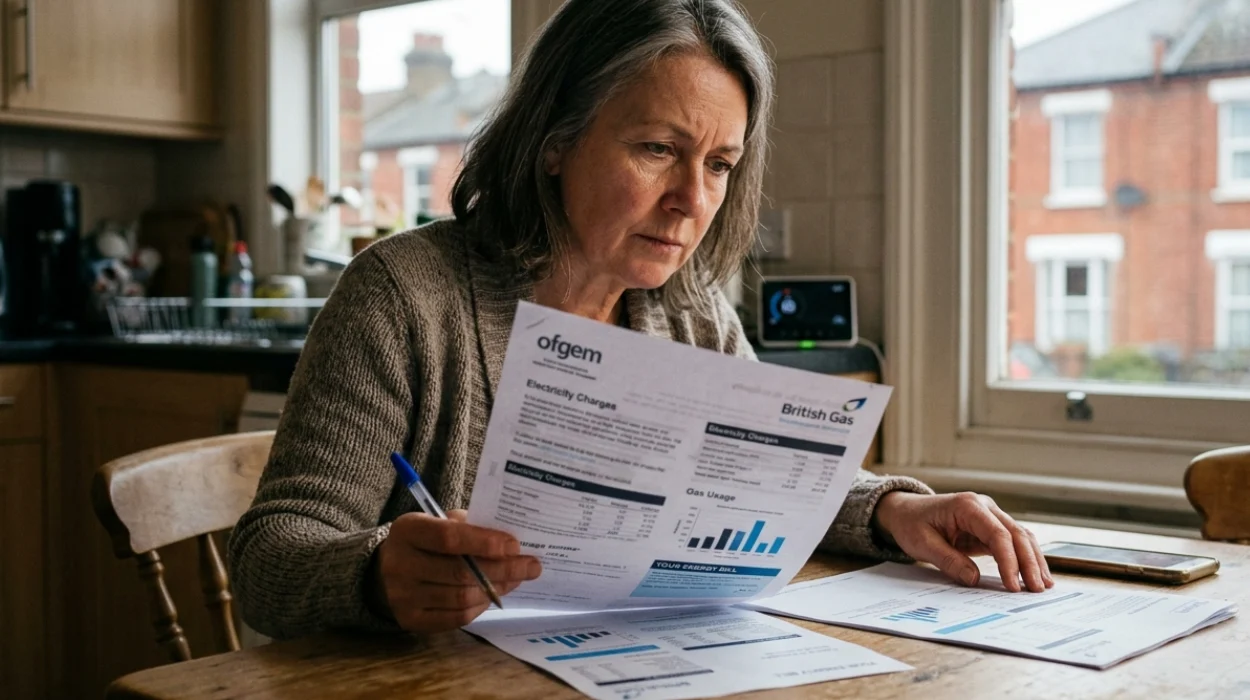
Domestic energy bills represent the recurring financial expenditure incurred by residential households to secure electricity and natural gas provisions. These monetary obligations directly reflect international commodity markets, national infrastructure engineering, and regulatory intervention policies executed by state institutions. Understanding the anatomical components of an energy statement is essential for tracking personal fiscal stability and assessing the macro-environmental forces impacting urban consumer demographics across London and the wider United Kingdom.
- What Factors Determine the Financial Baseline of Domestic Energy Bills?
- How Did the Modern Energy Regulatory System and Price Cap Evolve in the United Kingdom?
- What Are the Precise Pricing Mechanisms and Unit Metrics Used to Calculate Energy Invoices?
- What Types of Energy Tariffs Are Available to Modern Consumers?
- How Does the Process of Energy Billing and Payment Mechanics Operate?
- What Societal and Economic Implications Arise from Rising Domestic Energy Costs?
- What Future Trends and Structural Reforms Shape the Evolution of Energy Bills?
What Factors Determine the Financial Baseline of Domestic Energy Bills?
Domestic energy bills are determined by a combination of wholesale commodity costs, network distribution charges, regulatory policy levies, supplier operational costs, and value-added tax. These elements aggregate to establish the final retail unit rates and daily standing charges billed to consumers.
The primary driver of the domestic energy statement is the wholesale cost of energy, representing the market price at which commercial suppliers purchase raw gas and electricity from global producers. Wholesale costs undergo extreme fluctuations based on geopolitical events, international supply chain interruptions, and seasonal climate alterations. For example, a sudden disruption in natural gas extraction in Western Europe elevates the baseline cost for domestic distributors within hours, which ultimately manifests on consumer invoices from London to northern Scotland.
Network costs constitute the second structural layer of the household energy statement, accounting for approximately 25% of the total aggregate bill. These charges represent the expenses incurred by infrastructure operators to construct, maintain, and upgrade the physically complex systems of subterranean pipes and overhead transmission wires that transport power from generation facilities directly to residential properties. These operational components are divided into Transmission Network Use of System charges and Distribution Network Use of System charges. For London residents, these charges are heavily influenced by the UK Power Networks infrastructure operating across the capital.
Supplier operating costs comprise the administrative outlays required to manage consumer portfolios, including customer service operations, automated billing software maintenance, bad debt management, and the rollout of smart metering devices. This operational sector accounts for roughly 16% of the household financial baseline. Additionally, suppliers are legally permitted a regulated earnings margin, which is the baseline profit allowance established by the industry regulator, Office of Gas and Electricity Markets (Ofgem), currently calibrated at approximately 2.5% of the total bill layout.
Policy costs and statutory taxation represent the final regulatory components embedded within household energy bills. Policy costs finance state-mandated social schemes and environmental initiatives, such as the Warm Home Discount Scheme, which provides winter financial assistance to vulnerable demographics, and the Energy Company Obligation, which mandates structural insulation upgrades for low-income housing. Value-Added Tax (VAT) is then legally enforced by His Majesty’s Revenue and Customs (HMRC) at a fixed domestic rate of 5% on the gross subtotal of all residential energy consumption.
How Did the Modern Energy Regulatory System and Price Cap Evolve in the United Kingdom?
The modern energy regulatory system evolved through the total privatization of regional monopolies in the 1980s, followed by the introduction of the independent regulator Ofgem in 2000, and the implementation of the statutory Energy Price Cap in January 2019.
The contemporary structure of the British utility sector originates from the Electricity Act 1989 and the Gas Act 1986, parliamentary statutes that dissolved the state-owned Central Electricity Generating Board and British Gas Corporation. This legislation transformed regional public monopolies—including the historic London Electricity Board—into private corporate entities operating within a competitive commercial framework. To govern this market, the Utilities Act 2000 merged electricity and gas regulatory offices to form the Office of Gas and Electricity Markets (Ofgem), an independent non-ministerial government department tasked with protecting consumer interests and maintaining industry liquidity.
Between 2000 and 2018, the retail market operated with minimal price intervention, allowing suppliers to set variable and fixed contracts freely. However, market research conducted by the Competition and Markets Authority (CMA) between 2014 and 2016 revealed that millions of disengaged households were being automatically transitioned onto expensive Standard Variable Tariffs (SVTs) once their initial fixed-term contracts expired. This market failure, termed the “loyalty penalty,” prompted Parliament to pass the Domestic Gas and Electricity (Tariff Cap) Act 2018.
The legislation mandated that Ofgem establish a structural ceiling on standard variable rates, leading to the deployment of the first Energy Price Cap on 1 January 2019. Initially set at £1,137 per annum for a typical dual-fuel household, the price cap functioned as a regulatory backstop to ensure that default rates directly mirrored true underlying wholesale costs rather than corporate profit optimization. The cap was recalculated twice a year until August 2022, when extreme market volatility forced an evolution to a quarterly update cycle to protect supplier solvency and consumer transparency.
The regulatory framework underwent unprecedented stress during the global energy crisis of 2021 to 2023, sparked by post-pandemic demand spikes and geopolitical supply freezes. When the calculated price cap was projected to reach an unsustainable £3,549 per year in October 2022, the government intervened via the Energy Prices Act 2022, introducing the temporary Energy Price Guarantee (EPG). The EPG artificially suppressed consumer bills by subsidizing the difference between market rates and a state-mandated ceiling of £2,500 per annum, a financial mechanism that concluded in early 2024 as market prices returned to historical trends.

What Are the Precise Pricing Mechanisms and Unit Metrics Used to Calculate Energy Invoices?
Energy invoices are calculated using two precise metrics: the kilowatt-hour (kWh), which measures actual volumetric consumption of gas and electricity, and the daily standing charge, which is a fixed contractual fee applied irrespective of actual energy usage.
To comprehend the mathematical construction of a monthly or quarterly energy invoice, consumers must analyze the distinct pricing mechanisms applied by suppliers. The metric used to quantify physical energy use is the kilowatt-hour (kWh), defined as the amount of energy expended by a 1,000-watt appliance operating continuously for a 60-minute duration. Electricity consumption is tracked directly via digital or mechanical meters measuring the flow of active current, while gas consumption is measured volumetrically in cubic meters or cubic feet before being converted into equivalent kilowatt-hours using a standardized thermal efficiency formula.
The second component of the invoice calculation is the daily standing charge, a fixed nominal rate that covers the logistical expenses of keeping a property permanently connected to the national energy infrastructure. The standing charge pays for local network maintenance, emergency response protocols, and administrative processing fees. A consumer who utilizes zero units of gas or electricity during a specified monthly billing period will still generate a financial deficit solely due to the accumulation of these daily standing fees.
Under the current regulatory rules established by Ofgem for the third quarter of 2026 (running from 1 July to 30 September 2026), the pricing mechanisms are capped at strict regional limits. For a standard consumer paying by Direct Debit, the average national electricity unit rate is capped at 26.11 pence per kWh, accompanied by a daily electricity standing charge of 57.19 pence. Concurrently, the natural gas unit rate is capped at an average of 7.33 pence per kWh, with an associated daily gas standing charge of 29.04 pence.
These exact unit limitations aggregate to an annual annualized benchmark of £1,663 for a typical household exhibiting standard dual-fuel consumption habits. It remains critical to distinguish that regional variations exist across the country, meaning a household in the London region will see slight deviations in their standing charges compared to a household in Wales or the Midlands. The cap restricts only the cost per single unit of power; thus, houses with higher physical volumetric consumption will inevitably experience higher net energy invoices.
What Types of Energy Tariffs Are Available to Modern Consumers?
Modern consumers can choose between three primary contract structures: Standard Variable Tariffs, Fixed-Rate Tariffs, and Dynamic Smart Tariffs. Each operational structure offers varying degrees of financial predictability and exposure to wholesale market movements.
Standard Variable Tariffs (SVTs), colloquially referred to as default tariffs, are the base contract types applied when a customer does not actively choose a specific commercial package. The unit rates of an SVT fluctuate upward or downward every three months in direct symmetry with the adjustments announced by Ofgem. SVTs provide maximum structural flexibility as they carry zero exit fees, allowing consumers to switch providers immediately, but they expose households entirely to any sudden upward shifts in global wholesale commodity pricing.
Fixed-Rate Tariffs represent commercial agreements that freeze the unit cost of electricity and natural gas for a legally binding calendar duration, typically spanning 12 or 24 months. Regardless of global market disturbances or alterations to the regulatory price cap, the consumer’s contractual rates remain perfectly static throughout the term. While providing absolute financial certainty for household budgeting, fixed tariffs frequently incorporate early termination penalties ranging from £25 to £75 per fuel type if a consumer breaches the contract prior to its designated expiration date.
Dynamic Smart Tariffs encompass advanced operational structures that require the installation of an operational smart meter to track real-time power consumption metrics. These contracts include:
- Time-of-Use Tariffs: Packages that divide the 24-hour day into distinct cost segments, offering lower pricing during overnight troughs when national grid demand drops. These are increasingly popular among London electric vehicle owners charging their cars overnight.
- Tracker Tariffs: Dynamic pricing programs that adjust unit rates every midnight in direct alignment with the daily wholesale spot market index.
- Export Tariffs: Specialized digital agreements that allow residential households equipped with solar PV microgeneration setups to sell excess electricity back to commercial suppliers under the Smart Export Guarantee (SEG).
How Does the Process of Energy Billing and Payment Mechanics Operate?
The process of energy billing operates through the systematic collection of volumetric usage data via physical meters, which is then translated by suppliers into monetary statements settled through automated direct debits, variable payment on receipt, or pay-as-you-go prepayment accounts.
The operational cycle of utility billing begins with the transmission of localized consumption data. Traditional legacy homes require the manual physical reading of dials or digital readouts, which are then submitted via web interfaces or telephone applications to the supplier. Conversely, modern Smart Metering Equipment Technical Specifications (SMETS2) devices execute this transmission autonomously, utilizing a dedicated secure national wireless infrastructure managed by the Data and Communications Company (DCC) to provide automated half-hourly or daily log files directly to the utility vendor.
Once usage data is verified, the billing engine applies the agreed tariff calculations to establish the balance. The methods through which consumers settle these financial balances include three distinct operational procedures:
- Fixed Monthly Direct Debit: The supplier estimates the household’s total annualized energy consumption, divides that sum into 12 equal monthly installments, and automatically extracts the funds from the customer’s banking institution. This method builds up a financial surplus during low-use summer periods to offset the high consumption demands of the winter calendar.
- Standard Credit (Payment on Receipt): The supplier generates an invoice post-facto based on quarterly meter readings. The consumer then resolves the balance via manual bank transfers, credit cards, or postal checks within a designated 14-day window. This process typically incurs an administrative premium due to the increased collection risks managed by the supplier.
- Prepayment Meters (Pay-As-You-Go): The household must purchase energy credit prior to consumption by physically loading money onto a smart card or token at retail locations, or via mobile applications. If the monetary credit on the meter reaches zero without emergency credit activation, the physical supply of energy to the property terminates automatically. A significant percentage of rental properties across London boroughs rely on this billing mechanism.

What Societal and Economic Implications Arise from Rising Domestic Energy Costs?
Rising domestic energy costs escalate the prevalence of fuel poverty, reduce net disposable household income across the broader national economy, and drive structural inflation by increasing operational overheads for commercial entities and public service institutions.
When residential utility costs accelerate significantly above historical baseline levels, the immediate consequence is an expansion of fuel poverty. In regulatory terms, a household enters fuel poverty if they reside in a property with an energy efficiency rating below band C on the Energy Performance Certificate (EPC) scale and their net remaining income after spending the required amount to heat their home falls below the official national poverty line. Elevated utility bills force low-income households to make compromises between thermal comfort, nutritional stability, and debt repayment compliance.
Beyond direct low-income vulnerability, sustained increases in domestic energy costs place structural pressure on the broader national economy. Because energy demand is largely inelastic—meaning consumers cannot easily eliminate basic space heating or refrigeration needs—higher utility costs act as an un-elected tax on the public. Every pound sterling redirected toward paying utility invoices is a pound sterling extracted from discretionary consumer spending on retail goods, hospitality services, and leisure activities, thereby slowing economic growth across London high streets and municipal commercial centers.
The macro-economic implications also involve systemic supply-chain inflation. Commercial enterprises, industrial factories, and public entities like hospitals and schools do not benefit from the domestic Ofgem price cap, leaving them exposed to wholesale market spikes. To remain financially viable, a commercial business must pass its elevated operational energy expenses down to the end consumer, which increases the retail prices of everyday items like food, manufactured goods, and public transportation services.
What Future Trends and Structural Reforms Shape the Evolution of Energy Bills?
Future trends shaping the evolution of energy bills include the complete decarbonisation of the national electricity grid, the institutional shift toward general taxation funding for social policies, and the rollout of Market-Wide Half-Hourly Settlement systems.
The long-term trajectory of household utility statements is deeply linked with the statutory target to achieve net-zero greenhouse gas emissions. This transition involves a systemic shift away from fossil-fuel generation toward renewable generation assets, such as offshore wind farms, solar PV arrays, and next-generation nuclear facilities like Hinkley Point C. While these assets offer low ongoing operational running costs, the initial capital expenditures required to construct them and reinforce the physical grid require multi-billion-pound infrastructure investments that are partially recovered through consumer network charges.
Structural regulatory changes are also altering the composition of utility statements. The government has initiated steps to move environmental policy costs out of domestic unit rates and into the general taxation pool. By shifting these green levies off utility invoices, the state aims to lower the baseline cost of running electric heat pumps, making clean technology more financially competitive against traditional natural gas boilers in older, complex urban properties typical of the London housing stock.
Concurrently, Ofgem is overseeing the implementation of Market-Wide Half-Hourly Settlement (MHHS) across the retail utility network. This technology reform mandates that the energy industry utilize the granular data provided by smart meters to calculate the exact amount of electricity consumed within every 30-minute interval throughout the day. MHHS allows suppliers to develop highly responsive financial incentives that reward households for shifting heavy appliance usage away from peak times, helping to balance the national grid and lower individual monthly expenditures.
What factors affect domestic energy bills in the UK?
Domestic energy bills are influenced by wholesale gas and electricity prices, network distribution costs, supplier operating expenses, government policy levies, standing charges, and VAT. Your overall bill also depends on how much energy your household consumes.