Key points
- Three individuals have been charged in connection with an attempted arson attack on the offices of a Persian‑language media company in north‑west London.
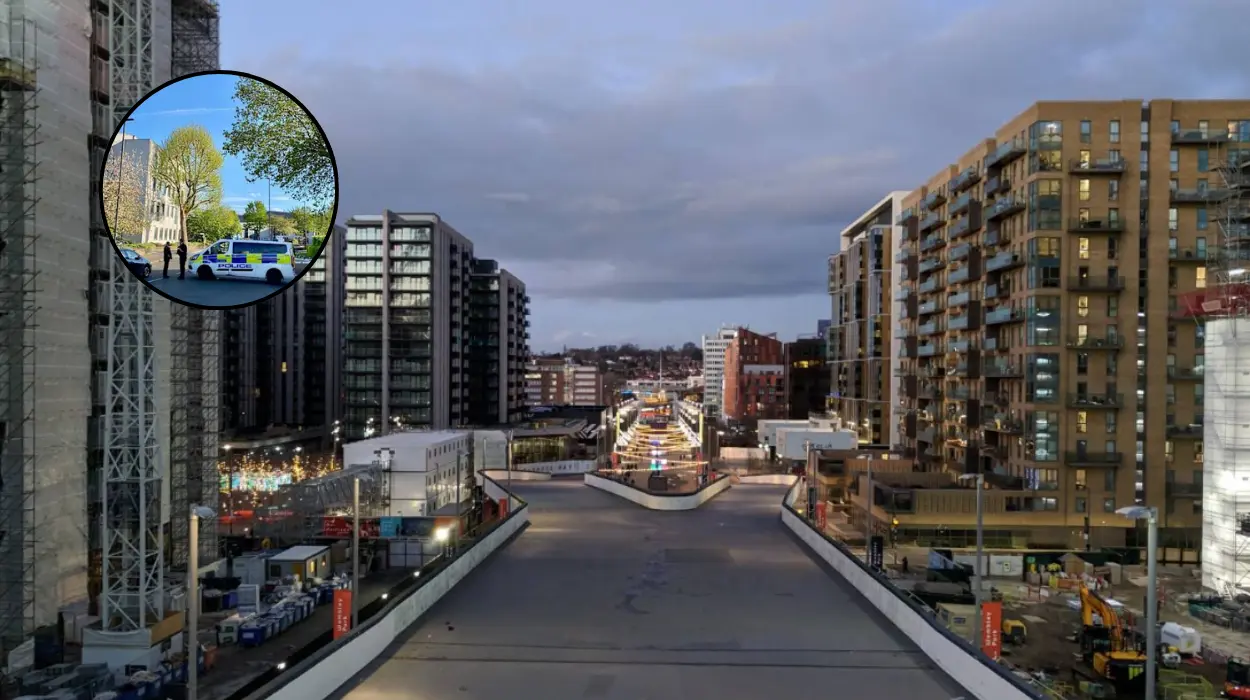
- The incident occurred around 8:30 pm BST on Wednesday, 15 April 2026, at the Park Royal / Wembley site of Volant Media.
- A container was thrown towards the Volant Media building but landed in a car park, where the flames quickly self‑extinguished; no one was injured and only minor fire damage resulted.
- Those charged include a 16‑year‑old boy and two men, aged 19 and 21, all of whom are British citizens.
- The Metropolitan Police have charged the three with arson with intent to endanger life; the 21‑year‑old also faces an additional charge of dangerous driving following a separate vehicle pursuit.
- Police have stated that the incident is not being treated as terrorism at this stage.
- The suspects appeared in court on Friday, 17 April 2026, with the case continuing through the criminal‑justice system.
Wembley (The Londoner News) April 17, 2026 –
- Key points
- What happened at the Volant Media offices?
- Who has been charged and what are the exact charges?
- Is the incident being treated as terrorism?
- How did the police respond and what did they recover?
- How has the media organisation reacted?
- What has the legal and political reaction been?
- What happens next in the case?
- Background of the development
- Prediction: How this development could affect stakeholders
Wembley, in north‑west London, has become the focus of a criminal investigation after three people were charged over an attempted arson attack on the offices of a Persian‑language media organisation, Volant Media. The incident unfolded on Wednesday evening, 15 April 2026, when a container was thrown towards the building in Park Royal, but fell into a nearby car park and extinguished itself, leaving no serious injuries and only minor fire effects. The Metropolitan Police have now placed the three suspects before the courts, underscoring the seriousness with which authorities are treating the targeting of a media outlet.
What happened at the Volant Media offices?
On the evening of 15 April 2026, at around 8:30 pm BST, an ignited container was hurled at the premises belonging to Volant Media in the Park Royal / Wembley area. According to the Metropolitan Police, the object did not strike the building directly but landed in a car park, where the flames quickly burned out and caused only limited damage. No staff or members of the public were hurt, and fire services did not have to escalate the response beyond basic checks.
Speaking to reporters, a Metropolitan Police spokesperson, as paraphrased by outlets including the BBC and Al Jazeera, said officers treated the matter as a serious criminal offence rather than a simple nuisance, given the deliberate targeting of a working media office. The police added that the vehicle linked to the suspects had fled the scene, prompting a pursuit that later led to a crash in north London.
Who has been charged and what are the exact charges?
The Metropolitan Police confirmed that three individuals have been charged with arson with intent to endanger life. Those facing charges include a 16‑year‑old boy and two men, aged 19 and 21. All three are identified as British citizens, with no indication yet that they came from outside the UK.
As reported by correspondents for the BBC and Al Jazeera, the 21‑year‑old man, named by some outlets as Oisin McGuinness, is also charged with dangerous driving in connection with the vehicle pursuit that followed the attack. The youth and the 19‑year‑old man are alleged to have been involved in the act of throwing the container at the Volant Media premises.
The suspects were first arrested on suspicion of arson endangering life and have since progressed from a police‑custody phase to formal charges and court appearance. On Friday, 17 April 2026, the three were brought before magistrates in London, according to court‑watch coverage relayed by national and international media.
Is the incident being treated as terrorism?
Asked about the nature of the crime, the Metropolitan Police told several outlets that the case is not, at this stage, being treated as terrorism. A senior police source, quoted or paraphrased by coverage in outlets such as The Standard and Al Jazeera, said investigators were treating the matter as a hate‑motivated or politically sensitive crime, but had not yet classified it under the terrorism‑related offences category.
The emphasis on non‑terrorism classification has been noted by correspondents at the BBC and Al Jazeera, who reported that counter‑terrorism units were notified but were not taking the lead on the investigation. Commentators and legal‑affairs journalists have observed that this distinction may influence how the case is framed in future court proceedings and in public‑safety announcements.
How did the police respond and what did they recover?
Metropolitan Police officers carried out “urgent enquiries” immediately after the incident, piecing together CCTV footage and witness accounts to trace the vehicle used by the suspects. As described by The Standard, an armed‑response vehicle (ARV) located a black SUV linked to the attack, which led to a short pursuit when the vehicle failed to stop. The SUV later crashed on Ballards Lane near the junction with Woodberry Gardens in north London, after which the three individuals were arrested nearby.
Officers recovered the container and related evidence from the car‑park area, and the building was inspected for further signs of incendiary devices or damage. Fire investigators, working alongside police, confirmed that the object had burned itself out without spreading to nearby structures.
How has the media organisation reacted?
Volant Media, which operates Persian‑language news and digital content from its north‑west London offices, has not issued a detailed public statement through major outlets, but colleagues and associates have privately expressed concern. Several journalists familiar with the outlet, speaking to Al Jazeera and BBC reporters, have highlighted that hosting a Persian‑language operation in London often places such outlets at the intersection of political tensions involving Iran and the diaspora.
Commentators at the Washington Post and Al Jazeera have noted that other Persian‑language media outlets in Europe have previously reported threats or harassment, though they caution against drawing direct parallels without evidence tying those cases to the arrestees in Wembley. Staff at similar outlets have told reporters that Wednesday’s incident has prompted internal reviews of security measures around their own offices.
What has the legal and political reaction been?
Legal analysts and city‑hall commentators have pointed out that charging three people with arson with intent to endanger life signals that prosecutors are treating the attack as a high‑risk crime, even though casualties were avoided. As noted by coverage in The Standard and Al Jazeera, the threshold for “arson with intent to endanger life” requires that the act be reasonably capable of causing death or serious injury, not merely property damage.
Politicians from various parties have issued short statements, as reported by UK‑based outlets, warning that attacks on media offices of any kind are unacceptable in a democratic society. Some opposition figures, speaking to Al Jazeera, have urged the government and police to “transparently” set out whether any political or ethnic motive is under investigation, while stopping short of prejudging the case.
What happens next in the case?
The suspects are expected to remain in custody or under bail conditions while the case proceeds through the magistrates’ and, likely, crown‑court system. Court‑reporting journalists for outlets such as the BBC and The Standard have indicated that further hearings will set timetables for disclosure of evidence, potential witness testimony, and any pre‑trial hearings on issues such as motive or hate‑crime enhancements.
Prosecutors, as outlined by legal correspondents, may later seek to prove that the attack was directed at a media outlet because of its content or political stance, which could influence sentencing even if the terrorism label is retained or dropped. Until then, the Metropolitan Police have reiterated that the investigation remains ongoing and have asked members of the public to come forward with any additional CCTV or dash‑cam footage from the Park Royal and Wembley corridors on the evening of 15 April.
Background of the development
The attempted arson on Volant Media’s offices must be understood in the context of rising concerns about safety for diaspora‑based media organisations across Europe. Persian‑language outlets in London, Paris, and elsewhere have previously reported receiving online threats, surveillance‑like behaviour around their offices, and occasional physical incidents, though many of these have not led to arrests.
In the UK, recent years have seen several high‑profile cases involving attacks on religious or cultural centres, prompting police and lawmakers to scrutinise the link between hate‑targeted violence and the targeting of minority‑language institutions. Media‑safety groups, such as those cited by Al Jazeera and the BBC, have argued that media outlets serving minority communities require similar protection to those serving larger, mainstream audiences.
Volant Media, like other Persian‑language broadcasters and digital platforms in the UK, operates in a space where its content can attract attention from both domestic and foreign actors with differing political agendas. Commentators have noted that such outlets often straddle debates over freedom of expression, diaspora politics, and relations between the UK and Iran, which has periodically criticised Persian‑language broadcasters it views as oppositional.
Security and policing‑sector reporters have also pointed out that London’s Metropolitan Police have, over the past five years, sharpened their focus on “media‑related” crimes, including harassment of journalists and attacks on media premises, sometimes in cooperation with the UK’s media‑regulatory and press‑freedom bodies. The Wembley case is therefore being watched as a test of how seriously such offences are treated when no one is physically hurt.
Prediction: How this development could affect stakeholders
For Persian‑language media outlets and other diaspora‑based news organisations, the Wembley attempted arson may translate into tighter security protocols and more formal requests for police liaison. Journalists and producers at similar outlets have told correspondents that they may now be more likely to install or upgrade CCTV, request patrols near their offices, and report low‑level threats earlier, even if they would previously have treated them as routine.
For the wider community of Persian‑language speakers in the UK, the case may heighten awareness of the risks facing media voices that cover sensitive political topics. Some commentators have warned that an increase in visible security around such outlets could also be perceived as intimidation by segments of the audience, potentially deepening perceptions of division or surveillance. At the same time, civil‑society groups focused on press freedom and minority rights may use the case to lobby for clearer legal protections and faster responses to threats against non‑mainstream media outlets.
In the criminal‑justice sphere, legal analysts suggest that the outcome of this case could influence how future arson‑style attacks on media premises are framed in court, particularly with regard to intent and hate‑crime considerations. If prosecutors successfully show that the target was chosen specifically because it was a Persian‑language media office, the verdict may set a precedent for enhancing sentences in similar, ideologically charged cases.
For the Metropolitan Police and national‑security actors, the case is likely to feature in internal reviews of how to respond to politically sensitive but non‑terrorism‑designated incidents. Police‑watch commentators have noted that the public’s trust in how such attacks are handled will depend on transparency about motive, without pre‑judging the defendants, and on consistent treatment of attacks on all media outlets regardless of language or audience.