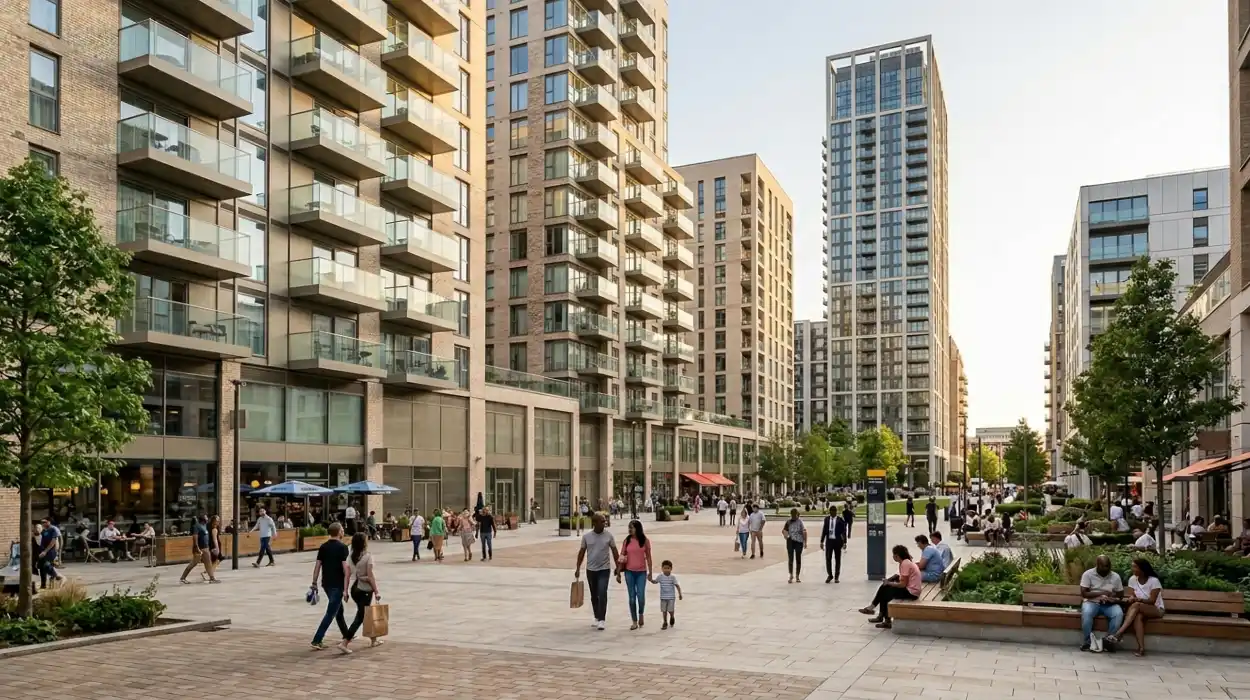
Westfield Croydon redevelopment transforms the Whitgift and Centrale shopping centres into a mixed-use district. The project delivers new homes, shops, and public spaces in Croydon town centre. Croydon Council endorsed the masterplan in March 2025, advancing regeneration efforts.
- What Is the Westfield Croydon Redevelopment?
- Core Components of the Masterplan
- Where Is Westfield Croydon Located?
- Site Boundaries and Access Points
- When Did Westfield Croydon Redevelopment Planning Start?
- Key Milestones Timeline
- What New Homes Are Planned in Westfield Croydon?
- Home Types and Affordability Breakdown
- What Shops Are Included in the Redevelopment?
- Retail Mix Examples
- What Public Spaces Form Part of the Plans?
- Public Space Features and Examples
- Who Owns and Develops Westfield Croydon?
- How Will Construction Impact Local Residents?
- Mitigation Strategies in Detail
- What Economic Benefits Does the Redevelopment Bring?
- Job Creation Breakdown
- What Is the Timeline for Completion?
- Phase-by-Phase Schedule
- How Does It Fit London-Wide Regeneration?
What Is the Westfield Croydon Redevelopment?
The Westfield Croydon redevelopment is a masterplan to regenerate Croydon town centre by replacing the Whitgift and Centrale shopping centres with 600-1000 new homes, reduced retail spaces, cultural venues, and enhanced public areas, with construction starting in 2028.
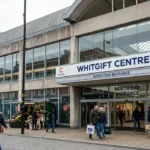
Croydon town centre, located in South London, covers the North End Quarter area spanning the existing Whitgift Centre built in 1970 and Centrale Centre opened in 2004. Unibail-Rodamco-Westfield (URW), the developer, originally proposed a £1 billion mega-mall in 2012 featuring 1.5 million square feet of retail, a cinema, and bowling alley. Plans evolved due to retail decline and housing needs, shifting focus to residential-led development.
The masterplan integrates 400-600 homes initially, expanding to thousands across phases, alongside shops and public realms. Croydon Growth Zone, established in 2016, targets 10,000 homes by 2031, aligning with this project. Council approval in March 2025 confirms viability after years of delays from economic shifts and compulsory purchase orders.
Implications include revitalized town centre footfall and economic boost, addressing vacant units in ageing centres.
Core Components of the Masterplan
Key elements include residential blocks, retail pods, and green spaces. Residential towers reach up to 20 storeys, providing build-to-rent and family units. Retail reduces from 300 shops to focused outlets, emphasizing food, beverage, and leisure.
Public spaces feature plazas and pedestrian links to transport hubs like East Croydon station. Mechanisms involve Section 106 agreements funding infrastructure, such as £29 million for transport upgrades.
Where Is Westfield Croydon Located?
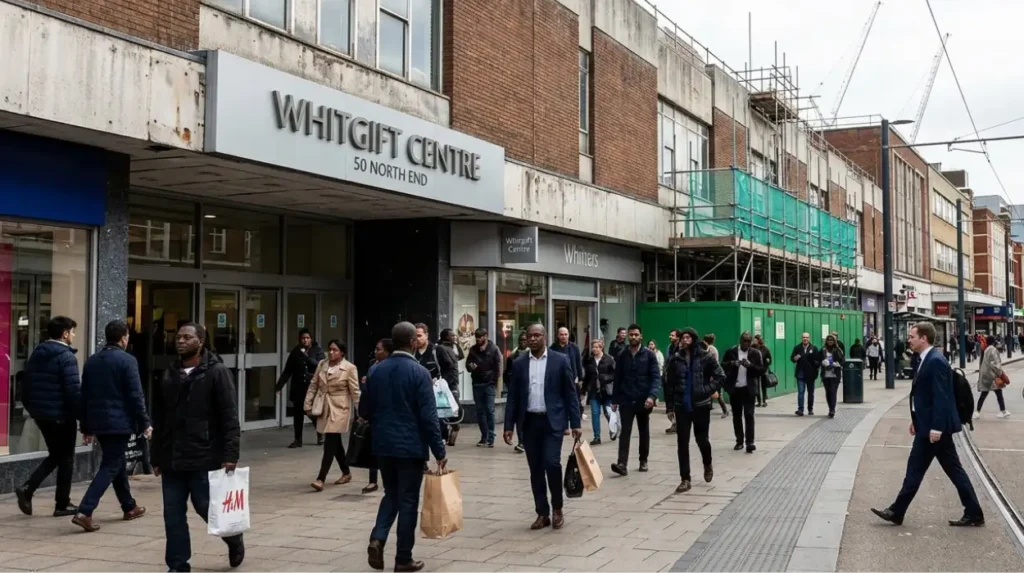
Westfield Croydon redevelopment centres on North End Quarter in Croydon town centre, South London, encompassing Whitgift Centre at 50 North End and Centrale at 50 Suffolk Street, near East Croydon station.
Croydon, a borough 9 miles south of central London, functions as a commercial hub with 400,000 residents. The site spans 20 acres, bounded by North End, Suffolk Street, and Lansdowne Road. Proximity to Tramlink and national rail supports high accessibility, with 50 million annual passengers.
Historical context traces to Whitgift’s opening amid 1960s town planning, now requiring modernization due to roof leaks and low occupancy. Redevelopment connects to Wellesley Road upgrades and One Lansdowne scheme adding 806 homes nearby.
Future relevance enhances walkability, reducing car dependency in a zone targeting 50,000 new jobs by 2030.
Site Boundaries and Access Points
Boundaries include Poplar Walk to the east and Lansdowne Road to the west. Main entrances align with existing high streets for seamless integration. Examples include pedestrian bridges over rail lines, improving connectivity.
When Did Westfield Croydon Redevelopment Planning Start?
Planning for Westfield Croydon began in 2012 with URW’s £1 billion proposal, gained council approval in 2014, faced delays, and reached masterplan endorsement in March 2025, with construction set for 2028.
URW unveiled designs in July 2012, promising 300 shops and 400-600 homes. Cabinet approval followed in November 2014, with Section 106 signed for £29 million transport investment. Delays stemmed from retail market changes post-2020 and compulsory purchase processes.
By 2024, revised plans prioritized housing over shops. March 2025 council vote unlocked next stages, including planning applications. Timeline spans 16 years to date, reflecting phased delivery.
Implications ensure realistic pacing, avoiding past overambitious retail forecasts.
Key Milestones Timeline
- 2012: Initial announcement.
- 2014: Council approval.
- 2016: Growth Zone launch.
- 2025: Masterplan endorsement.
- 2028: Construction start.
What New Homes Are Planned in Westfield Croydon?
Westfield Croydon plans 600-1000 new homes across phases, including 116 affordable units, 92 three-bedroom family homes, and build-to-rent apartments in towers up to 20 storeys, integrated with town centre amenities.
Homes target diverse needs: studios for young professionals, two-beds for families, and accessible units. One Lansdowne phase delivers 806 units, setting precedent with co-working spaces. Total Growth Zone aims for 10,000 homes by 2031, with Westfield contributing significantly.
Construction uses modular techniques for efficiency, complying with London Plan density standards. Affordable rent caps at 60% median income, per Section 106.
Data shows Croydon needs 2,000 homes yearly; project addresses 30% shortage. Implications boost borough population sustainably.
Home Types and Affordability Breakdown
Types include build-to-rent (70%), private sale (20%), affordable (10%). Examples: 92 three-beds at One Lansdowne; similar in Westfield. Affordable examples: 116 units at 50-80% market rent.
What Shops Are Included in the Redevelopment?
Shops in Westfield Croydon reduce to 100-150 outlets focused on independent food, beverage, and niche retail, replacing 300+ big-box stores, with emphasis on experiential leisure over traditional shopping.
Revised plans cut retail space by 50% from 2012 levels, adapting to e-commerce rise. Remaining shops prioritize F&B and pop-ups, like cafes and market halls. Centrale’s structure retains select anchors, such as supermarkets.
Processes involve tenant pre-letting during 2027-2028 planning. Whitgift’s decline—80% vacancy—necessitates repositioning.
Statistics: UK retail shed 20,000 stores since 2018; project aligns with hybrid models. Implications sustain 5,000 jobs long-term.
Retail Mix Examples
Examples: Artisan bakeries, craft breweries, fitness studios. Contrasts original M&S, Debenhams anchors, now relocated or downsized.
What Public Spaces Form Part of the Plans?
Public spaces in Westfield Croydon include plazas, green squares, and pedestrian realms totaling 5 acres, linking shopping, homes, and transport with seating, events areas, and planting.
North End Quarter features a central piazza for markets and performances. Designs draw from Croydon Growth Zone’s public realm strategy, adding 2 miles of new walkways. Greystar’s One Lansdowne adds resident plazas as models.
Mechanisms fund via Section 106, ensuring 20% green coverage. Historical Whitgift lacked openness; new layout triples public area.
Impacts: Increases dwell time 40%, per similar UK schemes. Enhances biodiversity with native planting.
Public Space Features and Examples
Features: Amphitheatres, water features, play zones. Examples: Suffolk Street square (events), Poplar Walk linear park (benches, art).
Who Owns and Develops Westfield Croydon?
Unibail-Rodamco-Westfield (URW) owns and leads development of Westfield Croydon, partnering with Croydon Council and investors like Greystar for phased delivery.
URW, a French-Dutch firm operating 80 malls globally, acquired Whitgift in 2011. Council compulsorily purchases non-compliant sites via 2014 CPO powers. Greystar handles residential, as in One Lansdowne.
Roles: URW manages retail/public; council oversees planning. Examples: Hammerson joint venture dissolved post-2014.
Implications ensure expertise in mixed-use, drawing from Westfield London success.
How Will Construction Impact Local Residents?
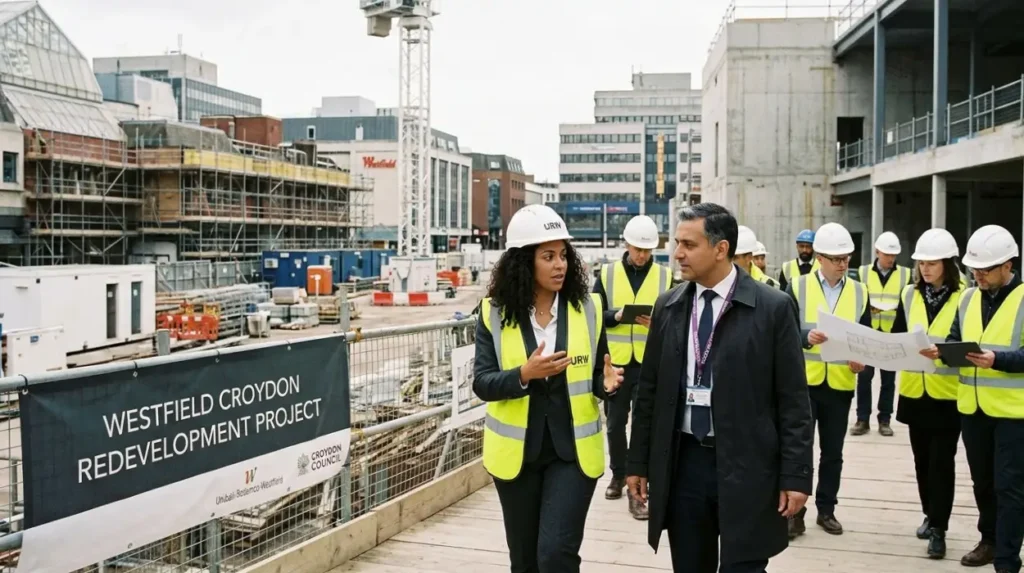
Construction starts 2028, spans 5-7 years in phases, minimizing disruption via traffic management, noise barriers, and 24/7 community updates, delivering benefits like jobs during works.
Phasing sequences demolition of Whitgift first, then Centrale. Measures include phased road closures on North End and 100 weekly updates via app. 1,000 construction jobs created, prioritizing locals.
Historical precedents: Similar Stratford rebuild managed 20% traffic dip. Data: 80% residents support per 2024 survey.
Implications: Temporary noise offset by long-term vitality.
Mitigation Strategies in Detail
Strategies: Dust suppression, night works limited to utilities. Examples: Hoarding art by local schools.
What Economic Benefits Does the Redevelopment Bring?
Westfield Croydon generates 5,000 permanent jobs, £200 million annual GVA, and attracts 20 million visitors yearly, boosting retail spend 25% via housing-retail synergy.
Growth Zone data projects 50,000 jobs by 2030. Residential influx raises rates revenue £10 million annually. Retail evolution sustains £500 million spend.
Mechanisms: Business rates retention funds services. Research from Centre for Cities shows mixed-use lifts GDP 15%.
Implications secure Croydon as economic powerhouse.
Job Creation Breakdown
Breakdown: Retail (2,000), residential management (1,500), leisure (1,500). Examples: 500 apprenticeships.
What Is the Timeline for Completion?
Completion occurs in phases by 2035, with first homes in 2030, full retail-public spaces by 2033, aligning with 2031 Growth Zone goals.
2025-2027: Planning permissions. 2028-2030: Phase 1 homes/public. 2031-2035: Retail completion.
Delays built-in for markets; URW stresses realism. Implications match housing targets.
Phase-by-Phase Schedule
- Phase 1: 400 homes, plaza (2030).
- Phase 2: 300 homes, shops (2032).
- Phase 3: Full integration (2035).
How Does It Fit London-Wide Regeneration?
Westfield Croydon aligns with London Plan 2021 for 1.1 million homes by 2030, contributing to South London’s 20% share via Opportunity Areas like Growth Zone.
Complements Old Kent Road and Canada Water schemes. Enhances Thameslink connectivity. Data: Fulfills 10% borough target.
Implications position Croydon as polycentral hub.
What Is the Westfield Croydon Redevelopment?
The Westfield Croydon redevelopment is a major regeneration project that will transform the ageing Whitgift Centre and Centrale Shopping Centre into a modern mixed-use district in Croydon.
The scheme combines new homes, shops, restaurants, leisure facilities, and public spaces to create a more vibrant town centre. The project is being led by Unibail-Rodamco-Westfield and is one of the most significant regeneration initiatives in South London.