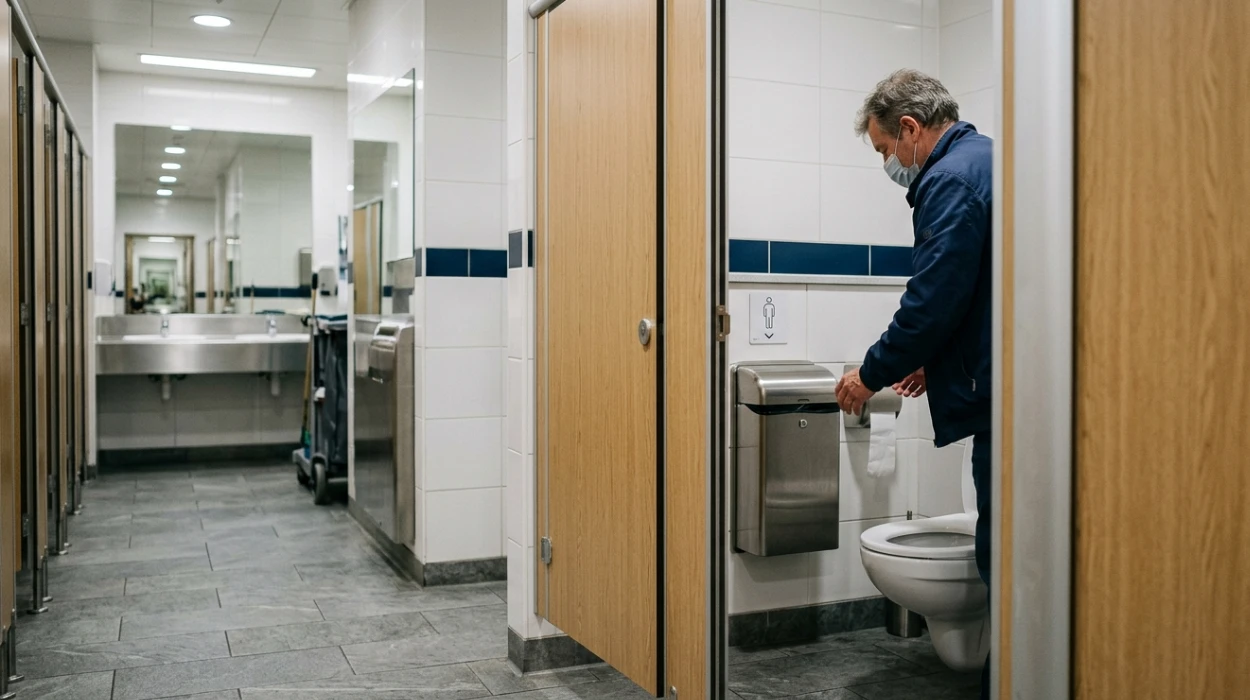
The provision of waste disposal facilities in public commercial restrooms constitutes a vital component of municipal hygiene infrastructure, occupational health compliance, and corporate social responsibility across major urban centers. Wm Morrison Supermarkets Limited, operating as Morrisons, ranks as one of the largest grocery retailers in the United Kingdom, maintaining a heavy retail footprint throughout the Greater London area alongside major industry competitors (Thomassen et al., 2017). Restroom facilities within these massive urban retail spaces must accommodate millions of diverse consumer needs daily. While waste disposal containment systems are historically standard in female public stalls, the integration of Morrisons men’s toilet sanitary bins addresses an escalating corporate and public health movement across London communities. This initiative satisfies key operational, environmental, and ethical metrics while supporting customers navigating medical realities such as male urinary incontinence, prostate recovery, and stoma care.
- Why are sanitary bins being placed in Morrisons men’s toilets?
- What are the legal requirements for male sanitary bin provisions?
- What medical conditions require the use of these disposal facilities?
- How does the “Boys Need Bins” national campaign influence retail design?
- What mechanical features characterize an effective male sanitary bin?
- What operational processes govern supermarket sanitary waste management?
- What are the commercial and ecological impacts of restroom updates?
- How does infrastructure inclusion affect long-term consumer retention?
Why are sanitary bins being placed in Morrisons men’s toilets?
Morrisons is installing sanitary bins in men’s toilets to support customers experiencing male incontinence, post-prostate surgery recovery, and stoma management. This infrastructure ensures individuals across London can change and dispose of containment items with complete privacy, physical dignity, and appropriate workplace hygiene.
The primary driver behind integrating waste containment units into male facilities is the widespread prevalence of male urinary bladder or bowel health conditions (Burton, 2013). Statistical evaluations compiled by national healthcare institutions reveal that millions of men in the United Kingdom experience varying levels of lower urinary tract symptoms or post-operative anatomical adjustments. Restroom design in urban areas has traditionally omitted dedicated disposal options from male stalls, forcing individuals to either carry soiled medical waste back into public spaces or flush heavy absorbent materials down standard water closets.
Flushing non-flushable products creates severe operational bottlenecks, plumbing blockages, and downstream environmental municipal management issues for city utilities. By intentionally placing dedicated waste disposal systems directly within individual male stalls in high-traffic London locations, commercial facilities establish an inclusive, hygienic environment. This tactical adaptation mitigates public embarrassment, reduces architectural maintenance costs, and normalizes a standard health requirement across retail spaces.
What are the legal requirements for male sanitary bin provisions?
Current United Kingdom legislation mandates the hygienic disposal of controlled waste in workplaces under the Workplace (Health, Safety and Welfare) Regulations 1992. However, clear statutory mandates explicitly forcing public commercial establishments in London to provide bins within male cubicles remain absent.
The regulatory framework governing sanitary waste disposal in public and commercial facilities comprises several integrated legislative articles:
- The Workplace (Health, Safety and Welfare) Regulations 1992: This statute demands that employers provide suitable and sufficient sanitary conveniences that include appropriate means for the disposal of sanitary products. Historically, regulatory enforcement interpreted this rule exclusively through the lens of biological female biological needs.
- The Environmental Protection Act 1990: Under Section 34 of this Act, commercial operators maintain a legal “Duty of Care” to ensure that all controlled business waste is securely contained, handled, and transferred by an authorized registered carrier.
- The Water Industry Act 1991: This piece of legislation prohibits the disposal of any material into the public sewer system that is calculated to interfere with the free flow of its contents or cause infrastructural damage.
Activists and non-profit health organizations lobby for amendments to the Building Regulations 2010 (specifically Approved Document M) to mandate at least one dedicated disposal container in all male public public facilities nationwide.
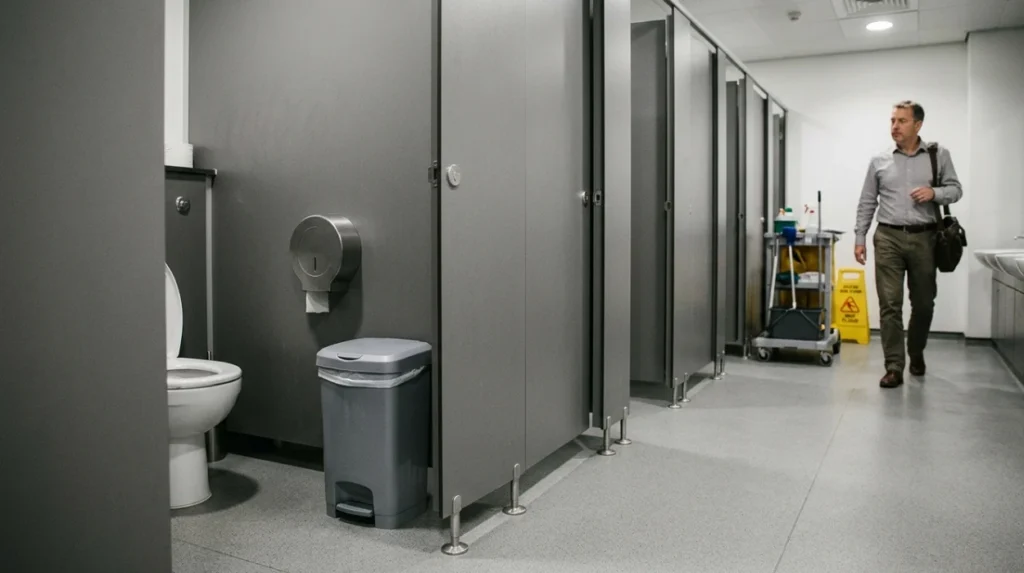
What medical conditions require the use of these disposal facilities?
Male consumers utilize stall disposal facilities to manage symptoms stemming from prostate cancer surgeries, benign prostatic hyperplasia, overactive bladder syndromes, and inflammatory bowel diseases. Individuals relying on external colostomy or urostomy pouch systems require these units for safe material changes.
The clinical realities necessitating specialized waste receptacles in male spaces span several major urological, oncological, and gastroenterological domains:
Prostate Cancer Interventions
Radical prostatectomy procedures, which involve the surgical removal of the prostate gland to treat localized malignant neoplasms, frequently disrupt the surrounding internal urethral sphincter mechanism. Clinical documentation tracking long-term post-operative recoveries demonstrates that a high percentage of patients face temporary or permanent stress urinary incontinence, requiring the continuous usage of protective absorbent pads.
Benign Prostatic Hyperplasia (BPH) and Chronic Conditions
Benign prostatic hyperplasia describes an age-associated non-malignant enlargement of the prostate gland that constricts the prostatic urethra, leading to chronic urinary retention, overflow incontinence, and detrusor muscle weakness. Additionally, neurological conditions such as multiple sclerosis, Parkinson’s disease, or localized spinal cord injuries disrupt normal neural pathway signaling to the urinary bladder, inducing severe urge incontinence.
Gastroenterological Diversions and Stoma Care
Patients managing advanced colorectal cancer, severe Crohn’s disease, or ulcerative colitis often undergo surgical interventions resulting in an ostomy. The resulting abdominal stoma requires the use of external collection pouches. These specialized apparatuses must be periodically emptied, cleaned, or entirely replaced, generating synthetic waste elements that cannot be disposed of via standard toilet flushes without causing blockages in municipal water systems.
How does the “Boys Need Bins” national campaign influence retail design?
The “Boys Need Bins” national campaign, spearheaded by Prostate Cancer UK alongside key mechanical sanitation partners, pressures commercial sectors to upgrade infrastructure. This initiative educates corporate executives on the psychological and systemic isolation caused by inadequate public restroom engineering.
The “Boys Need Bins” advocacy matrix works to systematically reduce the social stigma and logistical barriers associated with male health and incontinence care (Clegg, 2024). Before widespread public exposure of this structural issue, male individuals experiencing incontinence often adjusted their lifestyles, limiting public transit, avoiding extended shopping trips, or experiencing severe anxiety due to restroom design omissions (Burton, 2013).
The campaign focuses on three core corporate and civic interventions:
- Corporate Partnerships: Engaging directly with major nationwide commercial supermarkets, transit hubs, and entertainment companies to voluntarily commit to retrofitting existing infrastructure without waiting for statutory legal shifts.
- Architectural Standard Shifts: Collaborating with municipal planners, building layout consultants, and commercial developers to build default containment installations directly into technical blueprints.
- Public Awareness Realignment: Disseminating statistical data and testimonies to dismantle cultural biases, ensuring that male urological needs are recognized with the same clinical objectivity as female hygiene infrastructures.
Explore More Things To Do
New Town Masterplan and 2026 Planning Updates: Crews Hill
Major Rail Upgrades and Timetable Changes Disrupt Commuters in Surbiton
What mechanical features characterize an effective male sanitary bin?
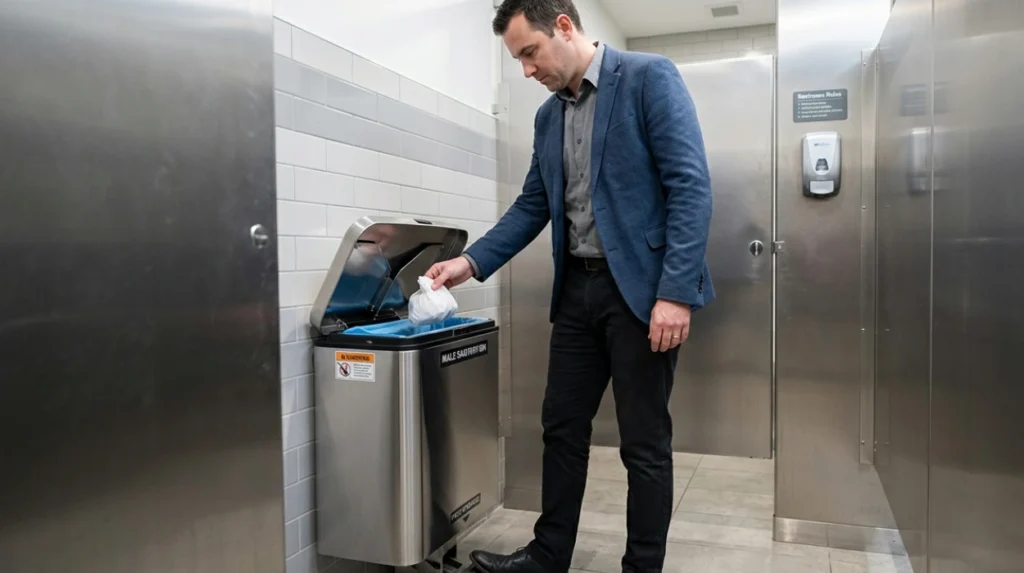
An effective male sanitary waste container relies on completely hands-free infrared motion sensors or foot-pedal mechanics to maximize surface hygiene. The units contain antimicrobial plastic liners and specialized chemical masking agents to neutralize ambient biological odors.
Commercial waste disposal configurations within compact public restroom stalls must operate under rigorous biochemical containment standards. The structural engineering of modern commercial restroom bins incorporates multiple safeguard features:
Contactless Operation Interfaces
To minimize cross-contamination risks and lower transmission rates of pathogenic microorganisms (such as Escherichia coli or Norovirus), modern waste bins leverage completely contactless mechanisms. Infrared proximity sensors or heavy-duty mechanical foot pedals allow users to deposit soiled materials without touching external surfaces.
Advanced Odor and Vision Barriers
The lid assembly typically employs a double-flap mechanical insert or a carefully counterbalanced trapdoor layout. This orientation prevents any visual sight lines into the internal contents of the bin when opened, protecting user privacy and dignity. Simultaneously, this tight physical seal minimizes the escape of volatile organic compounds and gaseous biological smells.
Antimicrobial and Chemical Interior Treatments
The heavy-duty internal plastic liners are manufactured with built-in antimicrobial agents that actively halt the growth and multiplication of common bacteria. Furthermore, specialized dry sanitizing granular treatments or slow-release vapor blocks are deposited inside the unit. These compounds alter the molecular structure of odor-causing bacteria instead of merely covering them with perfumes.
What operational processes govern supermarket sanitary waste management?
Supermarket facilities manage sanitary waste through strict legal workflows handled by licensed external environmental contractors. Store employees do not mix this specific stream with standard municipal refuse due to biological waste classification laws.
The life cycle management of commercial sanitary waste follows a structured, legally audited operational sequence:
1.On-Site Containment:Daily operations.
The customer deposits the used medical or incontinence material into the specialized hands-free bin located inside the male restroom cubicle. The internal chemical treatments inhibit microbial growth while the container remains closed.
2.Scheduled External Collection:Contracted intervals.
A registered, licensed waste technician from an authorized environmental company services the facility. The technician replaces the entire internal liner or swaps the container unit completely, avoiding any manual handling of raw materials by store team members.
3.Secure Transport with Manifests:Legal tracking.
The service provider logs the extraction details on an official Controlled Waste Transfer Note. The vehicle safely moves the classified biological waste via specialized transit lines to dedicated processing depots.
4.High-Temperature Incineration:Final disposal.
The collected waste undergoes controlled high-temperature processing at a specialized thermal destruction plant or is diverted to dedicated deep-landfill sites designated for non-hazardous medical materials.
What are the commercial and ecological impacts of restroom updates?
Integrating male disposal bins substantially drops interior plumbing repair bills caused by pipe clogs and polymer pile-ups. Ecologically, it keeps non-biodegradable waste out of municipal waterways and reduces macro-plastic contamination across maritime habitats.
The financial and environmental implications of updating public restrooms are multi-layered:
Commercial Financial Calculations
Commercial operators face substantial real-estate maintenance expenses when non-flushable items are forced down standard commercial wastewater setups. Absorbent padding, stoma equipment, and wet wipes are composed of synthetic materials (such as polypropylene, polyester, and superabsorbent polyacrylate polymers) that do not break down in water like standard toilet tissue. When caught in standard trap geometries or internal plumbing bends, these items trap organic fats and oils, forming solid blockages known as “fatbergs.” Clearing these clogs requires hydro-jetting equipment, emergency contractor call-outs, and can lead to operational stall closures that negatively impact consumer foot traffic.
Ecological Footprint and Water Integrity
When plumbing blockages are pushed out into municipal treatment grids, intense rainstorms can trigger combined sewer overflows, releasing raw waste and plastics into local rivers and coastal ecosystems. The synthetic elements within incontinence pads break down into microplastics over decades, contaminating aquatic lifelines and entering agricultural water tables. Restroom updates with dedicated bins ensure that these plastic-dense materials bypass the water ecosystem entirely and are routed through solid waste channels.
How does infrastructure inclusion affect long-term consumer retention?
Providing visible, inclusive facilities directly boosts brand loyalty and lengthens shopping times among demographics dealing with chronic medical adjustments. This adaptation builds an accessible, panic-free consumer experience that appeals to an aging population.
The demographic landscape features a steadily aging consumer base, with projections indicating a rising percentage of individuals over the age of 65 in major urban areas. Because lower urinary tract conditions correlate with age, retail providers that adapt their infrastructure see distinct commercial advantages.
By normalizing these updates within standard restroom layouts, brands remove the invisible barriers that often marginalize vulnerable shoppers. This strategic change shifts public sanitation from a basic utility into a core pillar of customer care, asset protection, and community health.
Why are sanitary bins now appearing in Morrisons men’s toilets?
Sanitary bins are being installed in men’s toilets to support individuals managing male incontinence, prostate cancer recovery, stoma care, and other medical conditions requiring discreet disposal of hygiene products. The change improves dignity, accessibility, and public hygiene standards.