London is internationally recognised for its royal parks, grand squares, and famous green spaces. Yet beyond these celebrated landscapes lies another side of the capital: a remarkable collection of hidden gardens that preserve centuries of history, architecture, horticulture, and biodiversity. These secluded spaces were created by monasteries, aristocratic families, charitable institutions, local communities, and conservation organisations. Today they provide peaceful walking routes while protecting rare plants, historic monuments, and fragments of London’s evolving urban landscape.
- Why are London’s secret gardens historically significant?
- Which hidden gardens offer the most peaceful walks in London?
- How did medieval and monastic gardens influence London’s hidden landscapes?
- What makes Chelsea Physic Garden one of London’s most important historic gardens?
- How do former churchyards preserve London’s social and cultural history?
- How have London’s secret gardens supported wildlife conservation?
- How did Victorian landscape design shape London’s hidden gardens?
- What role do community gardens play in preserving London’s heritage?
- How can visitors respectfully explore London’s hidden gardens?
Many of London’s secret gardens originated during the medieval period, expanded through Georgian and Victorian urban planning, and continue to thrive through modern conservation initiatives. Some remain enclosed behind historic walls, while others occupy former churchyards, forgotten courtyards, palace grounds, or riverside terraces. Together they demonstrate how green spaces have shaped London’s cultural identity across nearly one thousand years.
For visitors, historians, educators, and heritage enthusiasts, these gardens offer more than attractive scenery. They preserve evidence of London’s social history, changing landscape design, botanical collections, and architectural heritage. Their continued protection reflects the city’s long-standing commitment to balancing urban growth with environmental preservation.
Why are London’s secret gardens historically significant?
London’s secret gardens preserve centuries of urban history by protecting medieval landscapes, Victorian horticulture, historic churchyards, royal estates, and community green spaces. They illustrate how architecture, religion, social change, and conservation have shaped London’s environment while providing peaceful retreats within one of Europe’s largest cities.
Unlike London’s large public parks, many secret gardens originated as private spaces with specialised purposes. Medieval monasteries cultivated medicinal herbs and vegetables inside enclosed gardens. Wealthy landowners created ornamental landscapes beside their homes. Churches maintained quiet burial grounds planted with trees and flowers. Hospitals established therapeutic gardens for recovery and reflection.
During the nineteenth century, London’s rapid industrialisation dramatically increased demand for public green spaces. Reformers argued that gardens improved public health by reducing overcrowding and providing cleaner air. Numerous small gardens opened through charitable trusts, municipal authorities, and philanthropic organisations.
Following extensive bombing during the Second World War, several damaged sites were transformed into memorial gardens rather than redeveloped for housing or commercial use. These landscapes preserve memories of wartime destruction while creating places for quiet reflection.
Modern conservation organisations continue restoring historic gardens using archaeological evidence, historic maps, botanical records, and landscape plans. Their work ensures that many original design principles remain visible despite centuries of urban change.
Which hidden gardens offer the most peaceful walks in London?
Several hidden gardens combine historic significance with tranquil surroundings. Their enclosed layouts, mature trees, seasonal planting, historic architecture, and limited visitor numbers create peaceful walking environments that contrast with London’s busy streets while preserving important elements of the city’s heritage.
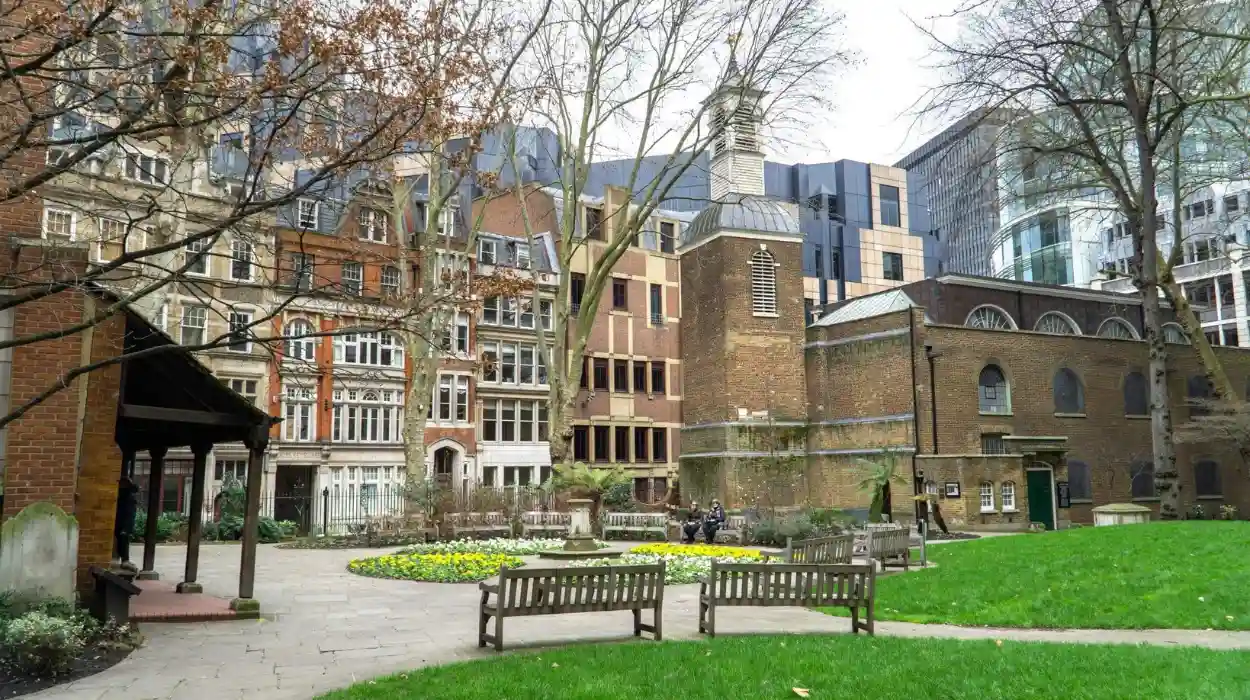
Among London’s finest secret gardens is St Dunstan in the East, where the ruins of a medieval church destroyed during the Blitz now support climbing plants, palms, and shaded pathways. Gothic stone walls blend naturally with vegetation, creating one of London’s most distinctive urban gardens.
Postman’s Park commemorates ordinary people who lost their lives while saving others. The famous Memorial to Heroic Self-Sacrifice contains dozens of hand-painted ceramic plaques installed from 1900 onwards. Mature trees and quiet seating make it one of central London’s most reflective public spaces.
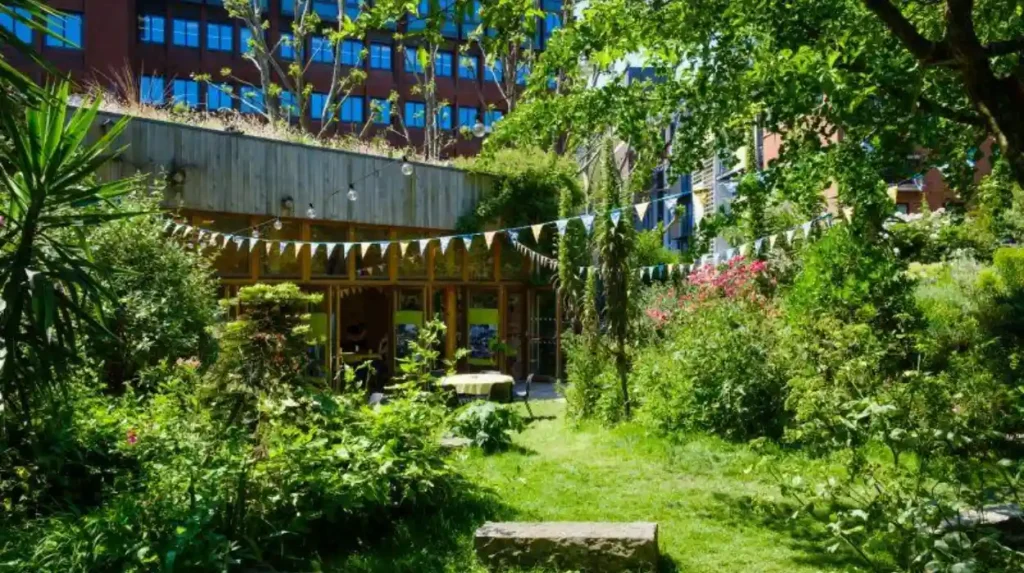
The Phoenix Garden, near Covent Garden, occupies land once threatened by commercial redevelopment. Community volunteers transformed the former construction site into a wildlife habitat supporting birds, insects, amphibians, and native plant species.
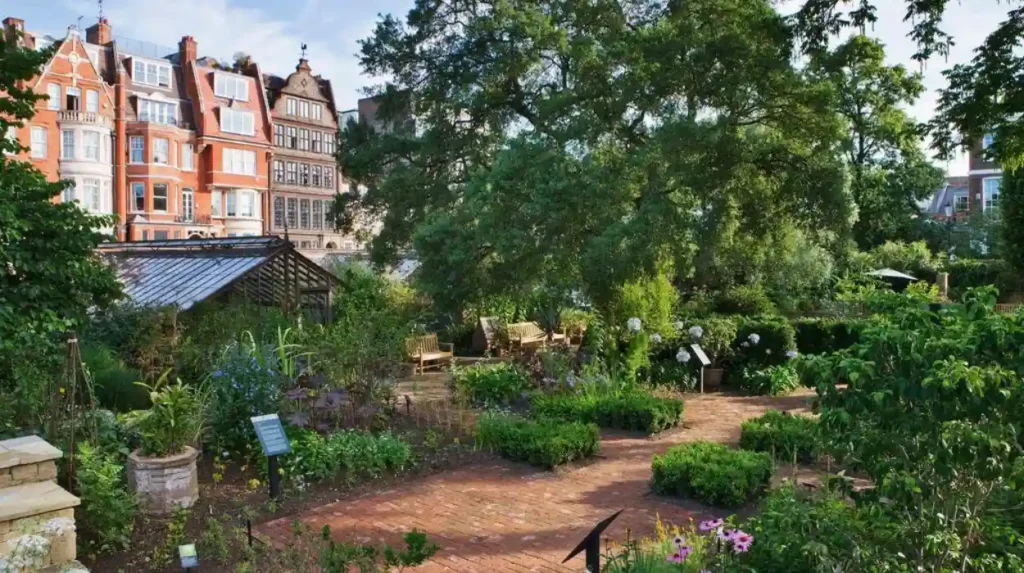
Chelsea Physic Garden, founded in 1673, remains one of Britain’s oldest botanical gardens. Originally established by the Worshipful Society of Apothecaries, it preserves thousands of medicinal, edible, and scientific plants collected from across the world.
These gardens demonstrate different aspects of London’s environmental history, ranging from medieval religious landscapes to twentieth-century community conservation.
To experience these historic landscapes in person today, consult our comprehensive [How London’s Skyline Changed Over Time Through Historic Growth and Modern Development] for itineraries and visiting parameters.
How did medieval and monastic gardens influence London’s hidden landscapes?
Medieval monasteries established enclosed gardens that supplied food, medicine, religious symbolism, and education. Their layout influenced later private gardens, institutional landscapes, and botanical collections while introducing organised horticultural practices that continued throughout London’s historical development.
Following the Norman Conquest in 1066, monasteries became major centres of agricultural and botanical knowledge. Religious communities cultivated herbs including sage, rosemary, fennel, lavender, mint, and thyme for medicinal treatments and daily cooking.
Monastic gardens usually followed carefully planned layouts. Separate sections contained medicinal herbs, vegetables, fruit trees, orchards, fish ponds, and contemplative cloisters. Stone walls protected valuable plants from livestock and harsh weather.
Many later London gardens adopted similar enclosed designs. High walls created sheltered microclimates that allowed delicate plants to flourish despite England’s cooler climate. These features remain visible in several surviving historic gardens.
Following the Dissolution of the Monasteries between 1536 and 1541 under King Henry VIII, many religious properties were converted into private estates. Their gardens evolved over subsequent centuries while retaining traces of medieval planning.
Archaeological excavations continue revealing evidence of former monastery gardens through pollen analysis, preserved seeds, soil layers, and historical documents, helping historians reconstruct London’s early horticultural traditions.
What makes Chelsea Physic Garden one of London’s most important historic gardens?
Chelsea Physic Garden represents more than three centuries of botanical science, medical education, and plant conservation. Its internationally significant collections document the development of pharmacology, horticulture, global exploration, and scientific research within Britain’s oldest surviving botanical institution.
Established in 1673 beside the River Thames, Chelsea Physic Garden trained apprentice apothecaries to identify medicinal plants accurately. Plant misidentification frequently resulted in ineffective or dangerous treatments, making botanical education essential.
The garden expanded during Britain’s period of overseas exploration. Botanists introduced species from North America, South America, Africa, Asia, and Australasia, allowing scientific comparison under controlled conditions.
Today the garden contains over 4,500 plant species representing medicinal, edible, economic, and conservation categories. Historic glasshouses support tropical collections, while protected outdoor areas benefit from unusually warm local conditions created by high brick walls and riverside geography.
Researchers continue studying plant adaptation, conservation genetics, and biodiversity using collections maintained for centuries. Educational programmes connect historical medicine with modern environmental science, demonstrating the continuing relevance of botanical research.
How do former churchyards preserve London’s social and cultural history?
Historic churchyard gardens conserve burial landscapes, memorial architecture, mature trees, and archaeological evidence spanning several centuries. They document London’s population growth, changing burial practices, religious traditions, and urban planning while providing peaceful public spaces for reflection.
Many London churchyards ceased accepting burials during the nineteenth century due to overcrowding and public health reforms. Rather than disappearing beneath redevelopment, numerous sites became public gardens.
Existing gravestones, boundary walls, memorials, and mature trees preserve valuable historical information about local communities. Inscriptions reveal occupations, family relationships, migration patterns, and changing artistic styles across generations.
Landscape architects introduced pathways, flower beds, and seating while preserving significant monuments. These adaptations transformed burial grounds into quiet urban sanctuaries without erasing their historical importance.
Several former churchyards also support remarkable biodiversity. Ancient yew trees, veteran oaks, lichens, mosses, fungi, and shade-loving plants thrive within undisturbed soils that have remained largely unchanged for centuries.
For genealogical researchers, these landscapes remain valuable historical resources that complement parish registers, census records, and municipal archives.
How have London’s secret gardens supported wildlife conservation?
Hidden gardens strengthen urban biodiversity by protecting native habitats, pollinators, birds, amphibians, insects, and rare plant species. Their ecological networks improve environmental resilience while demonstrating how historic landscapes contribute to modern conservation within densely populated cities.
Urban biodiversity has become increasingly important as London continues expanding. Small gardens act as ecological stepping stones connecting larger parks, rivers, canals, and nature reserves.
Native wildflowers support bees, butterflies, hoverflies, and other pollinating insects essential for healthy ecosystems. Mature trees provide nesting sites for birds including robins, wrens, tits, woodpeckers, and owls.
Ponds within secret gardens sustain frogs, newts, dragonflies, damselflies, and aquatic plants. Dead wood supports fungi and specialist insects rarely found in intensively managed urban landscapes.
Conservation organisations encourage sustainable management through reduced pesticide use, habitat restoration, native planting, rainwater harvesting, and careful monitoring of wildlife populations.
Scientific surveys consistently demonstrate that even relatively small urban gardens contribute significantly to regional biodiversity when managed using ecological principles.
How did Victorian landscape design shape London’s hidden gardens?
Victorian designers transformed London’s gardens through ornamental planting, public access, scientific horticulture, and municipal improvement programmes. Their innovations introduced colourful flower displays, winding pathways, decorative structures, and educational botanical collections that remain influential today.
During Queen Victoria’s reign from 1837 to 1901, Britain experienced unprecedented urban growth. Population increases created pressure for healthier living environments.
Municipal authorities established numerous public gardens on former cemeteries, industrial land, and unused urban spaces. Landscape designers incorporated winding paths, ornamental shrubs, seasonal flower displays, decorative railings, fountains, and carefully maintained lawns.
Victorian horticulture also benefited from global plant collecting. Explorers introduced rhododendrons, magnolias, camellias, conifers, and many flowering shrubs that diversified London’s landscapes.
Glasshouse technology expanded dramatically during this period, allowing tropical and subtropical plants to flourish despite Britain’s climate. Botanical institutions exchanged specimens internationally, strengthening scientific collaboration.
Many hidden gardens preserve Victorian planting schemes, offering visitors opportunities to experience authentic nineteenth-century landscape design within modern London.
What role do community gardens play in preserving London’s heritage?
Community-managed gardens protect local history by restoring neglected landscapes, preserving historic boundaries, encouraging environmental education, and maintaining traditional gardening practices. Volunteer participation strengthens neighbourhood identity while safeguarding important cultural and ecological heritage for future generations.
Numerous secret gardens survive because local residents opposed commercial redevelopment. Volunteer groups organised fundraising campaigns, restoration projects, archaeological investigations, and ecological improvements.
Community gardens frequently preserve surviving features such as historic walls, original paving, mature trees, heritage buildings, and traditional planting schemes. These elements document neighbourhood history that official records sometimes overlook.
Educational programmes introduce schoolchildren to local archaeology, wildlife identification, historical research, and sustainable gardening techniques. These initiatives strengthen public understanding of heritage conservation.
Volunteer maintenance reduces pressure on local authorities while encouraging long-term stewardship. Partnerships with conservation charities, museums, universities, and botanical institutions further improve restoration standards.
These gardens demonstrate that heritage preservation depends not only upon legislation but also upon active community participation.
How can visitors respectfully explore London’s hidden gardens?
Responsible visitors protect London’s secret gardens by following designated paths, respecting conservation rules, supporting heritage organisations, avoiding disturbance to wildlife, and recognising these landscapes as historically significant cultural resources rather than simple recreational attractions.
Many secret gardens remain relatively small compared with London’s major parks. Their tranquillity depends upon considerate visitor behaviour.
Following marked paths protects fragile planting and archaeological features. Respecting seasonal closures allows maintenance, restoration, and ecological management to continue effectively.
Photography remains welcome in most locations, although visitors should avoid climbing historic structures or entering restricted conservation areas.
Supporting charitable organisations through donations, memberships, educational events, or guided tours contributes directly to long-term preservation. These organisations fund specialist horticulture, archaeological research, infrastructure repairs, and biodiversity monitoring.
Understanding each garden’s historical context enriches every visit by revealing connections between London’s medieval foundations, imperial expansion, industrial development, wartime resilience, and modern environmental conservation.
London’s secret gardens reveal an extraordinary historical landscape concealed behind walls, churches, courtyards, and historic institutions. While famous parks attract millions of visitors annually, these quieter spaces preserve equally valuable chapters of the capital’s story. Medieval monasteries introduced organised horticulture, Georgian estates refined landscape design, Victorian reformers expanded public access to green spaces, and modern conservationists continue protecting biodiversity and architectural heritage.
Each hidden garden represents a unique combination of history, ecology, architecture, and community stewardship. Places such as St Dunstan in the East, Postman’s Park, Chelsea Physic Garden, and the Phoenix Garden demonstrate how centuries of social change have shaped London’s urban environment without erasing its past.
For historians, educators, cultural tourists, genealogists, and everyday visitors, London’s secret gardens provide more than peaceful walking routes. They serve as living archives where ancient walls, mature trees, historic monuments, botanical collections, and carefully restored landscapes preserve evidence of nearly one thousand years of continuous urban evolution. Their continued conservation ensures that future generations will experience not only London’s architectural landmarks but also the quiet green spaces that have long formed an essential part of the city’s cultural identity.
What are London’s secret gardens?
London’s secret gardens are secluded historic green spaces hidden behind churches, courtyards, old estates, former monasteries, and community sites. Many preserve centuries of architectural, botanical, and cultural heritage while offering peaceful places away from the city’s busiest attractions.