
The commercial landscape of North London operates as an intersection of medieval trading frameworks, Victorian urban development, and modern community-led commerce. In 2026, the resurgence of artisan markets across boroughs such as Hackney, Islington, and Camden represents more than a lifestyle trend; it is a direct continuation of London’s historical micro-economies. These modern street markets function as decentralized hubs for small-scale production, mirrors of demographic shifts, and spaces for structural heritage preservation. Understanding these spaces requires assessing their transition from ancient tithe lands and rural cattle routes into structured municipal entities that preserve the architectural and social fabric of the metropolis.
- What Is the Historical Origin of Trading in North London?
- How Did Victorian Urbanization Shape Modern Market Locations?
- Which Historical Key Figures and Locations Established This Trade?
- What Processes Drove the Transition to Artisan Markets?
- Where Are the Key Artisan Markets Located in 2026?
- How Do Modern Markets Protect and Preserve Urban Heritage?
- What Insights Do Academic Research and Data Reveal?
- What Is the Future Long-Term Relevance of These Spaces?
What Is the Historical Origin of Trading in North London?
North London’s market tradition originated in the medieval and early modern periods as rural hamlets established localized trade spaces to supply the expanding City of London with agricultural produce, livestock, and raw materials from the northern home counties.
Before the administrative consolidation of Greater London, regions such as Stoke Newington, Hampstead, and Islington existed as agrarian villages separated from the urban core by open fields. These settlements occupied strategic positions along primary historical thoroughfares, such as the Great North Road, which facilitated the movement of goods from Yorkshire and Lincolnshire into the capital. Local trade during the seventeenth and eighteenth centuries focused on agrarian commodities, particularly hops, wheat, and cattle (Dixon, 2006). For example, historical diaries from the early eighteenth century record that merchants frequently traveled to Stoke Newington to conduct speculative buying within thriving local hop markets (Dixon, 2006).
During this pre-industrial era, trading occurred on common land or under monastic jurisdictions. The transformation of these informal rural exchanges into structured, permanent markets accelerated with the rapid urbanization of the nineteenth century. As population density increased across the metropolitan area, municipal authorities and private developers sought to regulate street trading to manage public health, collect tolls, and standardize weights and measures. This shifted commerce from open-air village clearings into dedicated, architecturally defined market squares and covered halls.
How Did Victorian Urbanization Shape Modern Market Locations?
Victorian urbanization transformed North London’s trading landscape by replacing informal, unregulated street markets with permanent, engineered brick-and-iron structures designed to improve public sanitation, control working-class crowds, and centralize the distribution of food.
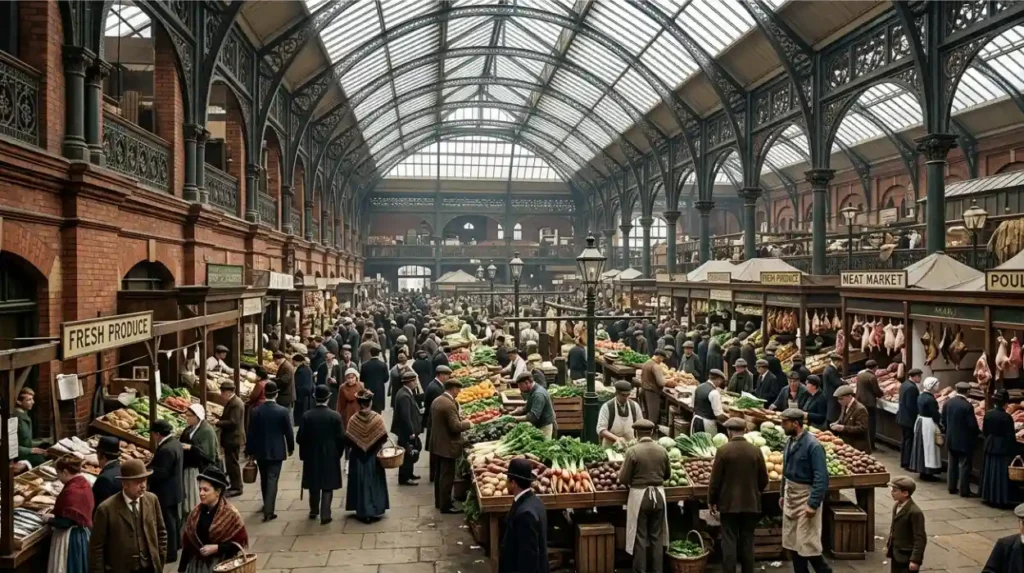
The nineteenth-century expansion of London altered the physical environment of the northern suburbs. Spurred by devastating cholera and typhus epidemics in the 1830s and 1840s, sanitary reformers argued that traditional, open-air street markets—which often lacked drainage and proper waste disposal—contributed to the spread of disease via miasmas or airborne pathogens generated by decaying organic matter (Grant & Njeru, 2022). Consequently, municipal bodies like the Metropolitan Board of Works initiated structural interventions to clear street markets and construct formal market institutions.
This era established the spatial layout of several prominent modern shopping and market districts. The clearance of dense housing and the introduction of railway lines fundamentally altered local geography. New transport infrastructures allowed for the rapid importation of perishable goods, requiring markets to sit adjacent to rail terminals. To experience this historic landmark in person today, consult our comprehensive [Visitor Guide to North London Historic Markets] for itineraries and visiting parameters. The architectural standard shifted toward large-span iron frames and brick facades, which optimized ventilation, maximized natural sunlight, and allowed for efficient washing of concrete floors to maintain hygiene standards (Grant & Njeru, 2022).
Which Historical Key Figures and Locations Established This Trade?
Key figures including local philanthropists, municipal architects, and aristocratic landowners established formal trading sites across North London by financing construction projects and securing royal market charters throughout the eighteenth and nineteenth centuries.
The development of specific market sites relied heavily on the intervention of prominent historical actors who shaped the built environment. In the borough of Islington, the establishment of the Royal Agricultural Hall in 1862 by the Smithfield Club demonstrated the scale of Victorian commercial ambition, providing a massive indoor venue for livestock shows and trade exhibitions. Similarly, in Camden, the corporate intervention of the Regent’s Canal Company in 1820 created the infrastructure for transport networks that later supported the industrial and commercial spaces of Camden Market.
In the North West, the preservation of Hampstead Heath as public common land played a vital role in maintaining open spaces that historically accommodated seasonal fairs and local trading. Middle-class activists and reformers fought to protect these areas from speculative housing developers between 1850 and 1910, preserving landscapes where commoners historically exercised medieval rights such as pasturage and foraging (Grant & Njeru, 2022; Readman, 2022). These preserved zones provided the physical footprint for twentieth-century community gatherings and modern artisan food markets, bridging the gap between historical land use and contemporary urban commerce.
What Processes Drove the Transition to Artisan Markets?
The transition from industrial-era wholesale commodities to twenty-first-century artisan economies was driven by deindustrialization, the growth of municipal conservation policies, and changing consumer demands prioritizing local, sustainable production systems over mass manufacturing.
During the mid-twentieth century, traditional retail and wholesale markets across London faced severe economic decline. The decentralization of freight transport, the growth of suburban supermarkets, and the containerization of shipping rendered many historic urban depots obsolete. Between 1950 and 1980, numerous market buildings fell into disrepair or faced demolition as industrial commercial patterns shifted away from the city center.
The reversal of this trend began in the late twentieth and early twenty-first centuries through specific socioeconomic mechanisms:
- Architectural Adaptive Reuse: Redundant industrial structures, such as Victorian stables, warehouses, and rail yards, were systematically repurposed into cultural and retail spaces rather than being demolished.
- Socio-Demographic Shifts: The influx of high-income residents into historically working-class boroughs created a consumer base willing to pay a premium for specialty, small-batch goods.
- Micro-Enterprise Proliferation: The transition toward a service-and-knowledge economy encouraged the growth of independent creators, micro-bakers, and urban agriculturists who required flexible, low-overhead retail venues to sell their output.
This structural evolution altered the types of items sold. Essential bulk commodities like coal, wholesale grain, and livestock were replaced by high-value artisan items, including sourdough bread, organic cheeses, handmade ceramics, and locally roasted coffee.
Explore More Local Businesses
Historical Guide to Small Businesses Thriving in the Northern Square Mile, Leeds
Top Rated Independent Shops and Boutique Services: Islington 2026
Where Are the Key Artisan Markets Located in 2026?
In 2026, North London’s premier artisan markets operate across a network of preserved historical sites, including Stoke Newington, Hampstead, Islington, and Camden, with each location specializing in distinct locally sourced provisions and handcrafted products.
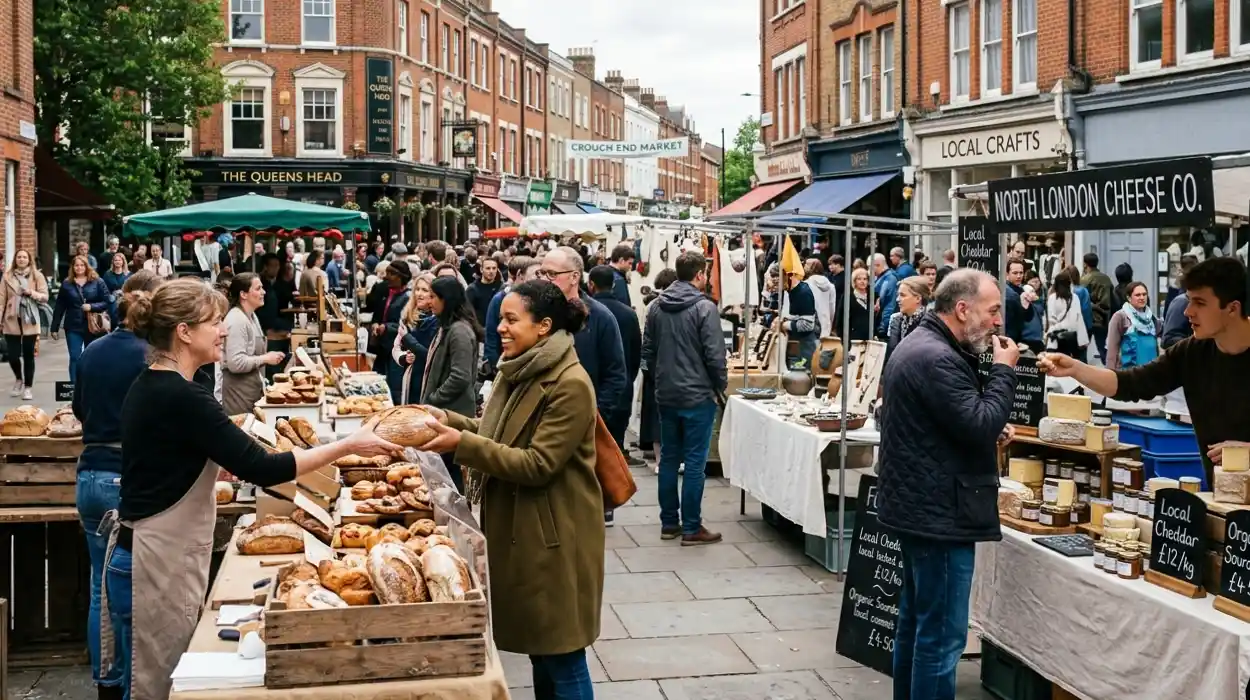
Modern artisan markets are strictly regulated by local borough councils and independent community trusts to ensure high standards of craftsmanship and provenance. In Hackney, the Stoke Newington producers’ market focuses heavily on organic agriculture, sustainable viticulture, and heritage grains. Vendors here source their ingredients directly from farms in Essex and Hertfordshire, minimizing food miles and supporting regional agricultural systems.
Further west, the markets surrounding Hampstead Heath utilize the historic village squares to host specialized food and craft fairs. These markets are known for their high-end pastry makers, artisan chocolatiers, and independent fine artists. In Islington, the historic passages of Camden Passage continue to support a dual economy of antique dealers and weekend food artisans, maintaining a tradition of specialized trade that dates back over a century. Each location acts as an incubator for local culinary and artistic businesses, generating substantial economic activity within their respective neighborhoods.
How Do Modern Markets Protect and Preserve Urban Heritage?
Modern artisan markets preserve urban heritage by generating continuous revenue streams that fund the structural maintenance of listed historic buildings, preventing commercial demolition, and keeping public spaces active.
The relationship between artisan commerce and heritage preservation is highly functional. Without active commercial use, historic structures often suffer from neglect, vandalism, and structural decay. By integrating market stalls into historic environments, local councils and preservation societies can maintain these assets without relying entirely on public subsidies or charitable donations.
Artisan markets preserve urban heritage through three primary mechanisms:
- Financing Listed Building Maintenance: Standard pitch fees collected from traders are directly allocated to conservation funds tasked with repairing Victorian brickwork, iron glazing bars, and cobblestone paving.
- Preventing Demolition and Redevelopment: Establishing an active, culturally significant market creates a high barrier against property developers seeking to clear historic industrial sites for luxury residential complexes.
- Preserving Intangible Cultural Heritage: Operating street markets maintains the traditional, centuries-old social practice of open-air communal trading within the modern, highly digitalized metropolis.
This approach ensures that architectural relics do not become static museum pieces. Instead, they remain functional, evolving commercial centers that serve the daily needs of contemporary residents.
What Insights Do Academic Research and Data Reveal?
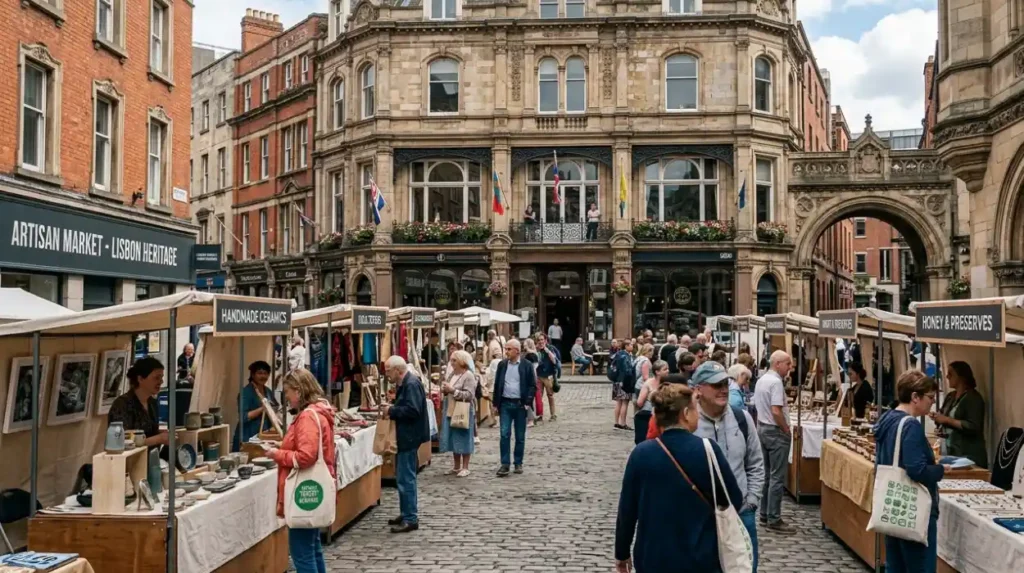
Academic research and demographic data show that artisan markets generate substantial economic multipliers for surrounding brick-and-mortar shops, significantly reduce food supply chain carbon emissions, and strengthen neighborhood social cohesion.
Quantitative studies conducted by urban planners and economic historians demonstrate the measurable impact of open-air artisan trading systems on modern cities. According to historical economic surveys tracking London’s labor and industrial shifts, street markets have long served as vital economic indicators of local purchasing power and employment trends (Abernethy, 2013). In the modern context, data indicates that for every £10 spent at an artisan market stall, approximately £17.50 is generated in the wider local economy due to consumers visiting nearby independent shops, cafes, and transport facilities.
Environmental data highlights that the supply chains supporting artisan market vendors are substantially shorter than those of conventional supermarket networks. The average artisan food item travels fewer than 50 miles from farm to point-of-sale, compared to an average of over 1,000 miles for mass-distributed grocery goods. Furthermore, sociological research confirms that street markets foster high levels of social interaction across different generations and social classes, operating as vital democratic spaces within the urban environment (Brannen, 2024; Winder, 2026).
What Is the Future Long-Term Relevance of These Spaces?
The long-term relevance of North London’s artisan markets rests on their ability to offer resilient, human-centric alternatives to automated online retail, preserve local economic diversity, and provide adaptable community infrastructure amid shifting climate conditions.
As digital commerce and automated retail systems reduce physical human interaction within the modern economy, artisan markets remain critically important. These spaces provide sensory experiences, interpersonal communication, and transparent product origins that digital platforms cannot replicate. Consequently, they are projected to remain highly resilient components of urban retail strategies over the coming decades.
From an urban planning perspective, these markets provide vital flexibility for future city layouts. They can easily adapt to changing demographic needs, support green infrastructure goals, and offer low-cost commercial opportunities for new entrepreneurs. By anchoring neighborhoods to their distinct historical identities, artisan markets ensure that North London’s boroughs resist commercial homogenization. Instead, they retain the unique architectural and cultural characteristics that have defined them for centuries.
What are artisan markets?
Artisan markets are community-focused marketplaces where independent producers sell handcrafted, locally sourced, or small-batch goods directly to consumers. Products commonly include specialty foods, baked goods, coffee, artwork, ceramics, textiles, and antiques.