Key Points
- Refusal to Endorse: The Mayor of London, Sir Sadiq Khan, has pointedly declined to offer his public backing to Prime Minister Sir Keir Starmer to remain as the UK’s premier, intensifying the ongoing Labour Party leadership crisis.
- Deepening Leadership Crisis: The refusal arrives as Prime Minister Starmer faces a severe internal rebellion within the ruling Labour Party, sparked by historical municipal election losses in May 2026 and plummeting public approval ratings.
- Ideological Disagreements: Policy divisions have drastically widened between City Hall and Downing Street, particularly regarding Britain’s post-Brexit relationship with the European Union (EU) and recent foreign policy disputes involving the United States.
- Calls for EU Reentry: Mayor Khan has publicly broken rank with official Labour Party policy by declaring Brexit an “act of economic self-harm” and demanding that the party campaign to rejoin the EU Single Market and Customs Union.
- Escalating Geopolitical Tensions: The political friction comes amid broader geopolitical instability, including ongoing public criticisms directed at Mayor Khan by US President Donald Trump.
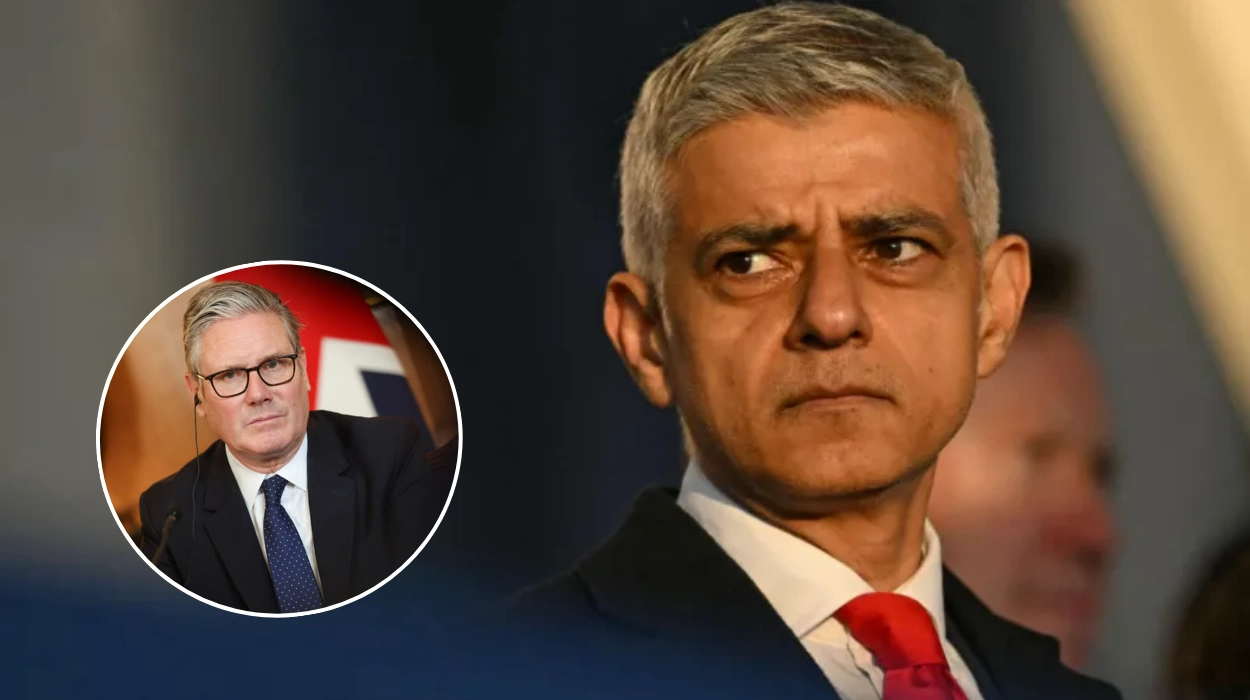
London (The Londoner News) June 16, 2026 – The political stability of the United Kingdom’s ruling Labour government was thrown into severe jeopardy today as the Mayor of London, Sir Sadiq Khan, explicitly declined to endorse Sir Keir Starmer to continue serving as the nation’s Prime Minister. Speaking amidst a widening leadership crisis that has gripped Downing Street since disastrous local elections last month, London’s longest-serving progressive leader refused to offer public validation for his party’s embattled premier. The high-profile refusal has effectively consolidated a growing backbench rebellion, laying bare deep ideological fractures over the economy, international relations, and Britain’s relationship with the European Union.
Why has Sadiq Khan refused to back Keir Starmer?
As reported by political correspondents tracking the inner machinations of the Labour Party, the relationship between City Hall and Downing Street has grown increasingly strained since the 2024 General Election. Despite initially presenting a united front, Mayor Khan’s latest reticence to support the Prime Minister directly reflects the severe electoral anxieties ripple-effecting through the centre-left movement.
In an exhaustive analysis broadcast by Lauren Frayer of WLRN, it was confirmed that Prime Minister Keir Starmer’s leadership is facing its most critical test to date following a “week of rebellion in Britain’s ruling party.” Frayer reported that multiple high-level contenders are already actively “vying for Prime Minister Keir Starmer’s job” following a devastating rout by opposition and far-right factions in municipal contests across the United Kingdom.
Compounding the domestic electoral turmoil, public confidence in the current administration has collapsed to historic depths. According to verified data compiled by the Ipsos polling organisation, Starmer’s net approval rating plunged to an unprecedented national average of minus 46 per cent. Political analysts have noted that this performance ranks him as the most unpopular serving British Prime Minister since comprehensive records began in 1977, significantly weakening his authority over regional leaders like Khan.
What are the main policy clashes between City Hall and Downing Street?
The widening chasm between the London Mayor and the Prime Minister is deeply rooted in starkly divergent visions for the United Kingdom’s economic recovery and global standing. Principal among these disagreements is the unresolved national debate surrounding Brexit and European integration.
Writing for The Jerusalem Post, international correspondent Esther Davis detailed how Mayor Khan has systematically positioned himself as a vocal opponent of the current administration’s trade strategies. Davis highlighted that Khan described the UK’s departure from the European Union as “the biggest act of economic self-harm any country’s ever done.” The London Mayor explicitly stated:
“My ultimate goal is for us to rejoin, and I think it will happen in my lifetime. I definitely want us to be part of a customs union.”
This position stands in direct opposition to the official mandate held by Downing Street. Prime Minister Starmer and his Chancellor of the Exchequer, Rachel Reeves, have continually rejected any proposals to re-enter European economic frameworks, pointing directly to the restrictive language of Labour’s general election manifesto, which explicitly rules out returning to the EU, the Single Market, or the Customs Union.
Furthermore, as noted in an exclusive European policy brief by Eunews, Khan has urged the party to adopt an uncompromisingly pro-European platform ahead of future general elections, arguing that rejoining trade mechanisms would directly alleviate the ongoing domestic cost-of-living crisis. Khan argued that data from the National Institute of Economic and Social Research and Goldman Sachs indicated the British economy would be roughly 10 per cent larger had the 2016 referendum yielded a different result.
Explore more Politics News:
E3 Leaders and Zelenskiy Form Peace and Defence Front: London 2026
Sadiq Khan and Westminster Clash Over Oxford Street Pedestrianisation: London 2026
How have international relations strained the Labour leadership?
The internal domestic feuding has been further exacerbated by escalating international conflicts and regional instabilities that have forced both leaders into contrasting rhetorical positions. The geopolitical landscape has shifted rapidly, impacting British consumer prices and security interests alike.
Reporting on regional safety and foreign policy alignment, Aysu Biçer of Anadolu Agency detailed a rare moment of consensus that nevertheless masked deep long-term strategic divisions. Biçer reported that Mayor Khan publicly praised Starmer for resisting intense pressure from US President Donald Trump to involve British forces in military strikes against Iran, with Khan warning that a “war of choice” would bring “needless killing and suffering” alongside serious economic consequences for domestic households.
However, the shadow of transatlantic politics continues to impact Khan’s standing. President Trump has maintained a highly contentious, public feud with the London Mayor. During a high-profile bilateral meeting in the Oval Office with German Chancellor Friedrich Merz, President Trump explicitly attacked Khan’s management of the capital, stating:
“You have a terrible Mayor of London, he’s an incompetent guy, you have Sharia courts, you don’t want Sharia courts.”
In response to the American executive’s assertions, a spokesperson representing the Mayor of London issued an official retort to reporters, stating:
“The Mayor is clearly still living rent free in Donald Trump’s head. He’s obsessed with him. Sadiq could probably claim squatters’ rights.”
Is there an ongoing rebellion within the wider Labour Cabinet?
While Mayor Khan represents the most prominent regional figurehead withholding political capital from the Prime Minister, journalists have observed that the insubordination is spreading directly into the shadow of the Cabinet itself.
According to tracking data published by The Guardian’s political desk, several members of Starmer’s top ministerial team have subtly broken ranks regarding European policy. Figures including Health Secretary Wes Streeting and Foreign Secretary David Lammy have notably refused to permanently rule out future participation in an EU customs union when questioned by journalists. Additionally, during discussions at the World Economic Forum, Business Secretary Peter Kyle raised eyebrows across Westminster by suggesting it would be “crazy” not to evaluate the long-term benefits of a structured customs union with Brussels, directly undermining the strict boundary lines established by Downing Street.
What does this mean for the future of British politics?
The refusal of the London Mayor to offer an explicit endorsement signals a potentially terminal shift in the internal power dynamics of the Labour Party. With local government leaders increasingly willing to distance themselves from the Prime Minister, the likelihood of a formal leadership challenge before the next scheduled general election has escalated drastically.
As the country navigates steep economic headwinds and a fracturing political landscape, the public divide between Sir Sadiq Khan and Sir Keir Starmer underscores a fundamental battle for the ideological soul of the ruling party—leaving the country’s executive leadership looking more isolated than at any point since taking office.