Key Points
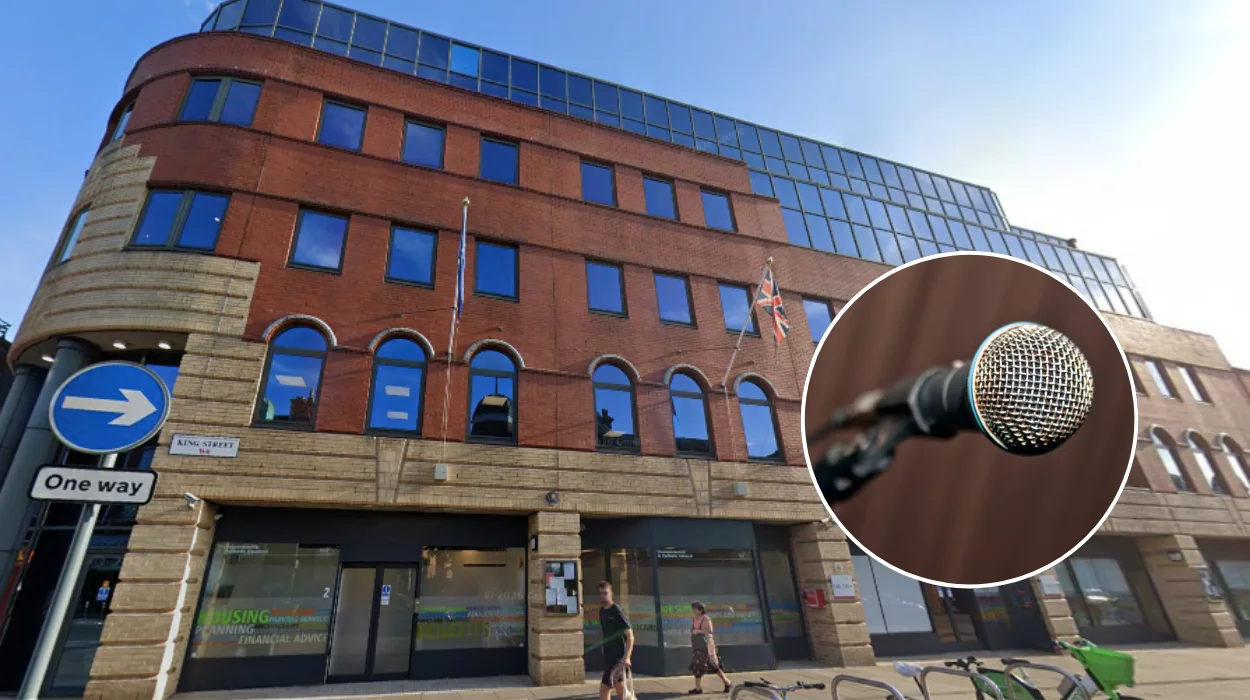
- Proposed Extension: Hammersmith and Fulham Council is formally consulting on plans to significantly expand its ban on microphones, megaphones, and loudspeakers across wider areas of West London.
- Target Areas: The new expansion aims to push the boundaries of the existing restrictions further west along Goldhawk Road and Uxbridge Road in Shepherd’s Bush, stretching to Coningham Road, and moving northwards toward the White City Estate.
- Existing Orders: Public Spaces Protection Orders (PSPOs) are already active inside parts of Hammersmith town centre, Shepherd’s Bush, and White City, prohibiting unpermitted amplification equipment.
- Prohibited Apparatus: The ban encompasses mains electricity, generator power, battery power, and any other devices used to mechanically or electronically amplify sound.
- Broad Enforcement Powers: Under PSPO legislation, the local authority possesses the direct legal power to issue immediate financial penalties and fines to individuals caught violating the specified rules.
- Historical Context: Hammersmith and Fulham Council began its noise-related enforcement campaigns in Shepherd’s Bush in 2016 and has previously used PSPOs to restrict street entertainment, busking, amplified public speaking, public alcohol consumption, balaclavas, aggressive begging, and intimidating groups.
- Consultation Deadline: Local residents, business owners, and stakeholders have been invited to submit their feedback on the official council consultation portal until the deadline on July 8.
London (The Londoner News) June 20, 2026 – A strict municipal ban prohibiting the public use of microphones, megaphones, and loudspeakers could soon be extended across a vastly wider footprint of West London, following an influx of local complaints regarding noise nuisances and disruptive antisocial behaviour. Hammersmith and Fulham Council has officially launched a public consultation to expand its current Public Spaces Protection Order (PSPO), targeting several high-traffic roads and residential corridors that remain exempt from the current acoustic restrictions. The proposed geographical expansion threatens to heavily penalise street performers, public speakers, and unpermitted events utilizing any form of artificial sound amplification.
- Key Points
- Why is Hammersmith and Fulham Council expanding the microphone ban?
- What specific electronic equipment and power sources are prohibited?
- How do Public Spaces Protection Orders (PSPOs) actually function?
- What other behaviours has the council targeted using PSPOs?
- What do municipal officials say about the success of the noise crackdown?
- How can West London residents participate in the ongoing consultation?
As reported by Ben Lynch, Local Democracy Reporter for the Evening Standard, the local authority’s current regulatory framework already criminalises the unapproved use of amplification equipment in defined sections of Hammersmith, Shepherd’s Bush, and White City. Under the newly unveiled proposals, municipal leaders intend to stretch the boundary lines west along Goldhawk Road and Uxbridge Road in Shepherd’s Bush, terminating at Coningham Road. Simultaneously, the restrictive zone will expand north toward the White City Estate—a residential enclave already bound by complementary public order restrictions. Conversely, the strict noise boundaries currently governing Hammersmith town centre are scheduled to remain completely unchanged under the updated legal structure.
Why is Hammersmith and Fulham Council expanding the microphone ban?
According to detailed reporting by Local Democracy Reporter Ben Lynch of the Evening Standard, the primary driving force behind the proposed legislative expansion is a sharp rise in formal complaints from local citizens residing just outside the current enforcement zones. Local residents have increasingly expressed frustration over unmonitored noise pollution originating from public spaces, which they argue significantly degrades the local quality of life, disrupts commerce, and fosters an chaotic street environment.
On its official municipal consultation webpage, as documented by Ben Lynch of the Evening Standard, the local authority explicitly justified the intervention by stating: “We have received an increasing number of reports about anti-social behaviour and noise nuisance linked to the use of amplified sound (such as loudspeakers and megaphones) in areas not currently covered by existing restrictions.”
The council maintains that by creating a seamless, expanded boundary across these problematic West London thoroughfares, enforcement officers will have the precise legal tools required to prevent noise-makers from simply moving a few yards down the street to escape penalty.
What specific electronic equipment and power sources are prohibited?
As detailed in the legislative breakdown compiled by Ben Lynch of the Evening Standard, the language within Hammersmith and Fulham Council’s Public Spaces Protection Order leaves no legal loopholes for those seeking to amplify audio in public spaces. The existing and proposed terms of the order explicitly forbid the deployment of microphones, loudspeakers, megaphones, or any structurally similar sound-producing equipment unless formal municipal authorization has been explicitly granted.
Furthermore, the legal scope of the ban extends comprehensively to the power sources driving these acoustic devices. As reported by Ben Lynch of the Evening Standard, the PSPO strictly outlaws the use of mains electricity, mobile generator power, traditional battery power, and any other mechanical or digital devices specifically engineered to amplify human speech, music, or broadcasts. This exhaustive definition ensures that modern, highly portable Bluetooth speakers and compact, battery-operated amplifiers are subject to the exact same confiscation and penalty risks as industrial-grade sound systems.
How do Public Spaces Protection Orders (PSPOs) actually function?
In a structural legal analysis of municipal governance published by Ben Lynch of the Evening Standard, it is noted that Public Spaces Protection Orders (PSPOs) are powerful legal mechanisms created under the Anti-social Behaviour, Crime and Policing Act 2014. These orders grant local authorities across England and Wales the direct statutory power to identify specific geographical zones and completely prohibit distinct activities or behaviours that are deemed to have a detrimental effect on the local community’s standard of living.
Once a PSPO is legally enacted and active within a designated zone, council enforcement officers and local police retain the authority to issue immediate Fixed Penalty Notices (FPNs) or financial fines to any individuals caught actively breaking the rules. Failure to pay these localized penalties can result in summary prosecution through the magistrates’ court system, potentially leading to significantly higher court-ordered financial liabilities or criminal records for persistent offenders.
Explore more West London News:
NHS Halves Pelvic Health Wait Times: West London Trust | Ealing 2026
West London Residents Ashamed over Felix Court Slum Conditions: Yiewsley 2026
What other behaviours has the council targeted using PSPOs?
Hammersmith and Fulham Council has established a long-standing reputation for using targeted public space legislation to manage urban conduct. As reported by Ben Lynch of the Evening Standard, the local authority has successfully implemented a diverse array of overlapping PSPOs over the last decade, systematically addressing a wide variety of public order concerns well beyond simple noise abatement.
According to the historical data outlined by Ben Lynch of the Evening Standard, the council’s ongoing enforcement campaigns have targeted:
- The open consumption of alcohol in non-designated public zones.
- Aggressive begging tactics targeting shoppers and commuters near transport hubs.
- The intimidating gathering of specific groups in commercial areas.
- Street-level harassment and anti-social loitering.
- The wearing of balaclavas and face coverings explicitly intended to conceal identity during criminal or anti-social acts.
Additionally, prior legislative interventions have been introduced with the specific intention of heavily restricting uncoordinated street entertainment, informal busking, and amplified political or religious public speaking across White City, Shepherd’s Bush, and the primary commercial corridors of Hammersmith town centre.
What do municipal officials say about the success of the noise crackdown?
Local authorities argue that their aggressive stance on public disturbances has yielded measurable, objective benefits for West London communities. As reported by Ben Lynch of the Evening Standard, an official spokesperson for Hammersmith and Fulham Council strongly defended the ongoing expansion strategy, linking the use of PSPOs directly to a statistical reduction in citizen distress and neighborhood friction.
As recorded by Ben Lynch of the Evening Standard, a Hammersmith and Fulham Council spokesperson stated:
“We’re working to improve our town centres to help make Hammersmith and Fulham the best place to live, work and socialise. Our efforts to tackle noise levels have seen complaints drop across the borough. We started in Shepherd’s Bush back in 2016 and we’ve worked with residents to renew and introduce further orders in Hammersmith and White City.”
The municipal spokesperson further emphasised the democratic nature of the enforcement expansion, stating to Ben Lynch of the Evening Standard: “Local people continue to tell us they want these protections to help tackle noise and anti-social behaviour. We invite residents to have their say via this consultation that closes in July.”
How can West London residents participate in the ongoing consultation?
The democratic window for local stakeholders to shape the future of West London’s acoustic landscape remains open for a limited time. According to the publication by Ben Lynch of the Evening Standard, the council’s community consultation process is scheduled to run continuously until its official closing date on July 8.
The local authority has hosted the interactive feedback forms directly on the official Hammersmith and Fulham Council website portal. Local residents, shopkeepers, street performers, and community advocates are being strongly encouraged to submit formal testimonials detailing how the presence or absence of amplified sound has altered their daily lives and businesses. The collected data will be analyzed by municipal analysts before a final, binding vote is cast by elected cabinet members regarding the permanent expansion of the PSPO boundaries.