

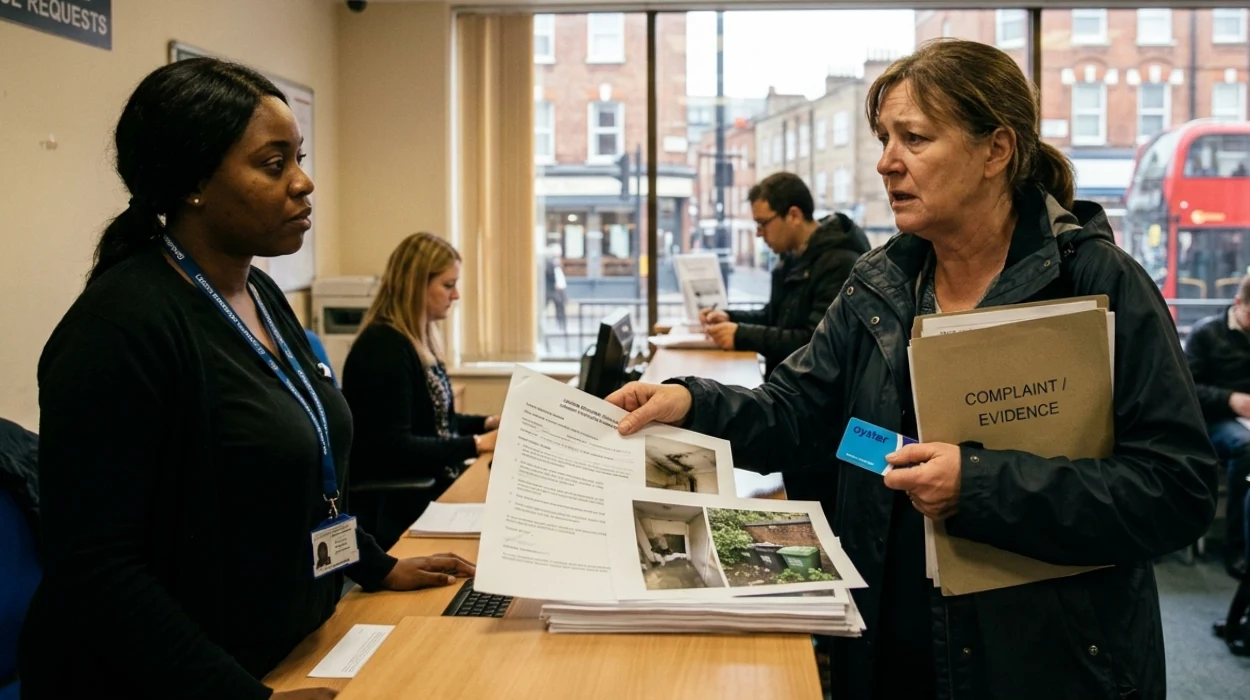
The mechanism for holding local government accountable in Greater London rests on a framework established by the London Government Act 1963 and the Local Government Act 1974. London is governed by 32 administrative boroughs and the City of London Corporation, each functioning as an independent local authority responsible for public services. When these authorities fail to deliver services—such as social housing maintenance, waste collection, planning decisions, or social care—to the statutory standard, it constitutes maladministration. The process of lodging a formal complaint requires navigating a strict, multi-stage statutory framework designed to investigate service failures, secure remedies, and ensure municipal accountability across the metropolis.
- What Constitutes a Local Authority Service Failure in London?
- How Has the London Council Complaint System Evolved Historically?
- What Are the Internal Stages of a Formal Council Complaint?
- When and How Should a Resident Escalate a Complaint to the Ombudsman?
- What Role Do LCC and GLC Historic Records Play in Modern Precedents?
- What Statutory Roles Manage Internal Accountability in London Boroughs?
- When Can a Service Failure Escalated to a Judicial Review?
- What Are the Contemporary Trends and Future Outlook for London Municipal Accountability?
What Constitutes a Local Authority Service Failure in London?
A local authority service failure in London occurs when a borough council breaches its statutory duties, exhibits administrative incompetence, or demonstrates maladministration that results in an injustice to a resident, tenant, or local business operating within the municipality.
Under the Local Government Act 1974, service failure is legally framed as maladministration or a total failure to provide a service that the council has a legal obligation to deliver. Maladministration encompasses a specific set of administrative errors, including unreasonable delays, failure to follow established internal policies, neglect of duty, bias, arbitrary decision-making, and providing misleading or incorrect information to residents.
Local authorities in Greater London operate under explicit statutory mandates to provide distinct public services. A formal service failure occurs when a borough fails to meet the standards dictated by nationwide legislation. For example, under the Housing Act 1985 and the Landlord and Tenant Act 1985, London councils acting as social landlords must maintain structural safety and keep installations for water, gas, electricity, and sanitation in proper working order. A prolonged failure to address systemic damp, mold, or structural degradation constitutes a clear service failure.
In public education and social care, the Children and Families Act 2014 mandates that councils assess and deliver specified support for children with Special Educational Needs and Disabilities (SEND) through Education, Health and Care Plans (EHCPs). Missing statutory deadlines for these assessments represents an actionable administrative failure. Similarly, under the Care Act 2014, councils must assess and meet the eligible care needs of vulnerable adults; withholding or delaying these services without legal justification qualifies as a service failure.
Other common areas of municipal failure involve environmental services, highways, and regulatory planning. The Environmental Protection Act 1990 obligates London boroughs to manage waste collection and address statutory nuisances such as persistent fly-tipping or noise pollution. Failure to clear reported hazards or maintain public highways under the Highways Act 1980 can lead to formal complaints. In planning departments, failing to publicize planning applications correctly or ignoring material considerations during the determination process constitutes maladministration, even if the resident cannot challenge the final planning decision itself through the complaints process.
How Has the London Council Complaint System Evolved Historically?
The London council complaint system evolved from a fragmented, unaccountable network of parish vestries and metropolitan boards into a centralized, statutory framework anchored by the creation of the Local Government Ombudsman under the Local Government Act 1974.
Prior to the mid-19th century, local administration in London was decentralized and largely unaccountable to the public. Governance was divided among hundreds of traditional entities, including parish vestries, manorial courts, and specialized commissions of sewers. Residents seeking redress for failures in sanitation, paving, or watchman services had no formal administrative complaint procedure. Grievances were handled arbitrarily by local magistrates or through costly civil litigation in the common law courts.
The first major step toward administrative modernization occurred with the passing of the Metropolis Management Act 1855. This statute dissolved the chaotic network of vestries and established the Metropolitan Board of Works (MBW), alongside 23 large parish vestries and 15 district boards. The MBW was tasked with constructing London’s main drainage system, managing street improvements, and regulating building lines. While the 1855 Act created a more structured bureaucracy, it lacked an independent, transparent mechanism for citizen complaints. Grievances regarding the MBW’s activities, which eventually culminated in major corruption scandals in the late 1880s, could only be raised via direct petitions to Parliament or through high-stakes legal challenges.
The Local Government Act 1888 fundamentally altered the civic landscape by abolishing the MBW and establishing the London County Council (LCC), the first directly elected metropolitan government for London. The LCC assumed vast powers over public housing, education, public health, and main drainage. To manage citizen grievances, the LCC instituted formal internal committees. Residents could submit written petitions or testify before committees, such as the Asylums Committee or the Housing of the Working Classes Committee. However, the LCC remained the final arbiter of its own disputes, meaning that true external independence did not exist.
The London Government Act 1963 abolished the LCC and the surrounding county councils of Middlesex, Surrey, and Kent within the metropolitan area to create Greater London. This act established the Greater London Council (GLC) and the 32 distinct London borough councils that exist today. As these new boroughs assumed localized control over personal social services, housing, and local planning, the sheer volume of bureaucratic interactions exposed the need for an independent watchdog.
This historical deficit was permanently corrected by the Local Government Act 1974, which created the Commission for Local Administration in England. This act introduced the Local Government Ombudsman (LGO), an independent officer empowered by Parliament to investigate allegations of injustice caused by maladministration within local authorities. Subsequent amendments, including the Local Government and Housing Act 1989, reinforced this structure by requiring every London borough to appoint a statutory Monitoring Officer. The Monitoring Officer holds a legal duty to report any internal administrative action that has caused, or is likely to cause, unlawfulness or maladministration, ensuring an internal check that mirrors the external oversight of the Ombudsman.

What Are the Internal Stages of a Formal Council Complaint?
The internal stages of a formal complaint against a London council consist of a formal Stage 1 investigation by the service department manager, followed by an escalatory Stage 2 corporate review conducted by a senior, independent officer.
Every London borough operates a standardized corporate complaints procedure designed to resolve disputes internally before external regulatory bodies intervene. To initiate the formal process, a complainant must submit a written grievance detailing the specific service failure, the date of occurrence, the statutory duties breached, and the clear injustice suffered. This submission officially triggers Stage 1 of the council’s internal procedure.
At Stage 1, the complaint is routed directly to the management team of the specific department responsible for the service failure, such as the housing repairs team, the planning department, or the parking enforcement unit. A designated line manager or service team leader investigates the administrative actions taken. Under corporate guidelines, the council must acknowledge receipt of the complaint within 3 to 5 working days. The department then has a strict window, typically 10 to 15 working days depending on the borough’s specific charter, to issue a full, formal written response. This response must outline the findings, state whether the complaint is upheld or not upheld, and propose a specific remedy if a failure is identified.
If the complainant remains unsatisfied with the Stage 1 outcome, they possess a statutory right to escalate the matter to Stage 2. The request for escalation must be submitted within a defined timeframe, usually 20 working days from the date of the Stage 1 response letter. Stage 2 functions as a corporate-level review. The investigation is removed entirely from the offending service department and assigned to a senior officer within the council’s central corporate complaints unit, or to a designated independent chief officer.
The Stage 2 investigator reviews the entire administrative case history, assesses whether the Stage 1 investigation was thorough, and evaluates whether the council adhered to its legal duties and local policies. The timescale for a Stage 2 determination is longer, generally requiring 20 to 30 working days due to the comprehensive nature of the corporate review. If the council requires an extension due to the complexity of the case, they must notify the complainant in writing, provide a valid justification, and set a firm revised deadline. The Stage 2 response represents the final stage of the council’s internal administrative procedures. The final letter must include a formal notice stating that the internal process is exhausted and provide explicit instructions on how the complainant can escalate their case to the appropriate independent external ombudsman.
When and How Should a Resident Escalate a Complaint to the Ombudsman?
A resident should escalate a complaint to the Ombudsman only after completing the council’s internal complaint process, or if the council fails to provide a final response within a reasonable window, typically fixed at 12 weeks.
Once the internal corporate complaints procedure of a London borough has been fully exhausted and a final Stage 2 response has been issued, the complainant has the legal right to take their grievance to an independent external arbiter. In England, local government oversight is divided between two distinct statutory ombudsman services depending on the nature of the service failure. For complaints regarding municipal housing management, tenancy disputes, estate maintenance, and transfers, the correct body is the Housing Ombudsman Service. For all other local authority services, including adult social care, SEND education provision, planning applications, council tax billing, and highway maintenance, the proper authority is the Local Government and Social Care Ombudsman (LGSCO).
To lodge an external complaint, the resident must submit a formal application to the appropriate ombudsman within 12 months of the date they first became aware of the service failure. This application must include the final Stage 2 determination letter from the council, copies of all core correspondence, and a detailed chronicle of the ongoing injustice. The ombudsman first conducts an intake assessment to verify that the case falls within their statutory jurisdiction and that the internal remedies have been properly exhausted.
The ombudsman possesses wide-ranging statutory powers under the Local Government Act 1974 to demand unredacted internal files, emails, minutes, and case notes from the accused London borough. If the ombudsman finds that the council committed maladministration resulting in an injustice, they issue a formal, binding public decision. While the ombudsman cannot fine a council in the manner of a criminal court, they possess the authority to recommend specific, enforceable remedies.
These remedies include ordering the council to immediately carry out delayed works, reverse unlawful administrative decisions, issue formal apologies, and pay financial compensation for quantifiable financial loss, distress, time, and trouble. London boroughs almost universally comply with these recommendations. If a borough refuses to implement the remedies, the ombudsman will publish a formal public report detailing the non-compliance, forcing the council to place the matter on the agenda of a full public meeting of the elected borough councillors within 3 months.
Explore More Public Services
How to Request a New Pedestrian Crossing in Croydon
How to Apply for a Freedom Pass with a Hidden Disability in Greater London
What Role Do LCC and GLC Historic Records Play in Modern Precedents?
Historic records from the London County Council and the Greater London Council establish modern administrative precedents by defining the original statutory scope, property boundaries, and infrastructural responsibilities inherited by modern boroughs.
The resolution of modern disputes over municipal service failures frequently hinges on archival documentation generated by London’s predecessor metropolitan authorities. When a modern borough council denies responsibility for a specific service failure—such as refusing to maintain a retaining wall, failing to repair a public right of way, or disclaiming ownership of drainage infrastructure—the legal resolution requires tracing the historical chain of title and administrative obligation. The primary repositories for these records are the London Metropolitan Archives and the respective local borough heritage collections.
LCC records dating from 1889 to 1965 provide definitive legal evidence regarding the establishment of early social housing estates and municipal boundaries. The LCC’s extensive minutes, architectural plans, and compulsory purchase orders define exactly which parcels of land were dedicated to public use and what specific covenants were placed on municipal property. For instance, if a modern tenant or adjacent property owner in a borough like Tower Hamlets or Southwark experiences systemic flooding due to an ancient culvert, LCC engineering records can prove whether the infrastructure was originally adopted as a public main sewer or remained a private responsibility.
Following the transition to the GLC in 1965, vast swathes of infrastructure and housing stock were systematically transferred to the individual London boroughs under various statutory transfer orders, such as the Greater London Council (Transfer of Land and Housing Accommodation) Orders passed between 1980 and 1983. These historic transfer documents explicitly detailed which borough assumed the legal liabilities, maintenance costs, and statutory obligations of the GLC. To experience this historic landmark in person today, consult our comprehensive [London Metropolitan Archives Visitor Guide] for itineraries and visiting parameters. By examining these microfilmed registries, modern legal researchers, genealogical historians, and tenants can uncover the precise legislative moment an obligation shifted to a modern borough council, invalidating contemporary claims by a council that they lack the legal jurisdiction or duty to remediate a persistent service failure.
What Statutory Roles Manage Internal Accountability in London Boroughs?
The statutory roles managing internal accountability within every London borough are the Monitoring Officer, the Chief Financial Officer, and the Head of Paid Service, who hold independent legal duties to stop unlawful administrative and financial actions.
The Local Government and Housing Act 1989 mandated the creation of a strict internal governance triumvirate within every local authority in England and Wales. These three distinct statutory officers must be appointed by the full council electing body, and they carry personal, legally enforceable duties that transcend their employment contracts with the borough. They act as the ultimate internal check against service failures that cross the threshold into systemic illegality or fiscal recklessness.
The Monitoring Officer, designated under Section 5 of the Local Government and Housing Act 1989, is tasked with ensuring administrative and legal compliance. If the Monitoring Officer determines that any proposal, decision, or omission by the council has given rise to, or is likely to give rise to, a breach of law, a violation of a statutory code of practice, or an act of maladministration, they are legally required to prepare a formal report. This report is sent directly to the executive mayor or cabinet and all elected councillors. The filing of a Section 5 report immediately pauses the implementation of the contested decision or policy, forcing a full council debate within 21 days to address the identified administrative failure.
The Chief Financial Officer, commonly referred to as the Section 151 Officer under the Local Government Act 1972, holds a parallel statutory duty regarding fiscal administration. Under Section 114 of the Local Government Finance Act 1988, if the Chief Financial Officer concludes that the council has made or is about to make a decision involving unlawful expenditure, or that the council’s expenditure will exceed its available resources in a given financial year, they must issue a formal Section 114 notice. This action freezes all non-statutory spending across the borough instantly, prioritizing funding strictly for legally mandated services like adult social care and child protection, thereby preventing fiscal collapse from completely erasing core municipal services.
Completing the triumvirate is the Head of Paid Service, designated under Section 4 of the 1989 Act and typically held by the council’s Chief Executive. This officer is legally required to report to the council on the proper coordination of the council’s distinct functions, the exact number and grades of staff required for service delivery, and the organization of municipal personnel. When widespread service failures occur due to chronic understaffing or structural mismanagement, the Head of Paid Service is responsible for restructuring the administration to restore statutory compliance.

When Can a Service Failure Escalated to a Judicial Review?
A service failure can be escalated to a Judicial Review in the High Court only when the council’s action or omission is unlawful, irrational, procedurally unfair, or violates human rights, and all alternative statutory remedies have been entirely exhausted.
Judicial Review is a specialized legal procedure conducted in the Administrative Court window of the High Court of Justice. Unlike an appeal to the Ombudsman, which investigates maladministration and seeks pragmatic remedies, a Judicial Review focuses strictly on the legal validity of the decision-making process itself. It is an adversarial court proceeding requiring formal legal representation, and it must be initiated promptly, and strictly within 3 months of the date of the challenged decision or failure to act.
To bring a case for Judicial Review, a claimant must first demonstrate standing, meaning they have a direct, sufficient interest in the matter. The legal challenge must be built upon one of four established grounds of public law:
- Illegality: The council acted outside the scope of its statutory powers, misdirected itself in law, or failed to fulfill an absolute statutory duty, such as refusing to house an eligible homeless individual under Part 7 of the Housing Act 1996.
- Irrationality (Wednesbury Unreasonableness): The council’s decision was so outrageous in its defiance of logic or accepted moral standards that no sensible authority, applying its mind to the question, could have possibly arrived at it.
- Procedural Impropriety: The council failed to follow its own statutory procedures or breached the principles of natural justice, such as failing to consult affected residents before implementing a mandatory licensing scheme, or exhibiting demonstrable bias in a regulatory committee hearing.
- Legitimate Expectation: The council breached a clear, unambiguous promise or established historic practice upon which a resident relied to their detriment.
Judicial Review is firmly treated as a remedy of last resort. If the High Court notes that the claimant failed to utilize available statutory appeal routes—such as appealing a planning refusal to the Planning Inspectorate, contesting a SEND decision before the First-tier Tribunal, or submitting a structural housing complaint to the Housing Ombudsman—the judge will refuse to grant permission for the Judicial Review to proceed.
If the claimant succeeds, the High Court can issue a range of public law remedies. The court can issue a quashing order to invalidate the unlawful decision, a mandatory order forcing the council to carry out a specific statutory duty, or a prohibiting order preventing the council from taking an unlawful action. However, the court will typically not award financial damages for mere administrative errors unless the council’s failure simultaneously constituted a breach of the Human Rights Act 1998 or resulted in a tortious private law claim.
What Are the Contemporary Trends and Future Outlook for London Municipal Accountability?
The future outlook for London municipal accountability is shaped by escalating Section 114 fiscal crises, enhanced regulatory enforcement by the Regulator of Social Housing, and the pervasive deployment of algorithmic automation in service delivery.
Local government administration across the 32 London boroughs faces systemic structural strains that directly impact service delivery and the frequency of formal complaints. Chief among these pressures is the rising wave of municipal insolvencies. Multiple local authorities across England have issued statutory Section 114 notices due to unbalanced budgets driven by the soaring costs of adult social care, temporary homeless accommodation, and structural deficits. When a borough enters a Section 114 freeze, non-statutory services—including youth clubs, library hours, park maintenance, and discretionary community grants—are severely curtailed, driving an increase in resident grievances over declining urban quality of life.
Concurrently, the regulatory landscape governing municipal housing has undergone a massive shift. The passing of the Social Housing (Regulation) Act 2023 fundamentally expanded the powers of the Regulator of Social Housing (RSH). The RSH is empowered to conduct routine, unannounced inspections of council-managed housing stock, issue strict Consumer Standards, and levy unlimited financial penalties against boroughs that fail to keep properties safe. This legislative shift has lowered the barrier for social tenants to secure external intervention, forcing councils to prioritize emergency repairs and damp remediation over standard bureaucratic deflections.
Furthermore, London boroughs are increasingly integrating automated decision-making systems and artificial intelligence algorithms to manage high-volume administrative tasks. These technologies are deployed to screen housing benefit applications, identify council tax fraud, optimize waste collection routes, and process parking fine appeals. While automation can improve efficiency, it introduces risks of algorithmic bias, automated errors, and a distinct lack of transparent human oversight.
Consequently, both the LGSCO and public law advocates are adapting to investigate automated maladministration. Future complaints will increasingly focus on securing transparency regarding the specific coding parameters, data inputs, and machine-learning models used by London boroughs, ensuring that the foundational principles of administrative law, statutory accountability, and natural justice established over centuries remain intact in a digital age.
Internal Accountability Checkpoints
To ensure a complaint is structured correctly for maximum legal and administrative impact, verify that the following data points are clearly documented before filing:
- Statutory Basis: Identify the exact piece of legislation (e.g., Care Act 2014, Housing Act 1985) the borough council has failed to uphold.
- Chronological Log: Maintain a precise timeline of all service requests, reference numbers, names of council officers spoken to, and subsequent delays.
- Quantifiable Injustice: Explicitly state the direct impact of the failure, including medical evidence for health issues caused by poor housing, or financial receipts for costs incurred due to missed collections.
- Exhaustion of Stages: Ensure you possess the formal Stage 1 and Stage 2 sign-off letters before attempting to submit your file to the external Ombudsman.
What is considered a council service failure in London?
A service failure occurs when a London borough council fails to carry out a legal duty, delays unreasonably, ignores its own policies, provides incorrect information, or acts unfairly, causing an injustice to a resident, tenant, or business.