Key Points
- Greater Manchester’s former mayor, Andy Burnham, has secured 322 nominations from Labour Members of Parliament, effectively guaranteeing his ascension to the position of Prime Minister without a leadership contest.
- The leadership transition follows the sudden resignation of Sir Keir Starmer on 22 June 2026, which was precipitated by catastrophic local election losses and prolonged internal party unrest.
- Burnham’s policy platform includes a radical devolution of fiscal powers, the conceptualisation of a “No. 10 North” headquarters, and an overhaul of regressive property taxes via a proportional property system.
- The incoming Prime Minister has formally apologised for Labour’s initial responses to the Middle East conflict, signalling an imminent, stricter diplomatic shift involving potential trade bans and expanded sanctions on illegal settlements.
- Under the party’s National Executive Committee timeline, Burnham is anticipated to formally visit King Charles III at Buckingham Palace and take office as the new Prime Minister on 20 July 2026.
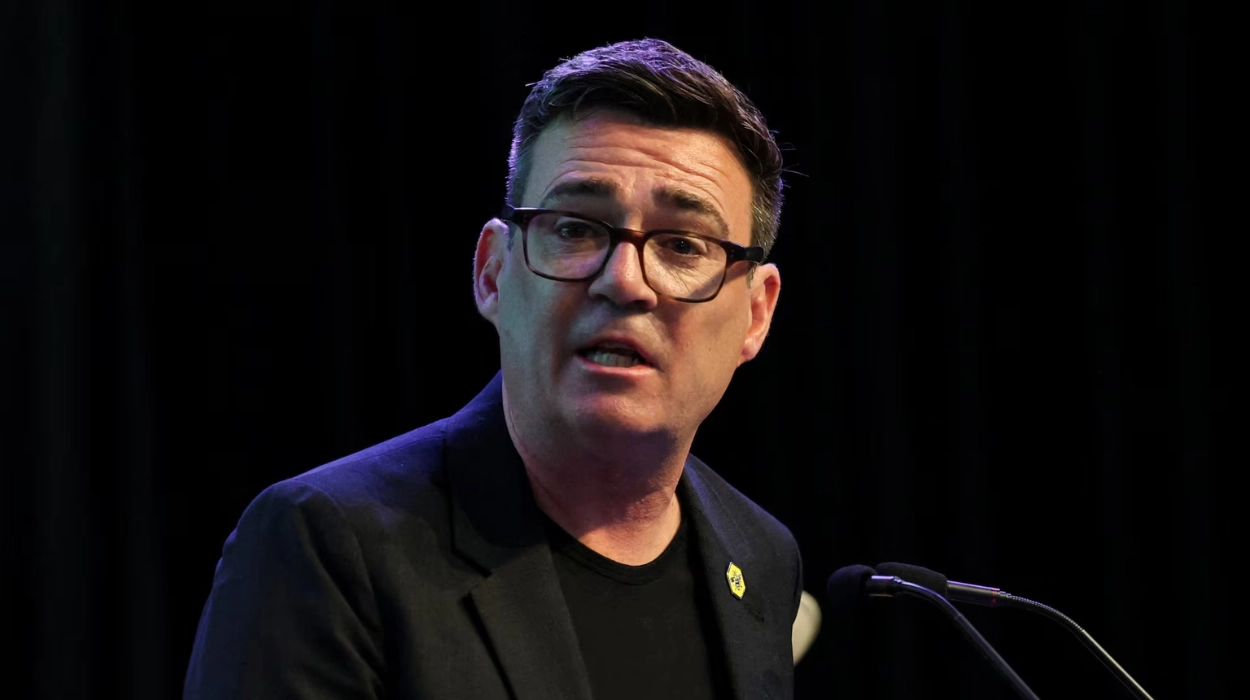
London (The Londoner News) July 11, 2026 – The political landscape of the United Kingdom has undergone a seismic consolidation as former Greater Manchester Mayor Andy Burnham secured an overwhelming mandate from the Parliamentary Labour Party, rendering his ascension to the office of Prime Minister an absolute mathematical certainty. Following the opening day of formal nominations, party officials confirmed that Burnham had amassed the signatures of 322 out of Labour’s 402 sitting Members of Parliament. This immense show of strength effectively closes the gate on any prospective inner-party rivals, as the remaining pool of undeclared backbenchers lacks the necessary numbers to meet the minimum threshold required to trigger a competitive ballot. Consequently, Burnham stands as the sole viable candidate to replace the outgoing Sir Keir Starmer, steering the country toward an uncontested leadership coronation that is poised to conclude by the third week of July.
- How Did Andy Burnham Secure an Unopposed Path to 10 Downing Street?
- What Caused the Resignation of Sir Keir Starmer?
- What Are the Core Pillars of Andy Burnham’s Domestic Policy and Tax Agenda?
- How Will the New Administration Shift the UK’s Foreign Policy Stance on Gaza?
- What Approach Will Andy Burnham Take Towards Tech Policy and Social Media Regulations?
- What Are the Next Legal and Constitutional Steps to Finalise the Leadership Transition?
The systemic shift comes in the wake of prolonged administrative fragility, culminating in Sir Keir’s abrupt resignation on 22 June 2026 after a series of bruising electoral performances at the local level. Having returned to Westminster via a highly strategic by-election victory in the constituency of Makerfield just days prior to the leadership collapse, Burnham has rapidly coalesced support across the soft-left and traditional wings of the party. His platform, built around the core ethos of “rewiring the economy for ordinary people” and shifting the gravity of British governance away from its historical London bias, has unified a fractured parliamentary cohort. Barring an unforeseen constitutional intervention, the official transition of executive authority will take place on 20 July 2026, when Burnham is scheduled to attend Buckingham Palace to kiss hands with the Monarch, cementing his status as the United Kingdom’s seventh Prime Minister in a turbulent ten-year span.
How Did Andy Burnham Secure an Unopposed Path to 10 Downing Street?
The internal mechanism of the Labour Party leadership race requires any prospective candidate to cross a strict nominating threshold to gain access to a wider membership vote. As reported by political correspondents at ITV News, the National Executive Committee (NEC) established a baseline requirement of 81 nominations from sitting Labour MPs. When the first day of the formal nomination period drew to a close, party administrators revealed that Andy Burnham had successfully secured 322 individual endorsements.
According to statistical breakdowns published by The Hindustan Times, this massive majority leaves only 81 Labour MPs undeclared. Because political convention dictates that the outgoing caretaker leader, Sir Keir Starmer, abstains from offering a formal nomination, the actual number of available uncommitted MPs stands well below the number needed to validate an alternative candidate. This mathematical reality transforms the leadership election from a contested ideological battle into an absolute certainty for the Makerfield representative.
Writing directly on his official social media channels, Andy Burnham expressed his gratitude to the parliamentary group. As recorded by ITV News, Burnham stated that:
“As the first day of nominations draws to a close, I am deeply grateful to the 322 Labour MPs who have put their trust in me and nominated me for leader of the Labour Party. Their support comes from across the PLP [Parliamentary Labour Party] and reflects a shared belief that Britain needs a new approach to politics. That is the circuit breaker I am offering: power out of Westminster, an economy rewired for ordinary people, and good growth in every postcode.”
The institutional timeline dictated by the NEC sets July 13 as the date for a parliamentary hustings, where the future leader will take questions directly from fellow lawmakers. Since Burnham is operating without an active challenger, party officials have indicated that this session will proceed as a solo forum, allowing MPs to scrutinise his legislative priorities before the nomination window closes definitively on July 15. If the current structural alignment remains intact, Burnham will be formally declared Labour leader unopposed by July 17, clearing the path for his first official working day at Downing Street on July 20.
Explore More London Politics News
Andy Burnham vs Keir Starmer: UK Special Election, Makerfield 2026
Andy Burnham Replaces Keir Starmer as UK Prime Minister: London 2026
What Caused the Resignation of Sir Keir Starmer?
The sudden vacancy at the apex of British governance was the culmination of a protracted period of internal dissent and structural vulnerability within the incumbent administration. As detailed in an extensive investigative report by journalists Jessica Elgot and Josh Halliday of The Guardian, the foundations for Sir Keir Starmer’s exit were laid throughout a “chaotic year-long project” orchestrated by disgruntled backbenchers and regional organizers who sought to return Burnham to the legislative frontline.
The internal friction within the party intensified significantly during the late months of 2025, driven by mounting public and backbench dissatisfaction with Downing Street’s policy caution. According to the investigative findings of Elgot and Halliday, senior figures within the centre-left pressure group Compass, alongside prominent regional allies such as Liverpool Metro Mayor Steve Rotheram, increasingly viewed Burnham as the natural repository for traditional Labour voters who felt alienated by Sir Keir’s strict policy parameters. As observed by Steve Rotheram of The Guardian, the situation escalated because “Andy was only saying what we were all saying, but everything he says is magnified several times over.”
The final catalyst occurred in May 2026, when the Labour Party suffered devastating losses during the local government elections. The loss of critical municipal strongholds, combined with an intense progressive backlash over foreign policy and welfare reforms, rendered Sir Keir’s position untenable. Realising that the Parliamentary Labour Party was rapidly fracturing, Sir Keir announced his resignation on 22 June 2026, initiating an immediate transition window designed to prevent a total paralysis of the executive branch.
What Are the Core Pillars of Andy Burnham’s Domestic Policy and Tax Agenda?
The impending Burnham administration is poised to introduce a profound re-ordering of fiscal policy, particularly regarding regional devolution and property taxation. As reported by the House of Commons Library in their policy briefing, Burnham has consistently advocated for a systemic overhaul of how local authorities generate revenue, moving away from centralized control toward autonomous municipal financing.
How Will Property and Council Taxes Change Under Burnham?
A core element of the incoming Prime Minister’s economic program involves the complete restructuring of local government finance. According to analysis provided by the Chartered Institute of Taxation (CIOT), Burnham intends to target the current council tax mechanism, which he has publicly branded as “highly regressive.” In an official policy interview published by The Times, Burnham explained his long-standing alignment with progressive property reform groups, stating:
“I’ve long been persuaded of the argument for a land value tax. I’m personally keen to see reform of council tax. It’s a highly regressive tax. I see a big case for land and property and business taxation to be changed.”
The CIOT research notes that Burnham has lent formal support to the Fairer Share campaign, a policy group advocating for the abolition of both council tax and the Stamp Duty Land Tax (SDLT), proposing their replacement with a Proportional Property Tax. Furthermore, Burnham’s long-term fiscal strategy includes the potential implementation of an annual Land Value Tax (LVT), which assesses fees solely based on the unimproved value of land to discourage speculative holding by private developers.
What Is the “No. 10 North” Strategy?
Central to Burnham’s vision for administrative reform is the decentralisation of the executive apparatus itself. In an article published exclusively by The Times, Burnham outlined a framework that seeks to break the institutional dominance of Whitehall by establishing a parallel administrative hub outside of London. Writing in The Times, Burnham declared:
“I see our strength at home and our strength in the world as indivisible. Through No. 10 North, and the devolution of power to all parts of the UK, we will take a new approach to regenerating and re-industrialising the country, and thereby strengthening its resilience. That same approach will consider foreign policy, economic policy, security, social cohesion and British values as inextricably linked elements of the same strategic question.”
How Will the New Administration Shift the UK’s Foreign Policy Stance on Gaza?
One of the most immediate departures from the Starmer era has emerged in the domain of foreign affairs, where Burnham has proactively sought to mend relations with the party’s progressive flank. As reported by senior political writers at The Guardian, Burnham issued a formal apology for the party’s historic hesitation regarding the humanitarian crisis in the Middle East.
Speaking to The Guardian, Burnham acknowledged the deep internal scars left by the previous leadership’s initial refusal to support immediate diplomatic interventions, stating:
“I know many people feel that at the start of Israel’s military action in Gaza my party didn’t get it right and I am sorry about that. We’ve got to do more to put pressure on the Israeli government… Yes, we have taken some important steps… But let‘s be honest, the UK was too slow to call for a ceasefire. And we must now do more to strengthen our approach.”
According to international correspondents at The Straits Times, Burnham’s proposed foreign policy recalibration will focus heavily on economic levers to influence international compliance. The prime-minister-in-waiting told reporters that his government would actively investigate tougher, targeted sanctions against individuals involved in regional violence, alongside legislative measures designed to ban the trade of commercial goods originating from illegal settlements in the West Bank and East Jerusalem.
However, as highlighted by The Guardian, Burnham has maintained a measured legal position, stopping short of categorising the ground operations as an absolute genocide. He indicated that while there is “increasing evidence that war crimes appear to have been committed,” definitive judicial rulings must remain the exclusive domain of the international courts. To reassure domestic communities, Burnham emphasized to The Guardian that “there is no contradiction between a zero-tolerance approach to antisemitism and holding the Netanyahu government to account.”
What Approach Will Andy Burnham Take Towards Tech Policy and Social Media Regulations?
The transition of power arrives amidst critical debates surrounding digital infrastructure and online safety legislation. As analyzed by tech analyst James Ball for Tech Policy Press, Burnham will inherit several highly controversial digital policies introduced during the final weeks of Sir Keir Starmer’s tenure, including a proposed comprehensive social media ban for individuals under the age of 16.
Will the Under-16 Social Media Ban Be Enforced?
Indications suggest that the incoming administration will pursue the regulation of digital spaces with considerable vigor. As noted by James Ball of Tech Policy Press, Burnham has a well-documented history of concern regarding corporate tech dominance and adolescent mental health. In a previous interview conducted by The Times, Burnham expressed strong support for protective digital barriers, stating:
“It’s clear that from a mental health point of view this is harmful. Why are we equivocating? If it’s not a ban it needs to be something. We’ve got to start to think differently about tech.”
This regulatory stance was further reinforced in early 2026, when Burnham publicly welcomed cross-party alignment on the issue, noting that “parents would welcome a cross-party consensus around much bolder action” regarding youth access to algorithmic feeds.
How Will the Digital Divide and AI Governance Be Handled?
Beyond regulatory restrictions, Burnham’s regional track record offers distinct clues regarding his broader digital philosophy. During his tenure as Metro Mayor, his office launched comprehensive regional initiatives to combat digital exclusion, operating on the principle that digital connectivity is an essential public utility akin to water or electricity. According to Tech Policy Press, while Burnham is supportive of robust framework models for ethical Artificial Intelligence usage, his primary objective remains structural access rather than pure technocratic expansion. Insiders within the Labour movement have suggested to Tech Policy Press that Burnham may look to reposition high-profile cabinet figures, such as Wes Streeting, into newly defined regulatory roles specifically tasked with managing the statutory enforcement of social media compliance and taking on the legislative influence of multinational technology conglomerates.
What Are the Next Legal and Constitutional Steps to Finalise the Leadership Transition?
Despite the absolute clarity of the parliamentary nominations, a series of precise constitutional and political protocols must occur before Andy Burnham can legally assume the premiership of the United Kingdom. As outlined by constitutional analysts at The Hindustan Times, the formal process is governed strictly by the Labour Party rulebook and the broader conventions of the British unwritten constitution.
First, the Labour Party must formally close its nomination portal on July 15. Because Burnham is the sole individual who has met the 81-MP endorsement floor, the party’s National Executive Committee will issue a declaration certifying him as the new leader of the Labour Party on July 17, completely bypassing the need for a mail-in ballot of the wider rank-and-file membership.
Following the internal party declaration, the focus shifts to the royal prerogative. Sir Keir Starmer must schedule an official audience at Buckingham Palace to tender his formal resignation to King Charles III. Immediately after Sir Keir’s departure from the palace, the King will summon Andy Burnham to an audience. During this meeting, the Monarch will formally invite Burnham to form a new administration. Once Burnham accepts the invitation and performs the traditional “kissing of hands,” he will legally become the Prime Minister of the United Kingdom. He will then travel directly to 10 Downing Street to deliver his inaugural address to the nation and begin the formal appointment of his senior Cabinet ministers, concluding a swift, uncontested transfer of national leadership.