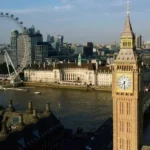

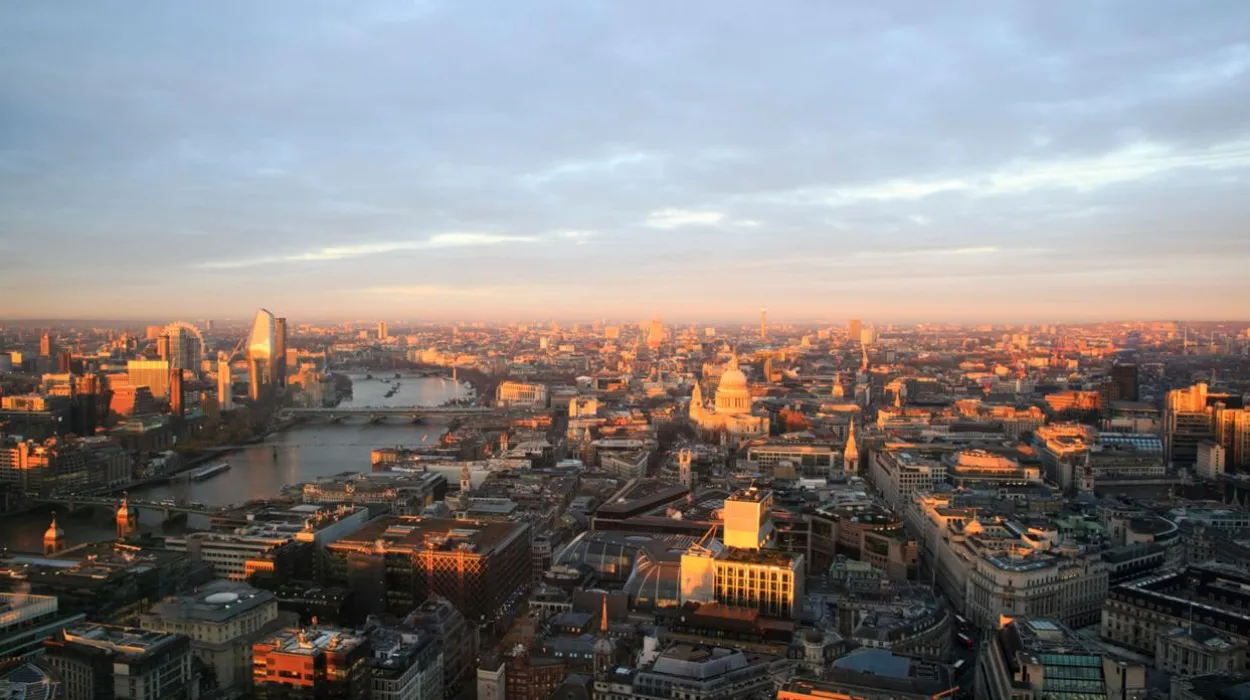
London became Britain’s cultural capital through centuries of political authority, global trade, artistic innovation, scientific advancement, migration, and continuous urban development. From its Roman origins to its modern role as one of the world’s leading cultural centres, the city has attracted writers, architects, performers, inventors, scholars, entrepreneurs, and communities from every continent. These influences shaped London’s museums, theatres, universities, libraries, galleries, markets, public spaces, and creative industries, making it the country’s foremost centre for culture, heritage, and innovation.
- What made London Britain’s cultural capital?
- How did Roman London establish the city’s cultural foundations?
- Why did London’s political importance strengthen its cultural influence?
- How did trade and the British Empire expand London’s cultural diversity?
- How did literature, theatre, and publishing shape London’s reputation?
- How did museums, galleries, and libraries preserve Britain’s cultural heritage?
- How did innovation and science strengthen London’s cultural leadership?
- How did architecture reflect London’s evolving cultural identity?
- Why has London’s multicultural population remained central to its cultural success?
- How is London’s cultural heritage protected for future generations?
Today, London contains four UNESCO World Heritage Sites, more than 190 museums, over 850 art galleries, thousands of listed historic buildings, hundreds of theatres, and one of the world’s largest collections of archives and libraries. This concentration of cultural institutions reflects nearly two millennia of continuous historical development.
What made London Britain’s cultural capital?
London became Britain’s cultural capital because political power, international commerce, artistic patronage, educational institutions, immigration, technological innovation, and continuous urban investment concentrated people, knowledge, wealth, and creativity in one city for nearly 2,000 years, creating lasting cultural influence across Britain and beyond.
London’s rise began with its foundation as the Roman settlement of Londinium around AD 47. The Romans established administrative offices, roads, markets, temples, and defensive walls that transformed the settlement into Britain’s principal commercial centre.
Following the Norman Conquest in 1066, London became the permanent seat of royal administration. The construction of Westminster Palace, the expansion of royal courts, and the establishment of legal institutions attracted nobles, merchants, craftsmen, scholars, and clergy.
Political authority encouraged investment in architecture, education, literature, and religion. Major religious institutions commissioned manuscripts, churches, sculptures, and stained-glass artworks. Royal patronage financed building projects and supported musicians, painters, playwrights, and scholars.
International trade strengthened London’s economic foundation. By the fourteenth century, the Port of London ranked among Europe’s busiest commercial ports. Merchants imported textiles, spices, metals, books, ceramics, and luxury goods from across Europe, Asia, and Africa.
Economic prosperity allowed wealthy patrons to support artists, builders, scientists, and publishers. Their investment transformed London into Britain’s intellectual and cultural centre.
How did Roman London establish the city’s cultural foundations?
Roman London established the city’s cultural foundations through planned urban development, administrative governance, commercial infrastructure, public architecture, road networks, and multicultural settlement patterns that connected Britain with the wider Roman Empire and encouraged economic and cultural exchange.
The Romans founded Londinium shortly after the invasion of Britain under Emperor Claudius. Its location beside the River Thames provided excellent access for shipping while allowing road connections across southern Britain.
Roman engineers constructed:
- A bridge across the Thames
- A forum and basilica
- Public baths
- Amphitheatres
- Temples
- Warehouses
- Defensive walls
These projects created Britain’s largest Roman urban centre.
Roman London hosted traders from Gaul, Germany, Spain, Italy, North Africa, and the eastern Mediterranean. Archaeological excavations have uncovered imported pottery, jewellery, coins, inscriptions, sculptures, and writing tablets demonstrating extensive international connections.
The Roman road system linked London with major settlements including York, Colchester, St Albans, Silchester, and Canterbury. These transport routes accelerated commerce and communication throughout Roman Britain.
Although Londinium declined after Roman administration ended in the fifth century, its street network, commercial importance, and strategic location influenced every subsequent stage of London’s development.
Why did London’s political importance strengthen its cultural influence?
London’s political importance strengthened its cultural influence because monarchs, Parliament, courts, government departments, diplomatic missions, and national institutions concentrated wealth, skilled professionals, ceremonial traditions, and public investment that encouraged artistic, educational, and architectural development over many centuries.
Following the Norman Conquest, England’s rulers increasingly governed from Westminster.
Royal government encouraged the construction of:
- Palaces
- Government offices
- Churches
- Markets
- Bridges
- Guildhalls
Political stability enabled the expansion of universities, legal institutions, and commercial guilds.
The English Parliament gradually became one of Europe’s most influential legislative bodies. Lawyers, scholars, printers, publishers, and civil servants relocated to London, expanding the city’s intellectual community.
National ceremonies also reinforced London’s symbolic importance.
Examples include:
- Coronations at Westminster Abbey
- State funerals
- Royal weddings
- Parliamentary openings
These events attracted visitors, artists, chroniclers, and diplomats who documented London’s ceremonial traditions for international audiences.
Government investment also supported archives, museums, libraries, and scientific institutions that preserved Britain’s cultural memory.
How did trade and the British Empire expand London’s cultural diversity?
Trade and the British Empire expanded London’s cultural diversity by bringing merchants, sailors, diplomats, students, workers, and families from every continent, introducing new languages, religions, cuisines, artistic traditions, and commercial networks that permanently reshaped London’s cultural identity.
The Port of London served as Britain’s principal gateway for international trade for centuries.
By the eighteenth century, ships arrived from:
- India
- China
- West Africa
- North America
- The Caribbean
- Australia
Trade introduced new consumer goods, including tea, coffee, sugar, silk, porcelain, spices, tobacco, and printed textiles.
Migration accompanied commerce.
Communities settled in different districts throughout London.
Examples include:
- French Huguenot silk weavers in Spitalfields
- Jewish communities in the East End
- Irish workers across central London
- South Asian communities after the Second World War
- Caribbean communities during the Windrush era
- African, Middle Eastern, East Asian, and Eastern European communities during the late twentieth century
Each community contributed languages, religious buildings, educational institutions, music, festivals, literature, food traditions, craftsmanship, and entrepreneurship.
This diversity remains one of London’s defining cultural characteristics.
How did literature, theatre, and publishing shape London’s reputation?
London earned international literary influence through playwrights, publishers, printers, newspapers, libraries, universities, and theatres that transformed the city into Britain’s leading centre for writing, performance, education, and intellectual debate across multiple historical periods.
Printing expanded rapidly after William Caxton introduced England’s first printing press at Westminster in 1476.
The availability of printed books increased literacy and encouraged scholarship.
The Elizabethan period transformed London into Europe’s leading theatrical city.
Purpose-built theatres appeared south of the River Thames because regulations restricted performances inside the City of London.
Playwrights including William Shakespeare, Christopher Marlowe, Ben Jonson, and Thomas Dekker created works that reflected London’s expanding society.
The publication of newspapers during the seventeenth century further strengthened London’s intellectual life.
Coffeehouses became centres for political discussion, journalism, commerce, and scientific debate.
During the eighteenth and nineteenth centuries, London attracted major authors including Samuel Johnson, Charles Dickens, Virginia Woolf, Arthur Conan Doyle, George Eliot, and many others whose works documented urban life, industrialisation, poverty, reform, and social change.
The city’s publishing industry remains one of the largest in Europe.
How did museums, galleries, and libraries preserve Britain’s cultural heritage?
London preserved Britain’s cultural heritage by establishing national museums, archives, libraries, galleries, and conservation institutions that collected, researched, restored, interpreted, and publicly displayed historical objects, manuscripts, artworks, archaeological discoveries, and scientific collections.
Public collecting expanded rapidly during the eighteenth century.
The British Museum opened in 1759 as the world’s first national public museum.
Its collections grew through archaeological discoveries, scientific expeditions, donations, and acquisitions.
The National Gallery opened in 1824 to display significant European paintings.
The Victoria and Albert Museum later specialised in decorative arts, design, textiles, sculpture, ceramics, and architecture.
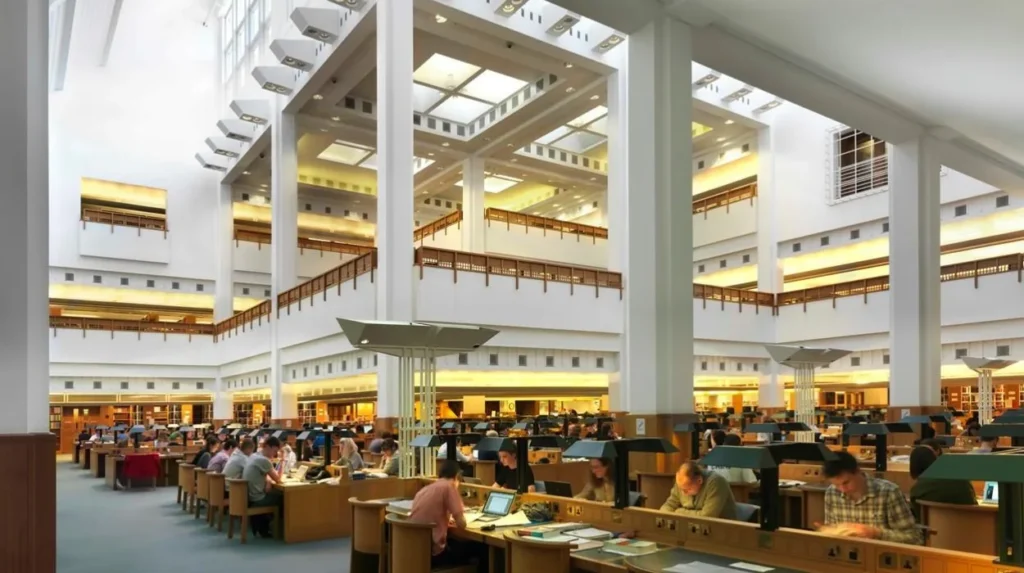
The British Library now preserves more than 170 million collection items, including manuscripts, maps, newspapers, recordings, and books.
The National Archives preserve government records dating back over 1,000 years.
These institutions support research, education, conservation, genealogy, and public engagement.
Modern conservation science ensures that fragile documents, paintings, textiles, fossils, and archaeological artefacts remain accessible for future generations.
How did innovation and science strengthen London’s cultural leadership?
Innovation strengthened London’s cultural leadership because scientific institutions, engineering achievements, universities, inventors, medical research, industrial technology, and public infrastructure transformed London into a global centre for knowledge, experimentation, and technological progress alongside artistic development.
The Scientific Revolution encouraged new approaches to observation and experimentation.
The Royal Society, founded in 1660, became Britain’s leading scientific institution.
Its members included Isaac Newton, Robert Hooke, Christopher Wren, Edmond Halley, and numerous pioneering researchers.
The Industrial Revolution accelerated innovation.
London introduced:
- Gas street lighting
- Underground railways
- Modern sewer systems
- Telegraph communications
- Electric transport
The Metropolitan Railway opened in 1863 as the world’s first underground railway.
Public health improvements followed engineer Joseph Bazalgette’s construction of London’s modern sewer network after the Great Stink of 1858.
Universities including University College London, King’s College London, Imperial College London, and the London School of Economics expanded higher education and research.
These institutions continue attracting international students and researchers.
How did architecture reflect London’s evolving cultural identity?
London’s architecture reflects its evolving cultural identity because each historical period introduced distinctive building styles, engineering methods, planning principles, and public spaces that documented political, religious, economic, and artistic transformation across nearly two thousand years of urban development.
Roman masonry established London’s earliest permanent architecture.
Norman builders introduced castles and Romanesque churches.
The Gothic period produced monumental religious buildings and civic halls.
The Great Fire of London in 1666 destroyed approximately 13,200 houses, 87 parish churches, and numerous public buildings.
The rebuilding programme transformed London’s appearance.
Architect Sir Christopher Wren designed St Paul’s Cathedral and more than 50 parish churches.
Georgian architecture introduced orderly terraces and public squares.
Victorian expansion created railway stations, museums, libraries, schools, markets, bridges, and civic buildings.
Twentieth-century reconstruction after the Second World War combined modern architecture with historic preservation.
Today, London’s skyline demonstrates centuries of continuous architectural evolution while conservation policies protect thousands of listed buildings.
To experience this historic architectural heritage in person today, consult our comprehensive [Best Free Rooftop Views in London for Incredible Skyline Photography Without Entry Fees] for itineraries and visiting parameters.
Why has London’s multicultural population remained central to its cultural success?
London’s multicultural population remains central to its cultural success because continuous migration introduced new traditions, languages, artistic practices, businesses, educational perspectives, and creative industries that enriched every aspect of the city’s social and cultural development across successive generations.
Migration has shaped London throughout its history.
Roman merchants introduced continental customs.
Medieval European traders expanded commercial exchange.
Refugees escaping religious persecution brought specialist skills.
Industrialisation attracted workers from across Britain.
Post-war reconstruction encouraged migration from Commonwealth nations.
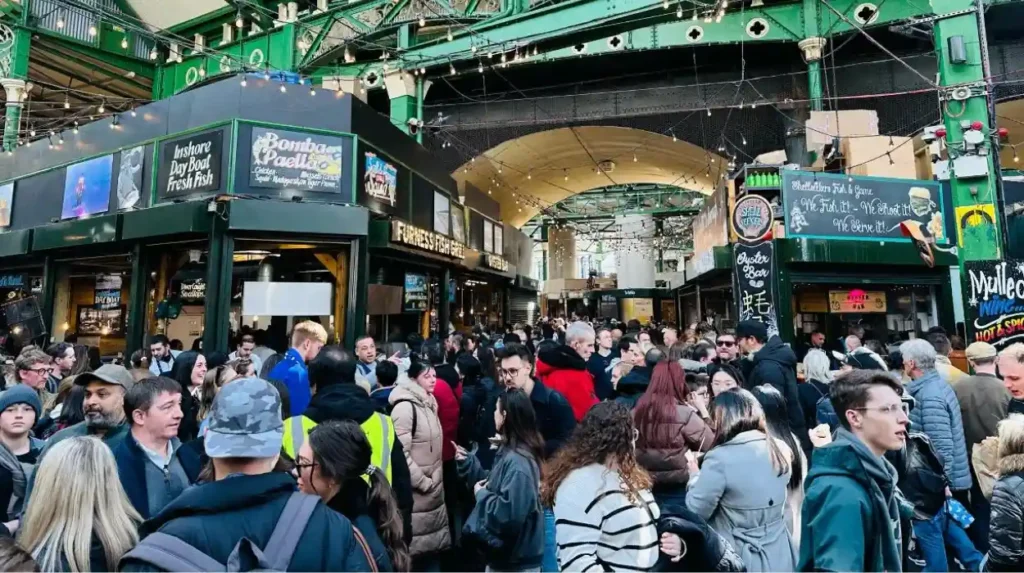
According to recent census data, more than one-third of London’s residents were born outside the United Kingdom, and hundreds of languages are spoken across the capital.
Religious diversity includes churches, mosques, synagogues, temples, gurdwaras, and other places of worship.
London’s culinary landscape reflects global influences.
Music, fashion, film, literature, visual arts, festivals, and sport all demonstrate contributions from diverse communities.
Rather than replacing earlier traditions, new cultural influences expanded London’s identity while preserving historic heritage.
How is London’s cultural heritage protected for future generations?
London protects its cultural heritage through conservation laws, heritage organisations, archaeological research, listed building regulations, museum preservation programmes, educational initiatives, and public investment that safeguard historic sites, collections, traditions, and archives against loss, neglect, and inappropriate development.
Historic England records and protects nationally significant buildings and monuments.
The Greater London Archaeological Advisory Service monitors archaeological remains during redevelopment projects.
UNESCO recognition protects internationally significant heritage sites.
Museums employ conservators specialising in paintings, manuscripts, metals, ceramics, textiles, and archaeological materials.
Digital preservation programmes create high-resolution records of manuscripts, photographs, maps, oral histories, and historical documents.
Universities collaborate with museums, archives, and local communities to research London’s changing history.
Community heritage groups also document neighbourhood histories, restore historic buildings, and preserve local traditions through exhibitions and educational programmes.
These combined efforts ensure that London’s cultural legacy remains accessible for researchers, visitors, educators, and future generations.
London became Britain’s cultural capital through nearly two millennia of continuous development rather than a single historical event. Roman planning established its commercial foundations. Medieval government transformed it into the nation’s political centre. Global trade expanded its economic influence. The British Empire connected it with cultures across the world. Scientific innovation, industrial progress, literary achievement, architectural excellence, and educational leadership strengthened its international reputation. Continuous migration introduced new ideas, traditions, and artistic expressions that reshaped the city across successive generations.
Today, London’s cultural landscape represents the cumulative result of historical preservation, institutional investment, and social diversity. Its museums preserve global heritage, its libraries protect centuries of knowledge, its theatres sustain literary traditions, its universities advance research, and its historic neighbourhoods reflect the contributions of countless communities. This combination of innovation, diversity, and historical continuity explains why London remains Britain’s cultural capital and one of the world’s most influential cultural cities.
Why is London considered Britain’s cultural capital?
London is considered Britain’s cultural capital because it has been the centre of political power, global trade, literature, theatre, science, architecture, museums, and multicultural communities for nearly 2,000 years. The city’s historic institutions, creative industries, and diverse population continue to influence British culture and global cultural development.