London’s food markets preserve more than trade. They document nearly 2,000 years of urban development, immigration, commerce, and culinary change. Every major market reflects a different stage of London’s economic growth while continuing to connect local producers, international communities, and visitors through authentic food traditions.
- How did London’s historic food markets develop over the centuries?
- Why is Borough Market considered London’s most famous historic food market?
- Which historic London food markets offer the most authentic local experiences?
- How have immigration and global trade shaped London’s food markets?
- What traditional British foods should visitors experience in London’s markets?
- How do London’s food markets preserve historic architecture and heritage?
- Why do London’s food markets remain important for local communities today?
- What lasting legacy do London’s historic food markets leave for future generations?
- Frequently Asked Question
London’s food markets have operated since the Roman occupation of Britain during the first century AD. The city’s location on the River Thames created an ideal trading centre where merchants exchanged grain, meat, fish, vegetables, spices, and imported goods from across Europe and later the wider British Empire. As London expanded during the medieval period, specialised markets emerged to serve different trades and neighbourhoods.
Markets became more than commercial spaces. They evolved into social centres where residents exchanged news, celebrated festivals, and maintained cultural traditions. During the Industrial Revolution between approximately 1760 and 1840, improved railways enabled fresh produce from across Britain to reach London quickly, transforming wholesale and retail food distribution.
Today, London’s food markets continue to reflect centuries of migration. Communities from Italy, France, India, Bangladesh, China, the Caribbean, the Middle East, Eastern Europe, and Africa introduced ingredients and cooking methods that reshaped British cuisine. Modern visitors experience both historic British foods and contemporary international dishes within markets that remain active commercial centres rather than museum exhibits.
The survival of these markets demonstrates London’s commitment to preserving historic public spaces while adapting them for changing consumer preferences and sustainable local food systems.
How did London’s historic food markets develop over the centuries?
London’s food markets developed through successive historical periods. Roman trading posts became medieval market squares, Victorian wholesale centres, and modern culinary destinations. Economic expansion, population growth, immigration, and transport innovations shaped each market’s evolution while preserving their commercial functions.
The earliest organised markets appeared in Roman Londinium around AD 50. Archaeological excavations near modern Leadenhall Market uncovered evidence of commercial trading, imported pottery, storage facilities, and food distribution dating from Roman occupation.
Following the Norman Conquest in 1066, London’s population expanded rapidly. Royal charters regulated markets to maintain fair pricing, food quality, and taxation. Medieval authorities designated specific areas for fish, meat, grain, dairy products, and livestock.
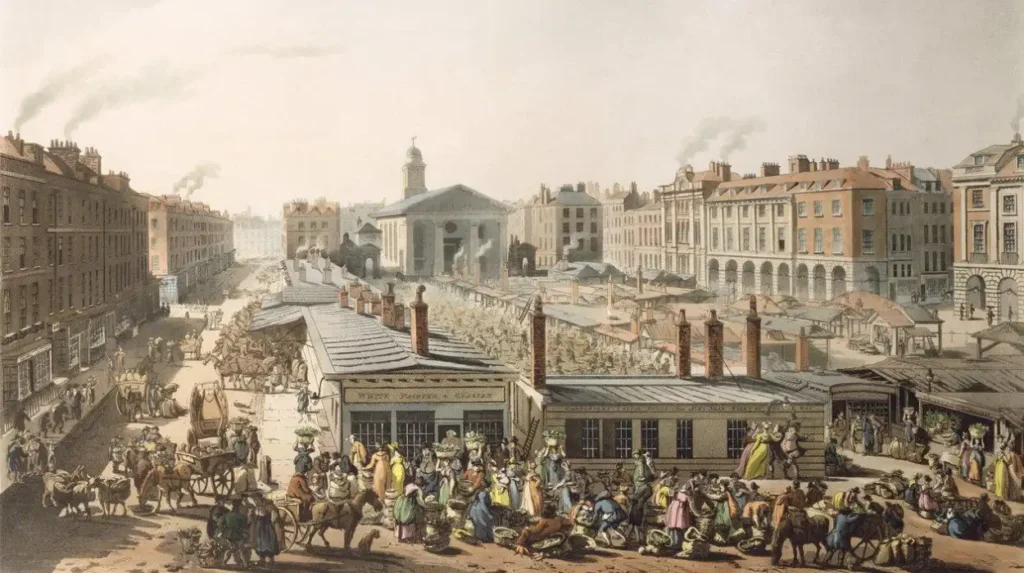
The Great Fire of London in 1666 destroyed many market buildings but encouraged reconstruction using improved urban planning. Covered market halls gradually replaced open-air trading spaces.
During the eighteenth and nineteenth centuries, London’s population exceeded one million residents. Railway stations enabled agricultural products from counties including Kent, Essex, Norfolk, and Yorkshire to reach the capital daily. Victorian engineers designed iron-and-glass market structures that improved sanitation and protected traders from weather.
The twentieth century introduced supermarkets and changing shopping habits, reducing the commercial importance of some traditional markets. However, urban regeneration programmes, heritage conservation policies, and growing interest in artisan food revived many historic markets during the late twentieth and early twenty-first centuries.
These developments transformed traditional wholesale centres into destinations combining local shopping, independent businesses, restaurants, educational experiences, and tourism.
Why is Borough Market considered London’s most famous historic food market?
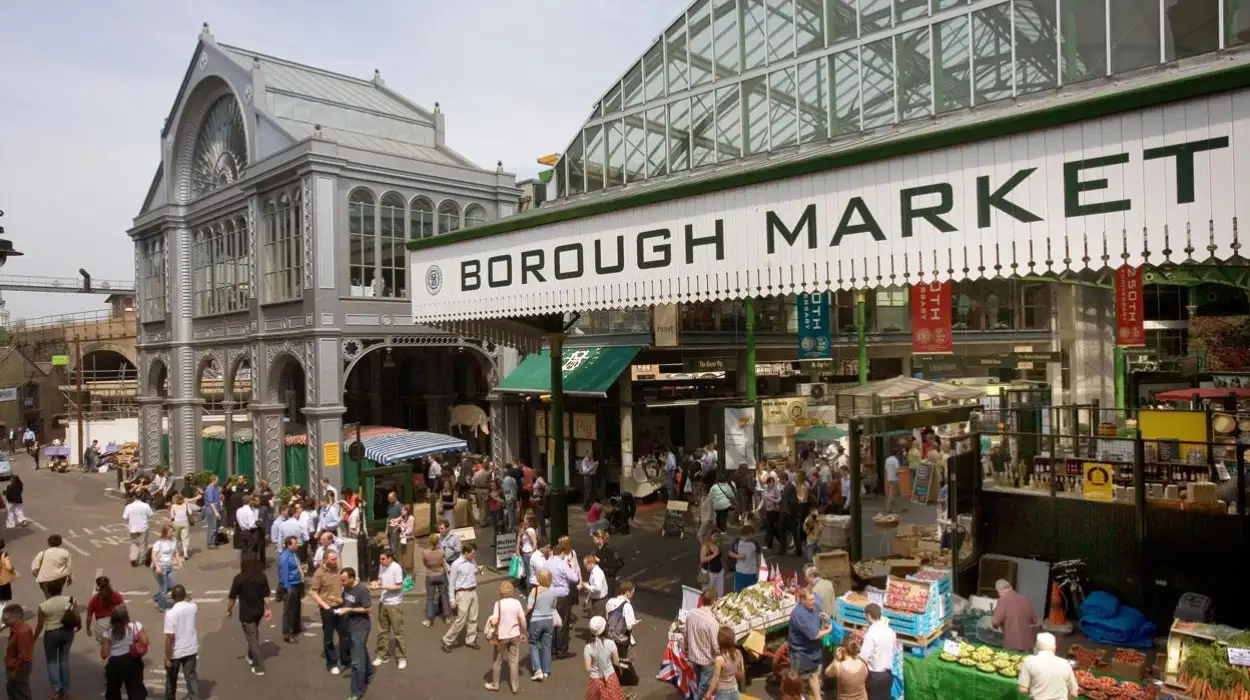
Borough Market combines approximately 1,000 years of commercial history with one of Europe’s most respected artisan food communities. Its medieval origins, independent traders, protected heritage, and exceptional culinary diversity make it London’s leading destination for authentic food experiences.
Borough Market occupies land immediately south of London Bridge. Historical records indicate organised trading occurred in this area by the eleventh century, although archaeological evidence suggests commercial activity existed much earlier.
The market originally supplied produce to travellers crossing London Bridge. Medieval merchants sold bread, vegetables, fish, livestock, and dairy products under regulations established by civic authorities.
The present Victorian market structures largely date from the nineteenth century following railway expansion. Iron architecture, covered trading halls, and preserved entrances represent significant examples of industrial-era engineering.
Today, Borough Market hosts more than one hundred independent traders specialising in British cheeses, artisan bread, sustainable seafood, organic vegetables, cured meats, specialty coffee, international street food, pastries, and seasonal produce.
Strict emphasis on quality distinguishes Borough Market from conventional retail centres. Many vendors work directly with British farmers, fisheries, vineyards, bakeries, and family producers.
Educational initiatives promote sustainable agriculture, seasonal eating, food waste reduction, and culinary heritage. Cooking demonstrations and producer events help visitors understand ingredient origins and traditional preparation techniques.
The market demonstrates how historic commercial spaces remain economically viable while supporting small businesses, tourism, and local agriculture.
To experience this historic landmark in person today, consult our comprehensive [Origins of London’s Historic Pub Culture and Its Enduring Social Importance Today] for itineraries and visiting parameters.
Which historic London food markets offer the most authentic local experiences?
Several historic markets preserve distinct aspects of London’s commercial and cultural heritage. Borough Market, Leadenhall Market, Old Spitalfields Market, Maltby Street Market, Broadway Market, and Greenwich Market each represent different historical periods, architectural styles, and culinary traditions within the capital.
Borough Market
Dating back around one thousand years, Borough Market remains London’s best-known specialist food market. Visitors encounter artisan producers, traditional British ingredients, and international cuisine prepared by independent vendors.
Leadenhall Market
Leadenhall Market stands on one of Roman London’s oldest commercial sites. The spectacular Victorian building designed by Sir Horace Jones opened in 1881. While famous for architecture and boutique shopping, it also contains cafés, pubs, delicatessens, and specialty food retailers reflecting the City’s commercial heritage.
Old Spitalfields Market
Originally established in 1638 after receiving a royal licence from King Charles I, Old Spitalfields Market served London’s growing eastern districts. Immigration from Huguenot silk weavers, Jewish communities, and later Bangladeshi residents influenced local food culture. Today, artisan bakeries, craft food producers, and global street-food vendors reflect this multicultural history.
Maltby Street Market
Located beneath Victorian railway arches in Bermondsey, Maltby Street Market represents modern adaptive reuse of industrial infrastructure. Independent traders specialise in handmade pastries, gourmet sandwiches, fresh seafood, specialty coffee, and regional British produce.
Broadway Market
Broadway Market in Hackney traces commercial activity to the Victorian era. Modern regeneration transformed it into one of East London’s leading weekend food destinations featuring local farms, artisan bread, cheeses, organic vegetables, and international cuisine.
Greenwich Market
Greenwich Market received its royal charter in 1700. Situated within the Maritime Greenwich World Heritage Site, the market combines historic architecture with independent food businesses serving British classics alongside global flavours.
Together these markets demonstrate London’s ability to preserve historic commercial environments while accommodating evolving culinary cultures.
How have immigration and global trade shaped London’s food markets?
London’s food markets illustrate centuries of migration and international trade. Successive immigrant communities introduced ingredients, cooking techniques, businesses, and cultural traditions that transformed local diets while creating one of the world’s most diverse urban food cultures.
Roman merchants introduced Mediterranean olive oil, wine, herbs, and preserved foods into Britain. Viking, Norman, and Hanseatic traders expanded access to northern European products during the medieval period.
Following Britain’s expanding global trade networks between the seventeenth and nineteenth centuries, London’s docks received spices from India, tea from China, sugar from the Caribbean, coffee from Arabia, cocoa from Central America, and tropical fruits from colonies throughout the Empire.
The nineteenth century welcomed Italian ice cream makers, French chefs, and Eastern European Jewish bakers who established specialist food businesses.
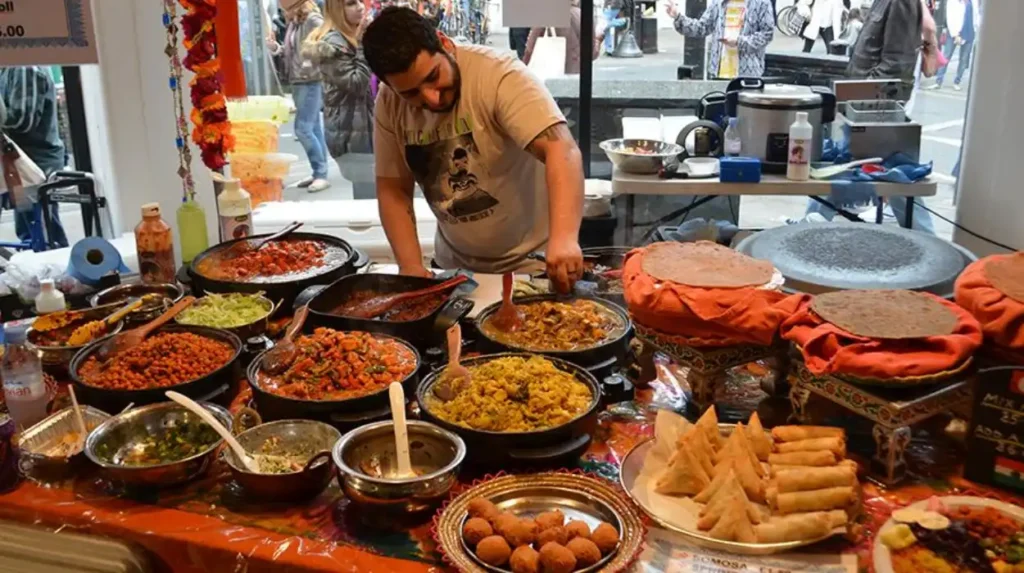
After the Second World War, immigration from Commonwealth nations reshaped London’s culinary landscape. Communities from India, Pakistan, Bangladesh, Jamaica, Nigeria, Ghana, Cyprus, Hong Kong, and many other regions introduced authentic regional cuisines into neighbourhood markets.
Bangladeshi entrepreneurs transformed nearby Brick Lane into one of Britain’s best-known South Asian dining districts. Caribbean communities popularised jerk cooking, tropical produce, and traditional baking. Middle Eastern businesses expanded demand for olives, flatbreads, spices, dates, and grilled meats.
Modern London’s markets therefore represent living evidence of cultural exchange rather than static historical displays.
What traditional British foods should visitors experience in London’s markets?
London’s markets showcase regional British food traditions alongside international cuisine. Historic recipes, locally produced cheeses, fresh seafood, artisan bread, pies, pastries, seasonal vegetables, and handmade desserts allow visitors to experience authentic British culinary heritage through independent producers.
Traditional British cheeses include Cheddar from Somerset, Stilton from Derbyshire, Red Leicester, Lancashire, Wensleydale, and Cornish Yarg.
Fresh seafood reflects Britain’s maritime geography. Oysters, smoked salmon, crab, mussels, scallops, and sustainably caught fish remain popular offerings.
Historic bakery traditions include sourdough bread, soda bread, Eccles cakes, Chelsea buns, Bakewell tarts, sausage rolls, Scotch eggs, and pork pies.
British preserves, marmalades, honey, chutneys, and pickles demonstrate long-established food preservation methods developed before refrigeration.
Seasonal produce reflects changing agricultural cycles. Spring asparagus, summer berries, autumn apples, winter root vegetables, and heritage tomato varieties highlight Britain’s farming diversity.
Many vendors emphasise regional sourcing, organic production, animal welfare standards, and environmental sustainability.
Sampling these products provides insight into Britain’s agricultural history while supporting independent producers who maintain traditional methods.
How do London’s food markets preserve historic architecture and heritage?
Historic market buildings preserve significant examples of Georgian, Victorian, and industrial architecture. Restoration programmes protect original ironwork, brick construction, glass roofs, and street layouts while adapting historic spaces to meet modern commercial, accessibility, and conservation standards.
Victorian architects revolutionised market design using cast iron, steel, and glass. These materials created spacious interiors with natural lighting and improved ventilation.
Leadenhall Market features ornate painted ironwork, decorative arches, and mosaic flooring designed by Sir Horace Jones.
Borough Market combines Victorian engineering with surviving medieval street patterns around Southwark.
Greenwich Market maintains eighteenth-century commercial layouts within a carefully preserved historic district recognised by UNESCO.
Many railway arches at Maltby Street Market illustrate adaptive reuse of nineteenth-century transport infrastructure.
Historic England, local councils, conservation organisations, and private stakeholders collaborate to protect these sites through listed building regulations and heritage management strategies.
Sensitive restoration ensures original architectural character survives while allowing modern safety standards, utilities, accessibility improvements, and commercial activity.
These conservation efforts maintain authentic urban environments that continue serving local communities rather than becoming purely tourist attractions.
Why do London’s food markets remain important for local communities today?
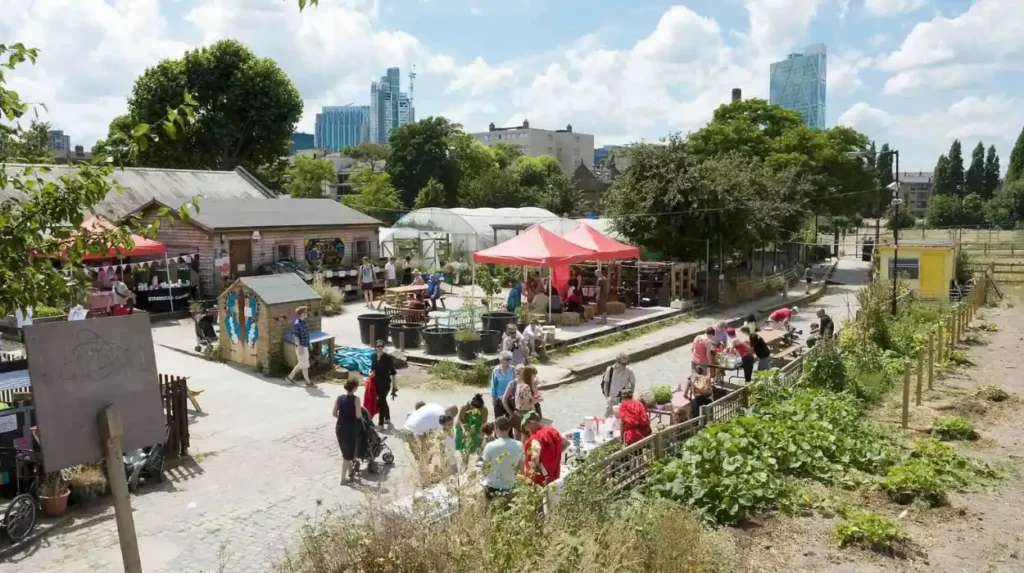
London’s food markets continue supporting independent businesses, local employment, sustainable agriculture, cultural diversity, and neighbourhood identity. Their economic and social importance extends beyond tourism by strengthening community relationships and preserving long-established trading traditions across the capital.
Independent traders gain access to customers without relying exclusively on large retail chains.
Farmers sell directly to consumers, reducing supply chains and increasing transparency regarding food origins.
Markets encourage seasonal purchasing, reducing unnecessary transportation while promoting environmentally responsible agriculture.
Community events, cooking workshops, cultural festivals, and educational programmes strengthen neighbourhood participation.
Food entrepreneurs frequently launch businesses through market stalls before expanding into permanent restaurants or retail premises.
According to market management organisations across London, millions of visitors collectively attend the city’s leading food markets annually, generating substantial economic activity for surrounding neighbourhoods through hospitality, accommodation, transport, and retail spending.
Universities, historians, chefs, conservation specialists, and tourism researchers increasingly study London’s markets as examples of successful heritage-led urban regeneration.
Their continued operation demonstrates how historic public spaces remain economically productive while preserving local identity.
What lasting legacy do London’s historic food markets leave for future generations?
London’s historic food markets preserve centuries of commercial, architectural, and cultural history while supporting sustainable food systems and independent enterprise. Their continued success demonstrates how heritage conservation and modern urban life reinforce each other through active public participation and responsible preservation.
Food markets document London’s transformation from a Roman settlement into one of the world’s leading global cities. Every surviving market records changing patterns of migration, commerce, architecture, agriculture, and public life.
Their buildings preserve craftsmanship from medieval, Georgian, Victorian, and industrial periods. Their traders maintain regional food traditions while introducing contemporary culinary innovation. Their customers sustain local economies through direct support of independent businesses.
Academic research increasingly recognises historic markets as valuable sources for understanding urban development, public health, food security, economic history, and cultural exchange. Archaeological discoveries continue expanding knowledge of London’s earliest commercial activities, while conservation programmes protect historic structures for future generations.
For tourists, London’s markets provide authentic experiences unavailable through conventional retail environments. For residents, they remain essential community spaces supporting employment, education, sustainability, and neighbourhood identity.
As London continues evolving, its historic food markets demonstrate that preservation and progress operate together. Their enduring popularity reflects the city’s ability to honour centuries of commercial heritage while embracing new cultures, cuisines, and generations of visitors.
Frequently Asked Question
Which is the best food market in London for tourists seeking authentic local culinary experiences?
Borough Market is widely regarded as London’s best food market for tourists because of its nearly 1,000-year history, exceptional selection of artisan producers, traditional British foods, and international cuisine. Visitors can enjoy fresh local produce, handmade cheeses, baked goods, sustainable seafood, and street food while experiencing one of the city’s most significant historic marketplaces.