
Key Points
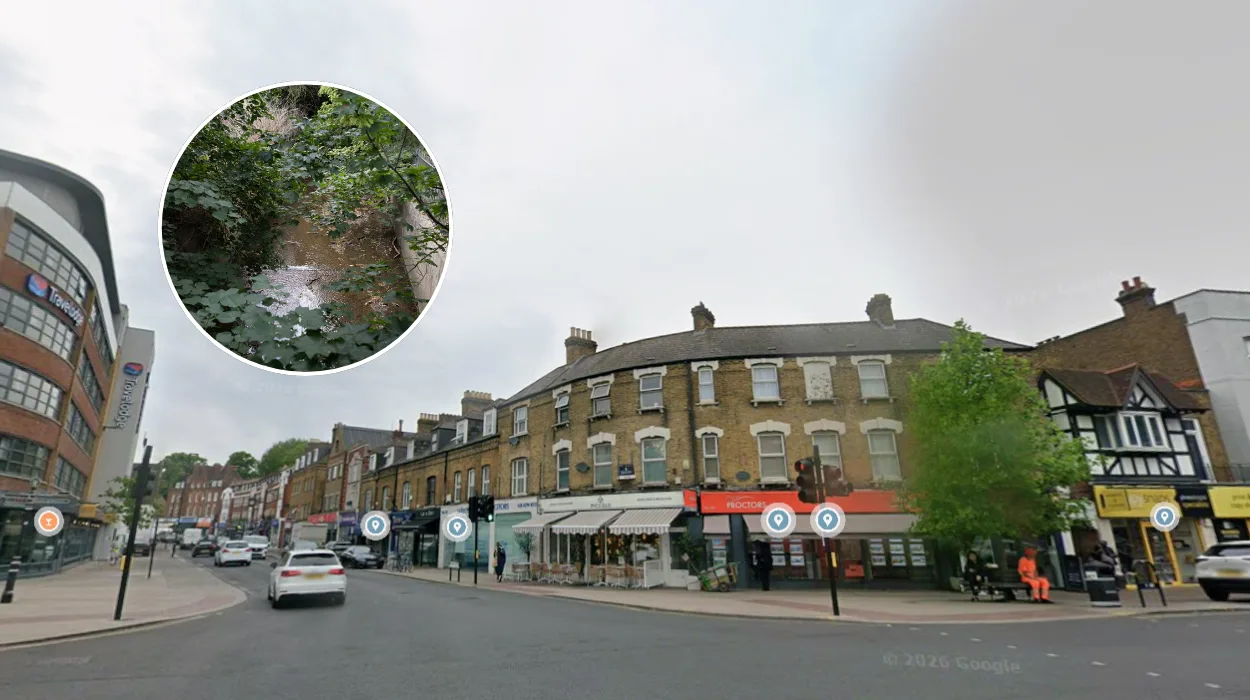
- Incident Overview: Images released in late July 2026 showed a section of the Ravensbourne River in Beckenham turning a stark brown colour following a reported burst water main.
- Cause of Discolouration: According to the Environment Agency and local representations, a large volume of water flushed into the low-level river, disturbing accumulated gravel and silt on the riverbed.
- Official Assurances: Initial assessments from the Environment Agency indicate that the primary effect is “visual” with no evidence of chemical pollution or lasting impact on drinking water quality.
- Preceding Pollution Tragedy: The new water discolouration follows a severe, unrelated Category 1 pollution incident earlier in July 2026 that killed thousands of fish and critically endangered European eels along a 3km stretch of the nearby River Pool.
- Community and Political Response: Local residents have expressed heightened worry, while local politicians—including MP Liam Conlon and Councillor Steven Jefferies—have actively engaged with Thames Water and the Environment Agency to press for rigorous ecological safety guarantees.
London (The Londoner News) July 20, 2026 — Anxiety has gripped communities across South London following a fresh environmental scare after water in a local Bromley river dramatically turned brown. The alarming visual transformation, documented through striking images shared widely by local residents, stems from a reported burst water main that forced a high volume of water cascading into the Ravensbourne River in Beckenham. While environmental authorities have rushed to reassure the public that the discolouration poses no chemical threat and will leave no permanent mark on the watercourse, the incident arrives on the heels of a devastating biological disaster earlier in the month. Just weeks prior, a toxic pollution spill decimated aquatic life in the adjacent River Pool, leaving communities hyper-sensitive to any alterations in local waterways.
Why Did the Ravensbourne River Suddenly Turn Brown?
As reported by Cameron Blackshaw of MyLondon, the stark discolouration observed in the Ravensbourne River at Beckenham Place Park was triggered by infrastructure failure. Local water networks experienced a significant burst water main, which discharged massive quantities of water into the river channel.
Because water levels in the river were relatively low at the time, the sudden influx violently churned up underlying gravel and silt resting on the riverbed.
This heavy disturbance suspended fine particles throughout the water column, creating the dramatic brown hue that alarmed passers-by and local park users.
Explore More South London News:
Malavika Datar Teaches Daughter Financial Literacy Using Investment Jars, South London 2026
Bunsik Launches Korean Street Food Delivery Across South London – Brixton 2026
What Are the Environment Agency and Local MP Saying About the Water Quality?
In the wake of public concern, regulatory bodies and elected officials stepped in to evaluate the situation. As detailed by MyLondon, local Bromley Councillor Steven Jefferies received direct updates from the Environment Agency (EA) indicating that their investigation concluded the primary impact of the burst main was strictly “visual”. The agency stated they do not believe there will be any significant or long-term damage to overall water quality.
Adding to these administrative updates, local Member of Parliament Liam Conlon released a comprehensive statement after coordinating closely with both Thames Water and the Environment Agency.
As reported by MyLondon, Mr Conlon stated:
“I am deeply concerned by images shared with me by residents which show extensive discolouration in the River Ravensbourne in Beckenham Place Park.”
Elaborating on the findings provided to him, Mr Conlon noted:
“In response to my enquiries, the Environment Agency have confirmed that their current understanding is that the discolouration was caused by a burst water main washing a large amount of water into the river. As the river was low, the water had disturbed the silt and gravel on the riverbed, causing discolouration.”
Providing further comfort regarding public health, Mr Conlon added:
“Thankfully, the Environment Agency have said that there is no evidence of pollution in the water, and there is no impact on drinking water. I have gone back to seek immediate reassurance that there is no impact on local wildlife either.”
How Does This Connect to the Recent Mass Fish Deaths in South London?
The unease surrounding the brown water is magnified by a much graver ecological catastrophe that struck the area earlier in July 2026. Reporting by local outlets including Ladywell Live and the Local Democracy Reporting Service (LDRS) highlighted a catastrophic Category 1 pollution incident along a 3-kilometre stretch of the River Pool—a vital tributary connecting to the River Ravensbourne down to Catford.
That earlier disaster wiped out thousands of fish, including coarse species such as chub, roach, and dace, alongside smaller species like sticklebacks, gudgeon, and stone loach.
Most alarmingly, the spill killed large numbers of European eels, a species listed as critically endangered by the International Union for Conservation of Nature (IUCN), whose juvenile populations have suffered staggering drops of up to 95 per cent since the 1980s.
While the exact origin of that early July pollution event remains under active investigation by the Environment Agency and local wastewater operator Thames Water, the psychological toll on the community remains palpable. Thames Water deployed tactical aeration equipment at key positions along the River Pool to elevate plummeting dissolved oxygen levels and stave off further mortality.
Consequently, when the Ravensbourne River turned brown later in the month, residents feared a secondary chemical disaster. Local stakeholders, park user groups, and municipal representatives continue to monitor the waterways closely, demanding accountability and absolute transparency from utility providers as South London’s fragile aquatic ecosystems struggle to recover.